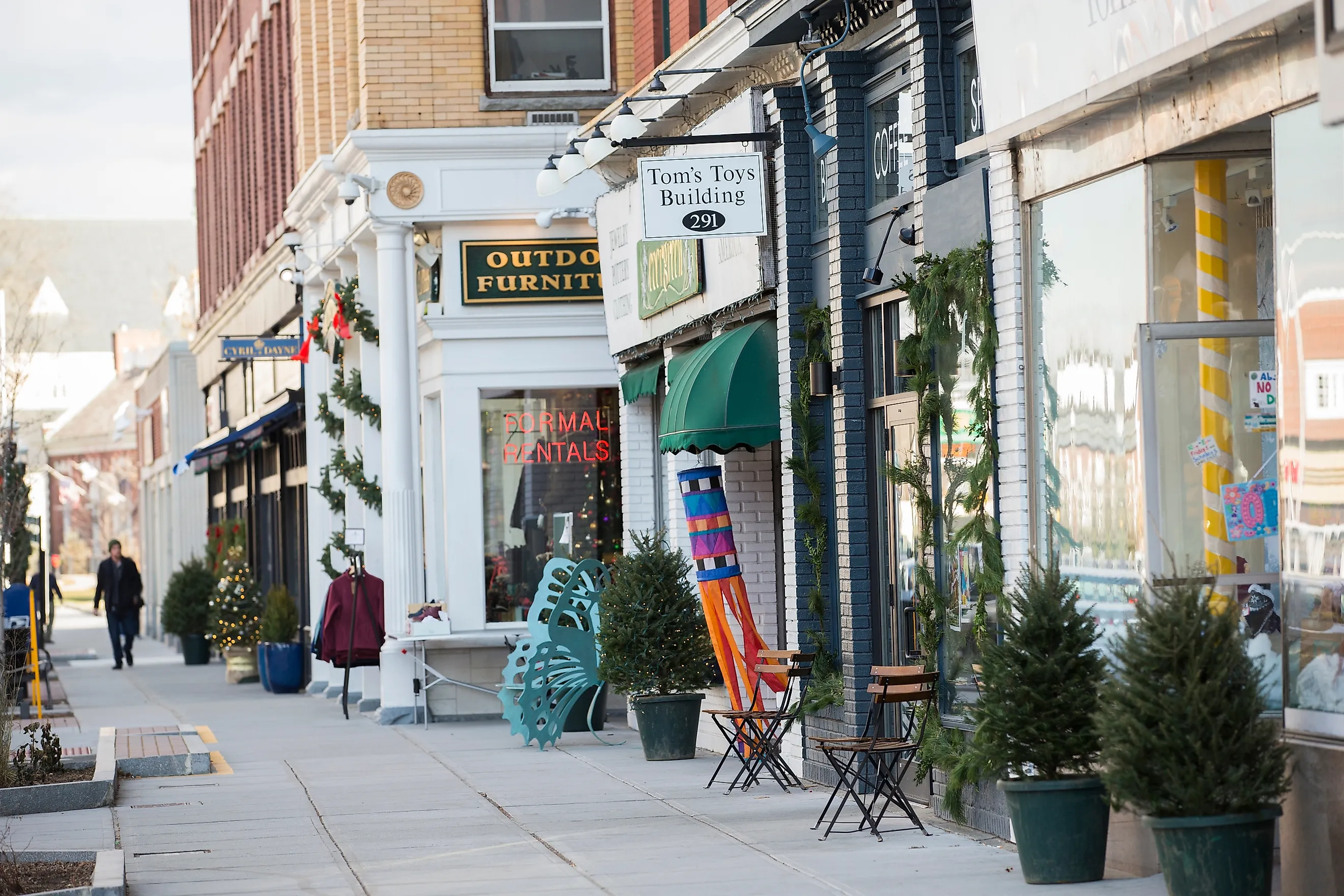
Ideal Berkshires Destinations For A 3-Day Weekend
The Berkshires pack an absurd amount of culture into one rural county. Western Massachusetts has the Boston Symphony's summer home, the largest contemporary art museum in the United States, the world's biggest collection of Norman Rockwell paintings, a French Impressionist collection that would embarrass most major cities, the house where Edith Wharton wrote, and the farmhouse where Herman Melville wrote Moby-Dick while looking at a mountain he thought resembled a whale. All of it sits within about an hour's drive. Three days is the genuine minimum, and the geography is kind enough to sort itself into three. Here are the eight places worth the time, and how to fit them in.
Stockbridge

Start here, because Stockbridge looks like the mental image most people already hold of New England, and that is not a coincidence. Norman Rockwell lived here for the last 25 years of his life and painted the main street.
The Norman Rockwell Museum holds the largest collection of his original paintings anywhere, and his actual studio was moved onto the grounds. The Red Lion Inn has been operating since 1773 and a drink on its porch is the closest thing the region has to a compulsory activity. Chesterwood, the studio of Daniel Chester French, who sculpted the seated Lincoln in the Lincoln Memorial, is a short drive away.
Lenox

Six miles north, Lenox is where the Gilded Age money went, and the consequences are still standing. Tanglewood has been the Boston Symphony Orchestra's summer home since 1937, and a lawn ticket with a picnic is the defining Berkshires evening. The Mount, built in 1902, was Edith Wharton's house and was designed by Wharton herself according to the principles in her own book on interior design, which is a level of commitment most authors do not reach.

The town itself is compact, walkable and thick with restaurants, which makes it the practical base for a three-day trip even if you spend your days elsewhere.
Pittsfield

Pittsfield gets skipped by a lot of visitors and holds the best literary site in the region. Arrowhead is the 1780s farmhouse where Herman Melville lived from 1850 to 1863, named for the artifacts he kept turning up in the fields. He wrote Moby-Dick in the upstairs study, looking north at Mount Greylock, whose long white profile in winter he reportedly thought resembled a whale.

Hancock Shaker Village, just west of town, preserves a complete Shaker settlement including the famous Round Stone Barn, and it keeps heirloom livestock, which makes it considerably more entertaining for children than the phrase "Shaker settlement" suggests.
North Adams

North Adams is a former mill town that collapsed and then reinvented itself around the only thing left standing, which was an enormous empty factory.
MASS MoCA occupies a 26-building nineteenth-century complex and is the largest contemporary art museum in the United States. The scale is the point. Works that would not fit in a conventional gallery live here permanently, including Sol LeWitt wall drawings installed across an entire building.
The town around it has filled in with murals, coffee shops and restaurants. Jack's Hot Dog Stand on Eagle Street has been running since 1917 and is the correct lunch before or after several hours of conceptual art.
Williamstown

Five miles west and an entirely different proposition, Williamstown is a college town built around Williams College, and it holds an art museum that has no business existing in a town of 7,500 people.
The Clark Art Institute holds one of the finest collections of French Impressionism outside Paris, with Degas, Manet, Monet and Renoir alongside Sargent, Homer and Remington. It sits on 140 acres, and the walk up Stone Hill behind the museum has a view that competes with the paintings.
In summer the Williamstown Theatre Festival runs a program that regularly attracts actors most regional theatres cannot get near.
Mount Greylock

At 3,489 feet, Mount Greylock is the highest point in Massachusetts, and the useful thing about it is that you can drive to the top.
The summit road opens roughly May to October and climbs from either Lanesborough or North Adams, ending at the Veterans War Memorial Tower with views across three states on a clear day. The Appalachian Trail crosses the summit, so you can also walk up if you would rather earn it.
This is the mountain Melville looked at while writing. Having seen the museum in Pittsfield first, the view makes considerably more sense.
Great Barrington

The southern Berkshires' commercial center and the place to eat. Railroad Street and Main Street carry an unusually good concentration of restaurants for a town this size, and the Mahaiwe Performing Arts Center handles touring music and film in a restored 1905 theatre.
Monument Mountain just north of town is the best short hike in the southern Berkshires, with a rocky summit ridge and about two hours of effort. It also has a literary footnote: Melville and Nathaniel Hawthorne met on a hike up it in 1850, an encounter credited with shaping the book Melville went home and wrote.
Becket
Worth the detour in summer for exactly one reason. Jacob's Pillow in Becket is among the most important dance festivals in the world and the oldest in the United States, running on a wooded hillside with performances in two theaters and free showings outdoors.
It is a National Historic Landmark and the sort of institution that would be the main attraction in most regions. In the Berkshires it competes with three other world-class festivals in the same two months.
How To Split Three Days

The geography makes the itinerary obvious, because the region splits cleanly into three. Give day one to the southern Berkshires: Stockbridge, the Norman Rockwell Museum and Great Barrington for dinner. Day two to Lenox and Pittsfield, with Tanglewood in the evening if it is summer. Day three to the north: MASS MoCA in the morning, the Clark in the afternoon, Mount Greylock if the weather holds.
Driving between the farthest points takes under an hour, so nothing here requires a dawn start.
When To Come
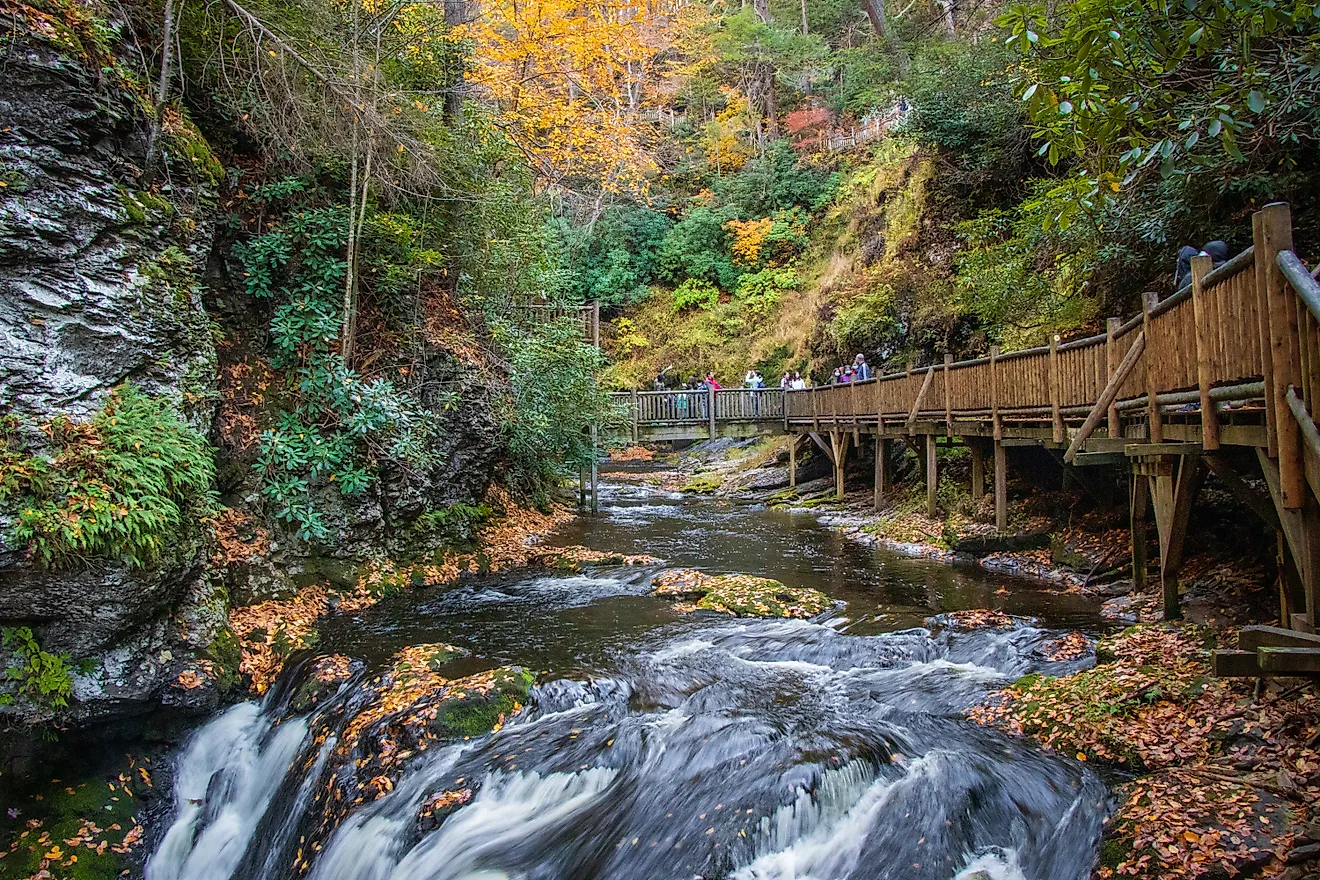
The Berkshires have two peak seasons and they want different things from you. Summer is festival season, when Tanglewood, Jacob's Pillow and Williamstown Theatre all run at once and the region is busy and expensive. October is foliage season, when the hills are the attraction and the cultural calendar thins out.
Both are genuinely good. The quiet secret is late spring, when the museums are open, the lodging is cheaper and the roads are empty.
The Short Version

Three days buys you the Norman Rockwell Museum, MASS MoCA, the Clark, Tanglewood, two writers' houses, a Shaker village and the highest point in Massachusetts, with a good dinner every night and under an hour of driving between any two of them.
Very few rural regions in America can offer that list. The Berkshires manage it because a century of New York and Boston money built the institutions and then the money mostly left, which turns out to be the ideal combination for a visitor.