12 Stress-Free Florida Towns For A Weekend Retreat
Two days is enough to reset in Florida if you skip the theme parks. Cedar Key still runs on the tide instead of a clock. Safety Harbor grew up around mineral springs that drew people centuries before anyone called it wellness. Manatees crowd the shallows at Crystal River and Tarpon Springs every cool season. Apalachicola shucks oysters pulled from its own bay, and the sand at Venice hides fossil shark teeth. These towns are built for a stress-free weekend retreat.
St. Augustine

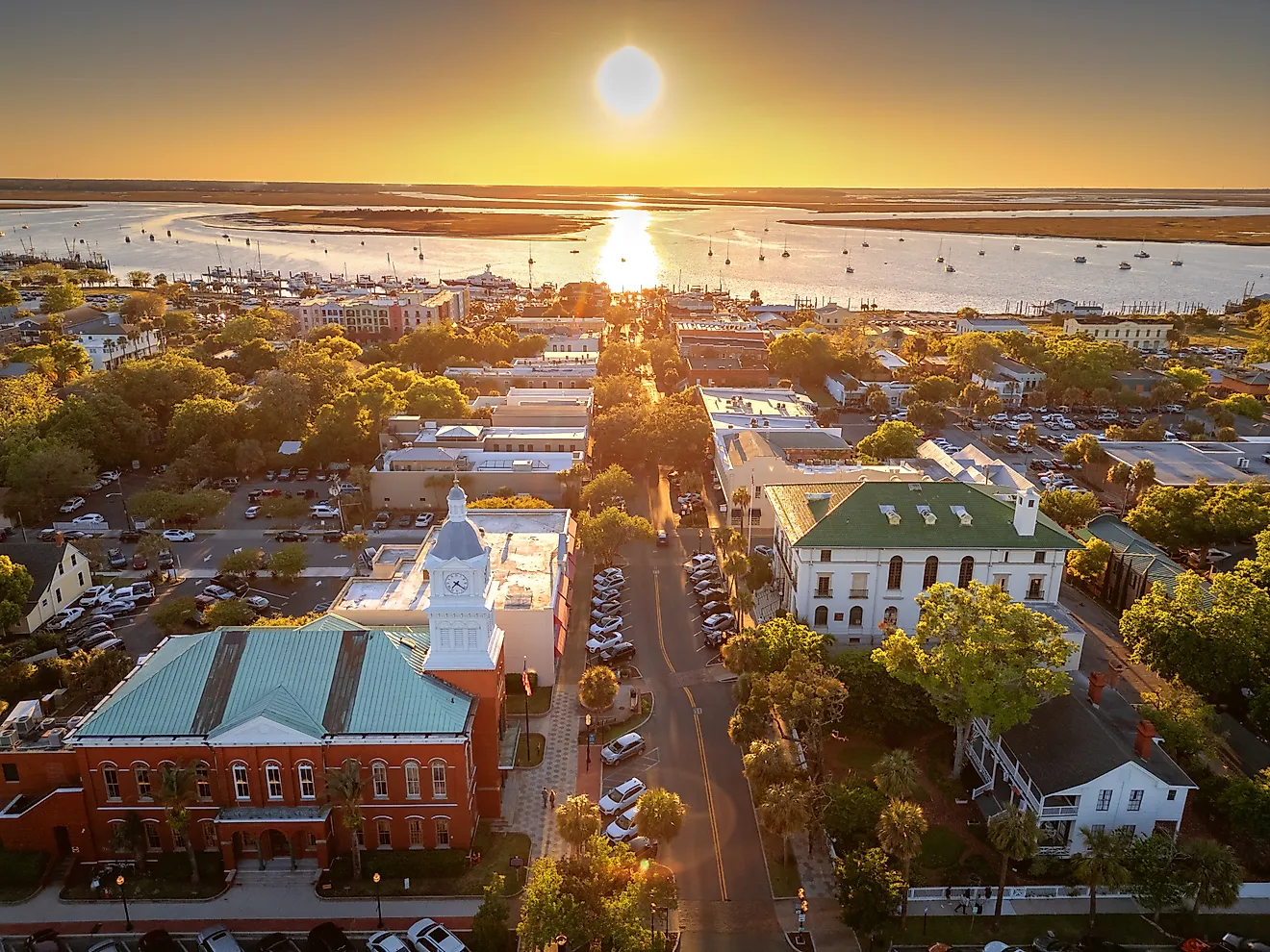
Founded by the Spanish in 1565, St. Augustine is the oldest continuously occupied European-established city in the continental United States, and its historic core still runs on foot rather than freeway. The Florida city's coquina-stone streets frame Castillo de San Marcos, the oldest masonry fort in the continental United States, built from local shellstone that shrugged off cannon fire because the soft rock absorbed the impact instead of shattering. The Lightner Museum fills a former Gilded Age hotel with antique music boxes, cut glass, and 19th-century oddities. Pedestrian-only St. George Street runs the length of the old town, threading past shaded courtyards, preserved colonial homes, and shops selling handmade goods.
Casa Monica Resort & Spa opened in 1888 as one of Henry Flagler's grand winter hotels and reopened a century later as a boutique property downtown. Beyond the chandeliers and tilework, it keeps a heated outdoor pool, a fitness center, and shuttle access to a private beach club on nearby Anastasia Island.
Cedar Key

The tide sets the schedule in Cedar Key, a fishing village on stilts three hours up the Gulf coast from the crowds. There are no high-rises and little traffic, just weathered docks and a working waterfront that looks the way the coast did before the developers arrived. Dock Street runs out over the water on a wooden boardwalk lined with seafood shacks serving local clams, and the public pier at its end is open to anyone who wants to cast a line or watch the herons work the shallows. The Island Hotel & Restaurant sits a five-minute walk away, and its ten rooms come without phones or televisions on purpose.
Cedar Keys National Wildlife Refuge protects 13 offshore islands totaling 762 acres just beyond the town, and a rented kayak or a pontoon tour gets you close to nesting bald eagles and bottlenose dolphins. Closer in, Cemetery Point Park carries a 1,200-foot boardwalk over the tidal flats and salt marsh, where the birdwatching is best in the hour before sunset.
Apalachicola

Apalachicola built its name on oysters, harvesting a large share of Florida's supply from the bay at its doorstep for well over a century. Up The Creek Raw Bar backs up the reputation, shucking the day's catch on an open-air deck above the river. A short walk inland, Orman House Historic State Park preserves the 1838 home of a cotton merchant, its heart-pine floors and molded plaster cornices marking the shift between Federal and Greek Revival taste. The adjoining Chapman Botanical Gardens honors a 19th-century botanist with a butterfly garden of native plants and enough quiet benches to lose an afternoon.
The restored three-story Gibson Inn, built in 1907, offers a saltwater pool out back and golf-cart rentals up front. The carts turn the compact downtown into a loop of shops and restaurants you can cover without moving your car.
Mount Dora

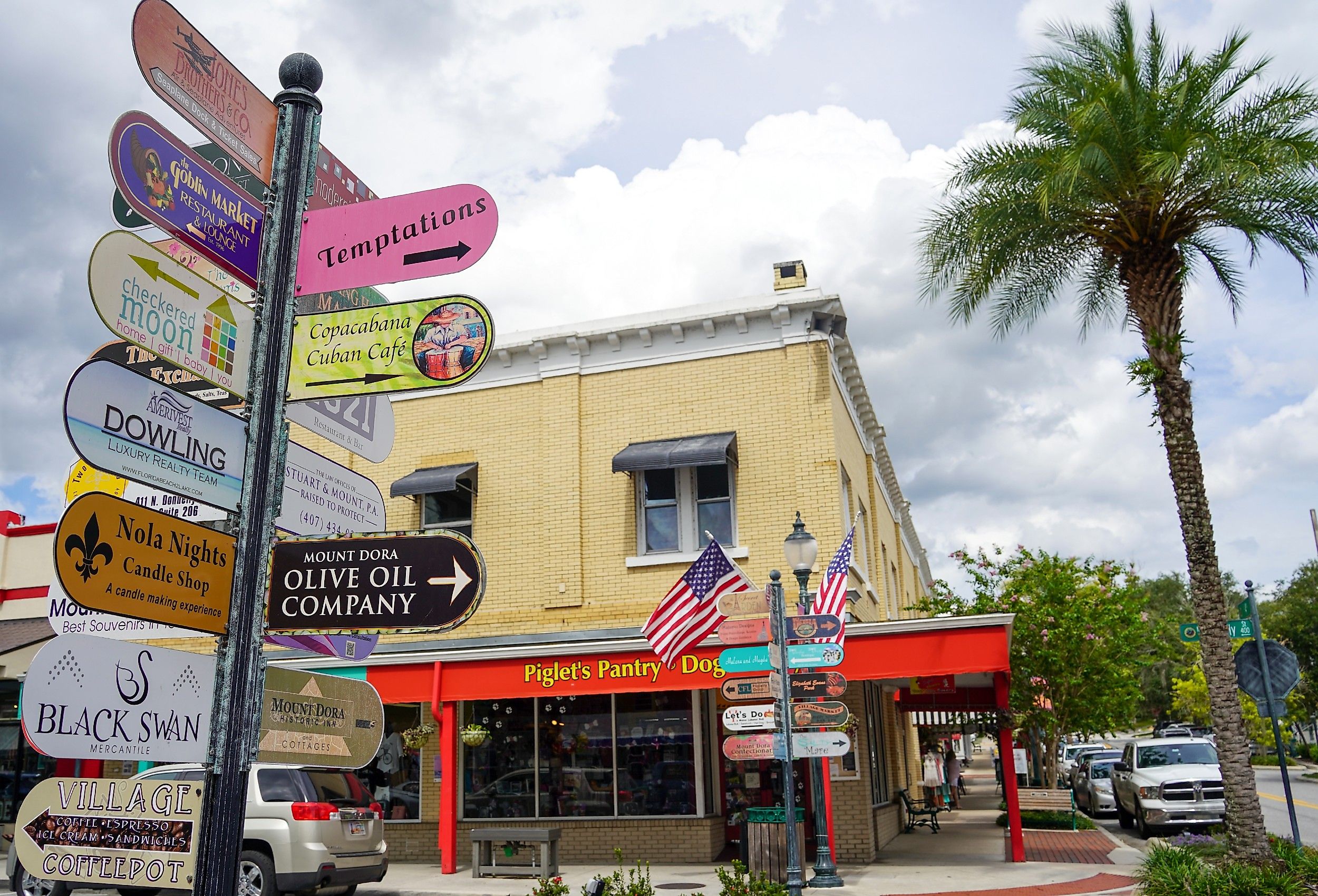
Rolling hills are rare in Florida, and Mount Dora sits on a set of them above Lake Dora, which is why the town has been drawing lakeside visitors since the 1880s. Lakeside Inn, built in 1883, is the oldest continuously operating hotel in the state. Its five yellow-and-white buildings hold roughly 90 rooms under moss-draped oaks, with a lakefront pool on landscaped grounds. Once you have checked in, Palm Island Park spreads across eight acres of preserve with a boardwalk, shaded dirt trails, and fishing access along the shoreline.
The historic downtown trades in antiques. Village Antique Mall packs 12,000 square feet with everything from garden statuary and costume jewelry to American art pottery and comic-book memorabilia. A few doors down, the Mount Dora History Museum occupies a building that served as both a fire station and a jail, and now holds a century of local artifacts, from period clothing to the everyday tools of early residents.
Dunedin

Dunedin wears its Scottish heritage openly, down to the tartan on the welcome signs, and pairs it with an unhurried Gulf Coast pace. The Fred Marquis Pinellas Trail cuts straight through downtown as part of a 45-mile rail-trail linking St. Petersburg and Tarpon Springs, flat and shaded enough for a morning walk or a rented bike. Offshore, Caladesi Island State Park reaches its beaches by ferry from neighboring Honeymoon Island, though the ambitious can wade the roughly three-mile route from Clearwater Beach at low tide.
The Fenway Hotel opened in the 1920s as a Jazz Age radio resort and reopened after a full restoration with a rooftop bar, a pool, and a lawn that hosts live music and community gatherings. A few blocks off, the Dunedin Downtown Market sells local produce, honey, and handmade crafts on market days.
Tarpon Springs

Greek sponge divers settled Tarpon Springs in the early 1900s, and their descendants turned the town into the country's Greek sponge capital, a heritage you taste and hear along the waterfront. The Sponge Docks remain a working harbor where boats still land natural sponges, and the restaurants serve Greek food made by the families who brought it. The Tarpon Springs Heritage Museum fills in the rest, with large-scale paintings and salvaged diving gear that trace how the industry built the town.
The 1910 Inn, a Queen Anne bed-and-breakfast, handles the overnight within walking distance of the docks. Spring Bayou sits a few steps beyond, a waterfront where wild manatees gather through the cool months, and kayakers and paddleboaters take over once the water warms.
Venice

Venice calls itself the Shark Tooth Capital of the World, and the claim keeps most visitors looking down. At low tide, Caspersen Beach draws people to sift the dark, phosphate-flecked sand for fossilized teeth that wash up from offshore deposits. A few miles north, Sharky's on the Pier has served a seafood menu beside the Venice Fishing Pier for more than three decades. Downtown, Venice Theatre has staged shows since 1950 and ranks among the largest and most active community theaters in the country, though its main stage is still rebuilding after Hurricane Ian.
The Inn at the Beach keeps the overnight close to the sand, a boutique hotel directly across the street from Venice Beach. You can walk over for a sunrise swim before breakfast and be back before the coffee cools.
Sanibel Island

Sanibel curves east to west instead of north to south, and that quirk of geography funnels shells onto its beaches by the ton, which is why shellers arrive before dawn bent into the "Sanibel stoop." Bowman's Beach rewards a slow morning of hunting without the resort crowds, and the Bailey-Matthews National Shell Museum, the only museum in the country devoted to mollusks, explains what you have been picking up. In the afternoon, J.N. "Ding" Darling National Wildlife Refuge opens its mangroves to paddlers among roseate spoonbills, white pelicans, and the occasional alligator.
The Sundial Beach Resort & Spa runs the beachfront stay, with several pools, tennis and pickleball courts, and full spa service. It reopened after extensive hurricane repairs, part of the island's long recovery from Ian in 2022.
Islamorada

Islamorada calls itself the Sportfishing Capital of the World and organizes nearly everything around the water. At Robbie's Marina, a few dollars buys a bucket of bait to hand-feed the resident tarpon that crowd the dock, some of them pushing five feet. Skip the rod entirely and Theater of the Sea, open since 1946, lets visitors swim with dolphins, sea lions, and rays in saltwater lagoons. The day ends well at Florida Keys Brewing Company, whose garden taproom pours everything from standard IPAs to cream ales.
Cheeca Lodge & Spa covers 27 waterfront acres with a private beach, a nine-hole golf course, a 525-foot fishing pier, and oceanside pools. Days can run from beach yoga at sunrise to an open-air massage in the afternoon to dinner by the water at night.
Micanopy

Ancient live oaks draped in Spanish moss form a canopy over Micanopy, the oldest inland town in Florida, and small enough to cross on foot in an afternoon. The Herlong Mansion Bed & Breakfast occupies a columned historic estate, where mornings begin with a cooked breakfast and evenings end with wine and fresh cookies. Cholokka Boulevard runs past the front door, lined with antique shops that make an errand feel like time travel.
Just south of the shops, Paynes Prairie Preserve State Park spreads across 21,000 acres of savanna roamed by wild horses and a small herd of bison, with more than 300 bird species, alligators, and deer sharing the ground. In town, the Micanopy Historical Society Museum fills an old warehouse with early Seminole artifacts and the tools of the region's pioneer settlers.
Crystal River

Crystal River is one of the few places in the country where you can legally swim near wild manatees, and hundreds gather here through the cool months. Three Sisters Springs runs so clear that the animals are visible from the boardwalk without getting in the water at all. Hunter Springs Park keeps a sandy swimming beach, a kayak launch, and picnic spots for the slower afternoons. A few minutes out of the main area, Crystal River Archaeological State Park preserves Native American burial and temple mounds built over roughly 1,600 years of occupation.
Plantation Resort on Crystal River handles the overnight, an eco-minded property with a lagoon-style pool, an 18-hole golf course, and a wide recreational lawn set back from the springs.
Safety Harbor

People came to Safety Harbor for its mineral springs long before wellness was a marketing term, from Tocobaga villagers to Spanish explorers who believed the water could heal. The Safety Harbor Resort and Spa sits directly atop the Espiritu Santo Springs and still pipes that mineral water into its pools and jacuzzis, the closest thing to the draw that first put the town on the map. It makes the most direct base for a weekend built around the water.
Beyond the springs, Philippe Park shades a walk along Tampa Bay with an ancient oak canopy and a centuries-old Tocobaga temple mound, one of the region's most significant Native American sites. The Safety Harbor Museum and Cultural Center rounds out the history with Indigenous artifacts, pioneer-era photographs, and rotating exhibitions by local artists.
Two Days, No Theme Parks
The manatee towns and the oyster town, the sponge docks and the shark-tooth beach: each of these places asks for a single weekend and gives back a genuine change of pace. Some trade on centuries of history and others on a stretch of quiet water, but none of them needs a fast pass or a park map. Pick one, give it two days, and let the tide or the trail set the schedule.