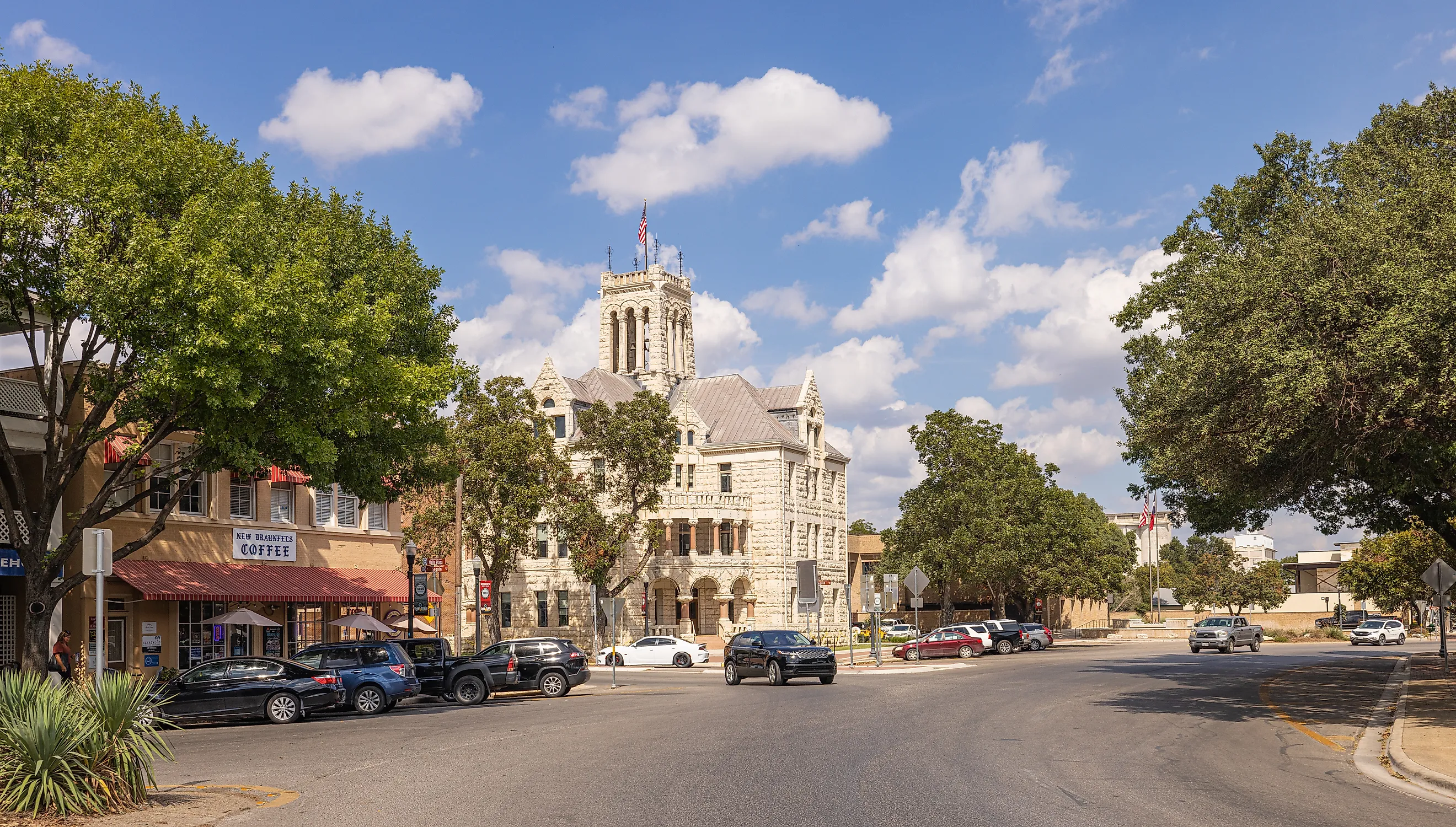
12 Must-Visit Small Towns in Texas
Texas takes its name from the Caddo word taysha, meaning "friend" or "ally," which Spanish missionaries in the 1680s rendered as Tejas. The 12 small towns ahead each carry a different stamp of that mixed-heritage past. Gruene preserves German-Texan dance-hall culture from settlers who arrived in the Comal County hill country in the 1840s. Marfa sits high in the Chihuahuan Desert with minimalist art installations placed in the middle of cattle country. Luckenbach turned a derelict 19th-century trading post into a global country-music landmark when Willie Nelson recorded a song about it in 1977. Each of these towns trades the Texas-sized cliché for something smaller and stranger.
Gruene
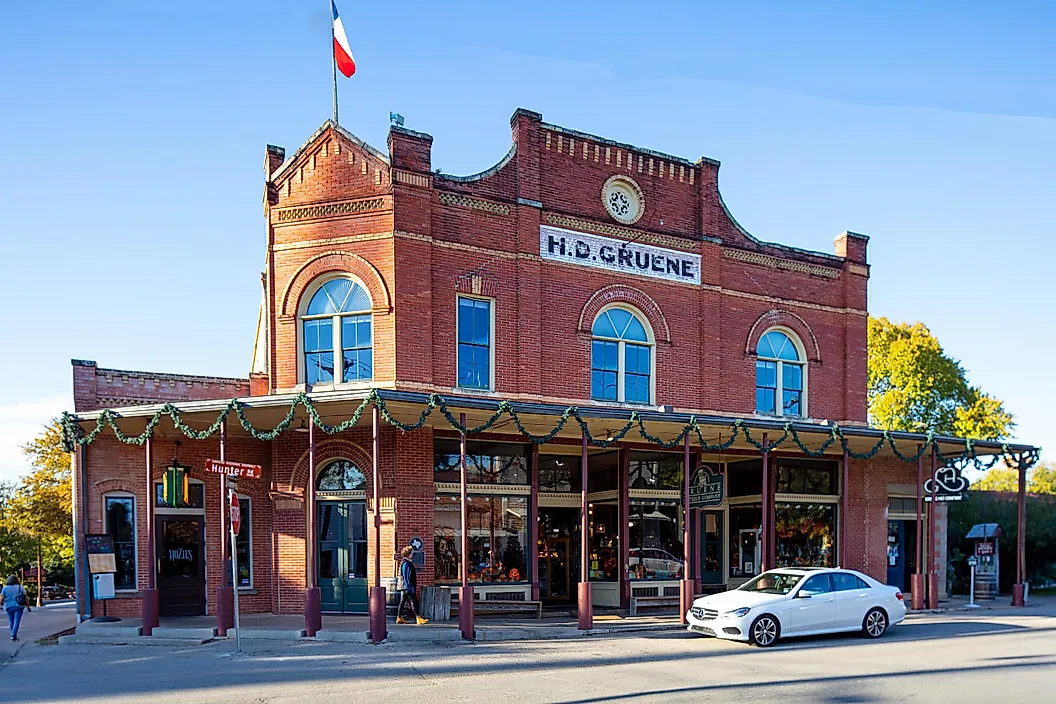
Now a historic district within New Braunfels, Gruene was founded by Ernst Gruene and his sons in the 1840s along the Guadalupe River in Comal County. His son Henry planted cotton in the 1870s, and Gruene grew into the largest cotton-producing community along the river until the boll weevil and the Great Depression flattened the local economy in the 1920s. Gruene Hall, built in 1878, is the oldest continually operating dance hall in Texas and has hosted Willie Nelson, George Strait, and Lyle Lovett over the decades; it still books live music seven nights a week. The 1878 Gristmill River Restaurant & Bar (housed in the ruins of the old Gruene cotton gin) overlooks the Guadalupe and runs a Tex-Mex menu year-round.
Luckenbach
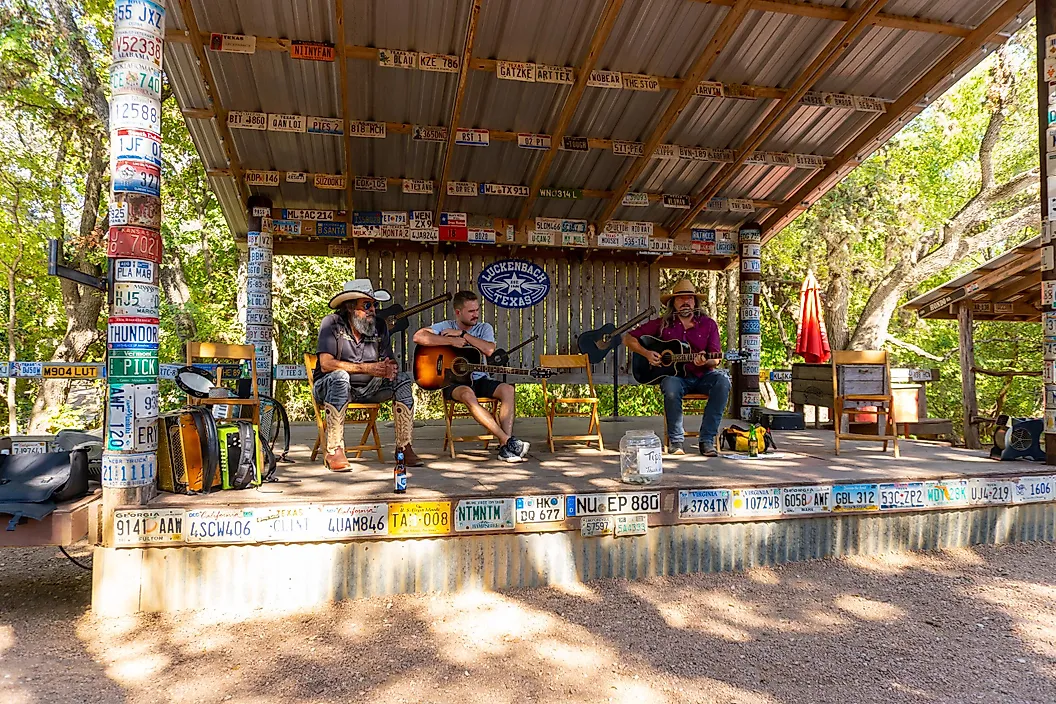
Luckenbach started as a trading post in the 1840s along Grape Creek in Gillespie County. The town was named for early settler Carl Albert Luckenbach. The community dwindled to almost nothing by the 1960s, when local rancher Hondo Crouch and two partners bought the town in 1970 for around $30,000 and kept it running as essentially a music venue and post office. Waylon Jennings and Willie Nelson recorded Luckenbach, Texas (Back to the Basics of Love) in 1977; the song hit number one on the country charts and put Luckenbach on the global map. The general store, dance hall, and outdoor stage still host pickers' circles most afternoons and headline shows on weekends.
Laredo
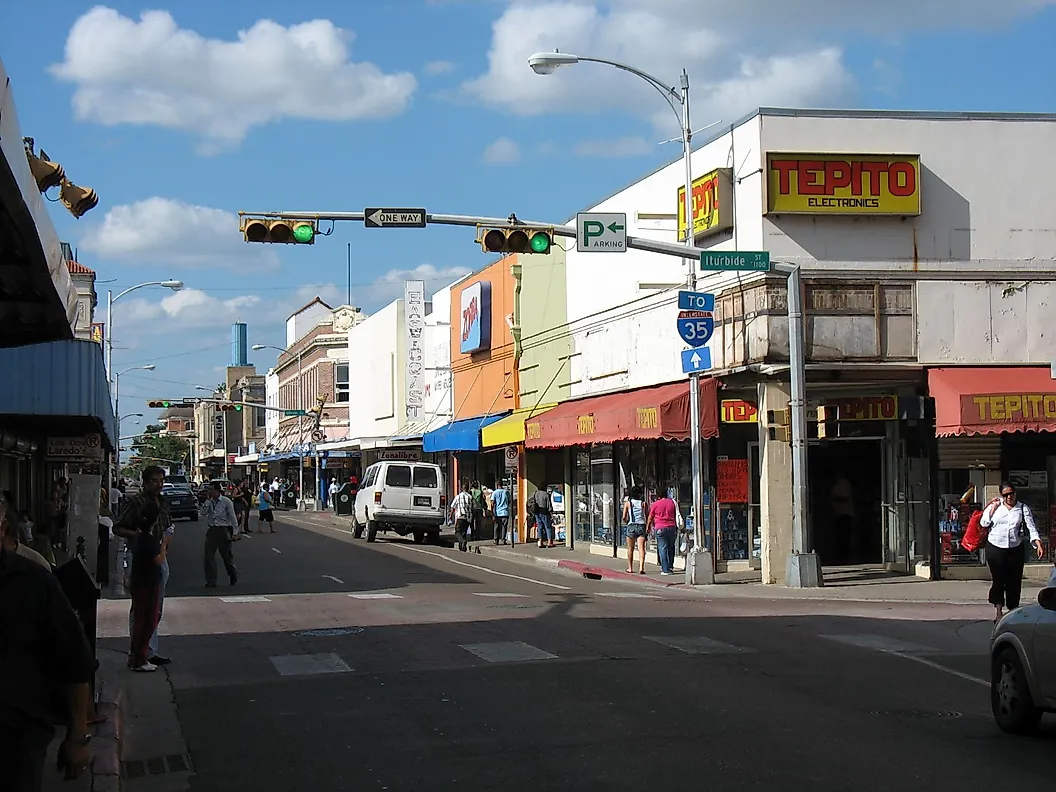
Laredo sits on the U.S.-Mexico border along the Rio Grande with a population of around 260,000, around 95 percent of whom identify as Hispanic, the highest percentage of any U.S. incorporated city over 100,000. Founded in 1755 as Villa de San Agustín de Laredo by Spanish colonist Tomás Sánchez, the town has flown the flags of six different nations including the short-lived Republic of the Rio Grande, which used Laredo as its capital for less than a year in 1840. The Republic of the Rio Grande Museum on Zaragoza Street, housed in the original 1830s capitol building, traces that complicated political history. The Laredo Center for the Arts and the annual Washington's Birthday Celebration (running since 1898) round out the cultural calendar.
Marfa

Marfa began in the 1880s as a railroad water stop and became a national art destination after minimalist sculptor Donald Judd moved there in 1971 and founded the Chinati Foundation in 1986 on the grounds of the former Fort D.A. Russell. Permanent installations at Chinati include 100 milled aluminum boxes by Judd, 25 sculptures by John Chamberlain, and a Dan Flavin fluorescent-light work installed in six former army barracks. The Marfa Lights, unexplained pulses of light occasionally visible at night east of town along U.S. 67, have drawn observers since the 19th century; the official Marfa Lights Viewing Area sits nine miles east of town. Prada Marfa, the permanent fake-storefront installation by Elmgreen and Dragset, sits about 26 miles northwest of town near Valentine.
Lockhart
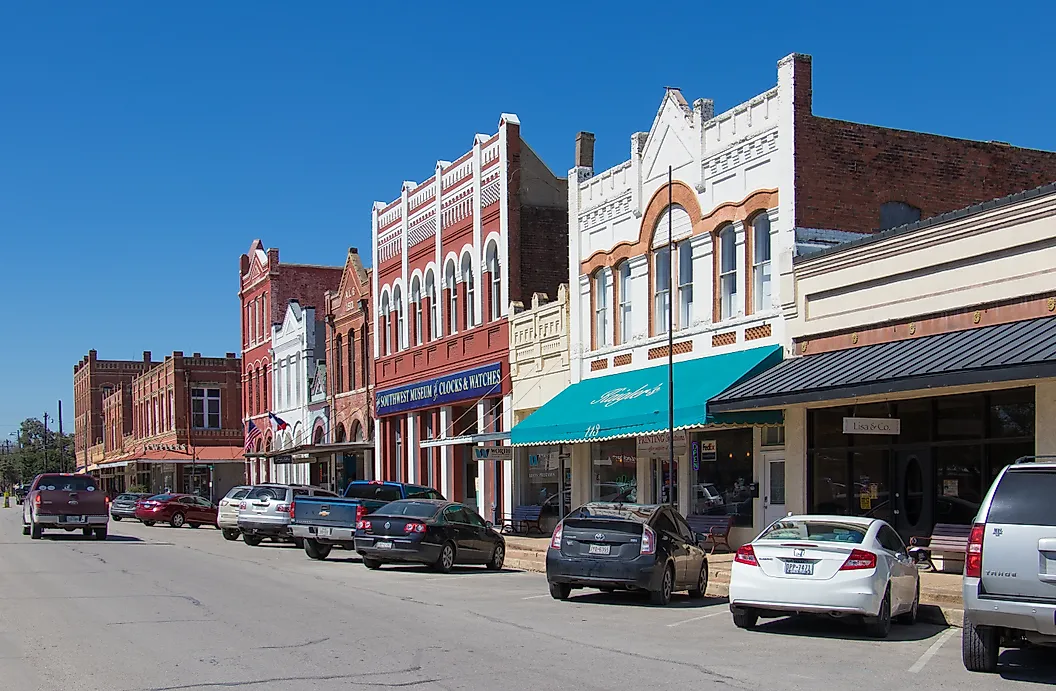
Lockhart, the Caldwell County seat with a population of around 14,000, was officially designated the Barbecue Capital of Texas by the state legislature in 2003. Four legendary smokehouses operate in town: Black's Barbecue (since 1932, claiming the title of the oldest continuously operating barbecue restaurant in Texas by the same family), Kreuz Market (since 1900), Smitty's Market (the original Kreuz location, run by a sister branch of the family), and Chisholm Trail Bar-B-Q. Before being renamed Lockhart, the town was called Plum Creek; the 1840 Battle of Plum Creek nearby ended the Comanche Great Raid through south-central Texas. Other downtown stops include the 1894 Caldwell County Courthouse (Second Empire-style with a clock tower) and the Dr. Eugene Clark Library, the oldest continuously operating public library in Texas (opened 1899).
Alpine
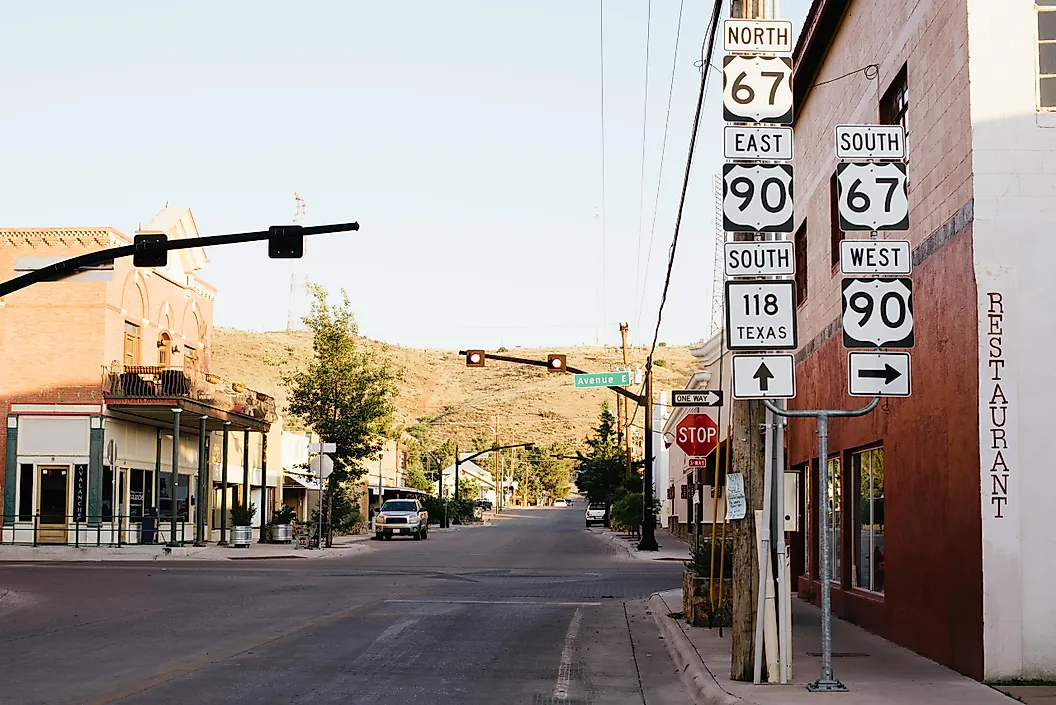
Alpine, with a population of around 6,000, is the Brewster County seat and the largest town in the Big Bend region of West Texas. The town sits at 4,475 feet of elevation between the Davis Mountains and Big Bend National Park. Sul Ross State University, founded in 1917, is the local four-year institution and hosts the Museum of the Big Bend with extensive exhibits on regional geology, archaeology, and Native American history. The annual Big Bend Ranch Rodeo each February at the SRSU arena draws working cowboys from across the state. Alpine also serves as the staging point for trips into Big Bend National Park, about 80 miles south.
New Braunfels

New Braunfels was founded in 1845 by Prince Carl of Solms-Braunfels, the German nobleman who led the Adelsverein settlement effort, and named for his hometown in Hesse. It sits at the confluence of the Comal River (the shortest navigable river in the United States at about 2.5 miles) and the Guadalupe River, making it a major summer tubing destination. The Sophienburg Museum & Archives in town preserves the Adelsverein records and the German-Texan heritage of the founding settlers. Schlitterbahn Waterpark, opened in 1979, was Texas's first waterpark and still operates as one of the largest in the state. The annual Wurstfest each November (running since 1961) brings German food, beer, and oompah music to the Wursthalle by the Comal River.
Comanche

Comanche is the seat of Comanche County in central Texas with a population of around 4,300. The town was established in 1858 and named for the Comanche people who once controlled the surrounding plains. The Old Cora Courthouse on the courthouse square, a small log structure built in 1856, is the oldest standing courthouse in Texas. Comanche's downtown square retains its 19th-century commercial architecture, with Harvest on Main running a farm-to-table menu inside one of the restored storefronts. The Courthouse Square Antique Mall handles antique and gift shopping. Local pecan orchards in the surrounding county supply much of the state's pecan production, and the Comanche County Pow Wow each October brings Native American dancers and craftspeople to the fairgrounds.
Shiner
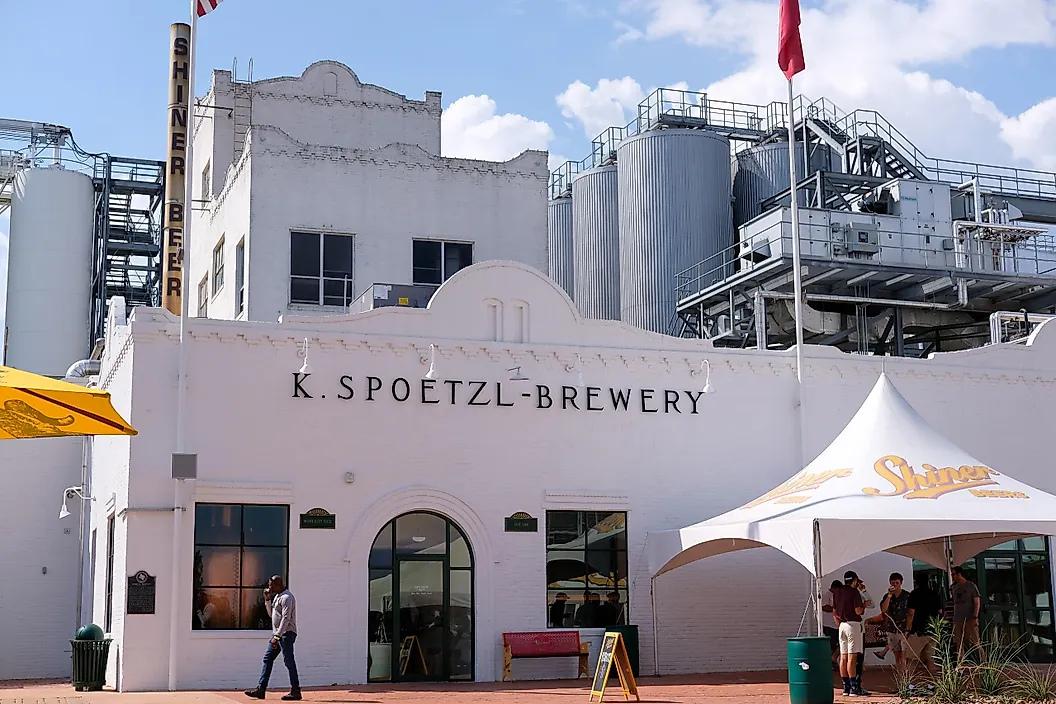
Shiner, in Lavaca County with a population of around 2,000, was named for Henry Shiner, who donated 250 acres for a railroad right-of-way in the 1880s. The town was incorporated in 1890 and quickly drew an influx of Czech and German immigrants whose culture still shapes local life. The Spoetzl Brewery, founded in 1909 by Kosmos Spoetzl from Bavaria, is the oldest independent brewery in Texas and produces Shiner Bock (a Bavarian-style dark lager) as its flagship beer. The brewery runs free public tours and a tasting room year-round and remains in Shiner as the local economic anchor. The Shiner Czech Heritage Festival each May preserves the polka, kolaches, and beer traditions of the original settlers.
Brenham
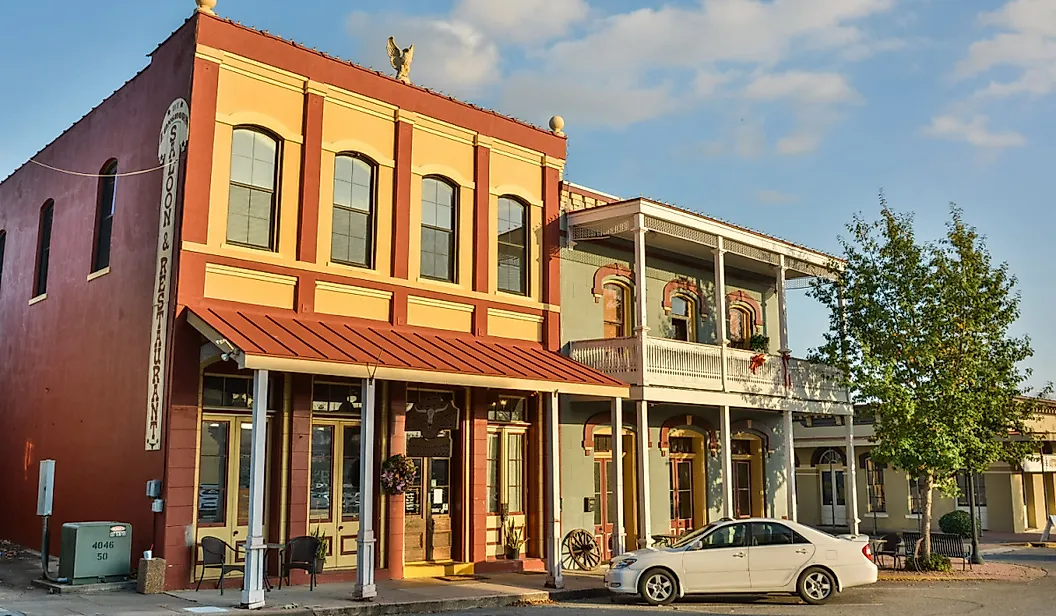
About an hour northwest of Houston, Brenham is the Washington County seat and home to the Blue Bell Creameries headquarters, founded in 1907 and producing Texas's most-loved ice cream brand. Blue Bell runs free public tours of the Brenham creamery (call ahead for reservations) ending in a serving at the ice cream parlor. The town's downtown square retains a strong collection of 19th-century commercial buildings, with the 1879 Simon Theatre restored as a community performing-arts venue. Each spring, the surrounding Washington County fills with bluebonnet wildflower fields drawing photographers from across the state. The Washington-on-the-Brazos State Historic Site, about 18 miles east of Brenham, marks the location where the Texas Declaration of Independence was signed on March 2, 1836.
Weatherford

Weatherford, the Parker County seat about 30 miles west of Fort Worth, was named for Jefferson Weatherford, the Texas state senator who coauthored the bill establishing Parker County in 1855. The town is known statewide as the "Cutting Horse Capital of the World" for the National Cutting Horse Association's headquarters and the cutting-horse competitions held year-round. Chandor Gardens, a four-acre garden built in 1936 by British portrait painter Douglas Chandor for his Texas-born wife Ina, blends English and Chinese landscape design. The 1886 Parker County Courthouse on the downtown square anchors a strong collection of preserved Victorian commercial buildings. The Weatherford First Monday Trade Day, running since 1850s, still draws antique buyers and sellers from across north Texas.
Terlingua
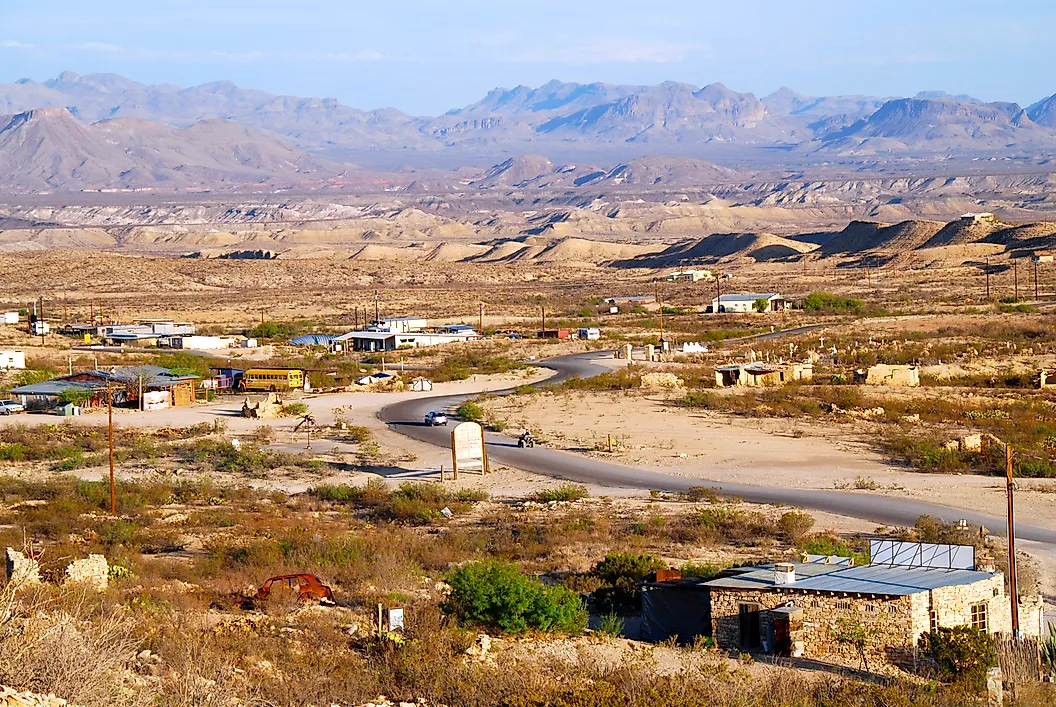
Terlingua is the most famous of Texas's ghost towns, sitting in the Chihuahuan Desert just outside the western entrance to Big Bend National Park. The town boomed in the 1890s after the Chisos Mining Company began extracting cinnabar (the ore that mercury is refined from) and reached a peak population of about 2,000 during World War I when mercury demand surged for use in detonators. The Chisos Mining Company shut down in 1946 and the town largely emptied; today fewer than 100 permanent residents live in the historic district. The Terlingua Cemetery on a small rise above town still holds graves from the mining era. The annual Terlingua International Chili Championship each November in nearby Saddle each year claims the title of the world's largest chili cook-off and draws thousands of competitors and spectators. The Starlight Theatre, in a restored 1930s movie house, runs a full bar and grill year-round.
Twelve Stops Across the State
The 12 towns above each represent a different angle on Texas. Gruene, New Braunfels, Luckenbach, and Shiner carry the German and Czech immigrant story. Laredo, the most Hispanic city in the country, anchors the border. Marfa and Terlingua mark the far-west desert. Brenham and Comanche cover the central pecan-and-bluebonnet country. Lockhart claims the state's barbecue title. Alpine handles the gateway to Big Bend, and Weatherford runs the cutting-horse circuit west of Fort Worth. Add them up and you get a more complete picture of the state than any big-city itinerary delivers.