11 Prettiest Small Towns In The Finger Lakes
The prettiest small towns in New York gather along the shores of the Finger Lakes. Clear water stretches out below streets lined with brick storefronts and nineteenth-century homes. Vineyard rows climb the hills in gold and green. Waterfalls drop through gorges and past village greens. Church steeples and lakefront parks fill out the view. These eleven look their finest in every season.
Skaneateles

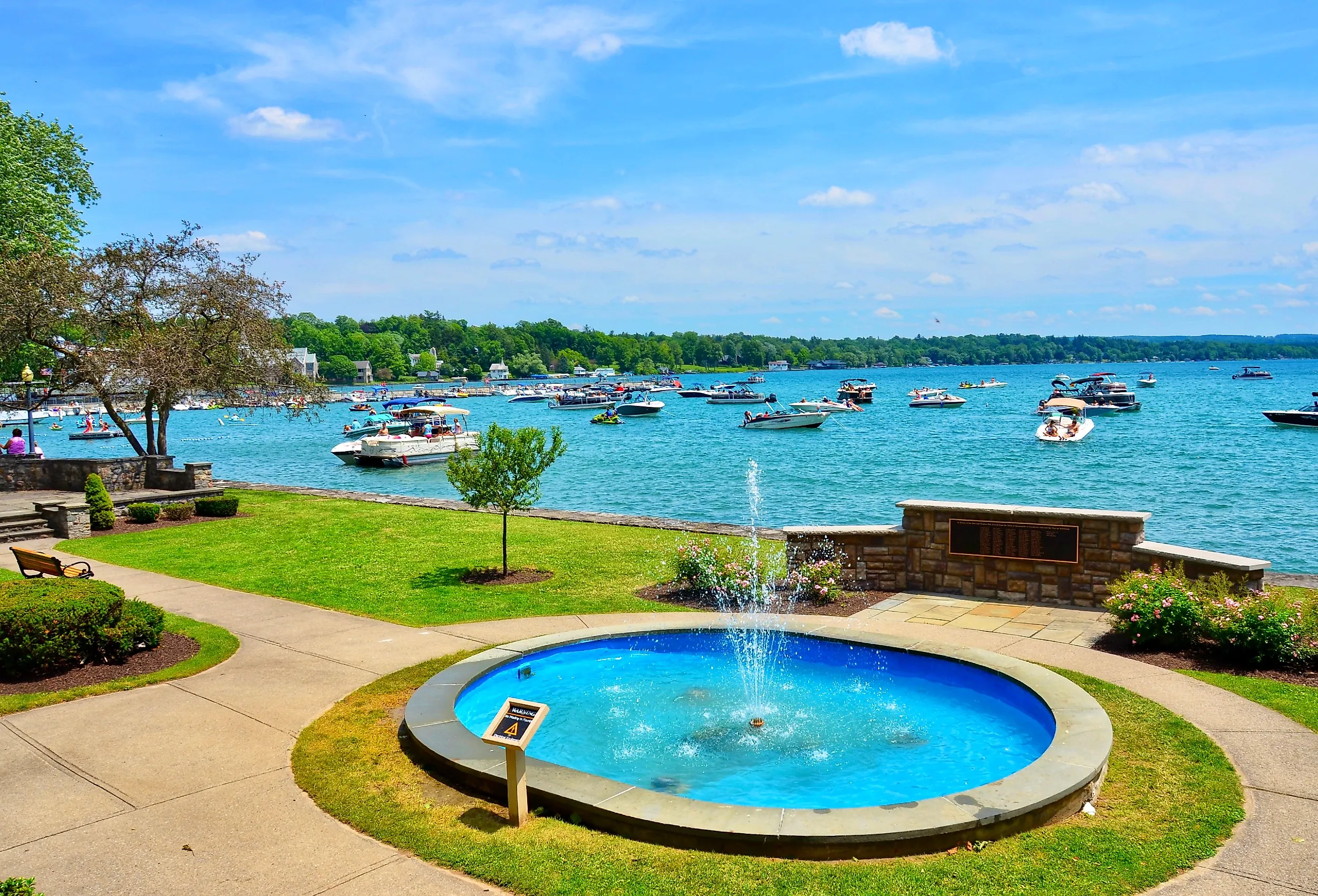
Skaneateles Lake supplies drinking water to Syracuse without a filtration plant, which tells you how clean it runs. On a bright day the shallows near Clift Park go pale green, and locals stretch out on the grass to watch the boats. Genesee Street sits a two-minute walk back from the shore, its brick storefronts holding galleries and shops that have changed hands but never really changed. The old Sherwood Inn has fed and boarded travelers on this corner since 1807, back when it was the stagecoach stop.
The best way onto the water is the Judge Ben Wiles, a restored steamboat that runs sightseeing and dinner cruises out of the village pier. Summer fills the lake with sailboats and kids off the town pier, and the whole place smells like sunscreen and cut grass. Then December arrives and Skaneateles leans all the way into its Dickens Christmas, with costumed carolers working the sidewalks every weekend. Roasted chestnuts, Father Christmas, the works. It is the rare lake town that looks just as good under snow.
Watkins Glen

The gorge at Watkins Glen State Park does something no other town in the region can match. Glen Creek drops about 400 feet over two miles, and the trail runs underneath, over, and behind nineteen waterfalls along the way. You walk through a tunnel of wet stone with the water roaring beside your ear, then come out blinking into daylight near Franklin Street. That is the town's front door, and it sits right at the southern tip of Seneca Lake.
Once you have dried off, Franklin Street handles the rest of the day with its tasting rooms, coffee shops, and the old Glen Theatre. A short walk north brings you to Seneca Harbor Park, where the marina fills up all summer and cruise boats head out onto the deepest of the Finger Lakes. Seneca Harbor Station, in the restored 1876 train depot on the water, is the spot people pick when they want to watch the sunset light up the lake. Order something with local trout and stay for the color.
Hammondsport

Keuka is the only Y-shaped lake in the bunch, and Hammondsport sits right in the crook of it. The hills fold in from three sides, all of them combed with vineyard rows that turn gold by October. Everything centers on Pulteney Square, a tidy village green ringed by cafes, wine shops, and a family-run store called Browsers that has sold gifts and local goods for years. The lake is a two-block stroll from the gazebo.
Wine put this town on the map, and the Keuka Lake Wine Trail still draws people up the ridges to tasting rooms like Dr. Konstantin Frank, where the modern Finger Lakes wine industry basically started in 1962. Hammondsport also calls itself the Cradle of Aviation, and the Glenn H. Curtiss Museum backs it up with early planes, motorcycles, and the story of the man who made one of America's first public flights here in 1908. Down at Depot Park, families spread out for picnics and swimming while sailboats drift back toward the marina. Nobody here is in a hurry, and the town rewards you for matching its speed.
Aurora

Aurora is barely more than one road along the eastern shore of Cayuga Lake, and that is exactly the appeal. Its row of nineteenth-century buildings looks close to the way it did a hundred years ago, right down to the wide lawns rolling to the water. Much of that main street now belongs to the Inns of Aurora, a set of restored homes turned into lodging that kept the village scale instead of steamrolling it. The old Wells College campus still lines the lakeshore with open greens and grand stone buildings, even after the school closed its doors in 2024.
The signature stop is MacKenzie-Childs, a working studio just north of town where artisans hand-paint the wildly colorful ceramics the brand is known for. The tours are free and the farmhouse grounds look out over the lake. Back in the village, the Fargo Bar & Grill has been the local watering hole since the 1800s, the kind of place where you settle in rather than pass through. Come fall the maples along Main Street throw their color straight into the water, and the whole village goes quiet and gold.
Canandaigua

Canandaigua runs one of the widest, liveliest main streets in the region, and it slopes gently down toward the lake. Brick storefronts, breweries, and restaurants give way to Kershaw Park at the water's edge, where a sandy beach and open lawns fill up every warm weekend. The Seneca word Kanandarque means "the chosen spot," and the town has spent two centuries earning the name. New York Kitchen sits along the way, a culinary center where you can take a class or just eat your way through a flight of state wines.
Just uphill, Sonnenberg Gardens spreads across a fifty-acre Gilded Age estate, nine formal gardens wrapped around a turreted stone mansion from the 1880s. The blooms run late spring into early fall, and the greenhouse holds tropical plants year-round. Out on the lake, the Canandaigua Lady paddle-wheeler runs sightseeing and dinner cruises from the City Pier. When the sun drops, the patios along Main Street fill back up, and the evening stretches on without any resort-town crush.
Naples

Naples paints its fire hydrants purple, and it means every bit of it. This is the Grape Pie Capital of the World, a title the town has defended since Irene Bouchard started selling Concord grape pies out of her kitchen in the 1950s. Monica's Pies carries the tradition now, baking grape pies year-round alongside two dozen other kinds. The village tucks into a valley about four miles south of Canandaigua Lake, ringed by vineyards instead of shoreline.
Every September the Naples Grape Festival takes over Main Street, drawing tens of thousands of people for the World's Greatest Grape Pie Contest and a couple of days of wine, crafts, and music. The rest of the year the pace drops back to bakeries, the Bristol Valley Theater, and tasting rooms like Inspire Moore Winery right on North Main. Walk ten minutes up Grimes Glen and you reach two sixty-foot waterfalls, plus the creek bed that gave up the oldest fossil tree ever found in New York. Grape pie, waterfalls, and a fossil forest add up to a lot of character for a town this size.
Penn Yan

Penn Yan got its name from the Pennsylvania and Yankee settlers who split the difference, and it sits at the northern tip of Keuka Lake. The Birkett Mills has ground buckwheat flour on the same spot since 1797, making it one of the oldest businesses still running in the Finger Lakes. Downtown keeps a working, lived-in feel, with brick buildings holding bookstores like Longs' Cards & Books and cafes that fill with farmers and boaters alike. The harbor at the foot of Main Street handles kayaks, fishing lines, and boat launches all summer.
The Keuka Outlet Trail follows an old canal corridor toward Seneca Lake, passing waterfalls and the stone ruins of mills that once powered the whole area. Out past the edge of town, Mennonite and Amish farms work the surrounding hills, and roadside stands sell what the season brings. Yoder's Country Store is the place to stock up on homemade baked goods, bulk staples, and handmade goods straight from that community. Penn Yan trades polish for the real thing, and that honesty is what sticks with you.
Trumansburg

Just north of Ithaca, Trumansburg leads with waterfalls instead of open lake. A few minutes down the road, Taughannock Falls plunges 215 feet in a single drop, which makes it 33 feet taller than Niagara and the tallest single-drop waterfall east of the Rockies. You can take the flat gorge trail to the base or the rim trail for the wide view. The village itself sits back in farm country, its colorful storefronts holding coffee at Gimme! and seasonal plates at Hazelnut Kitchen.
The town punches well above its size on music and community. Atlas Bowl combines a restaurant, a bar, and a handful of bowling lanes, and it books live bands most weekends. Every July the GrassRoots Festival of Music and Dance sets up multiple stages and pulls in crowds for four days of performances. Between the falls, the food, and the festival calendar, Trumansburg keeps a lot going without ever feeling crowded.
Montour Falls

Most towns hide their waterfalls in a park. Montour Falls put one at the end of Main Street. Shequaga Falls drops 156 feet down a sheer cliff right at the head of downtown, framed by houses on either side, lit up after dark. The Seneca name means "tumbling waters," and the village grew up looking straight at it.
The rest of downtown fits in a few easy blocks around that view. St. Paul's Episcopal Church and a run of stone storefronts hold antique shops like Guild Bros. and small cafes serving coffee and fresh pastries. Just outside town, the Catharine Valley Trail runs through wetlands that draw birdwatchers and cyclists across the seasons. Watkins Glen is only a few minutes up the road, yet Montour Falls stays noticeably calmer, which is exactly why some people prefer it.
Seneca Falls

Seneca Falls carries more history per block than almost anywhere its size. This is where the first Women's Rights Convention met in July 1848, and where Elizabeth Cady Stanton and Lucretia Mott read out the Declaration of Sentiments. The Women's Rights National Historical Park preserves the Wesleyan Chapel where it happened, and the National Women's Hall of Fame lines its walls with the names that followed. It all sits along a canal at the north end of Cayuga Lake.
The town also claims a lighter kind of fame. Locals will happily tell you Seneca Falls inspired Bedford Falls from It's a Wonderful Life, and a small museum leans into the connection with an annual December celebration. Trinkets aside, the bridge and the canal-side downtown really do look the part. Cayuga Lake State Park spreads along the water just south, and the Montezuma National Wildlife Refuge nearby fills with migrating birds each spring and fall.
Geneva

Geneva anchors the north end of Seneca Lake, and it is the closest thing the region has to a small city. South Main Street runs a long line of Federal and Greek Revival homes built when the Seneca and Cayuga Canal made this a trade hub in the 1800s. The lakefront balances all that stone with parks and a mile-long walking path. Even with the larger crowd, the water keeps the whole place unhurried.
Seneca Lake State Park spreads along the eastern edge with boat launches, a beach, and open lawns for the afternoon. Downtown stays busy well past dinner, fed in part by students and faculty from Hobart and William Smith Colleges just south of the center. The Smith Opera House, a restored theater from 1894, still runs concerts, films, and community shows through the year. Add more than thirty wineries within a short drive, and Geneva gives you history, water, and a night out without losing the small-town warmth.
Where The Finger Lakes Look Their Best
Walk these eleven towns back to back and the pattern comes clear. Skaneateles kept its water clean enough to drink, Watkins Glen and Montour Falls let theirs cut straight through rock, and Hammondsport and Naples pressed the hillsides into wine and grape pie. Aurora and Seneca Falls turned their shorelines into history you can walk through, while Penn Yan and Trumansburg kept the working-town grit that money tends to sand away. Every one of them found a different answer to the same lake, and that variety is the real reason the region rewards a slow, curious visit.