12 The Pacific Northwest Towns With A Slower Pace Of Life
Fishing, ferries, and gorgeous mountains. This is what the most relaxing Pacific Northwest towns do best. Port Orford is a fishing port first, so its wide beach has space even when the boats are busy. Joseph sits at the end of a long mountain road, with the Wallowa Mountains and a glacial lake right above town. Friday Harbor runs on the ferry schedule, so the town is calm for hours at a stretch. If you want a break that really feels like one, the Pacific Northwest awaits.
Port Orford, Oregon

Port Orford is the oldest townsite on the Oregon coast, and the effort it takes to reach keeps the crowds thin. The port runs one of only two dolly docks in the country, where cranes lift each fishing boat out of the water and set it on a trailer for the night. Battle Rock Wayside Park sits in the center of town, with a curving beach and a short climb up the rock itself at low tide. Offshore lies Redfish Rocks Marine Reserve, one of Oregon's protected marine areas and a strong snorkeling site. Port Orford Heads State Park keeps the 1934 Coast Guard lifeboat station, now a museum, above headland trails that look toward Cape Blanco. Griff's on the Dock serves the day's catch a few steps from where the boats come in.
Yachats, Oregon

On the basalt edge of Yachats, the coast makes no effort to soften itself. Waves hit black rock at the settlement's edge, and on rough days the spray rises well above the shelves. Amanda's Trail carries the heaviest local history, following forest and shore toward the memorial for Amanda De-Cuys, a blind Coos woman forced along this route in 1864. Cape Perpetua is the main physical test, with a high lookout above Thor's Well and Devil's Churn, where the clearest view often comes with wet shoes. Back in town, the Little Log Church Museum keeps a plain record of early settlement inside a spruce-log chapel. Green Salmon Coffee Company is busy for a reason: strong espresso, tea, and simple food in a room that needs no dressing up.
Manzanita, Oregon

Manzanita works best before the shops fully open, when the surf report is still useful and the seven-mile strand has more gulls than people. On Laneda Avenue, Manzanita News & Espresso handles drinks, newspapers, magazines, and the kind of browsing that holds up longer than a souvenir rack. To the north, Neahkahnie Mountain marks the end of the beach with a hard edge, and the hike to its viewpoints pays off when the marine haze lifts over Nehalem Bay. The Pine Grove Community House, built by local residents in the 1930s, remains active with concerts, talks, and civic meetings. That history of use matters in a place that could easily become only a coastal address.
Bandon, Oregon

At the mouth of the Coquille River, Bandon has enough working harbor left to keep the place from feeling staged. Face Rock Creamery draws steady traffic for cheddar, curds, and grilled cheese, built as much for residents as for people passing through. Face Rock State Scenic Viewpoint is the blunt introduction to the shore: sea stacks, wind, surf, and stairs that are less casual on the climb back up. North of town, at Bullards Beach, Coquille River Lighthouse keeps the maritime past in sight without requiring much interpretation. Washed Ashore takes a different approach entirely, turning ocean debris into large marine-life sculptures, a direct argument against plastic waste rather than a decorative project.
Joseph, Oregon

Joseph is not on the way to many destinations, which is part of its value. The town sits below the Wallowa Mountains, with bronze sculptures along Main Street and the lake road leading straight toward glacial country. Arrowhead Chocolates is the sensible first stop for truffles, drinking chocolate, and espresso before walking downtown. Wallowa Lake brings cold water, moraine walls, trail access, and weather that can change without much warning. The Wallowa Lake Tramway climbs to Mount Howard, where summit paths look across the Eagle Cap Wilderness and back toward Joseph. Iwetemlaykin State Heritage Site protects Nez Perce homeland, with open grassland, quiet paths, and a mountain view that needs no improvement.
Sisters, Oregon

Beyond the false-front storefronts of Sisters, the stronger evidence is outside the city limits: ponderosa pine, dry trail dust, and the Three Sisters rising beyond Cascade Avenue. Peterson Ridge Trail gives hikers and mountain bikers a direct look at the peaks without turning the day into an expedition. Higher up, Three Creek Lake brings cold water and lava stone, a useful escape from highway traffic. Back in town, the Stitchin' Post remains a serious destination for quilters, linked to Jean Wells and the annual Sisters Outdoor Quilt Show. Sisters Saloon and Ranch Grill occupies a 1912 building and carries the area's ranch history without making it a costume set. Sisters Bakery is the practical finish, especially for doughnuts, cinnamon rolls, and espresso before Santiam Pass.
Port Townsend, Washington

Port Townsend faces Admiralty Inlet with the confidence of a small city that had large ambitions early and kept many of the buildings. Arrival can involve ferry timing, and that uncertainty suits the place more than a strict schedule. Velocity Coffee at the Northwest Maritime Center is a steady waterfront break with baked goods, hot drinks, and boat traffic close by. Fort Worden gives Port Townsend its scale, with former Army batteries, parade grounds, bluff trails, and open water on three sides. Point Wilson Lighthouse marks the meeting of the Strait of Juan de Fuca and Admiralty Inlet, where ferries, freighters, and weather move through in plain view. The Jefferson Museum of Art and History, inside the old City Hall, keeps the Victorian record from becoming mere backdrop.
Friday Harbor, Washington

At the Friday Harbor ferry landing, cars unload, foot passengers scatter, and the village slows again until the next boat arrives. Coho Restaurant handles dinner with island produce, careful service, and enough restraint to let the ingredients do the work. A short walk uphill, the Whale Museum on First Street gives the place its clearest purpose, with orca exhibits, hydrophone material, and research connected to the Salish Sea as habitat rather than decoration. Lime Kiln Point, west of the harbor, has tide pools, a lighthouse, and one of Washington's stronger land-based whale-watching positions. San Juan Island National Historical Park adds English Camp and American Camp, where the Pig War ended through arbitration instead of gunfire.
La Conner, Washington

La Conner sits along the Swinomish Channel with a waterfront that stays measured even when the tulip traffic arrives in spring. Pioneer Park has fir, cedar, damp ground in wet months, and views back toward the channel and Rainbow Bridge. The Museum of Northwest Art gives the town real cultural weight, with work connected to Morris Graves, Guy Anderson, and other Northwest artists. A few blocks away, the Pacific Northwest Quilt and Fiber Arts Museum occupies the Gaches Mansion, keeping textile work inside a historic house rather than isolating craft from local history. La Conner Brewing Company is the straightforward end of the circuit, serving beer and wood-fired pizza in a brick building on First Street.
Coupeville, Washington

From Front Street in Coupeville, Penn Cove remains more than a view; it is still tied to water, farms, and ferry traffic. Front Street Grill makes the most direct local case with Penn Cove mussels and a menu shaped by Whidbey farms and fisheries. The Coupeville Wharf has marine exhibits and a clean sightline back to the main block. Ebey's Landing National Historical Reserve is the essential context for all of it, with bluff trails, old farmsteads, cemetery roads, and fields that make the island's history visible without dressing it up. Fort Casey adds concrete gun batteries, Admiralty Head Lighthouse, and wide views across Admiralty Inlet.
Winthrop, Washington

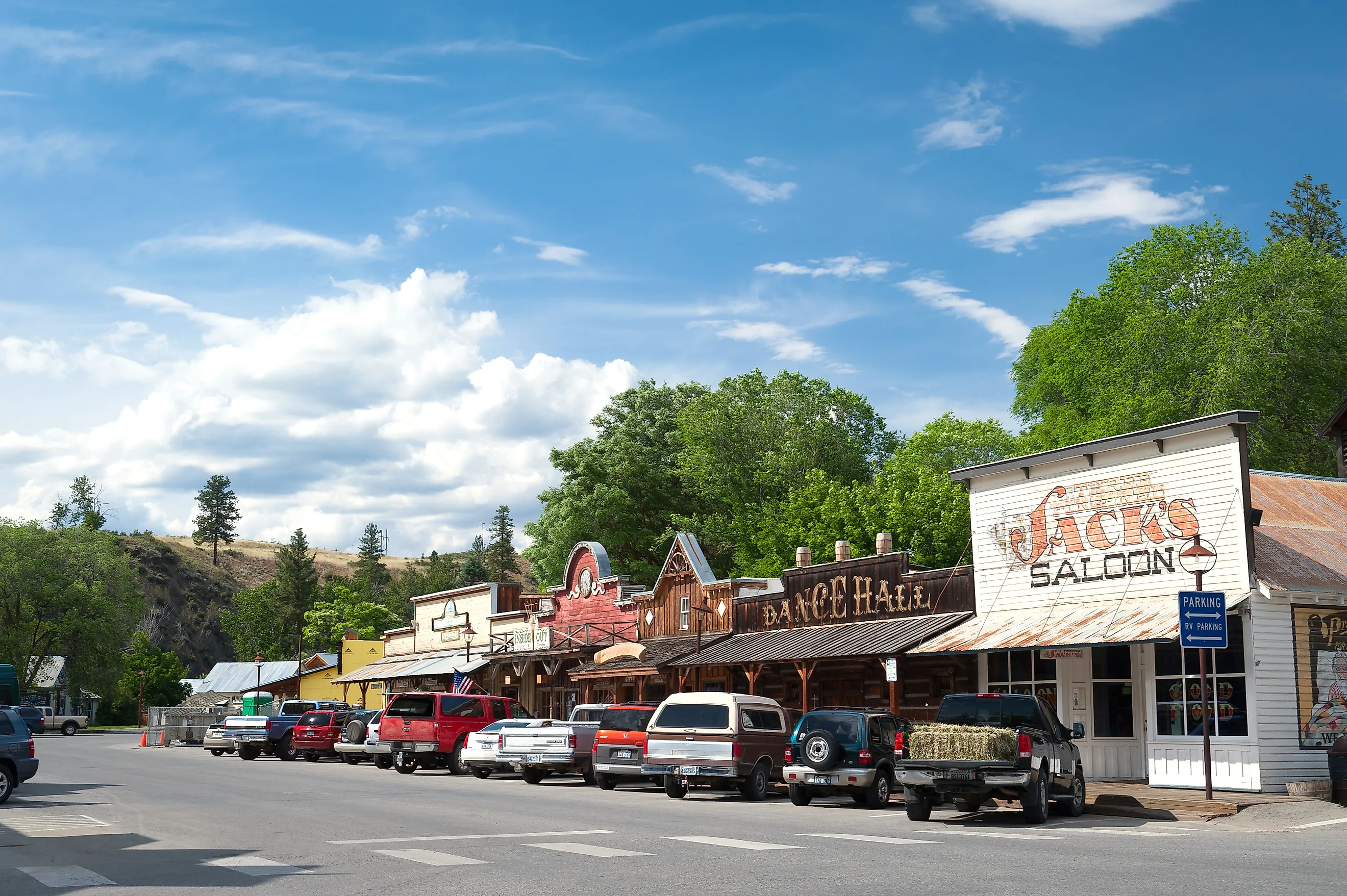
Winthrop's Old West storefronts came from a deliberate 1970s redesign, and the choice has held up more convincingly than many civic branding projects. The Methow Valley behind the facades is the real draw. Trail's End Bookstore on Riverside Avenue is useful for maps, regional writing, and unhurried browsing, particularly when winter closes the high highway and the valley feels more self-contained. The Shafer Museum keeps cabins, mining equipment, tools, and household objects from the homestead era without polishing away the harder parts. Methow Trails maintains routes for Nordic skiing, cycling, running, and walking through fields, forest, and river corridors. Pearrygin Lake is close enough for a half-day of swimming, paddling, fishing, or sitting still with the North Cascades in view.
Wallace, Idaho

In Wallace, mining history remains visible in brick, grade changes, old rail lines, and a downtown district listed on the National Register of Historic Places. The 1313 Club Historic Saloon serves steaks, burgers, and Idaho beer in a restored brick building that still belongs to the block outside. The Sierra Silver Mine Tour goes underground with retired miners explaining equipment, working conditions, and risk in direct terms. The Northern Pacific Railroad Depot Museum fills in the rail story inside a restored depot, a necessary counterpoint to the silver narrative. The Route of the Hiawatha, reached from Lookout Pass, is a controlled ride through trestles and long tunnels in the Bitterroot Mountains, with enough darkness and distance to make the engineering feel earned.
The Case These Towns Make
These twelve towns resist the usual coastal-or-mountain sorting. Some face tidal rock, some sit below glaciated peaks, and a few occupy channels and inlets that force ferry schedules on anyone arriving. What holds them together is not atmosphere but specificity: a mine tour led by retired miners, a whale museum with hydrophone recordings, a quilt store tied to a particular person and a particular annual event, a lifeboat station preserved as a museum above a working dock. The list is an argument that Oregon, Washington, and Idaho have enough specific places to make the generic version of the Pacific Northwest unnecessary.