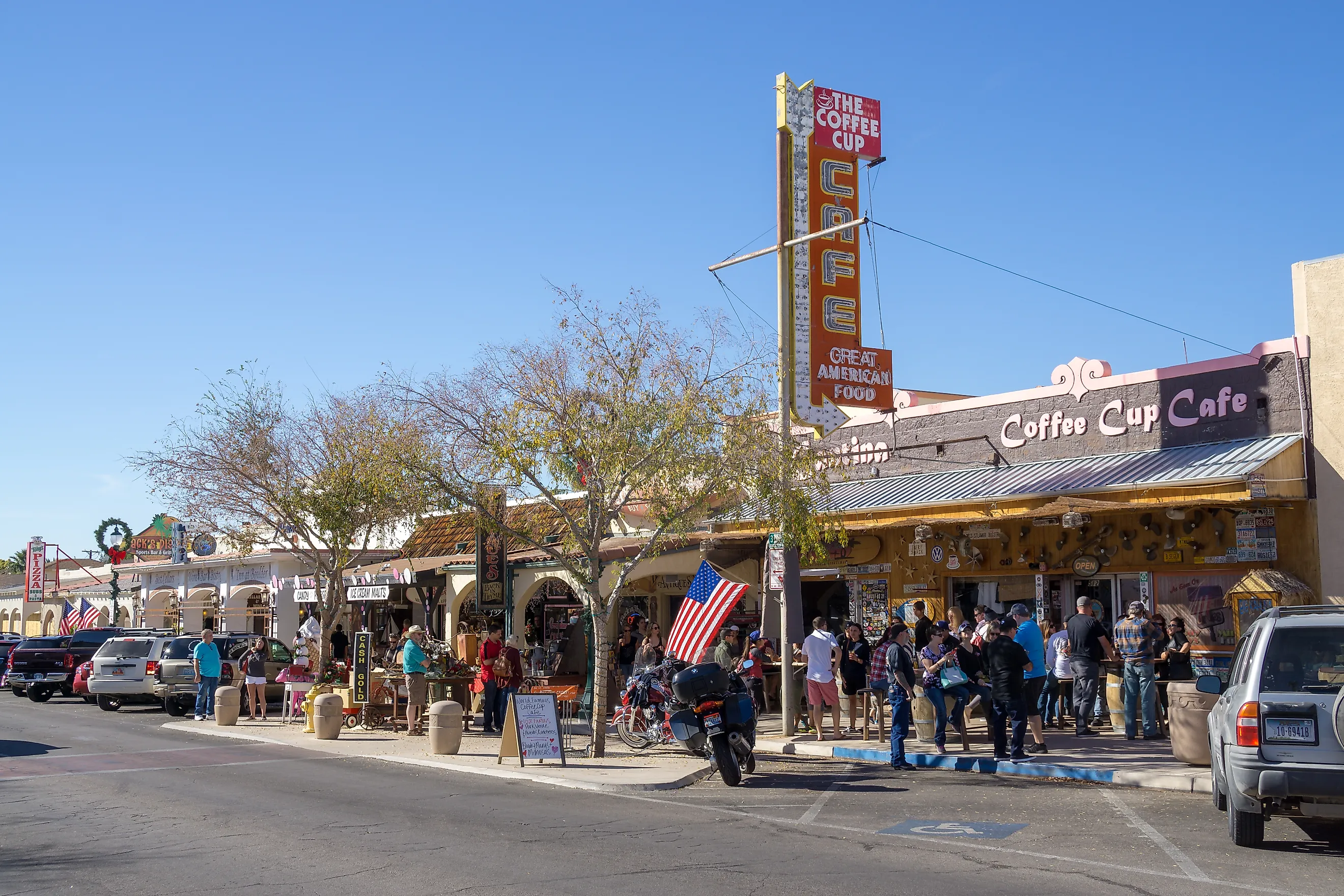
11 Nevada Small Towns With Unmatched Friendliness
Every September, Genoa hands out free homemade candy through a tradition that has run since 1919. The Candy Dance funds the town's streetlights and projects, and the proceeds depend on neighbors baking and cooking side by side for two days. Friendliness in Nevada looks a lot like that. It shows up at cowboy poetry gatherings and Basque dinners. It shows up at county fairs that have been running for more than a century. The same welcome runs through the eleven towns ahead.
Ely

Ely sits at 6,400 feet along the Loneliest Road in America and packs a lot of personality into four square miles. The Nevada Northern Railway Museum is the reason most visitors linger. Across its 56-acre rail yard, you can board 90-minute steam train excursions along the original copper ore route through Robinson Canyon. From the rail yard, the Ely Renaissance Village is two miles away. The restored early-1900s miners' cottages have each been turned into a cultural exhibit representing the ethnic communities that built the town. On summer weekends, the site hosts living history re-enactments, local artisan markets, and Chautauqua performances that pull visitors and residents into the same conversations.
The mural walk through downtown features around 20 large-scale works and sculptures that tell Ely's multicultural story across building facades. Every August, the White Pine County Fair and Horse Races brings three days of live rodeo, thoroughbred and quarter-horse racing, 4-H livestock auctions, and evening concerts back to the fairgrounds. It is the kind of weekend where a stranger waves you over to join their picnic table.
Eureka

Eureka calls itself "the Friendliest Town on the Loneliest Road in America," and the claim holds up. The Eureka Opera House, opened in 1880, is the town's most visible landmark. The deep red brick building once hosted silent films, masquerade balls, and theatrical productions, and today it still runs live performances including the Nevada Old Time Fiddlers' Contest each May. The contest fills the original 1880 stage with hoedowns, reels, waltzes, and folk performances as musicians from across the West compete and the audience claps along all night.
A two-minute walk away, the Eureka Sentinel Museum sits inside the original Sentinel newspaper space. A preserved 1870s press room and walls lined with historic front pages make it one of the state's more tactile mining-era museums, and volunteer guides often add stories from Eureka's newspaper and silver-boom years. Finally, the Jackson House Hotel keeps things interesting just steps away. This 1877 building started life as a hotel and saloon and later became one of Nevada's best-known reportedly haunted buildings, earning features on Travel Channel's Ghost Adventures and continuing to host paranormal events and ghost tours.
Virginia City

Virginia City is a living historic district where the boardwalks are original and the saloons have been pouring drinks for 150 years. The 1800s Piper's Opera House is the town's cultural heart. Ulysses S. Grant, Mark Twain, and Buffalo Bill Cody were all associated with the venue. Beyond the live concerts and theatrical events, the annual Spirits with the Spirits cocktail-and-ghost-hunting nights are the ones that bring people back. Down the street, the Historic Fourth Ward School Museum is the country's only surviving four-story wooden Second Empire school building. Initially built with 16 classrooms, it now houses exhibits on the American West, the Comstock, and the immigrant mining families who sent their children here.
Come September, everyone in town talks about the International Camel and Ostrich Races. The long-running tradition was born from a 1959 newspaper prank, and it now draws thousands for camel races, ostrich jockeys, costume contests, and offbeat frontier spectacle. The Virginia and Truckee Railroad rounds out the visit with 35-minute steam and diesel train rides along the original ore-hauling route, passing through scenery and tunnels that have barely changed since the Comstock's peak.
Genoa

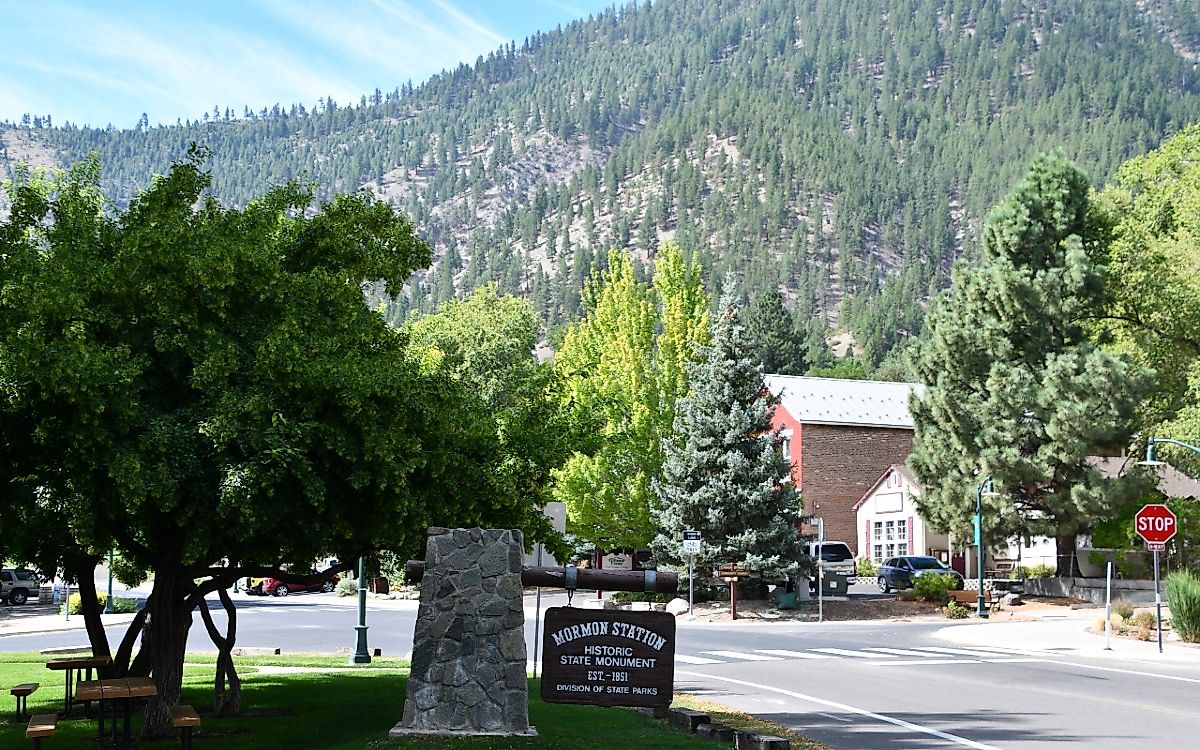
Genoa predates Nevada statehood by more than a decade and still feels quieter than the rest of the state. Mormon Station State Historic Park sits at the center of it. The faithfully reconstructed 1851 trading post is on the original footprint, complete with a stockade, a wagon shed, and a small museum featuring pioneer artifacts from the California Trail and the Pony Express. Across the side street, the 1850s Genoa Bar and Saloon continues to bill itself as "the oldest operating bar in Nevada." Inside, the diamond-dust mirror still hangs above a wall lined with memorabilia from decades of famous patrons including Mark Twain, Teddy Roosevelt, and Johnny Cash.
Since 1919, the Genoa Candy Dance Arts and Crafts Faire has held two days in September on the calendar. You can wander among more than 400 vendors, share handmade candy passed through the crowd, and stay for the dinner and dance on Saturday night. After a day of moving between historic landmarks and festival crowds, many visitors wind down at David Walley's Resort, a historic hot springs property at the edge of Carson Valley known for its mineral soaking pools fed by geothermal springs first developed in the 1860s.
Fallon

Surrounded by alfalfa fields, ranchland, and wetlands fed by the Carson River, Fallon feels greener and more agricultural than almost anywhere else in Nevada. It has earned the nickname "Oasis of Nevada." The community shows up loudest in August during the Fallon Cantaloupe Festival and Country Fair, one of Nevada's longest-running food and drink festivals. The celebration is built around the Hearts of Gold melon that helped make Fallon cantaloupes widely known across the West during the early 20th century. The festival combines live music, rodeo events, carnival rides, livestock exhibitions, and local produce traditions that still reflect the valley's farming roots. Off the festival calendar, the Oats Park Art Center is the year-round cultural go-to. The former 1915 elementary school is now a 350-capacity performance venue and gallery space hosting touring musicians and local visual art exhibitions.
You do not want to miss Frey Ranch Farmers and Distillers either, which has become one of the clearest modern extensions of Fallon's agricultural identity. The fifth-generation family farm grows all of the rye, corn, wheat, and barley used in its whiskey directly on-site. Visitors can tour the working distillery, walk past the grain fields surrounding the property, and taste estate-made whiskey produced entirely from crops grown in the Nevada desert. The Lahontan State Recreation Area stretches west of town around the 17-mile Lahontan Reservoir, where 69 miles of shoreline support boating, camping, fishing, kayaking, and birdwatching against a backdrop of irrigated farmland and open desert.
Incline Village

Lake Tahoe defines nearly everything about Incline Village. Sand Harbor, part of Lake Tahoe Nevada State Park, is a boulder-studded cove with some of the clearest water on the lake. It works well for swimming, kayaking, and scuba diving along its gently sloping granite shoreline. From there, the Tahoe East Shore Trail runs roughly three miles north along the Nevada shoreline back toward Incline Village. The path has been recognized as one of America's most beautiful bikeways thanks to its continuous lake and mountain views.
Summer is when the town opens up. Sand Harbor becomes the backdrop for the Lake Tahoe Shakespeare Festival, where classic and contemporary productions play out on an open-air stage set directly against the water. The lakeside theater experience sells out quickly and has expanded to include Reno Philharmonic performances and Sierra Nevada Ballet nights. Once winter arrives, Diamond Peak Ski Resort offers around 30 trails across 655 acres with a top elevation of 8,540 feet. The mountain feels uncrowded and genuinely local compared to the larger Tahoe resorts.
Gardnerville

Gardnerville wears its agricultural and immigrant heritage openly, in its flower-lined streets, its century-old storefronts, and its deeply loyal Basque community. That community is strongest inside J.T. Basque Bar and Dining Room, a historic wooden building moved from Virginia City in 1896 that has housed saloon and lodging operations for well over a century and operated as the J.T. since 1955. Family-style Basque dinners, garlic-heavy steaks, lamb chops, and Picon Punch still define the experience, while signed currency and memorabilia cover the ceiling above the bar.
A few doors down, Sharkey's Casino is one of northern Nevada's best-known locals' casinos. It still leans heavily into old Nevada character with Western memorabilia on the walls and a long-running reputation for prime rib and classic Basque-influenced casino dining that keeps locals returning as often as tourists. Lampe Park sits at the center of community life in Gardnerville. The 32-acre park has ballfields, horseshoe pits, picnic areas, and access to Willow Creek. It is also where Carson Valley Days takes place. The celebration has been running since 1910 and features a parade from downtown Minden into Gardnerville, along with live music, carnival rides, duck races, craft vendors, tournaments, and other longtime Carson Valley traditions.
Elko

Wide-open rangeland, Western festivals, and the nearby Ruby Mountains give Elko a different version of Nevada from the rest of the state. The Western Folklife Center sits in the 1913 Pioneer Hotel and is the natural starting point. It keeps a 300-seat theater, a rotating art gallery, an actual saloon, and programming dedicated to cowboy craftsmanship and American Indian art. The Center hosts the weeklong National Cowboy Poetry Gathering in January. The event has been running for more than four decades and draws musicians, poets, storytellers, and yodelers from across the West for performances, rawhide braiding workshops, dancing, and panel discussions that have made Elko the capital of working Western culture in America.
Downtown has another standout in J.M. Capriola Co., which has outfitted working ranchers since 1929. It continues to sell handcrafted saddles, spurs, and hand-tooled leatherwork from its original Commercial Street storefront. Meanwhile, Elko's Basque identity becomes clear during the National Basque Festival in July, where traditional dancing, rural sports demonstrations, paella feasts, and Basque music keep the cultural tradition alive.
Boulder City

Boulder City feels a world apart from its 30-minute neighbor, Las Vegas. There is less neon and nightlife and more desert trails, historic districts, and Depression-era civic planning. The Historic Railroad Trail runs roughly 3.7 miles from the Alan Bible Visitor Center, passing through five railroad tunnels. The trail overlooks Lake Mead's Boulder Basin for much of the route. Downtown, the Boulder City/Hoover Dam Museum preserves photographs, artifacts, and oral histories documenting the workers and engineers behind Hoover Dam, later recognized as one of the Seven Modern Civil Engineering Wonders by the American Society of Civil Engineers.
February brings the Dam Short Film Festival, which brings independent filmmakers from around the world to the historic Boulder Theatre for four days of screenings, director discussions, and awards programming that has become one of the Southwest's better-known short film festivals. Finally, The Dillinger has become a downtown favorite for elevated comfort food, craft cocktails, and live music inside a restored historic building that still fits naturally into Boulder City's 1930s streetscape.
Mesquite

Framed by red rock desert and the Virgin River Valley near the Arizona and Utah borders, Mesquite looks dramatically different from most Nevada towns. The contrast is best seen in the sprawling sandstone landscapes of Gold Butte National Monument. Designated in 2016 and accessible via the Gold Butte Backcountry Byway, the monument protects a vast stretch of the Mojave Desert, home to wind-carved sandstone, Joshua tree forests, petroglyph sites, and isolated natural springs. Its best-known landmark, Little Finland, rises from the desert floor in twisted red sandstone formations accessible through the Whitney Pocket area.
Anyone interested in local history can spend time at the Virgin Valley Heritage Museum. Exhibits here cover pioneer settlement, irrigation agriculture, and Native American history in the Virgin Valley. When it comes to friendliness, the best window is April for Mesquite Days. The four-day community celebration packs in locals and visitors with a downtown parade, carnival rides, Family Fun Night, the Mayor's Pancake Breakfast, live entertainment, and more.
Yerington

Yerington feels distinctly rural even by Nevada standards. It is a farming town surrounded by hay fields, cattle country, and long stretches of open basin landscape. The Lyon County Museum showcases that history in unusually personal detail. It holds a reconstructed barbershop, a Victorian bedroom and kitchen, a courthouse office, and a dedicated exhibit on the Anaconda Copper Company's mining operations in the valley, along with materials documenting Dr. Mary Fulstone, the first woman physician in the region, whose practice touched nearly every family in town. Outdoors, the Walker River State Recreation Area covers 12,300 acres of historic ranch land along the East Walker River. It offers fishing, OHV trails, birdwatching, and a cottonwood-shaded riverbank that shifts between high desert and riparian growth depending on where you stop. The river's brown and rainbow trout fishing draws anglers from across the region.
When it comes to celebrations, Yerington holds its own. August hosts the Lyon County Fair and Rodeo, with four days of livestock competitions, junior rodeo events, carnival rides, and live entertainment. July brings a very different atmosphere with the Night in the Country Music Festival. Spread across 160 acres at The Grange with more than 25 shows on five stages over three days and nights, the event draws nearly 30,000 attendees and raises funds for the local Boys and Girls Club.
Make Some Friends In Nevada
These eleven towns hold their own against any small-town destination across the country, and in many cases they outdo them. Where else can you watch 30,000 people descend on a farming valley in Yerington for a country music festival that still writes checks to the local Boys and Girls Club? Or walk into Eureka's 1880 opera house on a weeknight for a live fiddling competition? Nevada's interior rewards the detour, and these eleven towns have earned their reputations slowly and honestly.