8 Best Small Towns To Retire In Nevada
Nevada's smaller towns make a strong case for retirement: housing you can actually afford, and town sizes you can actually navigate. Elko hosts the National Cowboy Poetry Gathering each January, the longest-running event of its kind. Boulder City is one of only two communities in the state that ban gambling outright. Pahrump runs a working winery scene that produces an actual local vintage. Here are eight Nevada towns where the golden years really do feel golden.
Boulder City

Boulder City is one of only two Nevada communities, along with unincorporated Panaca, where gambling is prohibited, and it is the only incorporated Nevada city with a citywide gaming ban. Founded in 1931 to house workers building Hoover Dam, it remains one of the most deliberately preserved small towns in the American West. The Boulder City Historic District, listed on the National Register of Historic Places since 1983, contains over 541 homes and buildings. According to the City of Boulder City, the district's period of significance runs from 1931 to 1945, making a walk through downtown feel like a quiet tour through New Deal era history. The Nevada State Railroad Museum in Boulder City preserves the historic rail line that once carried workers and supplies to the dam site and offers seasonal train rides on vintage equipment. Just minutes from downtown, Lake Mead National Recreation Area, administered by the National Park Service, spreads across 1.5 million acres and offers boating, fishing, hiking, and camping along one of the country's largest reservoirs. The Hoover Dam itself sits eight miles away, offering guided tours through its powerplant and a recently renovated visitor center with immersive multisensory exhibits. For adventurous retirees, Boulder City can't be beat.
Mesquite

Mesquite sits in the far southeastern corner of Nevada near the Arizona and Utah borders, a warm, sunny town with a long golf season, accessible amenities, and some of the most dramatic desert and canyon scenery in the Southwest within easy driving distance. Its mild winters and low elevation make it appealing for active retirees all year round. The Virgin River Canyon Recreation Area, managed by the Bureau of Land Management in Mohave County, Arizona, sits roughly 20 miles northeast of Mesquite along Interstate 15. The canyon features access to the Sullivan Canyon Trail, nearby Cedar Pocket Wash narrows, the Beaver Dam Mountains Wilderness, the Paiute Wilderness, and camping with reservable and first-come, first-served sites. It is one of the premier recreation areas in the region for those who want hiking and wildlife viewing without long drives. The Virgin River Gorge itself provides birding, water play, and scenic drives through some of the most colorful canyon walls in the Mojave Desert. You'll never want for canyon-and-desert scenery when based in Mesquite.
Ely

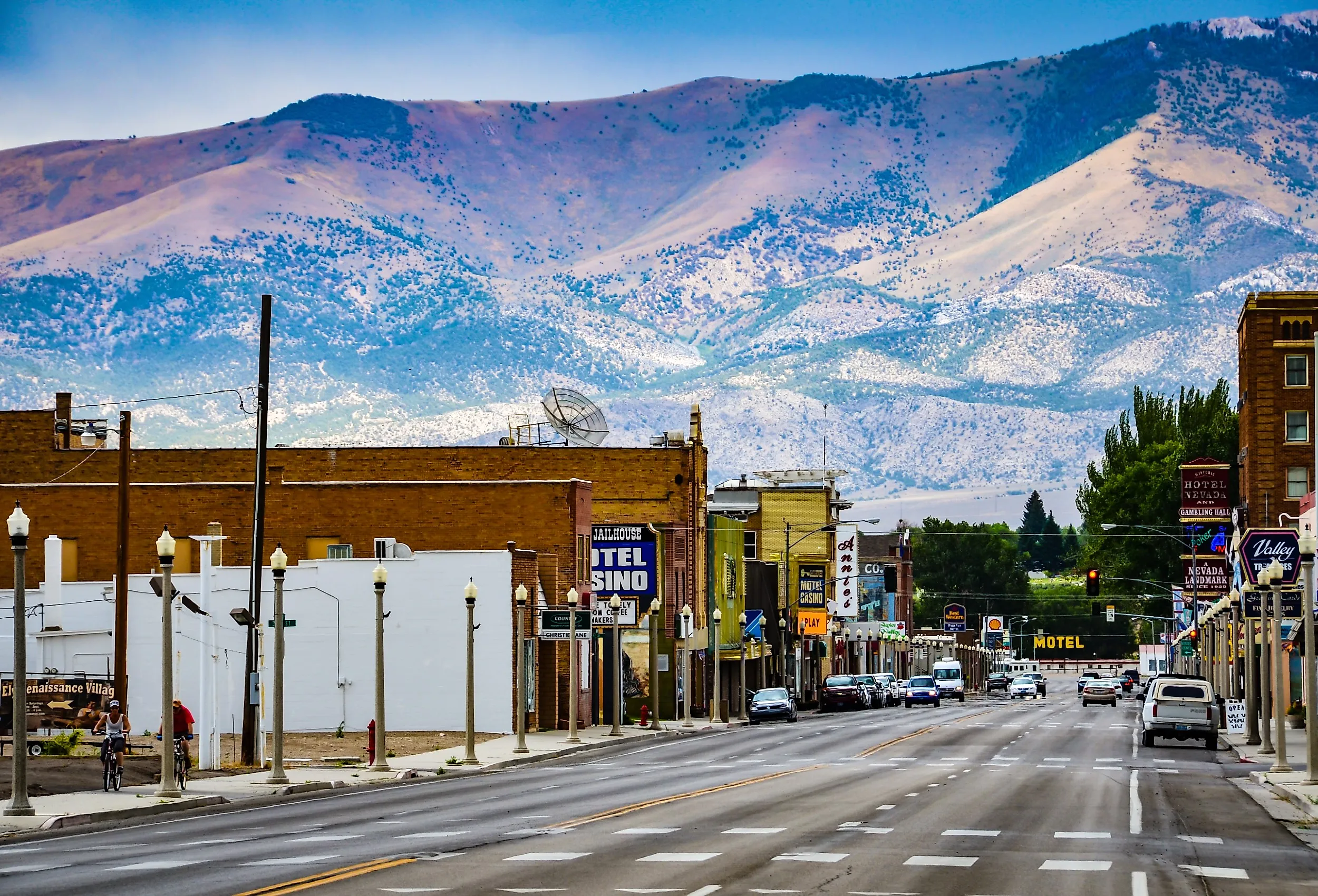
Ely is one of the most isolated small towns in Nevada, set in White Pine County at around 6,400 feet elevation along Highway 50, famously nicknamed "the loneliest road in America." That isolation is precisely the point. Ely offers exceptional access to wilderness, clean air, dramatic basin and range landscapes, and a genuine quietude that is increasingly rare. Great Basin National Park, located 55 miles east of Ely, protects a remarkable range of terrain from sagebrush foothills to the 13,063-foot summit of Wheeler Peak. The park features ancient bristlecone pine forests, alpine lakes, high-elevation hiking, and some of the darkest night skies in the continental United States. Closer to town, the Ely Ranger District of the Humboldt-Toiyabe National Forest manages roughly one million acres across nine designated wilderness areas in Lincoln, Nye, and White Pine counties, providing substantial backcountry hiking, hunting, and fishing opportunities. The Nevada Northern Railway Museum, meanwhile, preserves the historic East Ely railroad complex, including the 1907 depot, engine house, and rolling stock of the Nevada Northern Railway, one of the most intact early 20th-century shortline railroads in the country.
Elko

Elko is northeastern Nevada's largest town and its cultural center, a ranching and mining community with deep Basque heritage, a well-established arts scene, and immediate access to some of the most spectacular mountain terrain in the Great Basin. The Ruby Mountains rise dramatically from the valley floor just 30 miles south of town. According to the U.S. Forest Service, Lamoille Canyon, sometimes called "Nevada's Yosemite," winds through the heart of the Ruby Mountains beneath the 11,387-foot Ruby Dome, and the 33-mile Ruby Crest National Recreation Trail traverses the wilderness from Lamoille Canyon to Harrison Pass along some of the most scenic high country terrain in Nevada. The canyon is accessible via a paved road leading to multiple hiking trailheads and campgrounds. In town, the Western Folklife Center, a cultural organization headquartered in the 1913 Pioneer Hotel, hosts the National Cowboy Poetry Gathering each January, drawing thousands of visitors and celebrating the living traditions of the American ranching West. The Northeastern Nevada Museum, located on Idaho Street, preserves the region's natural and human history through exhibits on Native American life, pioneer trails, mining, ranching, Basque heritage, and local natural history. Elko has more services, healthcare options, and cultural activities than most Nevada towns of its size, making it one of the most practical retirement choices in the state.
Fallon

Fallon is a quiet agricultural town in the Lahontan Valley of north-central Nevada, known locally for its cantaloupe harvest and unhurried pace. It is also known to birders across the country for its extraordinary wildlife refuge complex. The Stillwater National Wildlife Refuge, managed by the U.S. Fish and Wildlife Service and located 17 miles northeast of town, encompasses more than 80,000 acres of freshwater and brackish marshes, alkaline beaches, and desert scrub. According to the FWS, more than 250 species of birds have been observed in the area, including tundra swans, canvasback ducks, American avocets, great blue herons, and long-billed dowitchers. Entrance to the refuge is free. The Lahontan State Recreation Area, about an hour away, centers on Lahontan Reservoir and offers water skiing, boating, fishing for walleye, bass, and catfish, and swimming along miles of reservoir shoreline. It is one of the most popular recreational lakes in northern Nevada. Fallon's downtown retains a genuine small town character, with the Churchill County Museum on South Maine Street preserving the region's archaeological history, including the Grimes Point petroglyph site, which the Bureau of Reclamation has documented as one of the largest accessible rock art sites in the United States, with hundreds of boulders bearing 6,000-year-old designs.
Winnemucca

Winnemucca sits along the Humboldt River in north-central Nevada, a crossroads community that grew up around the Central Pacific Railroad in the late 1800s. Its historic downtown still operates as a working town center rather than a curated tourist attraction, and the surrounding public lands offer some of the most accessible, no-fee recreation in the state. Water Canyon Recreation Area offers free overnight camping, picnics, hiking, biking, and limited ATV use, with a riparian corridor of cottonwood and aspen at the canyon bottom. The area is a popular local escape for nature walks, overlook views, and easy access to public-land recreation close to town. The Santa Rosa Ranger District of the Humboldt-Toiyabe National Forest manages over 280,000 acres of largely undiscovered mountain terrain, including the Santa Rosa-Paradise Peak Wilderness, which is accessible for hunting, fishing, and backcountry exploration, approximately 30 miles north of town. In town, the Humboldt Museum preserves the history of pioneer settlement, mining, and ranching in the region. Winnemucca also hosts Nevada's largest Ranch Hand Rodeo each spring, drawing working ranch teams from across the region to compete in events like saddle bronc riding, team branding, and ranch doctoring.
Gardnerville

Gardnerville is a small ranching community in Nevada's Carson Valley, tucked between the eastern Sierra Nevada foothills and the Great Basin desert at around 4,700 feet of elevation. It offers some of Nevada's most consistently mild four-season weather, a preserved main street, and exceptional outdoor access at every difficulty level. The Carson Ranger District of the Humboldt-Toiyabe National Forest encompasses over 400,000 acres in Nevada and California along the eastern Sierra front. The Fay-Luther Trailhead, located near Gardnerville on the California-Nevada state line, provides access to the Fay-Luther and Jobs Peak trail system, with routes popular among hikers and equestrian users who follow posted access rules where trails cross private-property segments. The East Fork of the Carson River, which runs through the Carson Valley, supports a 19-mile whitewater stretch that ends at the Carson River Takeout near Gardnerville, accessible for kayakers and rafters from the Humboldt-Toiyabe Forest Service takeout site. Lake Tahoe is approximately 35 minutes west, placing one of the most iconic alpine lakes in North America within easy day-trip range.
Pahrump

Pahrump is Nevada's largest unincorporated community, a sprawling high desert town in Nye County that has grown steadily as an affordable alternative to the Las Vegas metro while remaining distinctly its own place. At roughly 2,700 feet elevation with over 300 days of sunshine annually, it draws retirees looking for warm weather, low costs, and manageable scale without the congestion of the city. The Lovell Canyon Trailhead off State Highway 160 provides access to the Spring Mountains National Recreation Area. The SMNRA covers mountainous terrain in Clark and Nye counties, with trails for hikers and equestrians accessing the La Madre Mountain Wilderness and views from higher elevations across the Mojave Desert. According to the U.S. Forest Service, the recreation area draws over one million visitors annually and includes a ski area. Death Valley National Park, managed by the National Park Service, lies west of Pahrump, offering Badwater Basin, the lowest point in North America, dramatic salt flats, and the famous Mesquite Flat Sand Dunes. The town is also home to wine stops such as Charleston Peak Winery and Artesian Cellars, which take advantage of the valley's warm days and cool nights, a genuinely unexpected find in the Mojave.
The case for retiring in Nevada's smaller towns comes down to a straightforward set of advantages: low taxes, affordable real estate relative to neighboring states, abundant public land access, and communities that have held onto their identity without becoming tourist destinations. Ely offers Great Basin National Park, nine designated wilderness areas, and the kind of solitude that is genuinely difficult to find anywhere in the American West. Pahrump gives retirees warm, sunny weather, direct access to the Spring Mountains National Recreation Area, and Death Valley National Park as an easy day trip, all at a cost of living well below the national average. None of these towns asks for a major compromise. Each has its own blend of recreation, history, and community character that rewards the retirees who choose them deliberately, such as opportunities for outdoor activities, cultural events, and a sense of belonging within the community.