11 Best Places To Live In Northern California In 2026
Johnny Cash recorded a live album inside Folsom's state prison in 1968, and the town has been comfortable with that reputation ever since. It is also, according to U.S. News, the single best place to live in California. That is Northern California in one town: a little notorious, genuinely livable, and not especially bothered by the contradiction. The redwood coast, the Sierra foothills, Wine Country, and the suburbs ringing Sacramento barely feel like the same state, and the good places to live are just as scattered. The eleven below include bike-obsessed college towns and wine-country splurges. A tech salary helps in about half of them. Here is where to actually live.
Folsom

Folsom tops most of these lists, and U.S. News recently put it first in the entire state, on the strength of its schools, low crime, and the fact that a house here still costs less than the Bay Area equivalent. The Johnny Cash Trail nods to the prison up the road, crossing a bridge built to echo its Gothic stonework, and feeds into more than 50 miles of paved paths along the American River and Folsom Lake. The California International Marathon, a Boston qualifier, starts here every December. The town began life as a Gold Rush settlement called Granite City. It has aged well.
Roseville

Roseville runs on trains. The Union Pacific yard here, originally the Southern Pacific's and now named for executive J.R. Davis, is the largest rail yard on the West Coast, and the city grew up around it after the railroad moved its operations over from neighboring Rocklin in 1906. These days the bigger draw is retail. The Westfield Galleria is the largest mall in the Sacramento region, and Roseville posts some of the highest retail sales of any city in California. It is fast-growing, family-heavy Placer County, with the open space and schools to match. The trains just never left.
Rocklin

Rocklin is named for exactly what you think. The town sits on a granite belt, and its quarries cut the stone that built a good chunk of old Sacramento. One of those worked-out pits is now Quarry Park Adventures, where you can zip-line and rock-climb over the same granite that once shipped out by the trainload. Sierra College anchors the place, the schools rank among the strongest in the region, and the neighborhoods are quiet to the point of uneventful, which is the entire pitch. Bring a bike. Bring a helmet for the quarry.
Davis

Davis is the most aggressively bicycle-friendly town in America, and it has the hardware to prove it. It was the first U.S. city to paint official bike lanes, back in 1967, and it is home to the U.S. Bicycling Hall of Fame, which sits downtown like a perfectly normal thing for a town to have. More than 100 miles of bikeways thread a flat, compact grid, and roughly half of UC Davis students pedal to class. The university drives the rest, with deep benches in agriculture, veterinary medicine, and biotech. It sits fifteen minutes from Sacramento and feels nothing like it.
Santa Rosa

Charlie Brown was from Minnesota, but his creator was a Santa Rosa man. Charles Schulz drew Peanuts here for decades until his death in 2000, the local airport carries his name, and the Charles M. Schulz Museum holds the largest collection of original strips anywhere. The horticulturist Luther Burbank kept his famous experimental gardens here too, so the town has a genuine claim on American whimsy. As Sonoma County's largest city, it also brings the hospitals, the jobs, and the lakeside Spring Lake park with its swimming lagoon and trails. One caution worth stating plainly: the 2017 Tubbs Fire destroyed close to 3,000 homes inside the city, and wildfire remains a standing risk here.
Petaluma

Petaluma calls itself the Egg Capital of the World, and for once the title is earned. A local inventor built a workable egg incubator here in the 1870s, the white Leghorn hen did the rest, and by the 1920s the town supported the only drugstore in the country devoted entirely to chicken health. The egg empire faded, but Butter and Egg Days still fills downtown each spring with cow floats and a Cutest Little Chick contest. The Victorian main street is so intact that George Lucas filmed most of American Graffiti here. The Petaluma River runs straight through the middle of it. Hungry or nostalgic, the town delivers.
Walnut Creek

Walnut Creek is the East Bay's living room. Its downtown centers on Broadway Plaza, an open-air center with around 80 upscale stores, and the whole thing sits in the shadow of Mount Diablo, whose summit looms over the valley and pulls hikers up for the view. The schools are strong, the restaurants are plentiful, and a BART line runs straight into San Francisco for the days you want the city but not the parking. It is suburban in the way people mean when they use the word as a compliment. Come for the shopping. Stay for the mountain.
Pleasanton

Pleasanton has been racing horses since before the area was much of anything. The one-mile track at the Alameda County Fairgrounds was built in 1858 by the Bernal family and spent generations billed as the oldest of its kind in the country, until the racing operations finally wound down in 2025. The fairgrounds still host the Alameda County Fair every summer. Beyond the fair, Pleasanton is Tri-Valley tech money: quiet, safe, well-schooled, and not cheap. The parks and trails are everywhere, and the downtown is the kind people drive in for. The horses have left, but the town kept the good parts.
Palo Alto

Silicon Valley started in a Palo Alto garage. In 1938, Bill Hewlett and Dave Packard built an audio oscillator in a one-car garage on Addison Avenue, sold a batch to Disney to mix the sound for Fantasia, and more or less launched a region. The garage is a registered landmark now. Stanford sits next door, the tech headquarters stack up along the avenues, and the schools and home prices both rank near the top of anything in the country. For a break from the ambition, the Baylands Nature Preserve protects nearly 2,000 acres of tidal marsh, the largest undisturbed stretch left in the San Francisco Bay, plus some of the best birding on the coast. Bring money.
Healdsburg

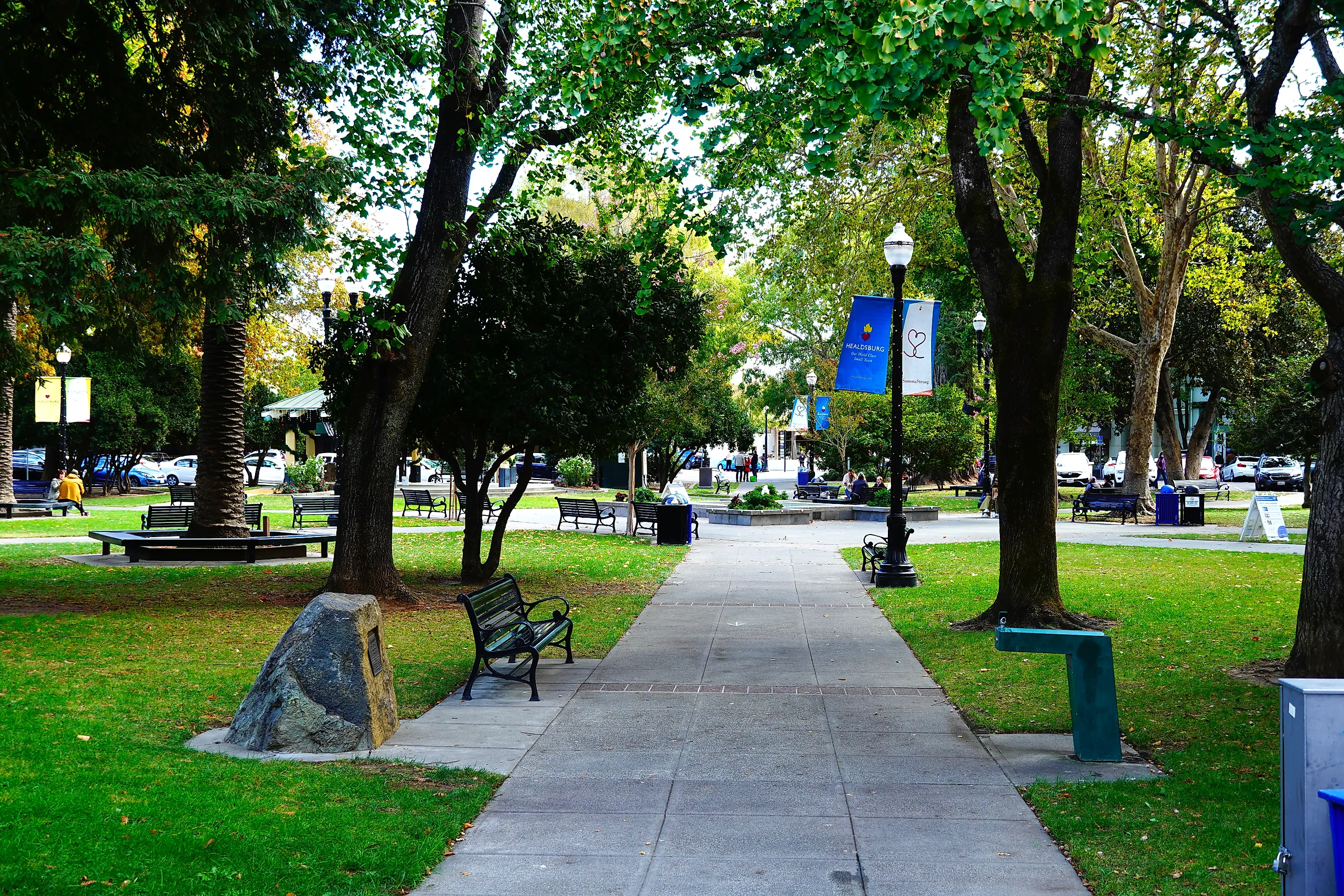
Healdsburg is the splurge. It sits at the center of Sonoma wine country, arranged around a tidy plaza and ringed by vineyards, and it is one of the most expensive towns in the county, with a median home price well north of a million dollars. This is not the affordable option, and it does not pretend to be. What you get for the money is genuinely rare: a farmers market locals rank among the region's best, dozens of tasting rooms within walking distance, and SingleThread, a three-Michelin-star restaurant whose tasting menu runs into the hundreds per person before a drop of wine. Live here if you can swing it. Visit if you cannot.
Elk Grove

Elk Grove barely existed as a city until 2000, then grew so fast it became one of the most diverse places in California, a suburb where the strip malls quietly serve food from a dozen countries. South of Sacramento, it has stayed comparatively affordable for the region, with a wide range of housing and steady work in healthcare, retail, and education. The Sky River Casino opened in 2022 and dropped a 100,000-square-foot gaming floor on the edge of town, for better or worse. Elk Grove Regional Park covers the family-weekend basics. It is the least flashy entry on this list, and that is most of the appeal.
Finding the Right Spot for You
The real divide here is not north versus south or coast versus foothills. It is cost. The Sacramento ring trades a little glamour for space, schools, and a mortgage you can actually carry. The Bay Area towns ask for a serious salary and hand back the jobs, the weather, and a short hop to the center of the tech universe. Wine country splits the difference and charges for the view. None of these is the wrong answer. The honest move is to pick the bank account first and the town second, then go stand in the place and see whether it feels like somewhere you would stay. Northern California is not short on options. It is short on cheap ones.