11 Best Cities To Retire In Australia
Australia’s best retirement cities make their case in their spectacular scenery. Hervey Bay watches more than 8,000 humpback whales settle offshore every winter. Geelong opens onto Corio Bay beside Cunningham Pier. Inland, Bendigo carries its gold-rush wealth into Victorian streets and a UNESCO gastronomy title. Toowoomba fills its parks for an 18-day flower carnival. Adelaide keeps the Central Market and Rundle Mall within a compact capital. Across these cities, there is something worthwhile within reach each morning.
Geelong, Victoria

Geelong is a port city on Corio Bay in Victoria, about 75 kilometers (47 miles) southwest of Melbourne, and it appeals to retirees for its flat waterfront and quiet coastal pace. UNESCO designated it a Creative City of Design in 2017. It remains the only Australian city to hold that title, and the galleries and street art in the center reflect it. The waterfront promenade takes in Cunningham Pier and the restored 1930s Eastern Beach sea baths. Along the way stand the Jan Mitchell bollards, about 100 painted timber figures spaced out over the shoreline. Retirees walk the pier deck and watch for dolphins in the bay. Geelong is also a sporting town, home to the Geelong Cats of the Australian Football League.
Adelaide, South Australia

Realestate.com.au put Adelaide’s median house price at $1.025 million in June 2026, about $579,000 below Sydney’s median, which may appeal to retirees priced out of Australia’s largest housing market. Colonel William Light's 1837 plan set a compact grid ringed by public parklands, and the short distances that plan created earned Adelaide its "20-minute city" label. Getting to a market, a clinic, or a concert rarely means a long trip.
The city is a UNESCO City of Music, with a live circuit that runs year-round and a festival calendar headlined by Adelaide Fringe each autumn. Adelaide Central Market has traded since 1869 and remains the place to shop for produce, cheese, and small goods under one roof. Rundle Mall handles the rest of the errands, and the Adelaide Hills wineries sit half an hour from the center.
Toowoomba, Queensland

Toowoomba sits roughly 700 meters (2,300 feet) up on the Great Dividing Range in Queensland, and that elevation is why retirees choose it over the coast: summers stay milder and nights cool off. It is the largest inland city in the state, so shops, specialists, and services are close at hand. Queens Park is at the center, with botanic gardens, wide lawns, and an avenue of camphor laurels.
The Japanese garden Ju Raku En opened in 1989 on the University of Southern Queensland campus and is one of the largest traditionally designed Japanese stroll gardens in Australia. More than 230 plant species surround its central lake, waterfalls, and red timber bridges. Toowoomba's Carnival of Flowers has run since 1949, making it the country's longest-running floral festival. The 2026 edition is the 77th, spanning 18 days across September into early October with a floral parade, food events, and open private gardens. Last year's carnival drew more than 500,000 people.
Coffs Harbour, New South Wales

Coffs Harbour is a mid-north-coast city in New South Wales, and it is often cited as having one of the most comfortable year-round climates in the country. Winters are mild, summers are warm without the tropical humidity further north, and the water stays swimmable most of the year. Jetty Beach and the harbor breakwall give retirees sheltered swimming and a flat walk with a view of the Solitary Islands.
The Big Banana Fun Park opened on the Pacific Highway in December 1964, when grower John Landi built a 13-meter concrete banana to pull passing cars into his roadside stall. It worked, and it launched the national fashion for oversized roadside sculpture. The park now runs waterslides, laser tag, ice skating, and plantation tours. Above town at Sealy Lookout, the Forest Sky Pier juts out over the escarpment for a long view down the coast and across the forests behind it.
Brisbane, Queensland
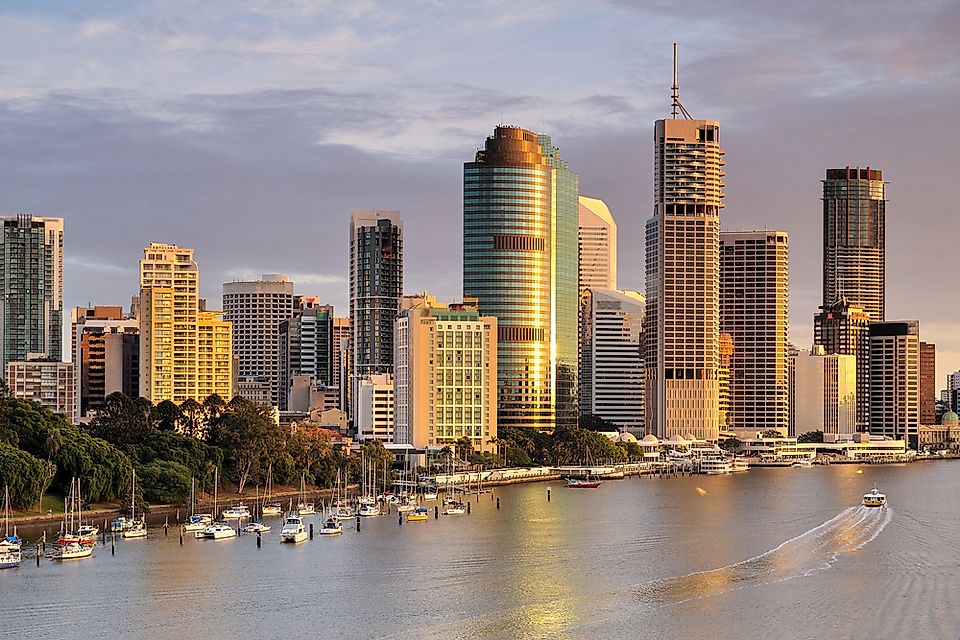
Queensland's capital suits retirees who want warm weather without giving up city services, and its public transport, parks, and outdoor recreation do the rest. The river runs through the middle of it. CityCat ferries double as commuter transport and sightseeing, and the Brisbane Riverwalk carries walkers and cyclists along a floating path at New Farm, rebuilt in 2014 after the 2011 flood destroyed the original.
Lone Pine Koala Sanctuary at Fig Tree Pocket opened in 1927 as the world's first koala sanctuary and still keeps one of the largest colonies anywhere. Across the river from the center, South Bank Parklands holds subtropical gardens and a riverside promenade. Its Streets Beach is a man-made lagoon with real sand and lifeguards, a few minutes' walk from the CBD.
Hobart, Tasmania

Founded in 1804, Hobart is the second-oldest city in the country. Retirees come for the cool climate, the slow pace, and a cultural scene larger than the place's size suggests. Hobart is a UNESCO City of Literature. The Museum of Old and New Art, known as MONA, is cut into a sandstone peninsula at Berriedale. It has run underground galleries, light and space installations, and a serious restaurant since 2011. Salamanca Place fills with market stalls every Saturday, and the Georgian sandstone warehouses behind them lead up into the early 19th-century cottages of Battery Point. Above all of it stands kunanyi, or Mount Wellington, at 1,271 meters (4,170 feet). Walking tracks and bike trails climb it, and a sealed road runs to the summit lookout.
Mandurah, Western Australia

Mandurah wraps around the Peel-Harvey estuary about 72 kilometers (45 miles) south of Perth, close enough for a hospital appointment or a family visit in the capital and far enough to cost less to live in. The Mandurah rail line covers that trip in roughly 50 minutes. Retirees come for the estuary as much as the ocean beaches: bottlenose dolphins live in it year-round, and the canals and inlets suit small boats and kayaks. The beaches around Halls Head take the swell off the coast.
The Creery Wetlands Nature Reserve sits on the estuary's edge as part of the Ramsar-listed Peel-Yalgorup wetland system, and the boardwalks there are a birdwatcher's dream. Dolphin Quay and the marina handle the cruises, the shops, and the seafood. Blue swimmer crabs are the local catch, celebrated at Crab Fest, a free waterfront festival usually held in March.
Bendigo, Victoria

Houses cost less in Bendigo than on the Victorian coast, and what the money buys is a walkable regional city built out of gold rush wealth. Gold turned up in 1851, and the Bendigo field became one of the richest in the world. That money paid for the churches, banks, and the 1897 Shamrock Hotel that still line Pall Mall. The Central Deborah Gold Mine worked the reef until 1954 and now runs underground tours down the shaft.
Bendigo became Australia's first UNESCO Creative City of Gastronomy in 2019, recognition for a regional food and wine scene that shows up in the cafes and the weekly produce markets. The Bendigo Art Gallery, founded in 1887, is one of the country's oldest regional galleries and brings in touring exhibitions most years. Lake Weeroona is a short walk from the center. A flat loop track circles it, with boats for hire and cafes at the water's edge.
Hervey Bay, Queensland

Hervey Bay has been a retirement destination for decades, and the reasons are plain: sheltered water, warm winters, and a flat coastal city built for walking. It lies about 290 kilometers (180 miles) north of Brisbane, a drive of roughly three and a half hours. The Charlton Esplanade runs about 16 kilometers (10 miles) along the bay between Point Vernon and Urangan, with a separated path for walkers and cyclists, and Urangan Pier reaches almost a kilometer out into the water.
The bay was named one of the world's first Whale Heritage Sites in 2019, alongside The Bluff in South Africa. More than 8,000 humpbacks break their southern migration here between July and November, resting in the protected water between the mainland and K'gari, which makes the season unusually long and the sightings unusually close. K'gari sits across the Great Sandy Strait. The largest sand island in the world and a World Heritage site, it draws visitors for four-wheel driving on 75 Mile Beach, freshwater lakes such as Lake McKenzie, and the tall satinay forest at Pile Valley and Central Station. Details on the surrounding national park are worth reading before a first trip. Back in town, WetSide Water Park is free to enter and busy with grandchildren all summer, and both Hervey Bay Hospital and St Stephen's cover local health needs.
Launceston, Tasmania

Launceston sits where the North Esk and South Esk rivers meet the Tamar in northern Tasmania, and retirees who want a cool temperate climate and a short walk to everything tend to stay. UNESCO named it a City of Gastronomy in 2021, and the Tamar Valley vineyards, the Saturday Harvest Market, and Festivale each February give the title something to stand on. The Queen Victoria Museum and Art Gallery is the largest museum in Australia outside a capital city, free to enter, and split between a 1891 gallery at Royal Park and the old railway workshops at Inveresk. The Guan Di Temple display at Royal Park came from the Chinese tin miners who worked in northeast Tasmania in the 19th century.
Cataract Gorge begins a 15-minute walk from the city center. River tracks and cafes ring the First Basin, crossed by the Alexandra Suspension Bridge and a scenic chairlift. City Park handles the gentler days, with a duck pond, chessboards, and the John Hart Conservatory. The glasshouse went up in 1932 on a bequest from the merchant it is named for, modeled on the conservatory in Melbourne's Fitzroy Gardens. Its seasonal displays still turn over through the year. The park's Japanese macaques, a gift from Launceston's Japanese sister city of Ikeda, have lived there since 1980.
Wollongong, New South Wales

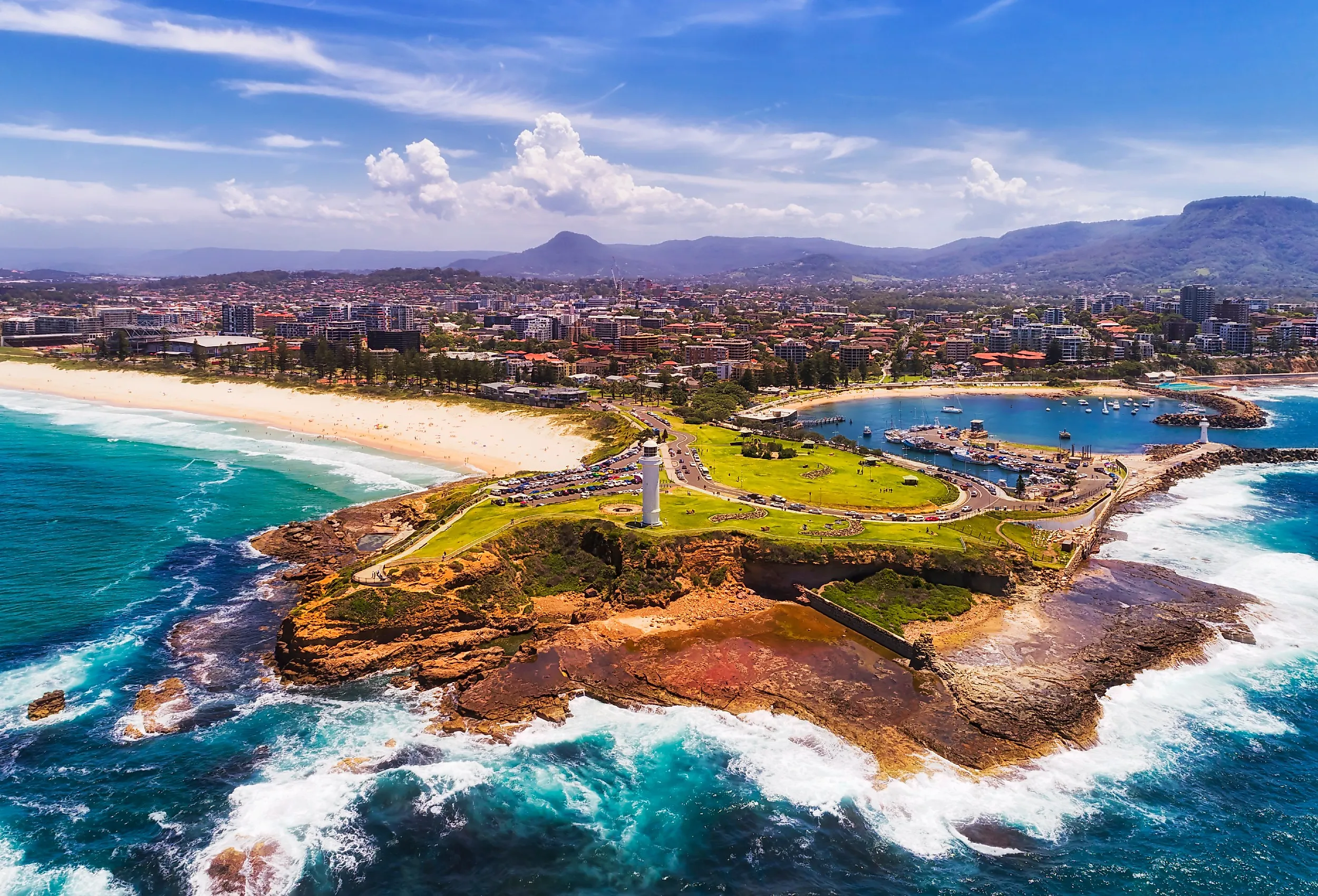
Wollongong is the third-largest city in New South Wales, 85 kilometers (53 miles) south of Sydney on a narrow strip between the Pacific Ocean and the Illawarra Escarpment. That geography puts beaches within walking distance of the center, rainforest tracks up the hill behind it, and the train line into Sydney within reach. Wollongong Hospital and its associated clinics serve the whole Illawarra region.
The Wollongong Botanic Garden covers 27 hectares of themed gardens, is free to visit, and offers mobility assistance for anyone who needs it. Wollongong Art Gallery runs exhibitions, tours, and workshops throughout the year. The Nan Tien Temple at Berkeley, billed as the largest Buddhist temple in the Southern Hemisphere, holds meditation sessions and monthly markets in its landscaped grounds and serves vegetarian meals. North of town, the Grand Pacific Drive crosses the Sea Cliff Bridge, a cantilevered span hung over the water at Coalcliff since 2005.
Choosing Between Them
Income tax in Australia is federal, so a move between these cities is primarily about housing prices and location. What varies by state is the paperwork for the move: stamp duty, land tax, council rates, and seniors card concessions are all set state by state. Climate is the other line item. The Queensland and northern New South Wales coast carries cyclone and flood exposure that Hobart, Launceston, and Bendigo do not, and insurance premiums up north reflect it. Weigh that against what each place is actually good at. Adelaide and Wollongong deliver capital-city services on smaller budgets, Hobart and Launceston trade warmth for cool air and a dense cultural calendar, and Bendigo and Toowoomba put the most houses within a short walk of a hospital and a garden. Retirees who want water at the door have Hervey Bay, Mandurah, Coffs Harbour, and Geelong to compare.