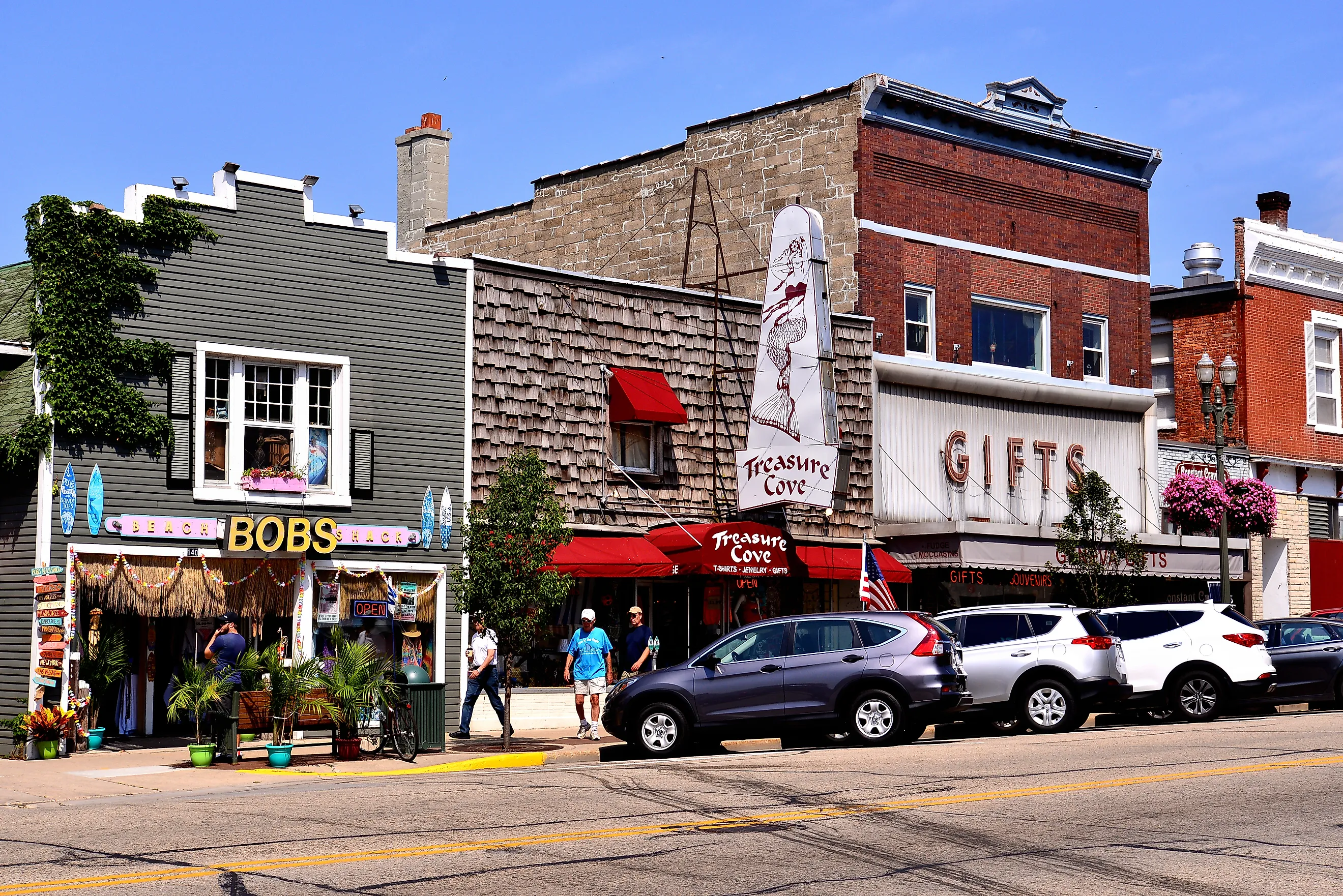
10 Stress-Free Wisconsin Towns For A Weekend Retreat
Two sunrises. That's the whole prescription. Wisconsin's most effective reset lives in towns built to idle: ferry ports looking out on Superior, mill villages stitched to creeks, a company town laid out like a garden. For this guide, the filter is simple. Ten places where the pace drops on contact, with walkable cores, water within reach, and stays that lower the volume rather than raise the scene.
This is not a scavenger hunt. It is a short list of specifics that do the work: named cafés where the line moves slowly, shoreline paths that empty out after the first bend, small museums with one room worth remembering, inns that respect quiet hours. The result is a weekend that does not balloon into logistics.
Bayfield

Bayfield is Wisconsin's northernmost city and its smallest, with a population just under 600, but it serves as the official gateway to the Apostle Islands, a chain of 21 Lake Superior islands known for sandstone sea caves and old-growth forests. What makes Bayfield unusual is that it is a port town with no commercial harbor. Sailboats, ferries, and kayaks dominate the waterfront instead, and time is marked by ferry schedules to Madeline Island rather than by traffic lights. The town also maintains a dense concentration of orchards and berry farms, a legacy of its glacial soil and cool lake breezes.

For views of Lake Superior and the islands, the Brownstone Trail begins downtown and follows an old railroad grade southward. Wild Rice Retreat, just outside the main village, offers overnight stays with sauna access and walking paths through birch groves. The Bayfield Maritime Museum houses original charts and shipwreck logs that connect the town to its shipping past.
Ephraim

Ephraim was founded in 1853 by Norwegian Moravians and stayed dry until 2016, when it lifted a 163-year ban on alcohol sales. The village's white clapboard buildings, including its churches, boathouses, and inns, are protected by ordinance, which gives Ephraim an architectural unity almost nowhere else in Door County has. It sits on a natural harbor at Eagle Harbor, and it remains one of the few places on this shoreline where no chain stores or fast food signs interrupt the view. Sunsets drop directly into the bay and are visible from nearly every point in town.
Wilson's Restaurant & Ice Cream Parlor, open since 1906, anchors the central strip and still uses its original soda fountain. Nearby, visitors can rent a kayak at South Shore Pier and paddle north toward Eagle Bluff. Anderson Dock, now a graffiti-covered art space, is lined with the names of boaters written in bold, sanctioned paint. The Ephraim Historical Foundation operates four preserved buildings, including the Pioneer Schoolhouse Museum and the Goodletson Cabin. Lodging at the Eagle Harbor Inn includes whirlpool suites and access to wooded footpaths behind the property. The shoreline road, Highway 42, is slow and narrow, bordered by lilacs in spring and maples in October.
Cedarburg

Cedarburg was built around a woolen mill, and much of that 19th-century industrial core still stands, repurposed rather than replaced. The Cedar Creek Settlement now fills the old mill complex with galleries, wine tasting rooms, and small shops. The town is bisected by Cedar Creek itself, which flows under limestone bridges and past a grist mill turned art museum. Unlike the exurban sprawl nearby, Cedarburg has preserved its historic district without resorting to pastiche. The stone buildings and narrow alleys are original, not recreated.

The Cedarburg Art Museum occupies a former home and rotates exhibits by regional painters and printmakers. Just down Washington Avenue, visitors stop at Amy's Candy Kitchen for house-made caramel apples and peanut brittle. The covered bridge north of town, built in 1876, is the last original covered bridge in Wisconsin and has been closed to vehicles since 1962, which is why the small riverside park around it is used more by locals than tourists. For overnight stays, the Washington House Inn offers restored brick rooms with working fireplaces and breakfast delivered to your door. Cedarburg does not pull much foot traffic from beyond Milwaukee, and that keeps the pace grounded.
Kohler

Kohler is not a town that grew naturally. It was laid out in 1912 by the Kohler Company as a planned garden community for its workers, with landscape work by the Olmsted Brothers firm. That foundation remains visible in every part of the village: tree-lined boulevards, brick façades, and walkable distances between work, lodging, and leisure. It is one of the few towns in the country built by a plumbing empire, and yet its identity is anchored in stillness rather than industry. Even the design center, where bath fixtures are displayed like sculpture, feels more like a gallery than a showroom.
The American Club, built in 1918 as a dormitory for immigrant workers, now operates as a luxury hotel with soaking tubs and library lounges. The Kohler Waters Spa across the courtyard offers hydrotherapy pools and a rooftop deck. Blackwolf Run, the company's original golf course, sits along the Sheboygan River and maintains two 18-hole layouts carved through glacial terrain. The Waelderhaus, a replica of an Austrian Bregenzerwald home completed in the early 1930s, hosts concerts and historical exhibits.
Elkhart Lake

Elkhart Lake began as a railroad resort in the 1800s and later became known for something unexpected: open-road racing. Between 1950 and 1952, sports cars tore through the village on public roads before Road America opened nearby as a permanent circuit in 1955. That tension between speed and stillness defines the town, with motorsports just beyond the trees and glass-calm water at the center. The lake itself is spring-fed and among the clearest in the state.
The Osthoff Resort borders the lake's north side and includes a private beach and L'ecole de la Maison, its cooking school. Just west of the resort, Off the Rail café serves sandwiches and coffee in a restored train depot. On weekends, Vintage Elkhart Lake caters to the motorsport crowd with racing memorabilia and European apparel. Fireman's Park, on the southern end, remains one of the few public swim spots and rarely fills past capacity. Walkers and cyclists use the route around the lake in the early morning, often before the noise from Road America kicks up.
Minocqua

Minocqua sits on a peninsula surrounded by water, nearly an island. It is part of Wisconsin's Lakeland region, which holds several thousand lakes across Oneida and Vilas counties, but Minocqua stands out for its geography: the town is wedged between Lake Minocqua and Lake Kawaguesaga, with water on nearly every side. It began as a logging camp in the late 1800s and evolved into a resort destination without losing its low-density feel. Traffic moves slowly. Canoes pass behind buildings. Loons call in the early morning.

The Bearskin State Trail starts just behind the town's main strip and runs roughly 18 miles along an old railroad bed, crossed by trestle bridges and lined with jack pine. Wildwood Wildlife Park, south of town, includes giraffe feeding decks and a safari tram through deer and bison enclosures. The Island Café on Oneida Street serves lemon-ricotta pancakes and Greek plates under ceiling fans and handwritten menus. Minocqua Brewing Company, at 329 Front Street, produces beers named after regional politics and operates out of a renovated supper club. The Waters of Minocqua offers lodge-style rooms and an indoor waterpark, though most people come for the lake.
New Glarus

New Glarus was founded in 1845 by Swiss immigrants who arrived with no land and no safety net. The town was established with assistance from the Canton of Glarus itself, and it has maintained that relationship ever since. Swiss flags hang from eaves, street signs are bilingual, and yodeling festivals still draw locals. Unlike towns that perform heritage, New Glarus never let go of it. It is not stylized; it is continuous. That continuity keeps the pace fixed and unhurried, especially outside festival weekends.

The New Glarus Brewing Company sits on a hill above town and operates without a national distributor. Spotted Cow is sold only in Wisconsin, and the brewery's self-guided tour winds through copper kettles and barrel-aging cellars. The Swiss Historical Village, made up of 14 buildings including a blacksmith shop and a one-room schoolhouse, documents the town's founding. Puempel's Olde Tavern, established in 1893, serves beer in a mural-covered barroom and often closes early. The Sugar River State Trail cuts through town and runs 24 miles along an old railroad corridor, passing dairy farms and trout streams. Chalet Landhaus Inn, built in the Bernese style, includes a pool, sauna, and full breakfast.
Port Washington

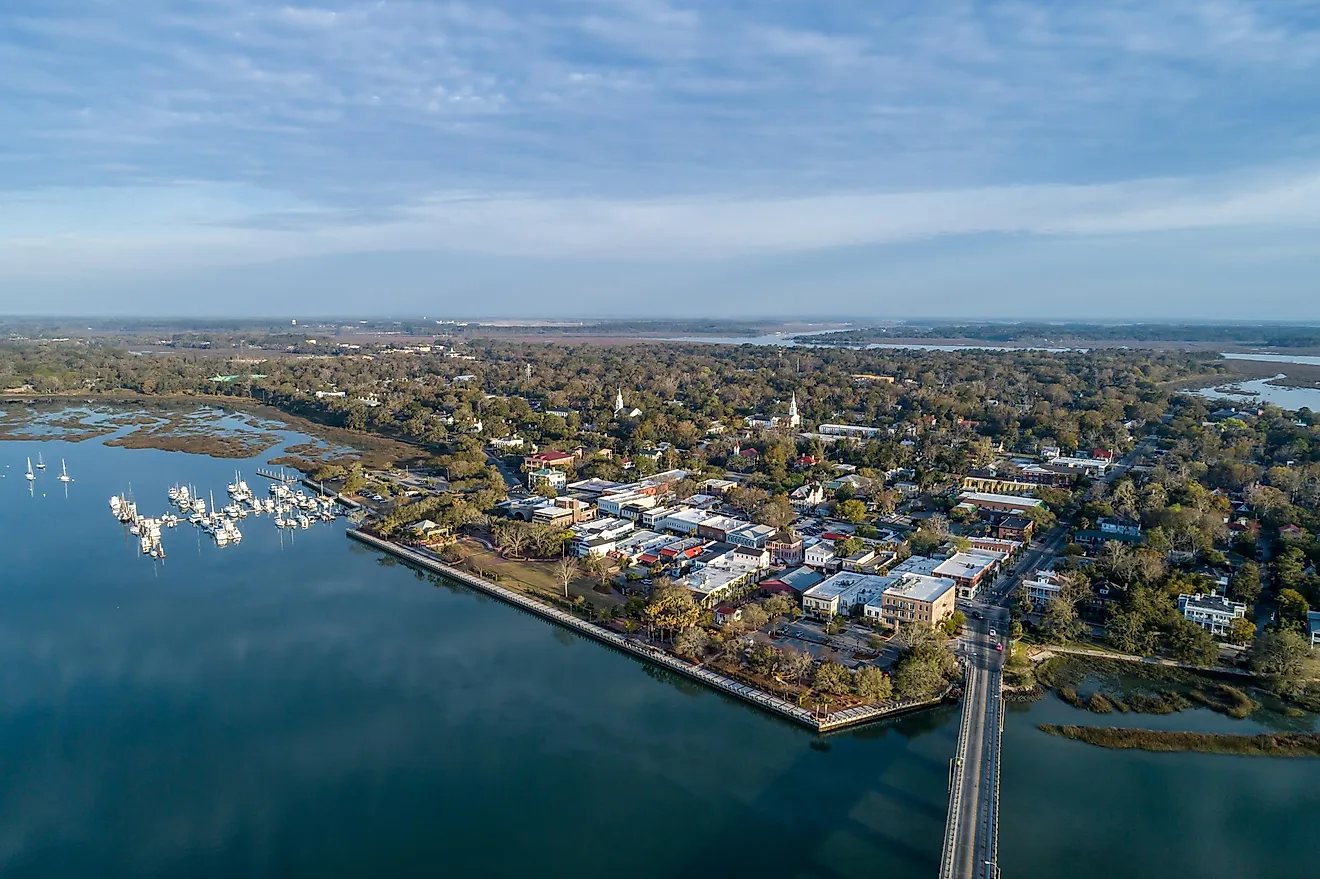
Port Washington is built into the curve of a Lake Michigan inlet and has kept a working harbor where most towns shifted entirely toward recreation. The downtown rises directly from the marina, with 19th-century brick buildings facing the water. It is one of the few places in Wisconsin where commercial fishing boats dock beside kayaks. A coal-fired power plant once dominated the skyline, but it converted to natural gas in the mid-2000s, and the tallest structure now is St. Mary's steeple. The water shapes everything here: the pace, the weather, the quiet.

The 1860 Light Station, on the bluff above the lake, offers tours of the keeper's quarters and views out to the horizon. The Ozaukee Interurban Trail runs through town and connects to Cedarburg, offering uninterrupted biking along an old electric rail line. Dockside Deli serves smoked whitefish and house-made soups with tables facing the boat slips. On clear nights, the lake falls completely still.
Baraboo

Baraboo was once the winter headquarters of the Ringling Bros. Circus, a fact that still shapes the town's identity. Unlike other towns that converted historical relics into facades, Baraboo has integrated its past into everyday function. The former train depot is now a visitor center. A preserved circus wagon repair building sits beside a working arts space. The Baraboo Hills give the area an uneven topography of escarpments, ravines, and kettle ponds, and that terrain sets it apart from the flat agricultural grid to the east.

Devil's Lake State Park lies just south of town, with quartzite bluffs rising about 500 feet above water that glaciers trapped by damming both ends of the gorge with moraines. The Al. Ringling Theatre, opened in 1915, remains in use and retains original murals and a pipe organ. Balanced Rock Winery, just off Highway 136, offers pours beside vineyard rows with clear views of the Baraboo Range. Coffee Bean Connection on Oak Street roasts in-house and serves from a small bar with no indoor seating, so coffee is taken outside or to go. The Ringling House Bed & Breakfast includes six guest rooms inside the original family home.
Lake Geneva

Lake Geneva grew from 19th-century Chicago's escape hatch into one of Wisconsin's most architecturally distinct lakeside towns. After the Great Chicago Fire of 1871, industrialists built opulent summer homes here, many still intact and viewable along the 21-mile Geneva Lake Shore Path, which stays public because it predates the estates it crosses. The town has never shed its air of retreat. Where Door County has coastline and the Dells have volume, Lake Geneva trades spectacle for equilibrium: boaters drift past Victorian boathouses, and the downtown hums quietly with shops rather than crowds.

Simple Café serves from-scratch breakfasts and seasonal lunches in a bright room that fills on weekend mornings. On the opposite end of town, The Baker House offers Victorian-era cocktails on a lake-facing lawn with armchairs instead of barstools. Big Foot Beach State Park lies just south, and it is small, shaded, and often overlooked in favor of larger parks. For lodging, the Maxwell Mansion, built in 1856, remains one of the town's most atmospheric stays: part boutique inn, part speakeasy, with preserved antique interiors and a cocktail bar in the former stables.
Making Two Days Count
Two-day resets work here because the ingredients are precise: water within walking distance, compact main streets, and lodgings that enforce quiet without signage. Lake paths, berry orchards, covered bridges, working harbors, and bluff-top vistas create variety without urgency. The geography does the sorting for you. Bayfield and Minocqua sit in the far north and take most of a day to reach from the southern half of the state, while Cedarburg, Port Washington, and Lake Geneva are inside an hour of Milwaukee. Coffee is local, museums are small, and nights end early. Choose any town on this list and the pattern repeats: arrival, calm, deep sleep, departure.