10 Stress-Free Utah Towns For A Weekend Retreat
Some weekends earn their rest by being simple. Utah has a number of towns where a Saturday morning can stretch into something quiet rather than something optimized. The ten ahead each give a visitor enough to do without making it feel like an itinerary. Each one is built around one or two things worth showing up for. Take a folding chair or a coffee or both. Most of the rest happens at the pace of the light.
Torrey

Torrey sits at the western edge of Capitol Reef National Park and was one of the first towns in Utah certified as an International Dark Sky Community. When the streetlights came down, the milky way came up, and the change was sharp enough that people drove out for it. The town itself is roughly half a mile of main street with a few inns, a cidery, and high country immediately above.
Etta Place Cidery on Main works through small-batch ciders and meads pressed from regional fruit, and it is named for Butch Cassidy's partner, which is the kind of detail Torrey traffics in. Panorama Point, about eight miles into the park, is the cleanest view of the Waterpocket Fold, a roughly 100-mile geological wrinkle that is Capitol Reef's distinguishing feature. South of town, Boulder Mountain rises above 11,000 feet with high lakes for trout fishing and air thin enough to slow you down.
Kanab

Kanab earned the nickname Little Hollywood honestly. Through the mid-twentieth century, more than a hundred Western films and television episodes shot in the canyons immediately around town, and some of those sets are still walkable. The Little Hollywood Movie Museum on Center Street holds the props and signage that survived.
Five miles north, Best Friends Animal Sanctuary in Angel Canyon is the country's largest no-kill animal sanctuary, with roughly 1,600 dogs, cats, horses, pigs, and rabbits on the property at any time. The sanctuary runs guided tours and same-day volunteer shifts, including the one where you walk a shelter dog along the red rock back roads. The Best Friends Roadhouse in town accepts the dog in your car. The Kanab Sand Caves, a short drive north on US-89, are man-made (someone quarried sand here decades ago) and the resulting hollow makes for a gentle scramble. About 22 miles west, Coral Pink Sand Dunes State Park has the only major sand dunes on the Colorado Plateau.
Huntsville

Huntsville is a small town in the Ogden Valley, set against the Wasatch Range with Pineview Reservoir just to the west. The valley empties out fast when the ski season ends, which is the point. From town the mountains close in on three sides and the water sits within walking distance.
The Shooting Star Saloon, on the corner across from the church, has been continuously serving drinks since 1879, which makes it the oldest saloon in Utah. The walls are taxidermy, including a stuffed St. Bernard head that no one explains. The Star Burger is two patties, two cheeses, and a knokwurst. Compass Rose Lodge a few blocks away keeps a private observatory called HALO on the property, which is open to guests and dramatic on dark winter nights. Cemetery Point Beach on Pineview Reservoir is the place to read for an afternoon when the temperature climbs.
Cedar City

Cedar City is the home of the Utah Shakespeare Festival, which won the Regional Theatre Tony Award in 2000 and has been running on the Southern Utah University campus since 1962. The festival runs from June through October and stages eight productions a year, plus the free outdoor Greenshows on the lawn before each evening performance. SUU dorms convert to summer housing during festival weeks, which is how a Shakespeare weekend stays affordable.
Kanarraville Falls is the local hike that earns the drive. The trail follows a creek into a slot canyon and tops out at a small waterfall with built-in ladders bolted into the rock. The Frontier Homestead State Park Museum, on the north end of town, keeps pioneer-era cabins, horse-drawn vehicles, and a working replica of the iron-mining furnace that gave Iron County its name.
Helper

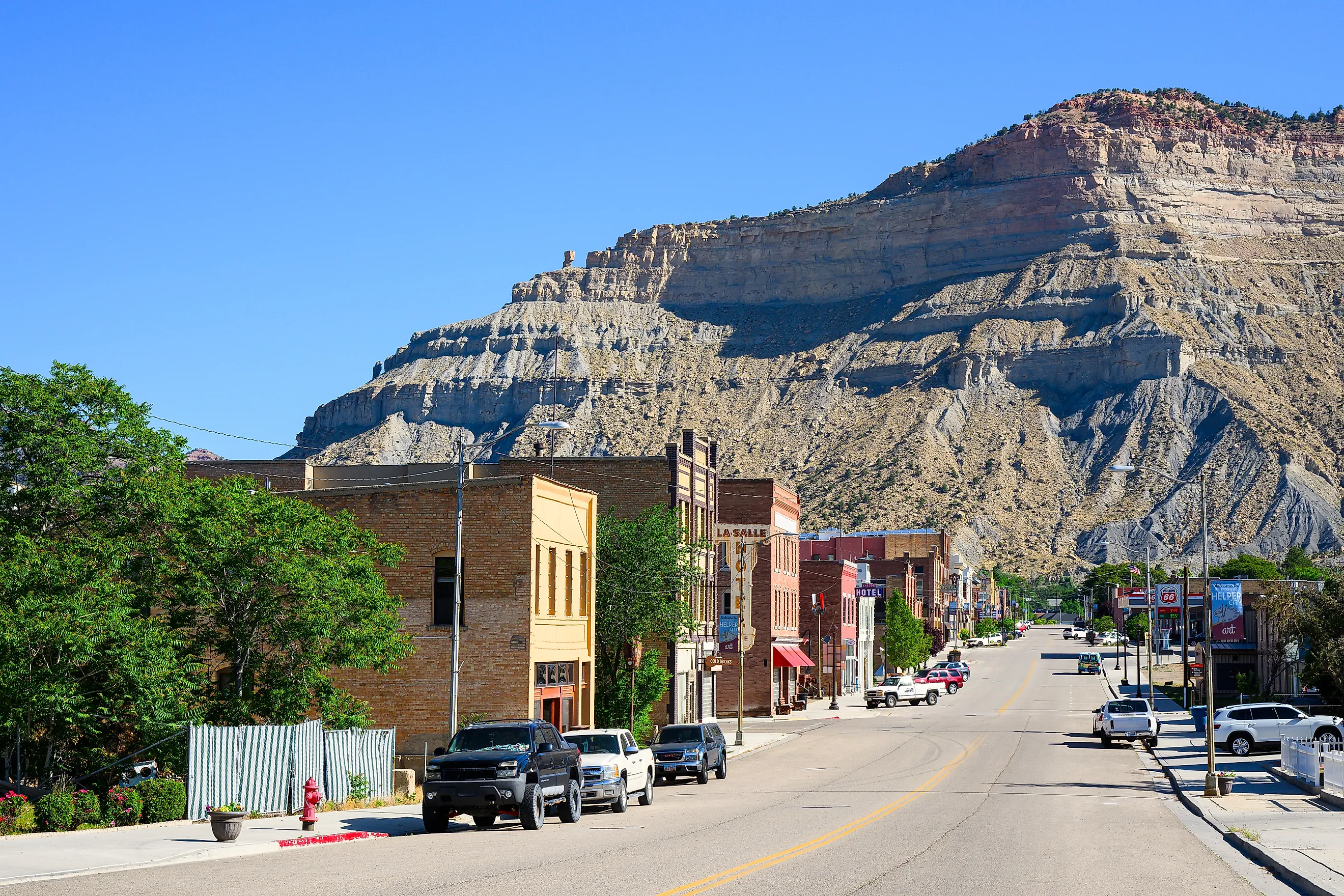
Helper got its name from the helper engines that the railroad coupled on at the depot to push freight trains up the steep grade out of Price Canyon. The town does not deny its origin. Main Street still reads as a railroad-and-coal town, with brick storefronts from the early twentieth century now holding art galleries and cafes instead of company stores. The conversion has been quiet and gradual rather than performed for visitors.
The Western Mining and Railroad Museum on Main holds the coal-camp story in detail, including a recreated mine adit you can walk into, town-history exhibits, and rooms full of rail and ranch artifacts. The Helper Riverwalk runs along the Price River for about a mile, with cottonwoods over the path and a bench every so often that has its own view of the river. The galleries up and down Main host First Friday art walks in the warmer months.
Vernal

Vernal calls itself Dinosaurland and has the pink dinosaur statue downtown to prove the point. The marketing follows the geology. The Morrison Formation runs through the surrounding Uinta Basin and has produced one of the densest concentrations of Jurassic dinosaur fossils on the continent.
The Utah Field House of Natural History State Park Museum in town is the polite place to start, with the Dinosaur Garden out back holding life-size sculptures keyed to the local fossil record. Dinosaur National Monument sits about twenty minutes northeast, and the Quarry Exhibit Hall there preserves an in-situ fossil wall, where roughly 1,500 bones from Camarasaurus, Allosaurus, Stegosaurus, and Apatosaurus sit in the same sandstone where they were buried. Steinaker Reservoir is about five minutes north of downtown for an afternoon walk along the water without anyone asking what the hurry is.
St. George

St. George sits in the southwest corner of Utah and was settled in 1861 by Mormon families sent to grow cotton in the warm climate, which is how the area picked up the nickname Utah's Dixie. The cotton experiment did not last past the Civil War, but the name and the warm winters did.
Snow Canyon State Park, just north of town, is the closest red-rock landscape, with a paved scenic road, lava tubes, petrified dunes, and the kind of light that brings the cliffs forward in the late afternoon. Red Hills Desert Garden uses about 5,000 plants from arid regions of the world to demonstrate water-wise landscaping, on paved paths walkable in any weather. Pioneer Park, just east of downtown, is roughly 50 acres of red sandstone boulders weathered into a natural playground that children climb without any encouragement.
Moab

Moab is the gateway to both Arches National Park and Canyonlands National Park, which is most of the reason a stress-free weekend is harder to engineer here than in the rest of the list. But the way to do it is to pick one big thing, do it slowly, and leave the rest for next time.
Highway 128 leaves Moab and follows the Colorado River along the base of red sandstone cliffs for about 44 miles to Interstate 70. The byway has pull-outs every mile or so, and the only real schedule is the light. Dead Horse Point State Park is twenty miles outside of town and looks roughly 2,000 feet straight down to a gooseneck bend of the Colorado, with the Canyonlands maze unfolding beyond. Moab Springs Ranch is a quiet base on the north edge of town, with shaded cabins, a heated pool, and no requirement that anyone leave the property.
Midway

Midway sits in the Heber Valley, an hour southeast of Salt Lake City, settled in the 1860s by Swiss and German pioneers who said the Wasatch Back looked like the country they had left. The architecture downtown still leans Swiss, with brown timber, white plaster, and steep gables on the older buildings. Midway Town Hall, dedicated in 1941 and built as the community recreation center, fronts the main square and still hosts the town's events.
The Homestead Crater on the north edge of town is a 55-foot beehive of limestone built up by mineral deposits over 10,000 years, with a geothermal pool inside that holds at 90 to 96 degrees year-round. It is the only warm-water scuba diving site in the continental United States, but most visitors come for the float, and paddleboard yoga runs through the colder months. Swiss Days fills the town square the Friday and Saturday before Labor Day, with the parade Saturday morning and the food booths running both days. Wasatch Mountain State Park starts at the edge of town with a paved bike path and an eighteen-hole golf course.
Monticello

Monticello sits at the foot of the Abajo Mountains in southeastern Utah, well off the highway most travelers take through the region. At about 7,000 feet of elevation, the town stays cool in summer when the rest of the canyon country bakes, which is why the local Forest Service rangers describe Monticello to visiting hikers as the air conditioning. The downtown is two blocks, the courthouse is brick, and the welcome center is friendly in a way that does not feel performed.
The Frontier Museum at the welcome center keeps the local pioneer-history exhibits, with the centerpiece being the Big 4 tractor, a 1912 Emerson-Brantingham steam-style machine that worked the dry-farm wheat fields outside town. Loyd's Lake, just west of downtown, has a 2.5-mile loop trail around the water that fills with locals in the long evenings. The Hideout Golf Club, on the south end of town, runs a mountain-shaded eighteen-hole course at the foot of the Abajos.
Ten Utah Weekends That Slow Down
The pattern that runs through these ten is that the weekend rests on one good thing each. Torrey has the dark sky. Kanab has the canyon and the animals. Cedar City has the festival. Moab has the rivers and the parks. The others have their own version of the same arrangement: pick one main attraction, plan around it loosely, and let the light do the rest of the work.