10 Prettiest Downtown Strips In Mississippi
Mississippi’s small towns may stir memories of the Civil War, the blues and Southern hospitality. Antebellum architecture and modern art hubs may contrast one another on the same block. But all these things go together like biscuits and gravy. Towns like Ocean Springs are tied to the Gulf and Oxford runs on its university literary hubs. Whether drawn to Port Gibson’s “too beautiful to burn” label or to Greenwood’s Delta views, these places hold downtown strips that reward repeat visits.
Washington Avenue (Ocean Springs)

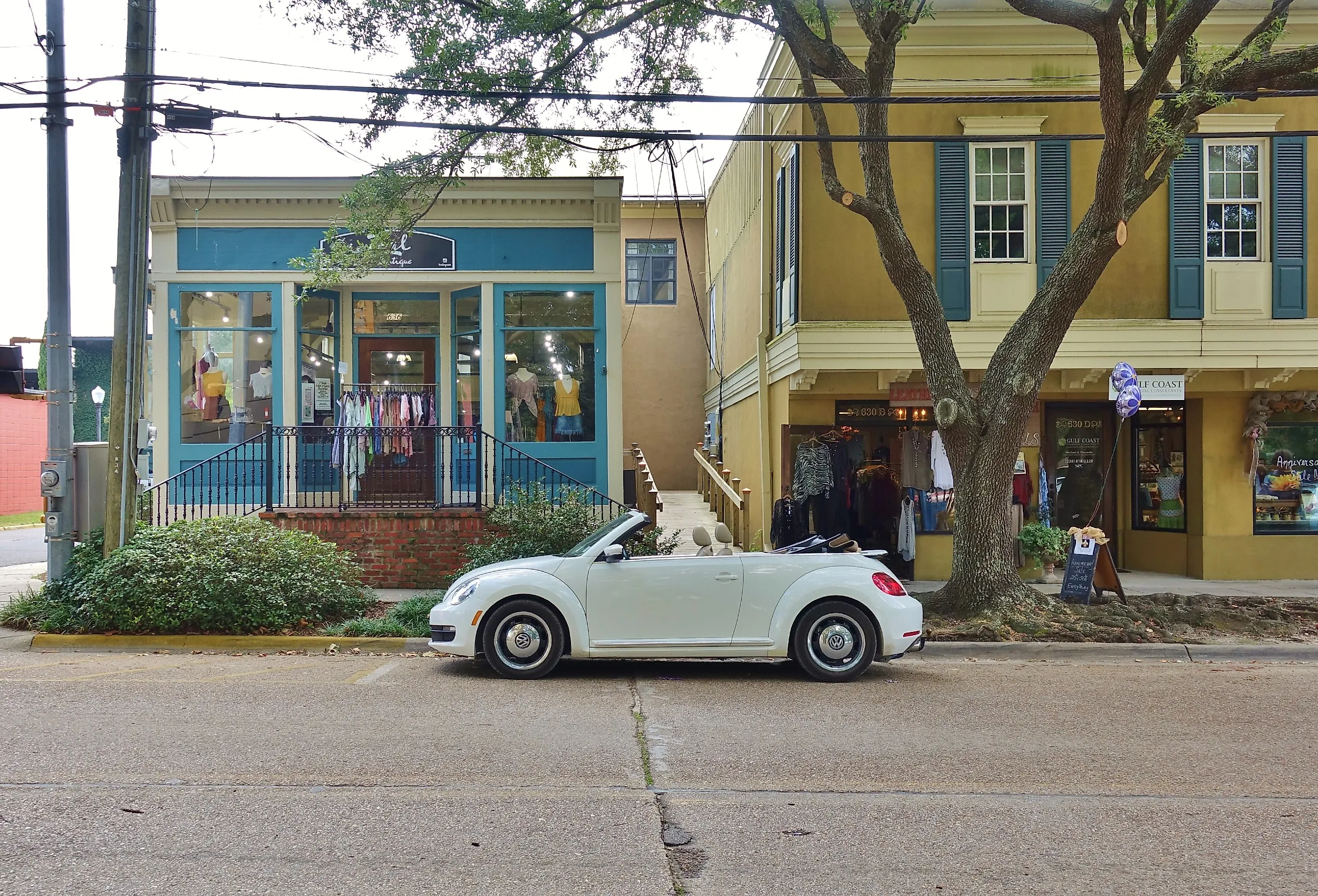
Walking along Ocean Springs’ Washington Avenue may give you the impression that you have stumbled onto a movie set. In the heart of downtown, the clocktower at the intersection of Washington Avenue and Government Street feels like a beacon alongside the red brick buildings and shops nearby. Southern live oaks crest the edges of the street, some looming over and providing a gently drooping canopy over the road.
During the holiday seasons, the trees are often adorned with lights, giving an ethereal festivity to the neighborhood. Art galleries, restaurants, and other independent businesses line the corridor of Washington Avenue, ensuring that there is never a want for activity. The Walter Anderson Museum of Art reinforces the town’s longstanding connection to regional art. Nearby streets extend toward the waterfront and marina.
The Square (Oxford)

As the cultural and economic hub of the city, the Square boasts a wide array of shops, restaurants, and boutiques. Situated around the stunning Lafayette County Courthouse (rebuilt in 1872 after its predecessor burned down in 1864), the Square is home to the South’s oldest department store, Neilson’s. Everything in Oxford seems to stem from this downtown heart, branching out in all directions.
Oxford’s downtown is among the most active in Mississippi, unlike quieter cores in other parts of the state. Oxford leans into its steady yet lively student community from the University of Mississippi. This is reflected in shops that have become staple institutions for the community, such as Square Books and North Lamar’s Snackbar.
Old Town (Bay St. Louis)

Bay St. Louis combines coastal Gulf geography with a compact downtown focused on the arts. Main Street runs parallel to the shoreline, with low-rise buildings that house galleries, cafés, and small shops. The L&N Train Depot has been repurposed as a cultural site, reflecting the town’s shift from transportation hub to creative destination.
Main Street has a quieter and more residential feel, but do not let that fool you. Every second Saturday of the month brings out the best of Bay St. Louis for special events, live music, and festive shopping opportunities. The downtown core may be small, but the community spirit keeps the party going long after sundown.
Main Street (Starkville)

As Mississippi’s university town, Starkville blends historic depth with collegiate energy. At the heart of this community lies downtown Starkville, where the atmosphere is driven by its deep ties to Mississippi State University. The city merges its role as a county seat with a thriving, modern culture driven by students, faculty, and lifelong residents alike.
Downtown and nearby districts host events that draw crowds year-round, from unTapped Downtown and Downtown at Sundown to the Starkville Derby, billed as the World’s Largest Weenie Dog Race. Between these festivities, visitors can explore the nearby Cotton District, North America’s oldest new urbanist community, which connects the downtown core to the university campus.
Cotton Row (Greenwood)

Home to an immersive historic walking trail, Greenwood’s Cotton Row leans away from the party side and into its historic roots. Cotton Row is closely tied to the Yazoo River, reflecting the town’s historical role in the Delta’s cotton economy. The buildings here are more utilitarian in design, with former warehouse and loading areas adapted for modern use. This austere sense of beauty lends a certain timeless quality to the whole district.
Plenty of boutique shops such as the Mississippi Gift Company and Delta Boutique & Gifts can be found alongside local restaurants while following the Mississippi Blues Trail markers around the former “cotton capital of the world.” Although less tourism-focused than coastal towns, Greenwood’s downtown emphasizes its historical identity.
Courthouse Square (Canton)

Canton’s downtown is organized around the Madison County Courthouse, a building in the National Register of Historic Places with notable Greek Revival architecture. Twice annually, the nationally famous Canton Flea Market Arts & Crafts Show is hosted here, bringing crowds of up to 100,000 both locally and from across the nation. As one of the more traditional courthouse squares of Mississippi, the surrounding downtown includes a mix of historic storefronts, some of which retain painted signage from days of yore, reflecting the town’s well-kept history.
Commerce Street (Aberdeen)

One cannot visit Aberdeen without admiring The Magnolias, a prime example of the unique antebellum architecture for which the South is famous. Built as a residence in the 1850s, this striking structure is now open to the public and serves as a venue for special events like weddings.
Far from the bustle of university towns, Aberdeen’s downtown streets offer a quieter, more relaxed environment that feels like a step back in time. The area boasts its wealth of small-town character, where rows of historic buildings and lush, tree-lined streets create a serene and visually striking atmosphere. It is a fine setting for an afternoon stroll, where one may linger to appreciate the intricate details of the town’s preserved historical architecture. Beyond the grand homes, the deliberate preservation of the city’s aesthetic blends Southern grace with its peaceful environment.
Main Street (Senatobia)

Senatobia’s downtown is smaller and more modernized. While historic structures remain, many buildings have been adapted for modern retail and office space without sacrificing their aesthetic character. Visitors to the heart of Senatobia should begin at the Tate County Courthouse. As one of the oldest continuously used courthouses in Mississippi, this historic landmark serves as a cornerstone of the community and houses the Tate County Heritage Museum, where local history, from early rail development to the unique stories of the region, comes to life.
For a bit of nature, Gabbert Park offers a green space well-suited to a quiet afternoon walk. Cultural enthusiasts will find that the Northwest Mississippi Community College campus frequently energizes the downtown scene with art exhibits and performances. The Sycamore Arts Council continues to beautify the area through public mural projects.
Under-the-Hill District (Natchez)

Positioned along the Mississippi River, below the bluffs that give the Under-the-Hill Historic District its name, this area forms a distinct and historic part of Natchez. Once a lively riverfront hub in Natchez’s early history, the Under-the-Hill District now features a mix of restaurants, shops, and bars, including the historic Under-the-Hill Saloon. Natchez hosts a wide variety of events that capitalize on the downtown’s compact layout. The Downtown Natchez Farmers Market brings out local crowds on Saturdays, with 2026 listings showing hours from 8:30 a.m. to noon on North Broadway Street.
Market Street (Port Gibson)

Port Gibson’s downtown is notable for its high level of preservation and its association with Civil War history. Ulysses S. Grant’s reported remark that the town was “too beautiful to burn” is often cited in connection with its survival. The downtown area remains largely untouched, with mid-19th-century buildings lining the main streets, offering a rare window into the antebellum South.
A stroll down historic Church Street reveals the town’s architectural legacy, featuring numerous historic churches, including the First Presbyterian Church, easily identified by the gold hand atop its steeple pointing toward heaven. Visitors can also explore the Windsor Ruins, where the towering Corinthian columns of a once-magnificent mansion stand as a haunting symbol of a bygone era.
For those interested in military history, the Grand Gulf Military Park offers an immersive look into the past with restored buildings, hiking trails, and observation towers. Whether you are admiring the quiet beauty of the town’s well-preserved streets or visiting sites like the Wintergreen Cemetery, Port Gibson invites travelers to slow down and connect with the profound history embedded in its landscape.
Prettiest Downtown Strips in ’The Sip’
Mississippi’s small towns, diverse as they are, share the same deep-rooted Southern character and history, yet these legacy elements are merely the starting point for their beauty. Across the state, architectural eras collide as antebellum structures and Greek Revival buildings fit together with a harmonious ease.
Towns like Ocean Springs draw inspiration from their coastal geography to foster thriving art cultures. Others leverage the intellectual energy of their higher-ed institutions. Throughout, the collective landscape reveals a compelling duality. Some districts prioritize active commercial growth, while others such as Aberdeen and Port Gibson remain dedicated to the quiet art of preservation.