10 Of The Friendliest Towns In Spain
Friendliness is difficult to measure, but some towns make social connection especially easy. In Spain, that often means plazas where neighbors linger over coffee and markets that double as gathering places. It can also mean festivals that fill entire streets and food traditions built around sharing rather than rushing. The following towns all stand out for the number of places and activities that naturally bring people together. Whether Basque pintxos bars, Galician wine festivals, or Andalusian theater, these communities give visitors plenty of opportunities to experience local life rather than simply observe it.
Hondarribia

Hondarribia makes it easy to move between sightseeing and social life. The fortified old quarter is filled with cobbled streets, historic buildings, and small squares, but the liveliest atmosphere is often found in La Marina, where brightly painted former fishermen's houses now line streets filled with pintxos bars and terraces.
A relaxed visit can include walking the old walls, stopping for pintxos along Calle San Pedro, and continuing toward the harbor or Hondarribia Beach. The town's calendar also includes traditional festivals and public celebrations that draw residents into shared spaces throughout the year. With fewer than 20,000 residents, Hondarribia feels active without becoming overwhelming. Its combination of neighborhood bars, waterfront walks, public squares, and long-standing local traditions makes it one of the easiest places in northern Spain to encounter community life at street level.
Cudillero

Cudillero's compact fishing harbor acts almost like a communal living room. Colorful houses rise above the waterfront in an amphitheater-like arrangement, while seafood restaurants and terraces gather around the central harbor area below.
Visitors can spend time watching fishing boats come and go, walk uphill to the town's miradores, step inside the Church of San Pedro, or explore the surrounding Asturian coastline. Just as important, the harbor remains a place where residents and visitors naturally mix over long lunches, evening drinks, and local celebrations. The town's small size, with fewer than 5,000 residents, reinforces that sense of familiarity. Rather than moving between isolated attractions, most experiences here lead back toward the same harbor, cafés, stairways, and viewpoints, making Cudillero feel unusually sociable despite its tiny population.
Cambados

Cambados is one of Galicia's best examples of community life built around food, wine, and public space. Praza de Fefiñáns anchors the historic center, where arcades, stone buildings, cafés, and nearby wineries create a natural gathering place.
Wine culture is central to the town's identity, and visitors can tour local bodegas, sample Albariño, and walk through the old streets before joining residents at bars and restaurants around the center. The annual Festa do Albariño takes that social atmosphere to another level. Wine stands, concerts, workshops, theater, bagpipers, and evening festivities bring people together across several days. Cambados also has a strong market and seafood culture tied to the nearby Rías Baixas coast. With fewer than 14,000 residents, the town remains small enough for festivals, squares, and wine bars to feel like extensions of everyday community life.
Chinchón

In Chinchón, almost everything seems to return to Plaza Mayor. The irregular, arcaded square is lined with balconies, cafés, and restaurants and has served for centuries as a setting for markets, performances, celebrations, and public gatherings.
Visitors can begin with coffee or lunch in the plaza before walking to the Church of Nuestra Señora de la Asunción, where a painting by Goya is preserved. The ruins of Chinchón Castle provide another short excursion, while traditional festivals and seasonal events regularly bring activity back into the center. The town has only around 6,000 residents, which makes Plaza Mayor feel less like a monumental civic space and more like a shared neighborhood center. Few places in Spain make it so easy to sit down, watch people pass, and become part of the rhythm of local life.
Haro

Haro's friendliness is closely tied to wine, but not in a formal or exclusive way. The heart of town, Plaza de la Paz, is surrounded by cafés, bars, and historic buildings where residents gather throughout the day. Nearby, the Barrio de la Estación contains some of Rioja's best-known wineries, many of which welcome visitors for tastings and tours.
Back in town, tapas and wine bars provide an easy way to meet people over small plates and local vintages. The annual Batalla del Vino turns that conviviality into one of Spain's most unusual celebrations. During the San Pedro festivities, crowds head into the hills outside town and soak one another with wine before returning for food, music, and further celebrations. Haro has only around 12,000 residents, so its wine culture feels closely woven into civic life rather than separated from it.
Almagro

Almagro's social life revolves around theater and public space. Its broad Plaza Mayor, framed by green-painted balconies and arcades, is an obvious place for coffee, conversation, and people-watching. Just off the square, the Corral de Comedias remains one of Spain's best-preserved 17th-century theaters and still hosts live performances.
The town becomes especially animated during the International Classical Theatre Festival, when performances, workshops, and public events spread into courtyards, palaces, streets, and squares. Visitors can also explore the National Theatre Museum or simply move between cafés and historic streets in the center. With fewer than 10,000 residents, Almagro remains intimate even when cultural events fill the town. The result is a place where theater functions as a shared civic tradition rather than merely a tourist attraction.
Llanes

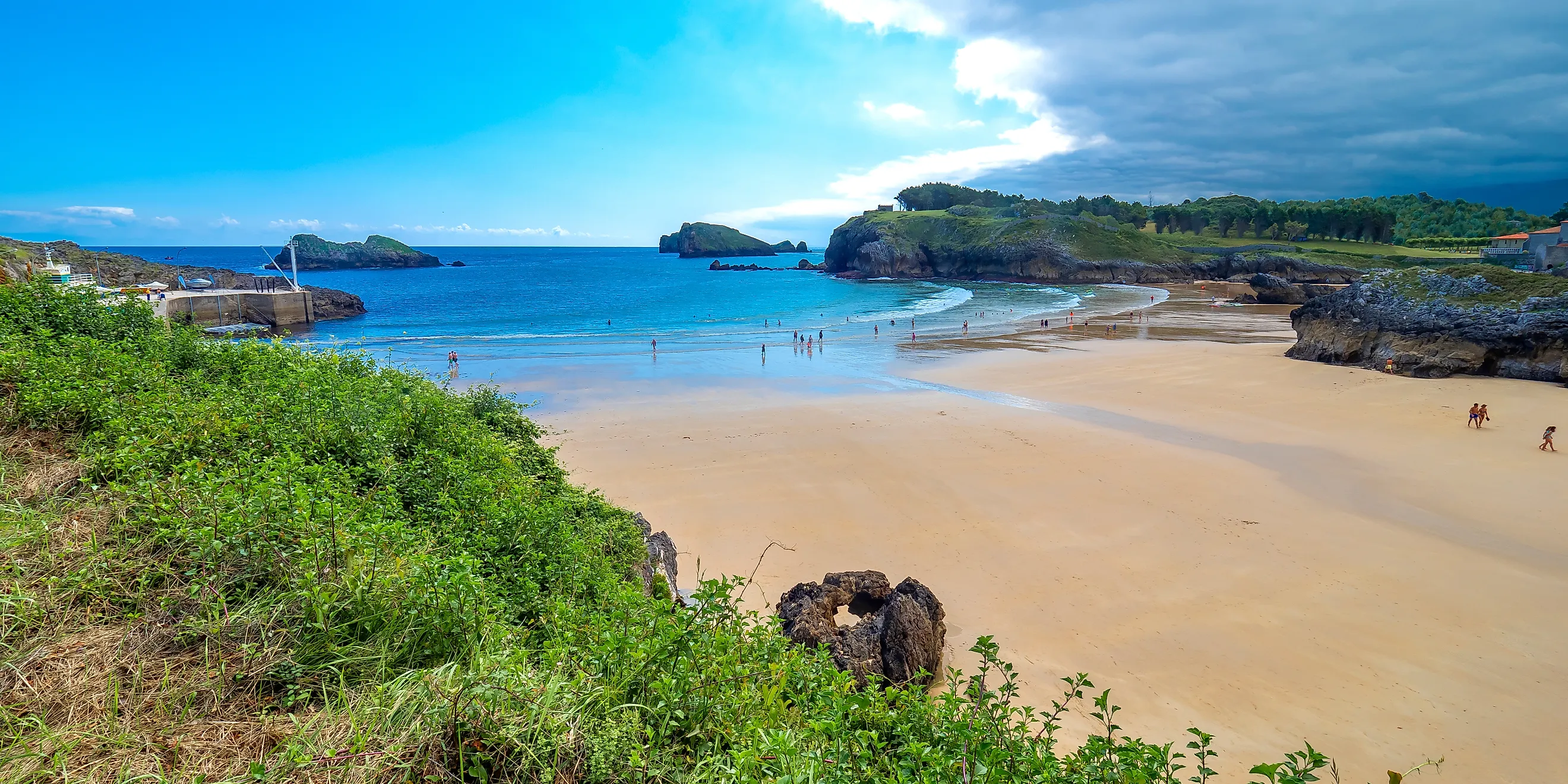
Llanes combines a small Asturian harbor with an unusually active festival calendar. Visitors can walk beside the fishing port, explore the medieval old quarter, or follow the Paseo de San Pedro, a grassy clifftop promenade overlooking the Cantabrian Sea.
The town's cider houses and terraces provide casual gathering places throughout the year, while local fiestas bring entire neighborhoods together. Celebrations such as La Magdalena and La Guía include processions, traditional music, communal meals, dances, cider gatherings, and activities for children. That participatory character is central to Llanes' appeal. The municipality has around 14,000 residents, giving it enough restaurants and cultural activity to feel lively while retaining the close-knit atmosphere of a smaller coastal community.
Peñíscola

Peñíscola combines a spectacular setting with plenty of shared public space. The old town climbs a rocky peninsula beneath Peñíscola Castle, where narrow lanes open onto terraces, small squares, and viewpoints over the Mediterranean.
Visitors can tour the castle, wander the historic streets, walk along the waterfront, or spend time on North Beach, which stretches beside the old town. Festivals, cultural performances, and seasonal events regularly make use of the historic center and public plazas, adding a social dimension to the town's architecture. With only around 8,000 permanent residents, Peñíscola feels much more intimate outside peak holiday periods. Its cafés, waterfront, castle approaches, and compact streets naturally place residents and visitors in the same spaces throughout the day.
Trujillo

Trujillo's Plaza Mayor is one of the grandest public squares in Extremadura, but it still functions as a place to sit, eat, and watch town life unfold. Cafés and restaurants face the equestrian statue of Francisco Pizarro, while historic palaces and churches surround the square.
From there, visitors can climb toward Trujillo Castle, explore the old streets, and visit Santa María la Mayor Church. The strongest community event is the annual Feria Nacional del Queso, when cheesemakers, producers, and visitors gather in the plaza for tastings and events centered on Spanish cheeses. With fewer than 10,000 residents, Trujillo has the scale of a small town despite its monumental architecture. The plaza, restaurants, festival, and historic streets give visitors repeated opportunities to mix with local residents rather than simply tour the sights.
Tarazona

Tarazona has historic architecture, but its most memorable expression of community spirit is the Cipotegato. Every August 27, thousands of people crowd Plaza de España as the costumed Cipotegato emerges from City Hall and runs through the streets while participants throw tomatoes. The event opens the town's San Atilano festivities and transforms the entire center into a shared celebration.
Outside festival week, visitors can explore Tarazona Cathedral, walk through the old Jewish quarter, and visit the unusual Plaza de Toros Vieja, a former bullring surrounded by residential buildings. Plaza de España remains a central meeting place for cafés and everyday activity. With only around 11,000 residents, Tarazona is small enough for its festivals and public spaces to feel genuinely communal, making it a fitting example of how tradition can turn strangers into participants.
Where Friendliness Comes Naturally
Spain's friendliest small towns do not rely on one type of attraction. Hondarribia and Llanes bring people together through food and waterfront life, while Cambados and Haro use wine as a social tradition. Chinchón, Trujillo, and Tarazona revolve around plazas that become stages for markets and festivals, and Almagro turns theater into a town-wide communal event. Across all ten, the common thread is simple. These are places where the best experiences happen in shared spaces, making it easy for visitors to feel part of the town rather than apart from it.