10 Most Neighborly Towns In Alaska
Ferries, floatplanes, and fishing boats are how Alaskans reach many of the state's small towns, where close-knit communities gather each year around a signature celebration. Valdez runs its summer festival entirely on volunteer labor and donates the proceeds to local charities, and the Sons of Norway Hall in Petersburg has hosted the town's weddings, potlucks, and festivals since 1912. These ten towns sit on islands, inlets, and remote coastlines where the calendar is built around the moments that bring neighbors back together.
Juneau

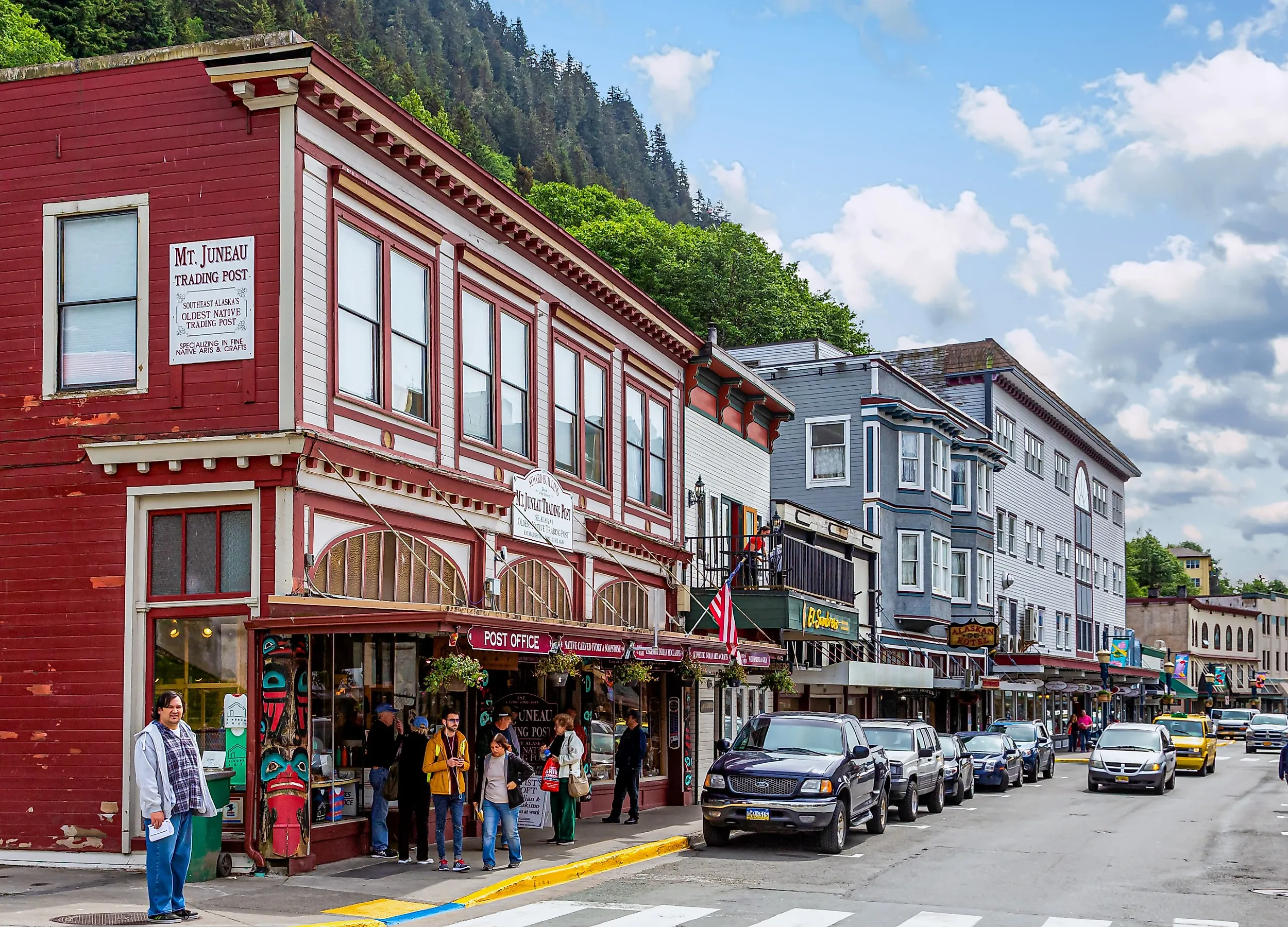
Known as a cultural and artistic hub of Southeast Alaska, Juneau is a midsize town with around 31,454 residents who value community through art and tradition. The town is well known for the Alaska Folk Festival, the oldest and largest festival of its kind in Alaska, a free seven-day celebration of American folk music each April that welcomes nonprofessional performers. Juneau also hosts Celebration, a four-day event held every other June by the Sealaska Heritage Institute, where Tlingit, Haida, and Tsimshian peoples gather for regalia, song and dance, canoe welcomes, and storytelling.
The town sits along the Inside Passage within the vast Tongass National Forest, the largest national forest in the country, where well-kept trails like the West Glacier Trail share the landscape with bear viewing and tours to see migrating humpback whales and bald eagles. Visitors can tour the Alaska State Museum in downtown Juneau, a year-round stop for artifacts and exhibits on Alaska’s people, history, and art.
Ketchikan

Ketchikan, one of Alaska’s southernmost cities, is a lively community of 7,898 residents who take great pride in their Indigenous heritage, local arts, abundance of salmon, and frontier history. Known as Alaska's First City and the Salmon Capital of the World, the town sits on Revillagigedo Island within the vast Tongass National Forest, with a busy events calendar and a strong sense of its own culture.
Every August, the Blueberry Arts Festival has filled downtown since 1975, hosted by the Ketchikan Area Arts and Humanities Council, with artisan and food booths, live music, a juried art show, a blueberry pie-eating contest, and the human-powered Blueberry Boat Race. The town is also home to the world's largest collection of standing totem poles, displayed at the Totem Heritage Center, Saxman Totem Park, and Totem Bight State Historical Park, reflecting the living Tlingit, Haida, and Tsimshian cultures of the region. Residents and visitors can also board a floatplane to Misty Fjords National Monument, a breathtaking wilderness of sheer cliffs, waterfalls, and glacier-carved fjords.
Talkeetna

Talkeetna is a quirky, creative village of just 1,025 residents, widely believed to be the inspiration for the fictional town in Northern Exposure. Its artistic and outdoorsy character shines brightest each December at the Talkeetna Winterfest, home to the Wilderness Woman Contest, in which women race down Main Street hauling water and chopping wood, and the Bachelor Auction and Ball, a good-natured fundraiser that has raised well over one hundred thousand dollars for women and children in need.
Set where the Susitna, Chulitna, and Talkeetna Rivers meet, the town is the gateway to Denali, North America's tallest peak, where prepared mountaineers set out on expeditions, and flightseeing tours depart for glacier landings and views of the Alaska Range. Talkeetna's historic district, on the National Register of Historic Places, preserves the log cabins, roadhouse, and clapboard storefronts of its early mining and railroad era.
Skagway

Skagway is a Gold Rush town of about 1,279 year-round residents at the head of the Lynn Canal, where the downtown historic district preserves a late-1890s Gold Rush atmosphere. Much of the town lies within Klondike Gold Rush National Historical Park, where the visitor center occupies the restored 1898 railroad depot, and rangers bring the stampede era to life through walking tours of the historic Broadway district.
From downtown, the narrow-gauge White Pass and Yukon Route railway climbs nearly 3,000 feet through tunnels and trestles to the summit of the pass, offering one of the most spectacular train journeys in North America. Adventurous travelers can hike the famous Chilkoot Trail, often called the world's longest museum, retracing the footsteps of the gold seekers. Each September, the town hosts the Klondike Road Relay, an epic 110-mile team running race along the historic White Pass route from Skagway to Whitehorse, Yukon.
Petersburg

Petersburg, known as Alaska's Little Norway, is a community of about 4,118 residents, founded by Norwegian fishermen in the late 1800s. Petersburg keeps its Scandinavian roots front and center, and that heritage shapes how the town celebrates. The Little Norway Festival, held each May and centered on Norwegian Constitution Day, brings parades, traditional dancing, bunader regalia, Scandinavian food, and playful herring-tossing games.
The historic Sons of Norway Hall, built in 1912 and listed on the National Register of Historic Places, has served as the heart of the community for over a century, hosting weddings, potlucks, barbecue cookouts, and festivals. Pay your respects at Bojer Wikan Fishermen's Memorial Park, which features the Valhalla Viking ship replica and a nine-foot-tall bronze sculpture of a local fisherman, honoring him and his crew who were tragically lost at sea. The Clausen Memorial Museum rounds out the town's heritage with exhibits on its Norwegian immigrant roots and the unofficial 126.5-pound king salmon.
Valdez

Valdez is a community of about 3,615 residents, set between the mountains and the sea at the United States' farthest-north ice-free port. Founded during the Klondike Gold Rush as the gateway to the "All-American Route," the town blends a strong sense of history with a love of the outdoors and a volunteer spirit that powers its events. Every summer, the volunteer-run Valdez Gold Rush Days takes over the streets for a few days. The community gets together to enjoy the parade, live music, can-can performers, and a local market, with proceeds donated to local charities.
The Valdez Museum and Historical Archive preserves the town's Gold Rush, Native American, pipeline, and earthquake history across its downtown locations. The Maxine and Jesse Whitney Museum promotes the belief that collections tell stories, which becomes evident when you step inside and discover that it holds one of the world's largest collections of Native Alaskan art and artifacts. Give yourself a full afternoon with the Alaskan art, history, and animal mounts that tell the state's story.
Haines
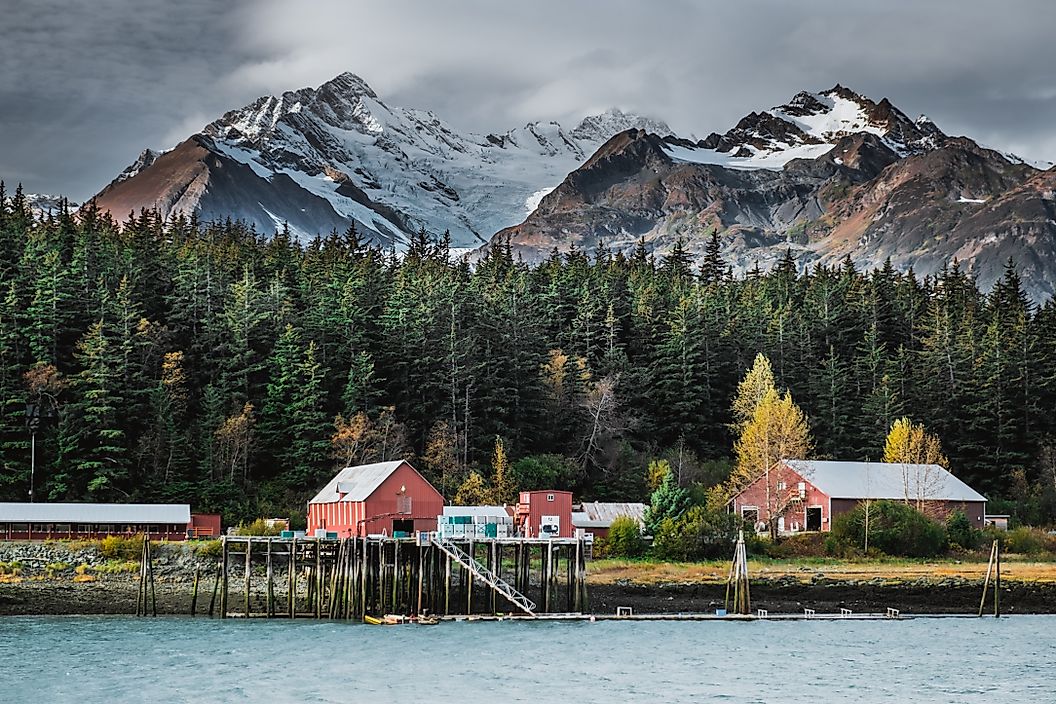
Haines, the last Gold Rush-era military post, is a small community of 1,797 residents who are fiercely proud of their town and local artists. Home to the Fort William H. Seward National Historic Landmark, Haines has an active arts scene; in 2017, artists turned the crumbling basement of the Seward barracks into a free interactive art gallery showcasing the thought-provoking work of local talent. Winter is a big deal in Haines, and for good reason.
Every February, the community participates in Winterfest, when the town becomes a large playground with outdoor races, winter games, the Kat to Koot Adventure Race, the ALCAN 200 International Snowmachine Race, and warm chili from the cookoff to keep everyone cozy. Each October and November, the Alaska Chilkat Bald Eagle Preserve hosts the largest gathering of bald eagles in the world, when 3,000 to 4,000 birds line the Chilkat River to feast on a late salmon run, honored by the annual Alaska Bald Eagle Festival.
Kodiak

Kodiak is situated on Kodiak Island, famously known as the home of the Kodiak bear. About 5,214 people live in Kodiak, and the town leans hard into its fishing roots and outdoor life. It is best known for the Kodiak Crab Fest, which has run every year since 1958. Held every May to mark the end of crabbing season, the five-day festival features parades, live music, races, fishing competitions, and plenty of king crab.
Beyond the festival, Kodiak's real draw is its wild surroundings and layered history. The Kodiak National Wildlife Refuge spans almost two million acres across the Kodiak Archipelago, including more than two-thirds of Kodiak Island, sheltering some of the densest brown bear populations on Earth and drawing wildlife watchers who arrive by floatplane to observe the bears feast on salmon. Closer to town, Fort Abercrombie State Historical Park invites visitors to wander forested trails and dramatic sea cliffs while exploring World War Two bunkers and scanning the water for whales. Its history goes back millennia, and the Alutiiq Museum preserves more than 7,800 years of Alutiiq and Sugpiaq culture.
Nome

On the southern coast of the Seward Peninsula, Nome brings together 3,641 residents around a strong cultural identity and a deep love of festivals and community events. It is internationally known as the finish line for the Iditarod Sled Dog Race, which takes place every March, when over 1,000 visitors, mushers, and spectators slide into town to celebrate. It caps the long winter and kicks off spring for the whole town.
Nome's story is also rooted in gold. History buffs enjoy the Carrie M. McLain Memorial Museum on 7th Avenue, a modern, climate-controlled facility that highlights the area's history and cultures through interactive exhibits on themes such as mining, transportation, and sustainability. Explore the beaches of the Bering Sea and imagine the days of the famous Three Lucky Swedes, who discovered gold near Nome in 1898, followed by prospectors who soon flooded its shores. Visitors today can still pan for flecks of gold along these public sands. Head along the Council Road, where the rusting locomotives of the Last Train to Nowhere stand as a haunting monument to Nome's frontier past.
North Pole

North Pole is a small community known as the place where the Christmas spirit lives year-round, home to approximately 2,539 residents. A Christmas countdown on the city website says it all. The holiday theme turns up everywhere you look: candy-cane-striped light poles, and streets named Santa Claus Lane and Kris Kringle Drive. Residents and visitors alike enjoy the Santa Claus House, the town's most iconic attraction, where guests can browse Alaska-made crafts, gifts, and tasty treats, and pose beside the fifty-foot-tall Santa sculpture, Santa's sleigh, and a decorated Christmas tree.
In winter, Chena Lake Recreation Area near North Pole draws visitors for ice fishing, aurora viewing, photography, and trails. The month of December is especially exciting with the annual North Pole Winter Festival hosted by the North Pole Community Chamber of Commerce, featuring local vendors, community activities, the crowning of the King and Queen of the North Pole, and a beautiful fireworks display.
Community in Every Season
Whatever the season, these ten Alaskan towns build their year-round community. Many sit on islands or remote coastlines, reachable only by sea, air, or a long northern road, and each one builds its calendar around a single defining event. Across Alaska, those traditions give residents and visitors a reason to gather again and again, no matter how long the season.