Alaska's 9 Best Retirement Towns Ranked
Many people consider retiring in Alaska an unrealistic dream. As a retirement destination though, few states can compete. The scenery does the easy selling but the financials seal the deal. Alaska has no statewide income tax or sales tax even if some local municipalities do impose their own. The state’s senior property tax exemption program also offers eligible residents 65 and older a reduction of up to $150,000 depending on local participation. The nine towns below are the best Alaska has for retirement.
Wrangell

Founded in 1834, with a current population of around 2,000, Wrangell is one of the oldest towns in Alaska and has been historically ruled by Russia, Britain, and the United States. Located on the north end of Wrangell Island in the southern Inside Passage, the town has all the pieces in place for a comfortable retirement.
Outdoor enthusiasts can wander through the Tongass National Forest, or find themselves fishing the Stikine River. Just drop by Angerman’s Inc for all your gear, and stop off at the Marine Bar to share your stories when you are done. For an easier day, try some whale watching along the Inside Passage itself, or peruse Petroglyph Beach State Park.
For those requiring assistance, Wrangell Senior Center has what you need, as well as meal service for those who have a harder time getting out and about. Feel secure in the knowledge that nearby Wrangell Medical Center is ready to handle any medical emergencies.
Petersburg

Peter Buschmann founded Petersburg in 1897, and a present population of around 3,000 keeps "Little Norway" small but big on appeal.
This small town on Mitkof Island has been so dubbed due to its undeniable ties to its namesake, which are pervasive in local culture. From the Little Norway Festival every May to local landmarks like Sons of Norway Hall and Clausen Memorial Museum, the connection is everywhere.
Petersburg does have what locals need. For great eats, Inga’s Galley has what you need, or pick up something light at The Salty Pantry. For more serious situations, Petersburg Medical Center is right there, along with senior living at Mountain View Manor.
Valdez

Valdez is another town with European ties. The "Little Switzerland of the North" was founded during the Gold Rush (1898) and presently boasts around 4,000 residents who enjoy views of Prince William Sound and the Chugach Mountains.
Valdez will have all your needs covered, with Providence Valdez Medical Center for full-service care, as well as meeting your social needs at the Valdez Senior Center.
As with much of Alaska, however, it’s the natural attractions that will provide the most nourishment. If traversing Worthington Glacier isn’t your thing, visit the Old Valdez Townsite or the Valdez Museum for a taste of history. Stocking up on salmon is a popular pastime, with many fishing derbies dotting the calendar year, but if your catch wasn’t complete, stop by The Potato for some rosemary fries, or find your way into The Fat Mermaid for more northern goodness.
Kodiak

The borough of Kodiak has around 13,000 people and roughly 3,500 large brown bears. Don’t let the bears deter you. Founded in 1792 as the original capital of "Russian America," the "Emerald Isle" answers most retirement questions on its own.
Providence Kodiak Island Medical Center is there when you need care, and the Kodiak Senior Center offers the standard fare of social classes and local excursions. Excursions are easy to find on an island this scenic. If going to the bears is too much for you, stop by the indigenously-owned Kodiak Brown Bear Center to get your fill of viewing, fishing, and photography (and make a reservation to stay the night at one of their cabins), or consume local culture at the Alutiiq Museum. When thirst hits, head to the Kodiak Island Brewing Company.
Palmer

Palmer was founded in 1916 and grew during the New Deal era around 1935. With about 6,000 people in town, it sits as the little brother of Anchorage to the south.
Being so close to one of Alaska’s major metropolises, Palmer offers more of the conveniences travelers from the lower 48 expect. Close proximity to Mat-Su Regional Medical Center and the Alaska Veterans and Pioneers Home make medical and housing needs convenient, while the imports processed through Anchorage keep costs of living down.
Rural beauty blends with the conveniences of living in Palmer. The Alaska State Fair brings all the fun you had in your home state, while the local Musk Ox Farm reminds you that you are indeed in Alaska! If you are up for a Sunday sojourn, head out of the city and book a family-friendly walking tour on top of Matanuska Glacier. After hiking up a hunger, head back to Turkey Red for soups and sandwiches, with Bleeding Heart Brewery handling the drinks.
Seward

Alaska was purchased from Russia in 1867. The deal was handled by William H. Seward, and this town founded in 1903 takes his name.
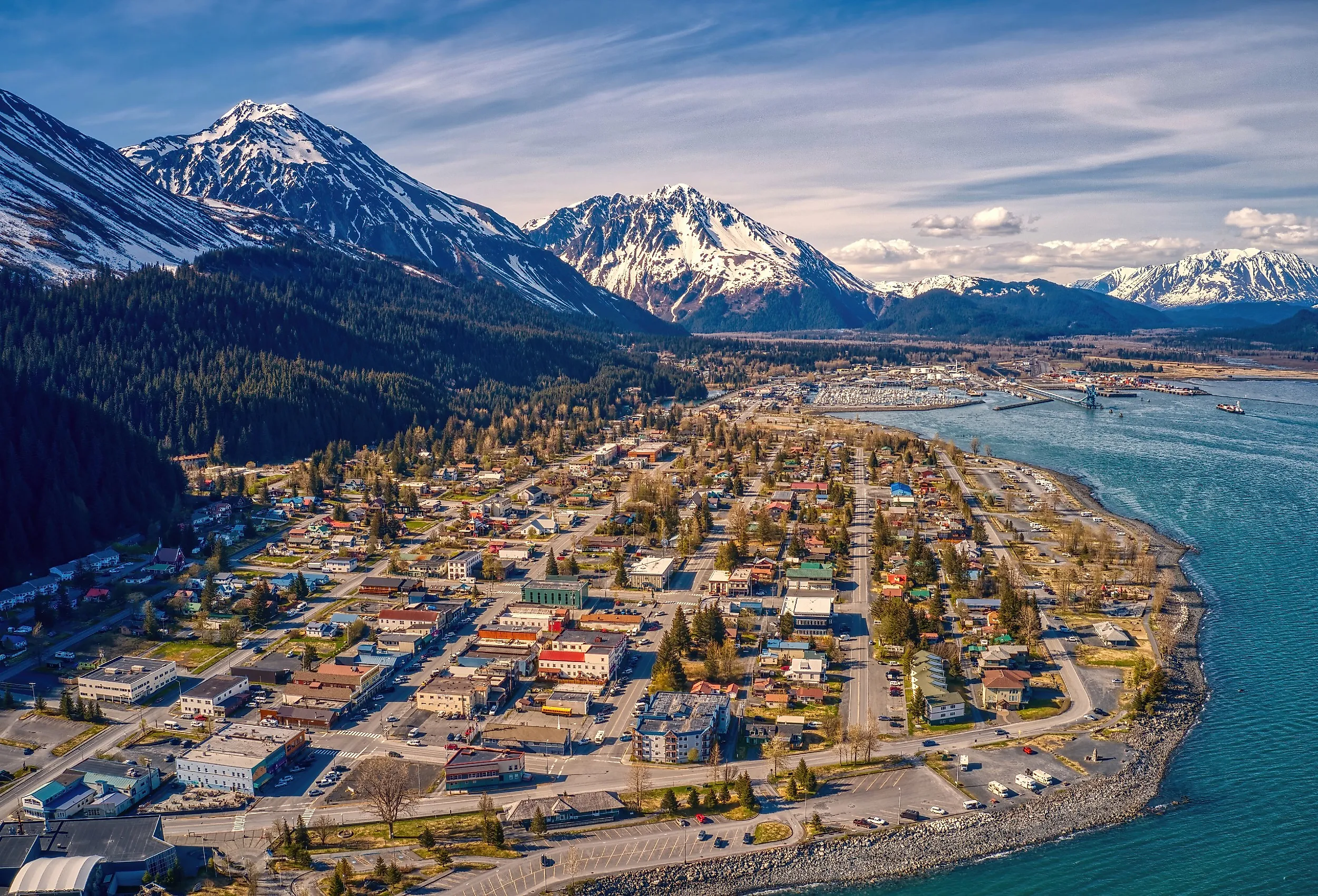
Seward sits on the Kenai Peninsula, near Resurrection Bay, a focal point of local life in this Alaskan retirement destination. Kenai Fjords National Park and local glacier boat tours will get you out on the water, or stay dry while soaking it all up at the Alaska SeaLife Center.
Dining leans heavily oceanside. Ray’s Waterfront feels lifted from the Seattle waterfront and serves steak and seafood. The Cookery handles farm-to-table with a focus on local sources.
Soldotna

Not as common a name as perhaps Ketchikan or Anchorage, Soldotna came into existence in 1947 after WWII as an area where veterans were invited to homestead. Centrally located on the Kenai Peninsula, potential retirees will have no trouble making the move to this sanctuary, thanks to its proximity to Central Peninsula Hospital.
Easy living defines Soldotna, with abundant salmon fishing and the "World Record King Salmon" statue in town. Kenai National Wildlife Refuge sits nearby and is gorgeous if not expansive. The Soldotna Wednesday Market is a popular local spot, along with The Catch Restaurant and Bar and the nearby St. Elias Brewing Company.
Homer

From salmon in Soldotna to halibut in Homer, this town of roughly 6,000 has evolved into the "Halibut Fishing Capital of the World" since its origins in 1895.
Set your sails south of Anchorage, and you will find yourself in Homer, where The Homer Spit sticks out into the sea, and beautiful Bishop’s Beach lies nearby. This little town does boast some big attractions, however. Walk the days away amongst the numerous, colorful art galleries on Pioneer Avenue, and wrap it all up with a nightcap at The Salty Dawg Saloon. After working up an appetite, head to Captain Pattie’s Fish House. With an average home value around $415,000, Homer’s real estate is prized.
Sitka

Sitka was founded in 1799. This Baranof Island town of about 8,500 sits at a relatively low latitude, so the weather runs milder than much of the state. Sitka was also the site of the 1867 transfer ceremony, when Alaska was purchased by the United States.
Southern Alaska is totem pole territory, and Sitka National Historical Park displays them in all their wonder and significance. Watch whales go by, or sit and enjoy the headliners at the Sitka Summer Music Festival. In a digital age, Old Harbor Books proves the bookstore is alive and well. If you are into birds, check out the Alaska Raptor Center next. When you have had your fill for the day, be sure to leave room for more at Ludvig’s Bistro.

Some of Alaska’s finest facilities are here for future seniors. Although Sitka is a relatively safe and walkable city, Mt. Edgecumbe Medical Center is available for any emergencies you may encounter, as is Sitka Medical Center on Katlian Street. If you are looking for a retirement facility that is both reputable and historic, look no further than Sitka Pioneer Home.
Does It Pay to Retire in Alaska?
Yes. Tax breaks in many towns for those 65 and older pair with statewide income and sales tax incentives. Alaska takes it one step further and pays you to live there. After establishing residency, you receive an annual payment from the Alaska Permanent Fund Dividend as your share of the profits from the state’s natural resources.
Beyond the finances, the daily reality of life in Alaska speaks for itself.