10 Main Streets Where New York Comes Alive
The perfect Saturday in small-town New York fits inside about four blocks. Grab a coffee and start walking. The storefronts are full of antique dealers and secondhand bookshops worth an hour of digging. In Greenport, people have been eating lunch at Claudio's in the same waterfront building for more than 150 years. Walk off the meal with a slow lap past the galleries and sweet shops. Stay past dark and you can catch a show at the Tarrytown Music Hall, built in 1885. Park the car once on any of these 10 main streets and leave it there until the curtain falls.
Greenport

Greenport was settled in 1682 and grew into one of the busiest whaling and shipbuilding ports on Long Island's North Fork well before the Long Island Rail Road made it the eastern terminal of its line in 1844. That double identity, working harbor and railroad town, still shapes Main Street today.
The East End Seaport Museum, housed in a former railroad station, traces the village's maritime past with ship models and lighthouse artifacts. A block away, the Northrop Grumman Carousel, a century-old ride donated to the village by the aircraft manufacturer, still spins inside Mitchell Park at the water's edge. Enjoy a meal with a direct line to the whaling era at Claudio's, a waterfront restaurant that has operated in the same building for more than 150 years, right where fishing boats once unloaded their catch. The harbor itself is the real draw, with sailboats and ferries crossing to Shelter Island just past the docks.
Nyack

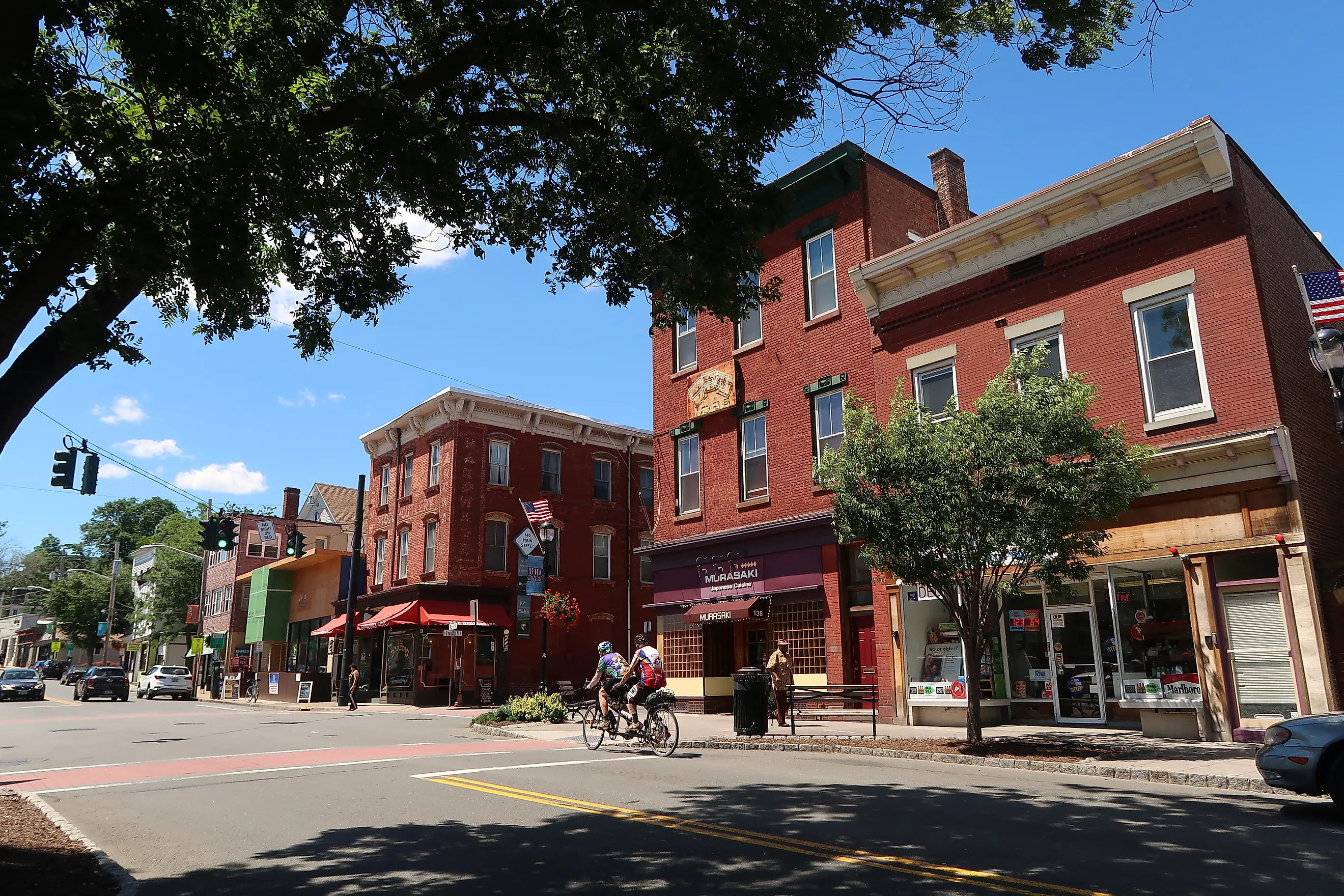
Nyack's Main Street runs downhill toward the Hudson, a functional layout left over from when the village was Rockland County's busiest port. Dutch settlers arrived to settle here in the 1670s, but it was 19th-century sandstone quarrying and shipbuilding that bolstered the downtown. These industries helped Nyack grow from seven houses in 1814 to a bustling business district by 1860. When manufacturing faded in the 20th century, Nyack reinvented itself as an antiques and arts town, and that character continues on Main Street today.
A few blocks north, the Edward Hopper House, birthplace of the painter, anchors the village's art scene with rotating exhibitions in the family's 1858 home. Main Street itself is lined with antique dealers and independent galleries, and at its foot, the street opens onto sweeping views of the Hudson River and the Tappan Zee.
Tarrytown

Dutch farmers were already growing wheat here in the 1640s, a crop so central to local life that the village's name likely descends from the Dutch word for wheat, tarwe. Tarrytown later became a Gilded Age retreat, ringed by the estates of the so-called Millionaire's Colony, but its Main Street kept its working-town scale.
The Tarrytown Music Hall, an 1885 Queen Anne theater built by a local chocolate manufacturer, still hosts around 180 performances a year and remains the street's focal point. For a real treat, Main Street Sweets has been a local stop for candy and sweets for years. At the bottom of the hill, Main Street opens toward the Hudson River, with open views across to the Rockland County shoreline.
Warwick

Warwick's Main Street boomed when the Warwick Valley Railroad arrived in 1860, turning a farming hamlet into a prosperous commercial center by the time it incorporated as a village in 1867. When the railroad era ended and dairy farming declined in the mid-20th century, Main Street fell into disrepair. Then, starting in the 1960s, residents determined to keep its historic storefronts intact spent the time and energy to revive the street. That preservation-first instinct is why Warwick's Main Street still displays its century-old facades.
Baird's Tavern, a longtime gathering spot for food and drinks, occupies one of those historic buildings. A short walk from downtown, Wickham Woodlands Park offers has trails for a break from the shops. Each fall, the street becomes the center of Orange County's largest festival, the Warwick Applefest, filling a Main Street built to impress a crowd.
Catskill

Catskill's half-mile Main Street is lined with Victorian storefronts that now house galleries, bookshops, and restaurants that replaced the dry-goods stores that once served river traffic. A few blocks off Main Street, the Thomas Cole National Historic Site preserves the home and studio of the painter who founded the Hudson River School, the first major American art movement, in the 1820s.
Back on Main Street, the 1910 Greene County Courthouse is on one end of the block in Classical Revival stone, and the Magpie Bookshop keeps the secondhand-book tradition alive at the other. The street runs down toward the point where Catskill Creek meets the Hudson River, giving the whole downtown a waterside backdrop that has drawn painters here for two centuries.
Old Forge

Settled in 1798 and shaped more by recreation than industry, Old Forge is at the western edge of the Fulton Chain of Lakes, and its Main Street reflects that gateway role.
The Enchanted Forest Water Safari, New York's largest water theme park, draws people off Main Street and into its slides and pools every summer. For local history, the Goodsell House, a National Register of Historic Places museum run by the Town of Webb Historical Association, tells the story of the Adirondack settlers who came before the resorts. Shops like Copper Fox, a spirits and wine store, line the rest of the block. Old Forge Pond, the first of the Fulton Chain's eight lakes, is close enough to reach on foot, making this one Main Street where the wilderness is never far from the register.
Cazenovia

Cazenovia's Albany Street, the village's Main Street, was laid out in 1794 by Dutch naval officer John Lincklaen as part of the Holland Land Company's settlement plan, and it served briefly as the first seat of Madison County. The village has history to match its architecture. In 1850, Frederick Douglass chaired the Fugitive Slave Law Convention at the Free Church on nearby Lincklaen Street, one of the era's major abolitionist gatherings.
The Lincklaen House, a historic inn and restaurant named for the village's founder, still welcomes overnight guests and diners. Down the block, the Cazenovia Public Library, built in 1830 as a Greek Revival home, holds a collection of books and historical artifacts open to browsing. At the street's southeastern end, Albany Street runs nearly to the shore of Cazenovia Lake, a four-mile-long lake that gives the whole village its waterfront feel.
Chittenango

Chittenango's Genesee Street grew up around the Erie Canal, which reached the village in 1825 and turned it into a boatbuilding and repair town almost overnight. That canal-era prosperity built the Main Street storefronts still standing today, many of them now home to local cafes and shops.
The village's other claim to fame runs right down the center of downtown. A brick sidewalk painted yellow in 1982 in tribute to native son L. Frank Baum, author of "The Wonderful Wizard of Oz," who was born here in 1856. The All Things Oz Museum keeps that legacy close by, displaying original costumes and props a short walk from where Baum grew up. Chittenango Creek, the waterway that made the canal town possible in the first place, still runs alongside the downtown block, a quiet reminder of why the village exists at all.
Seneca Falls

Fall Street, Seneca Falls' Main Street, looks like any other well-kept upstate downtown at first glance. But it was here, in July 1848, that Elizabeth Cady Stanton, Lucretia Mott, and three other organizers held the first Women's Rights Convention at the Wesleyan Chapel. Today, the building still stands and is preserved as part of the Women's Rights National Historical Park.
A few doors down, the It's a Wonderful Life Museum celebrates the town's other claim to fame as a likely inspiration for Frank Capra's 1946 film. The Seneca Museum of Waterways & Industry rounds out downtown's historical offerings with exhibits on the canal system that once powered the village's mills. Behind Fall Street, the Cayuga-Seneca Canal still carries boat traffic past downtown, linking Seneca Falls to Cayuga and Seneca Lakes.
Lewiston

Center Street, Lewiston's Main Street, sits on ground that saw the first European settlement in western New York in 1720. Later, the 1812 Battle of Queenston Heights was staged just across the river, and then, freedom seekers crossed to Canada on the Underground Railroad.
The Frontier House, an 1824 hotel that once hosted presidents and held a prestigious place as the finest hotel west of Albany, reopened in 2025 after decades of vacancy and now holds a restaurant named for its original builder, Joshua Fairbanks. Today's Center Street boasts more than 30 locally owned restaurants and shops, all set along brick sidewalks and period lanterns reflecting a recent streetscape renovation. At the foot of the street, Lewiston Landing opens onto the Niagara River, offering a direct view of the same waterway that shaped the village's entire history.
How These New York Towns Reinvented Main Street
These downtowns have something in common beyond historic buildings: the industries that built them eventually disappeared. In Greenport, a waterfront carousel helps the village come alive, and Chittenango puts its Oz connection right underfoot with its distinctive yellow brick sidewalks. Whaling, quarrying, farming, and canal freight may have faded, but these towns found new uses for old spaces and new reasons to keep their Main Streets active.