10 Lovely Small Towns to Visit in The Rockies This Summer
In Stanley, Idaho, the Sawtooth Mountains rise straight off the edge of town. Crested Butte, Colorado, paints its Victorian storefronts along Elk Avenue, each one a different color. Whitefish, Montana, lies 25 miles from the gates of Glacier National Park. Taos, New Mexico, has pulled painters to the southern Rockies for more than a century. The range crosses six US states before climbing into the Canadian Rockies, and a different small town waits along each stretch.
Whitefish, Montana

Whitefish built its downtown around the railroad. The 1928 depot still stands on Central Avenue, and the Empire Builder train stops there twice a day. Shops and restaurants line the avenue below the slopes of Big Mountain. Whitefish Lake lies at the north end of town, with a public beach and docks busy all summer.
Glacier National Park is the reason most people come, about 25 miles east. Going-to-the-Sun Road opens across the park by midsummer, once crews clear the snow at Logan Pass. Whitefish Mountain Resort opens its lifts in summer for hikers and downhill bikers. The town itself remains a working main street under all of it.
Stanley, Idaho

The Sawtooth Mountains rise behind Stanley in a wall of jagged granite. The Salmon River passes the edge of town, clear and cold off the snowmelt. A short main street lies between the two. On summer Thursdays, it closes for a free dance with a live band.
Redfish Lake lies a few miles south, its blue water backed by the Sawtooth peaks. A lodge, a beach, and a marina stand at the north end. Stanley falls inside the Central Idaho Dark Sky Reserve, the first of its kind in the country, and the summer sky comes in thick with stars. Hot springs along the river road give a warm soak after a cold day on the water.
Jackson, Wyoming

Four arches of shed elk antlers stand at the corners of the town square in Jackson, rebuilt every few years as the antlers weather. Boardwalks edge the square. The Million Dollar Cowboy Bar seats its drinkers on saddles instead of stools. Galleries and the 1941 Wort Hotel take up the blocks nearby.
Grand Teton National Park rises just north of town, its trails clear of snow by midsummer. The Snake River crosses the valley floor. Float trips drift below the Tetons, with rougher water downstream. Yellowstone is a morning's drive away, close enough for a single summer day.
Midway, Utah

Swiss immigrants settled Midway in the 1860s, and the town still leans on that heritage. Chalet-style buildings line the streets, and the Swiss Days festival takes over Main Street at the end of summer. The town lies in the Heber Valley, on the back side of the Wasatch. Mountains close the valley on most sides.
The Homestead Crater hides a warm mineral spring inside a tall limestone dome, open for a soak or a swim. Wasatch Mountain State Park borders the town with trails for hiking and biking through the summer. The Heber Valley Railroad sends vintage trains down the valley from nearby Heber City. Jordanelle Reservoir lies just north for boating on warm afternoons.
Crested Butte, Colorado

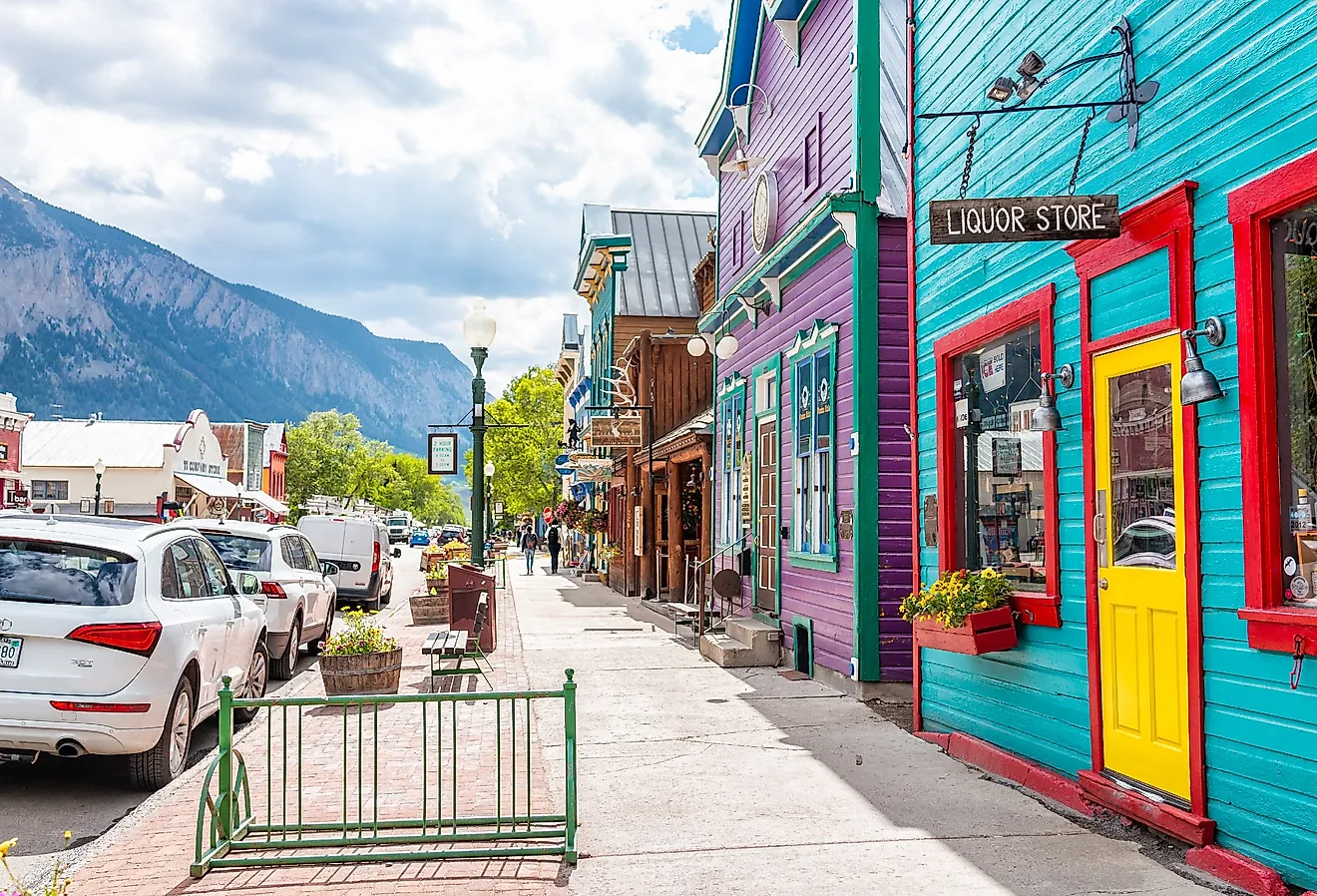
On Elk Avenue, the Victorian storefronts of Crested Butte line the block, each painted a different color. The town incorporated in 1880 as a coal camp, and its old commercial core survives as a National Historic District. Mountain biking took shape here in the 1970s, when locals rebuilt junk bikes to ride the passes. The town still treats the sport as local history. Its Fourth of July parade brings the whole valley onto Elk Avenue.
The state named Crested Butte its wildflower capital, and the meadows earn it. Peak bloom comes in July. Trails like the Lower Loop and Snodgrass climb through columbine and lupine within minutes of town. A ten-day wildflower festival follows the bloom each July, with guided walks and photography workshops. Kebler Pass opens its dirt road by early summer, climbing beneath one of the largest aspen groves in the country, wildflowers crowding the shoulders.
Ouray, Colorado

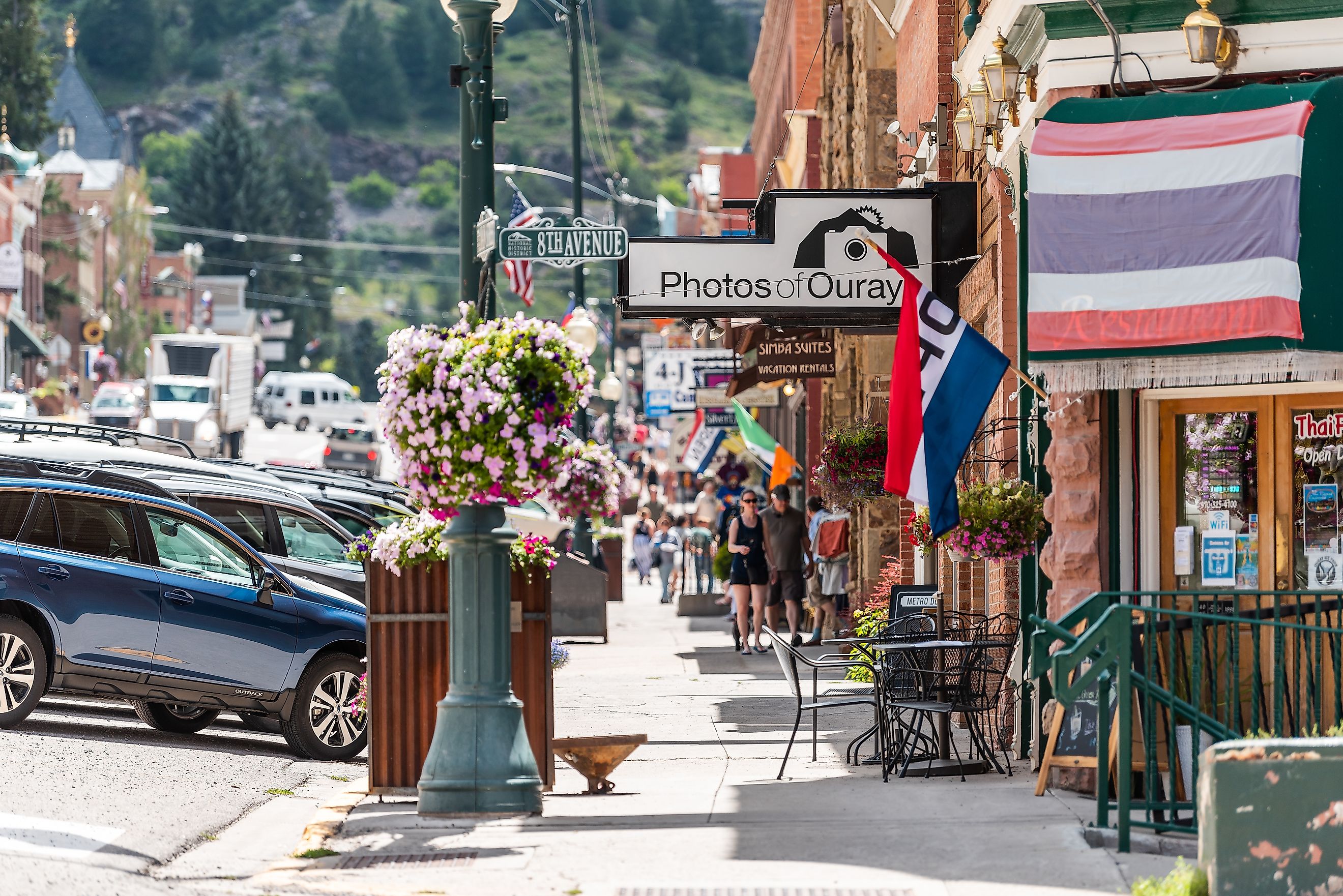
Ouray occupies the floor of a tight box canyon, walled on three sides by the San Juan Mountains. The name comes from Chief Ouray of the Ute. The town grew through the gold and silver rush of the late 1800s. Main Street carries a compact run of Victorian buildings, the 1886 Beaumont Hotel among them, with the peaks close behind the rooflines. The Ouray Hot Springs pool lies at the north edge, fed by mineral water.
Box Canyon Falls drops through a narrow slot a few blocks from Main Street, loudest with snowmelt in early summer. A rough road climbs to Yankee Boy Basin above town, where wildflowers spread across the meadows in July. Climbers work the Ouray Ice Park's frozen walls in winter. In summer, rock climbers and canyon walkers take the routes instead.
Durango, Colorado

The railroad built Durango in 1880, and Main Avenue still reads as a Victorian commercial district. The Strater Hotel has worked the corner of Main and Seventh since 1887, its saloon and period rooms behind a red brick front. The Animas River cuts straight through the middle of town. Kayakers work a whitewater play wave along the riverside path all summer.
The Durango and Silverton Narrow Gauge Railroad still pulls coal-fired steam trains up the Animas canyon. The line ends at the old mining town of Silverton, and has carried passengers on the same route since 1882. Mesa Verde National Park lies west of town. Ancestral Puebloan people built cliff dwellings under its sandstone overhangs, and guided tours reach the largest in summer.
Taos, New Mexico

Taos has pulled artists to the foot of the Sangre de Cristo Mountains for over a century. The adobe storefronts around the plaza carry galleries and old Spanish-colonial churches. Taos Pueblo stands just north of town, its multistory adobe lived in for about a thousand years. The southern Rockies close the skyline behind it.
The Rio Grande Gorge cuts a deep slot west of town, crossed by a steel bridge that hangs high over the river. Wheeler Peak rises east of town, the highest point in New Mexico, with a summer trail through alpine basins. Taos Ski Valley turns its slopes over to hikers once the snow melts. The high desert light is the thing that brings painters back.
Banff, Alberta

Banff began with a cave. In 1885, railway workers found hot springs inside Sulphur Mountain, and the discovery created Banff National Park, the first in Canada. The Cave and Basin site protects the original pools. Bathers still soak nearby at the Banff Upper Hot Springs. Down in town, Banff Avenue points straight at Cascade Mountain, and the Fairmont Banff Springs stands over the Bow River, built to look like a Scottish castle.
The Banff Gondola climbs Sulphur Mountain to a ridgetop boardwalk, with a view across six ranges. Lake Louise lies a short drive northwest. Canoes return to its glacier-fed water by summer, and a trail climbs from the shore to the Lake Agnes Tea House. The northern daylight lasts late into the evening.
Field, British Columbia

Field is a grid of painted railway cottages under Mount Stephen, deep in Yoho National Park. The Canadian Pacific built it as a working stop in the 1880s, and freight trains still grind through the valley below. The real distinction is overhead. The slopes above the village carry the Burgess Shale, a fossil bed of soft-bodied sea creatures more than 500 million years old, and one of the most important fossil sites on Earth.
Emerald Lake lies six kilometers (about four miles) from town, its green water ringed by a flat shoreline trail and rental canoes. Takakkaw Falls drops more than 300 meters (around 1,000 feet) down a cliff, fed by glacier melt and loudest in the summer runoff. At the Natural Bridge nearby, the Kicking Horse River cuts through a slab of rock instead of over it.
Where the Mountains Meet Main Street
In Field, a row of railway cottages stands under Mount Stephen, with Cambrian fossils on the slopes above. Jackson frames its town square with four arches of elk antler. Midway leans on its Swiss past in a green Utah valley. Ouray packs a Victorian main street into a box canyon in the San Juans. These towns spread across six states and two provinces, yet the shape repeats. Each pairs a main street with open mountains a few minutes past the last building, and summer is the season they line up.