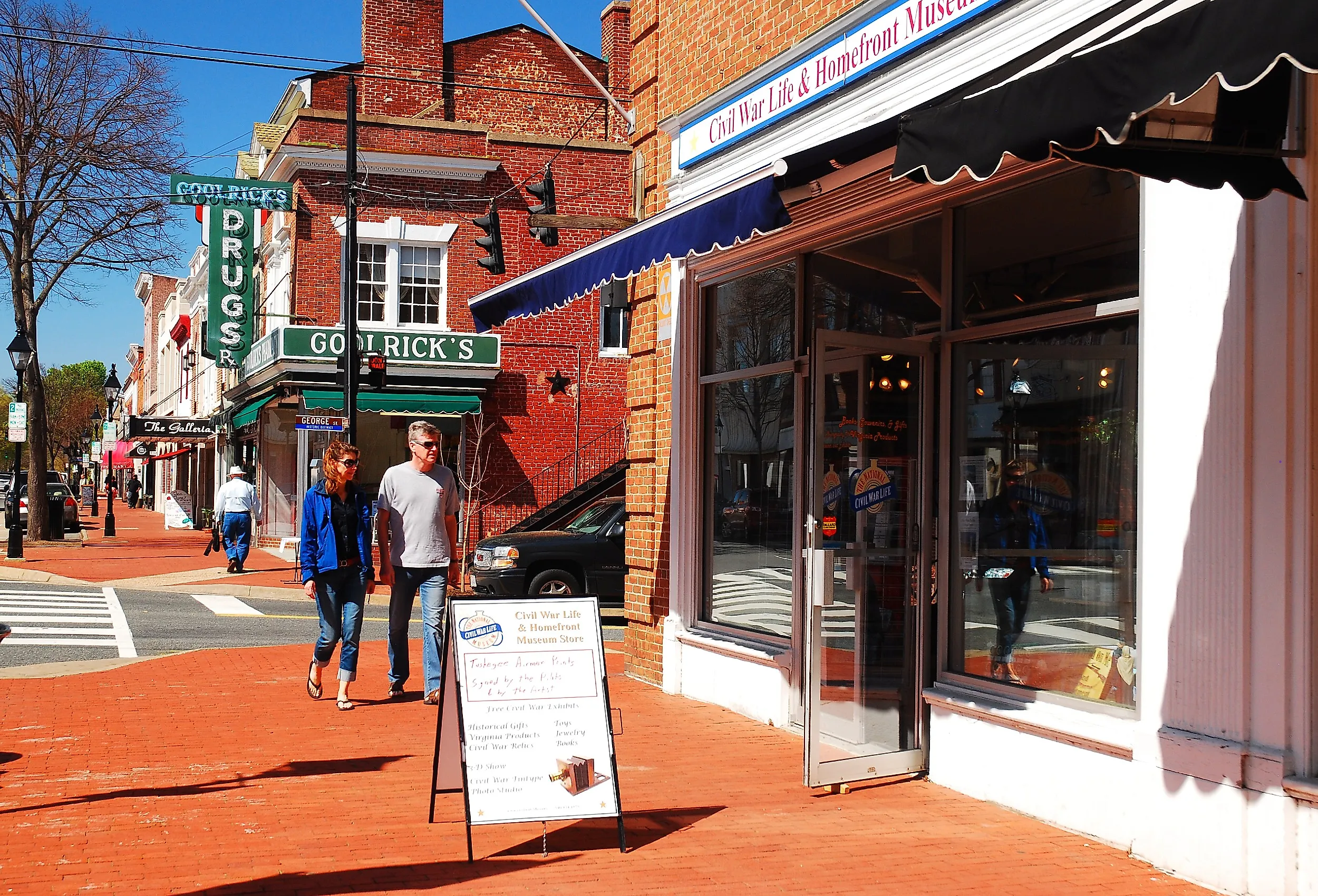
Where Young Families Are Putting Down Roots In Virginia
Virginia reached an estimated 8.88 million residents in July, 2025, adding more than 248,000 people since the 2020 Census. Net migration accounted for 68.5% of that increase, but the growth did not spread evenly across the state. It concentrated in communities where new housing, school capacity, employment access, and family services could support the households arriving. The strongest young-family signals appear where population gains overlap with an increase in school-aged residents, new classrooms, residential construction, and infrastructure designed for daily family life. Hampton Roads, the northern Piedmont, the Shenandoah Valley, and Northern Virginia each turn up in the seven communities below that show the pattern most clearly.
Lynchburg

Lynchburg's estimated population reached 81,347 on July 1, 2025, up 3% from its 2020 population base. The city offers two practical advantages for younger households: a mean commute of less than 20 minutes and a lower housing price than similar communities in this list. Employment growth strengthens the case. Framatome announced a $49.4 million Lynchburg expansion in December 2023, expected to create 515 jobs connected to nuclear-energy technology and manufacturing, and broke ground on the project in April 2024. Hiring has been phased rather than immediate, but the expansion represents a substantial long-term investment by an established local employer.
A March 2025 rezoning on Wigginton Road opened the door to as many as 750 for-sale residences at West Point, a mix of condominiums, townhouses, and patio-style homes on roughly 53 acres, adding another route into the housing market beyond detached houses and rental apartments. Redfin reported a median sale price of approximately $259,000 during the three months ending in May 2026. The city also maintains the parks and urban trails, giving families recreation without requiring a trip beyond city limits.
Suffolk

Suffolk reached an estimated 104,699 residents on July 1, 2025, up 10.9% from its 2020 population base. Children younger than 18 accounted for 23.4% of residents, showing that families are a substantial part of the city rather than a minor group within its overall expansion. Suffolk Public Schools serves roughly 14,500 students across 21 schools, giving the city a sizable school system that must grow alongside its neighborhoods.
Redfin reported a median sale price of approximately $399,000 during the three months ending in May 2026. That price, combined with continued detached-home construction, gives families access to more space while remaining connected to employers and military facilities across Hampton Roads. Recent patterns showing where people are moving in Virginia place Suffolk at the center of that regional shift. Its growth is now shaping decisions about roads, school capacity, and how much additional housing the city can support.
Culpeper

Mountain Run Elementary School broke ground in March 2026 with space planned for 650 students. The school will become Culpeper County's seventh elementary campus and its first new elementary school since 2008 when it opens for the 2027-2028 academic year. Construction also began in May 2025 on a major renovation and expansion of Culpeper Middle School. The expansion provides broader evidence of the household growth occurring in and around the town.
Culpeper itself reached an estimated 22,074 residents on July 1, 2025, an increase of 9.9% from its 2020 population base. Nearly 30% of residents were younger than 18, and 8.1% were younger than five. Those are among the strongest child-population figures in this group and help explain why elementary and middle-school capacity has become a real-time investment rather than a distant concern. Redfin placed the median sale price at approximately $414,000 during the three months ending May 2026, so the town is not Virginia's least expensive market, but families moving there are entering a community that is adding classrooms at a rate that reflects the number of young residents choosing to call Culpeper home.
Fredericksburg

Fredericksburg expanded two levels of school capacity for the 2025-2026 academic year. A purpose-built Walker-Grant Middle School opened in Idlewild, while the former Walker-Grant campus became Gladys West Elementary School, the city school division's third elementary campus. Attendance zones were adjusted around the two openings, showing that the buildings were part of a broader response to changing enrollment and neighborhood growth. Fredericksburg reached an estimated 30,393 residents on July 1, 2025, up 8.6% from its 2020 population base. That increase added more than 2,400 residents within five years and placed additional pressure on a geographically compact school division.
Work access provides another reason families can make the city function. The Virginia Railway Express schedule that took effect in May 2026 lists eight weekday northbound departures from Fredericksburg, the earliest at 5:03 a.m. and the last at 7:57 a.m. Six run through to Washington Union Station, while two end at Alexandria. The ride does not make every commute easy, but it gives households an alternative to completing the entire trip by car. Fredericksburg costs more than several communities farther south and west, with a median sale price of approximately $454,000, but its school expansion and established rail service help explain why households consider the price a good value for their money.
Fairfax

Children younger than five accounted for 8.7% of Fairfax residents, one of the largest early-childhood shares among these communities. The city reached an estimated 26,772 people on July 1, 2025, up 10.9% from its 2020 population base. Those figures make the family movement difficult to separate from the city's overall growth. Fairfax is also adding housing inside an already developed footprint. In July 2025, the City Council approved redevelopment of the Davies Property at 4131 Chain Bridge Road with as many as 276 apartments, along with limited retail and office space. Apartments will not meet every family's needs, but the project adds housing within a city where vacant land and detached-home inventory remain limited.
Fairfax is home to Daniels Run Elementary School, Providence Elementary School, Katherine Johnson Middle School, and Fairfax High School. CUE Bus service connects neighborhoods with schools, parks, George Mason University, and the Vienna/Fairfax-GMU Metrorail station seven days a week. That compact network reduces the number of family routines that require a long drive and reinforces the community connections found throughout Fairfax. With a median sale price of approximately $735,000, families choosing Fairfax are paying a premium for access rather than square footage alone, but the city's popularity and rate of growth suggest the price is right.
Ashland

Ashland added approximately 150 housing units between 2020 and 2024. That number appears modest beside construction in larger Virginia cities, but it represents meaningful growth for a town with fewer than 8,000 residents. Its estimated population reached 7,982 on July 1, 2025, up 5.1% from its 2020 population base. Ashland is not responding to its growth with a new school campus or hundreds of homes inside a single subdivision. Instead, it is steadily creating room for more households while maintaining a mean commute of just over 20 minutes.
Family infrastructure is already available at the neighborhood level. Carter Park Pool combines an eight-lane junior Olympic pool with a zero-depth entry swim area, a separate kiddie pool, and a slide. The Patrick Henry YMCA runs swim lessons there four mornings and evenings a week, the Ashland Barracudas practice and compete in the same water, and the town offers membership scholarships to qualifying Ashland residents. With a median sale price of approximately $423,000, Ashland is a comfortable choice for many families looking for stability and services that won't break the bank.
Waynesboro

Waynesboro changed its zoning regulations in 2025 to permit cottage-court developments, where smaller detached or attached homes face shared open space. The format can create another entry point for smaller households and young families that do not need a large lot but want something different from a conventional apartment complex. The city reached an estimated 23,951 residents on July 1, 2025, up 7.9% from its 2020 population base, and children younger than 18 accounted for 22.4% of residents.
Waynesboro is also planning additional classroom space and a competition-size gym at Waynesboro High School, although the project is still in its early planning stages. Outside school hours, Sunset Park opened in June 2024 on a capped former landfill at the highest point in the city, covering 107 acres with two overlooks, a picnic shelter, and restrooms. About a mile of hiking and biking trail is open, with roughly four more miles planned. Those amenities add everyday value beyond Waynesboro's location among the towns of the Shenandoah Valley. Redfin placed the median sale price at approximately $320,000 during the three months ending May 2026. That comparatively attainable price, paired with population growth and efforts to broaden the housing supply, gives Waynesboro one of the clearest entry points for families establishing themselves in Virginia.
What the Growth Has in Common
In these communities across Virginia, population gains are being met with classrooms, housing formats, transportation, recreation, and public services that make everyday life more convenient and accessible for young families. A lower home price or a new job may start the move, but families remain where the rest of their routines can grow with them. For those looking to put down new roots in Virginia, these hot spots are the ones to watch.