10 Best Towns In South Carolina For A Two-Day Recharge
In Newberry, you can catch a show in an 1880s opera house and be standing in a koi-pond Japanese garden a few blocks later, which is the whole pitch of a South Carolina weekend: you do not have to go far to feel like you left. Beaufort's antebellum district sits a short walk from the waterfront. Camden has been around longer than almost any inland town in the state. Coastal boardwalks, quiet garden trails, mountain-edge drives, courthouse squares, these ten towns are built for the two-day reset, close enough to reach after work on a Friday and packed enough to make the weekend count.
Newberry

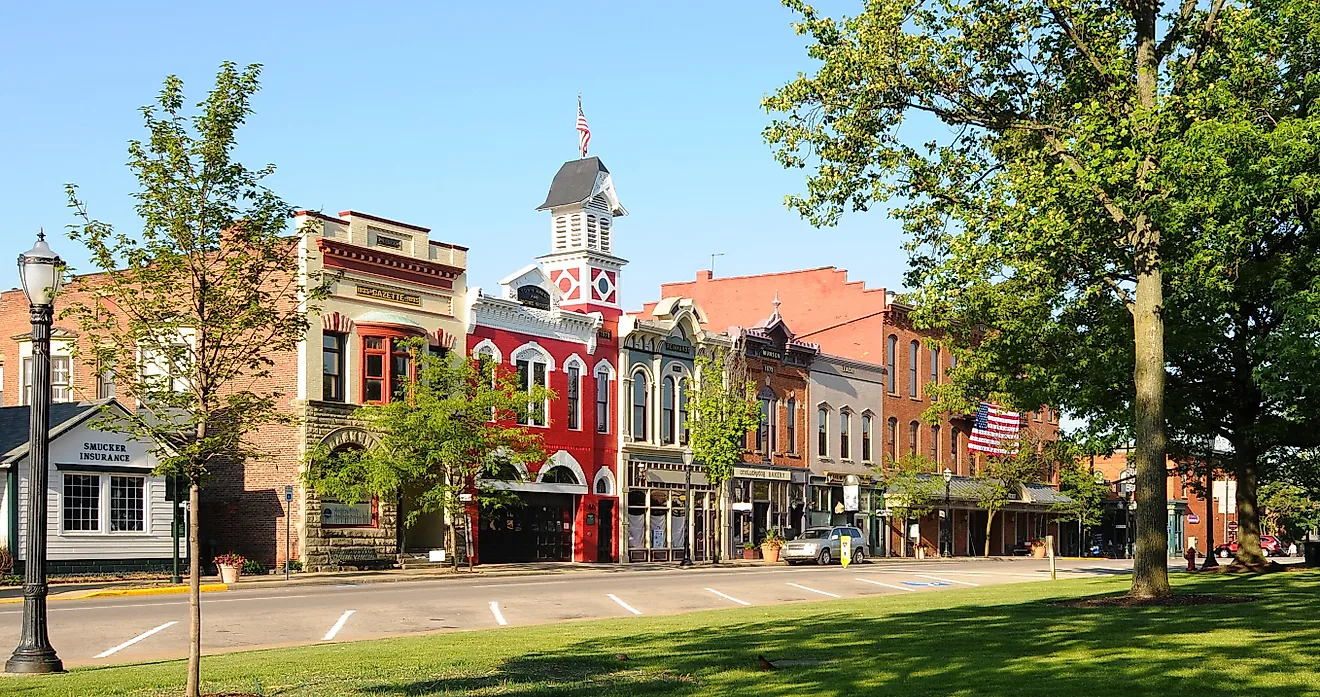
Newberry calls itself "The City of Friendly Folk," and for a Midlands town this size it seriously overdelivers. The downtown square is small enough that you park once and walk the rest. Catch whatever is playing at the restored 1880s Newberry Opera House, then stroll next door to Memorial Park. Dinner is right there too, white-tablecloth at Figaro The Dining Room or easygoing at the Grille On Main. A few blocks off the square, the Wells Japanese Garden is the quiet ringer: arched bridges over koi ponds, stone lanterns, and plantings that turn over with the seasons. For the overnight, Newberry Manor is a bed-and-breakfast near downtown, and The Old Newberry Hotel fills a building that has stood since 1878.
Beaufort

Two days in Beaufort split cleanly between the historic district and the water, and the Beaufort Inn keeps you walking distance from both. Start in the Point, where the antebellum mansions come with wide porches and live oaks dripping Spanish moss, then wind down at Henry C. Chambers Waterfront Park, where the bench swings look out over the Beaufort River. Give day two to the Reconstruction Era National Historical Park, which tells the story of the years right after the Civil War across several sites; the hour-long narrated carriage tour is the lazy, excellent way to take it in. And when the coast starts calling, Hunting Island State Park is a short drive out, with five miles of beach running up to a lighthouse first lit in 1859 and rebuilt in 1875.
Bluffton

The May River sets the tempo in Bluffton, which serves up the Lowcountry without the resort crush of its neighbors down the road. Old Town rewards a slow walk down Calhoun Street, past the Society of Bluffton Artists gallery and the 1840s Heyward House Museum. Old Town Bluffton Inn drops you right among the restaurants and shops; Montage Palmetto Bluff nearby is the blow-the-budget option. Down at the water, Bluffton Oyster Factory Park has a riverside trail, a working dock, and the state's last hand-shucking oyster house, where you can eat with the river right in front of you. The Church of the Cross, a Gothic Revival chapel built beside the water in the 1850s, is the right last stop before the light goes.
Georgetown

The state's third-oldest city, founded in 1729, is a working harbor town with more than enough to fill a weekend. The Harborwalk runs several blocks of boardwalk along the Sampit River, stringing together shops and restaurants, with the Kaminski House Museum and the Rice Museum's Town Clock along the way. The George Hotel is the stylish stay near the water; Baxter's Brewhouse Inn is the cozier downtown pick. The whole harbor goes quiet and gold at sunset, when the light drops over the shrimp boats. From there, pick your speed: ghost tours through the old rice-port district after dark, or a daytime walking tour past the fifty-odd antebellum homes downtown. Before you leave, the Purr and Pour Cat Cafe pairs coffee with cats up for adoption, which is exactly as good an idea as it sounds.
Aiken

Horses run through everything in Aiken. The Thoroughbred Racing Hall of Fame and Museum sits in the Iselins' old stables, and the shows run out at the Aiken Horse Park. The Willcox has been putting up guests since the Winter Colony days, back when wealthy Northerners wintered their horses here and tended to stick around themselves. Two days leaves room for a wander through Hopelands Gardens, where a serpentine brick wall wraps around towering deodar cedars and old camellias, plus a slow downtown morning of shops and lunch under the live oaks. Save an afternoon for Hitchcock Woods, one of the largest urban forests in the country at around 2,100 acres, with roughly 70 miles of soft sand trail winding through longleaf pine. Along South Boundary Avenue, century-old oaks close overhead into a green tunnel.
Camden

Camden is the oldest inland town in the state, and it has stayed small enough to feel personal. History buffs get the most to chew on: the Historic Camden Revolutionary War Site spreads over 107 acres of restored and reconstructed period buildings, including the rebuilt Kershaw-Cornwallis House, which the British used as their headquarters during the 1780-81 occupation. Bloomsbury Inn makes a quiet base a short drive from the grounds. The Camden Archives and Museum plus a knot of downtown antique shops will fill the middle of a day, with a relaxed dinner along Broad Street to close it out. The real signature, though, is horse country. Camden calls itself the Steeplechase Capital of the World, and most weekends the South Carolina Equine Park has something open to the public, from hunter-jumper trials to quarter horse shows and barrel racing.
Travelers Rest

Travelers Rest, which nobody local calls anything but "TR," sits right at the edge of the Upstate foothills, outdoorsy but comfortable, and makes a solid base for an active weekend. Just outside town, Hotel Domestique is the standout for a refined mountain-country stay. The main event runs straight through the middle: the Prisma Health Swamp Rabbit Trail, a paved rail-trail on the old Greenville and Northern line that follows the Reedy River south toward Greenville, past Furman University. Rent a bike and ride a stretch, drive over to Paris Mountain State Park for lake swimming and wooded trails, or just point the car at the Blue Ridge for the scenic route. Back in town, the trailside strip has Coastal Crust for wood-fired plates and the Chicora Alley Firehouse Restaurant for something casual.
Hartsville

Hartsville is built for a calm, well-rounded weekend with a little time outside. Kalmia Gardens is where to start: from the 1820s Hart House and its formal beds, the land drops about 60 feet down a bluff to the Black Creek floodplain, where a boardwalk threads through mountain laurel, azaleas, and camellias down to the water. The Mantissa Hotel handles the boutique stay, a short walk away in the heart of downtown. For something looser, Lawton Park runs along the shore of Prestwood Lake, good for a stroll or a paddle. The Hartsville Museum, in a 1930s post office, keeps the town's history on display, including the 1899 Locomobile steam car said to be the first automobile in South Carolina. Downtown covers dinner, whether you want the upscale Sam Kendall's or the laid-back Wild Heart Brewing Company.
Abbeville

A beautifully preserved downtown gives Abbeville its classic small-town feel, and the courthouse square, laid out European-style, is ringed with antique shops, restaurants, and locally owned boutiques meant to be taken slowly. At the Abbeville Opera House you can tour the building and stay for a live show. The Belmont Inn is the signature stay, right on the square. Abbeville also carries a heavy historical footnote: it is sometimes called the birthplace and the deathbed of the Confederacy, since the secession movement gathered steam here in 1860 and Jefferson Davis held one of his last war councils in town in 1865. Just out of town, Calhoun Falls State Park opens onto Lake Russell for the outdoor half of the trip, 318 acres set up for water sports, lakeside camping, and fishing, with a park office that loans out rods and reels so you can cast for bass, catfish, walleye, and crappie without hauling your own gear.
York

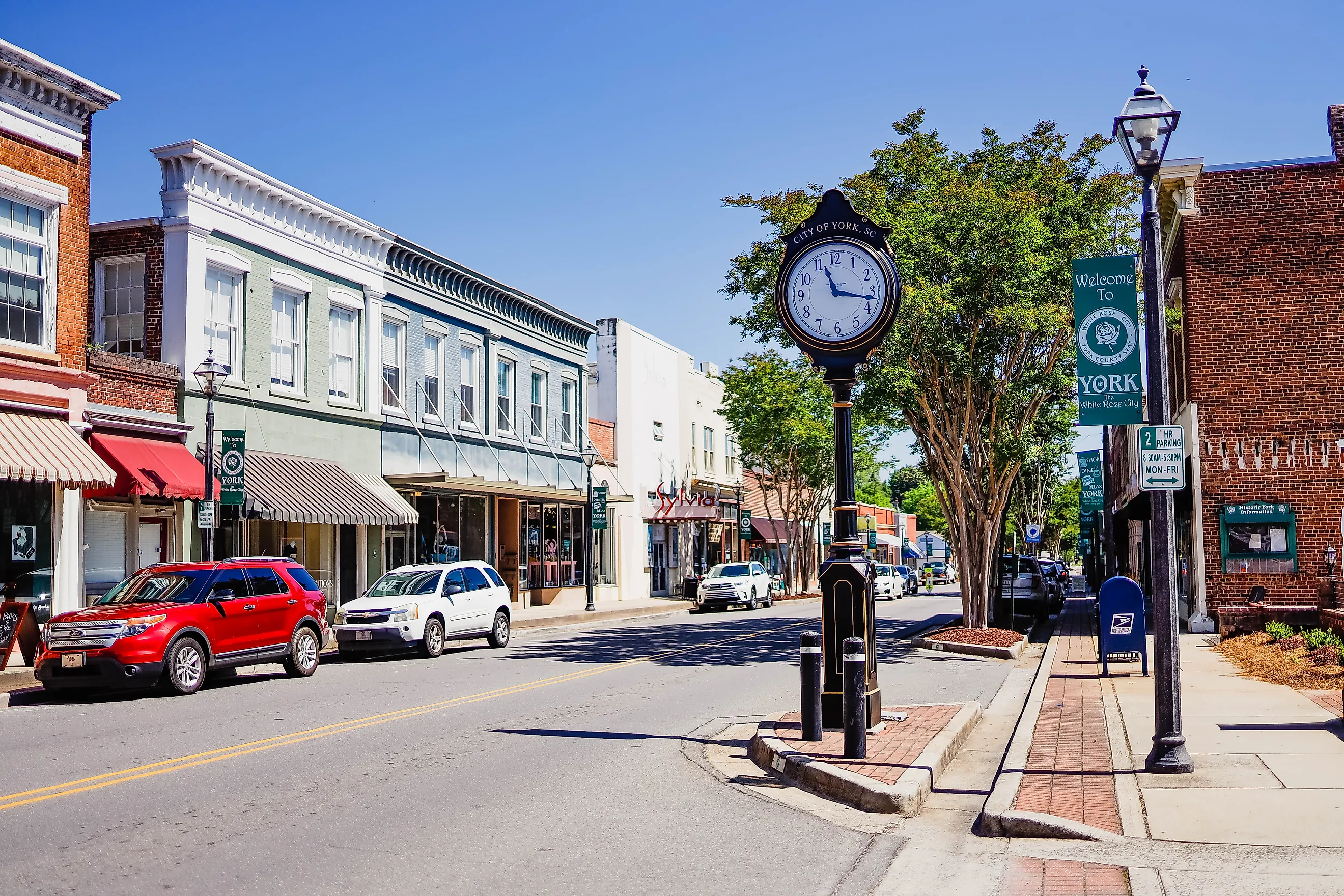
York goes by the "White Rose City," a name the Scotch-Irish settlers carried down the Great Wagon Road in honor of England's House of York from the Wars of the Roses. What makes it a two-day town is the sheer density of its downtown: a 264-acre National Register historic district, one of the largest in the state, with around 180 contributing buildings and roughly thirty styles of architecture packed into a few walkable blocks. The York County Courthouse anchors the center, and Congress Street carries the shops and restaurants, longtime storefronts alongside the newer Yorkville Marketplace. The history runs deep and genuinely strange in spots. The McCelvey Center, once the Yorkville Female College back in 1852, now holds the Historical Center of York County, the Southern Revolutionary War Institute, and the 500-seat Lowry Family Theater. Jefferson Davis gave one of his last public addresses on Congress Street as the Confederacy collapsed in 1865, and local lore still swears that a circus elephant once helped bring Santa to town during the Barnett Brothers Circus years. For the outdoor half of the trip, Kings Mountain, where the militia turned the Revolution in 1780, and its state park are a short drive west.
Making the Most of Two Days
The simplest plan is to pick one town as a base and build around a loose first evening, a full day of wandering, and a last-morning walk or brunch before the drive home. Beaufort, Bluffton, and Georgetown lean coastal. Camden, Abbeville, and York reward anyone who likes their history hands-on. Aiken, Hartsville, Newberry, and Travelers Rest bring the gardens, trails, and mountain edges. Whichever one fits the mood, two days is plenty to get you home feeling like the weekend actually did its job.