10 Best Places To Live In Switzerland In 2026
The decision about where to settle in Switzerland rarely comes down to distance. Trains run on time, hospitals are excellent, and the schools are strong almost everywhere, so the real question is what kind of day you want. A banker in Zurich and a researcher in Lausanne both live in the same small country, but their lives look nothing alike. Some cities run on finance and global institutions. Others turn on a university, a parliament, or a single lake. These ten cities show how much the answer can change from one valley to the next.
Zurich

Paradeplatz is where the money sits. The square holds the headquarters of Switzerland's largest bank, and the financial district around it is the engine that pulls most people to Zurich in the first place, whether they work in banking, insurance, or tech. From there, the Lake Zurich shoreline is a short walk down Bahnhofstrasse, the shopping street that runs the length of the old town to the water. Housing near this core is some of the most expensive in the country. People who want a shorter commute without the central price tag often land in Oerlikon to the north, which keeps fast tram and rail access into the center.
The University of Zurich and the federal technology institute, ETH, give the city a large student and research population, and they keep the cultural calendar full. Kunsthaus Zurich holds one of the country's best art collections, and the opera house sits near the lake. The old industrial quarter of Zurich West has become the place to go out, with the Schiffbau theatre and Frau Gerolds Garten, a cluster of bars and food stalls built into former warehouses. Enge, on the western shore, draws families who want to swim off the lake in summer and still reach the office in fifteen minutes.
Geneva

Half the people in a Geneva cafe seem to work for an organization with an acronym. The United Nations office and the Red Cross sit in the international quarter near the lake, and they bring a steady flow of diplomats and aid workers who keep demand for central apartments high. Land is scarce, so many of the people who fill those jobs live across the border in France and ride the regional rail line in each morning. For families, the draw is often the cluster of international schools, which makes a posting here easier to accept.
The city is quieter than its reputation suggests, and most of the life happens around the water. The Jet d'Eau throws its plume over the harbor, the Parc des Bastions fills with chess players and students, and Parc La Grange hosts open-air concerts in summer. Up in the old town, the Place du Bourg-de-Four has been a market square since Roman times, and St. Pierre Cathedral looks out over the rooftops. The Grand Théâtre handles the opera, and the Musée d'Art et d'Histoire holds the city's deepest collections.
Lausanne

Lausanne is built on a hillside, and that slope decides almost everything about living here. The metro line is the spine that links the lakefront at Ouchy with the center and the university plateau above, so a flat near a station is worth far more than one a steep ten minutes away. Work in the city leans heavily on education and medicine. The university hospital is one of the largest employers in the whole region, and it anchors a research economy that keeps the population young.
The split between the water and the academic heights gives the city two moods. Ouchy is for the lakeside promenade and summer swimming. Flon, a redeveloped warehouse district in the center, is where the nightlife lives, with clubs like D! Club and Le Romandie. The Collection de l'Art Brut gathers work by self-taught and outsider artists, a museum unlike any other in the country, while the Fondation de l'Hermitage shows its exhibitions in a villa with a view back over the rooftops.
Bern

The country runs its government from Bern, and the work follows from that. The federal parliament building sits in the center, and a large share of jobs orbit it, in the ministries, the university, and the big Inselspital hospital. People who take those posts tend to stay, and they fill the residential districts just outside the core, like Länggasse and Breitenrain, then walk or tram in. This is a city for a long, predictable career rather than a fast-moving one.
Most of the medieval center is closed to cars, which gives Bern its unhurried feel. Kramgasse runs under sandstone arcades past cafes and the Zytglogge, the astronomical clock tower that has kept time since the Middle Ages. The square in front of parliament holds a market twice a week. In summer the real event is the Aare River, where locals walk upstream and float back down through the Marzili baths. Gurten, the hill on the southern edge, gives the whole city a green roof and a view of the Alps.
Basel
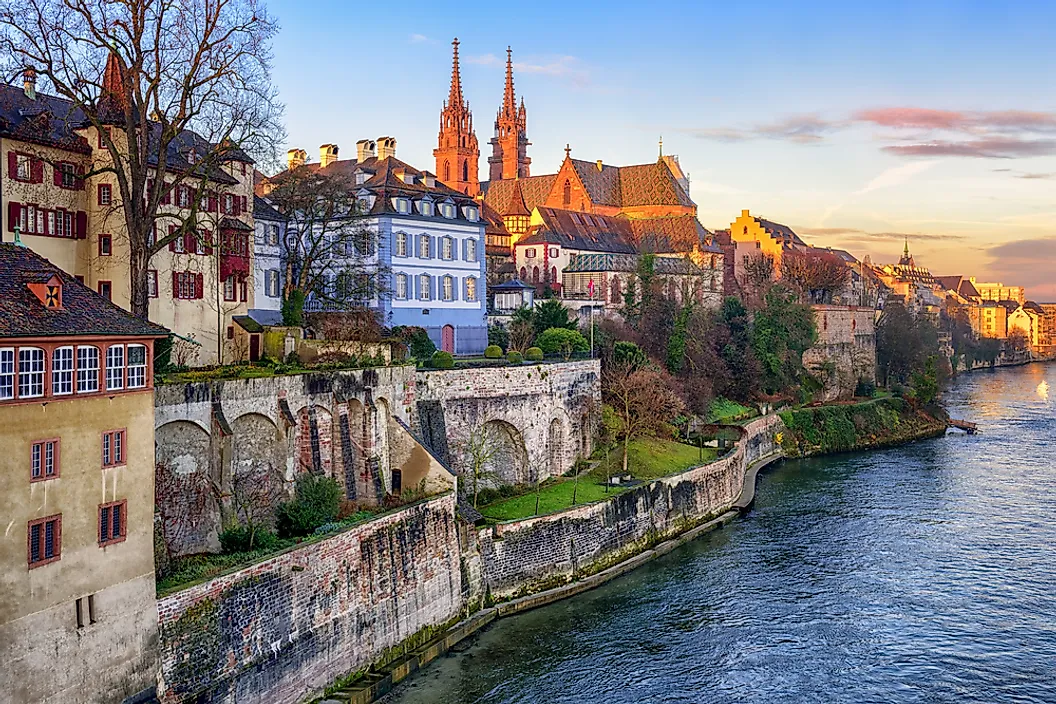
Basel runs on chemistry. Roche and Novartis built their headquarters along the Rhine, and the pharmaceutical industry draws a specialized workforce that shapes the housing market and the salaries behind it. The city sits in the corner where Switzerland meets France and Germany, so a large part of that workforce commutes across a border every day, and the main rail station functions as an international hub. The university and its teaching hospital add a second, steadier pillar to the local economy.
For a working city, Basel takes its art seriously. The Kunstmuseum is one of the oldest public collections in the world, the Fondation Beyeler in nearby Riehen shows modern masters, and the Tinguely Museum is given over to the clattering kinetic sculptures of its namesake. The old town gathers around Marktplatz and the red sandstone Rathaus, with markets spilling over to Barfüsserplatz. In summer the whole city seems to climb into the Rhine and float downstream with their clothes sealed in waterproof bags. Steinenvorstadt keeps the restaurants, cinemas, and late nights.
Lucerne

Lucerne lives on its setting. The city sits where Lake Lucerne meets the mountains, an hour from Zurich, and the economy that has grown up around it is built on tourism, transport, and regional administration. That keeps the job market stable but modest, smaller in scale than the big financial cities, which is exactly the trade some residents are looking for.
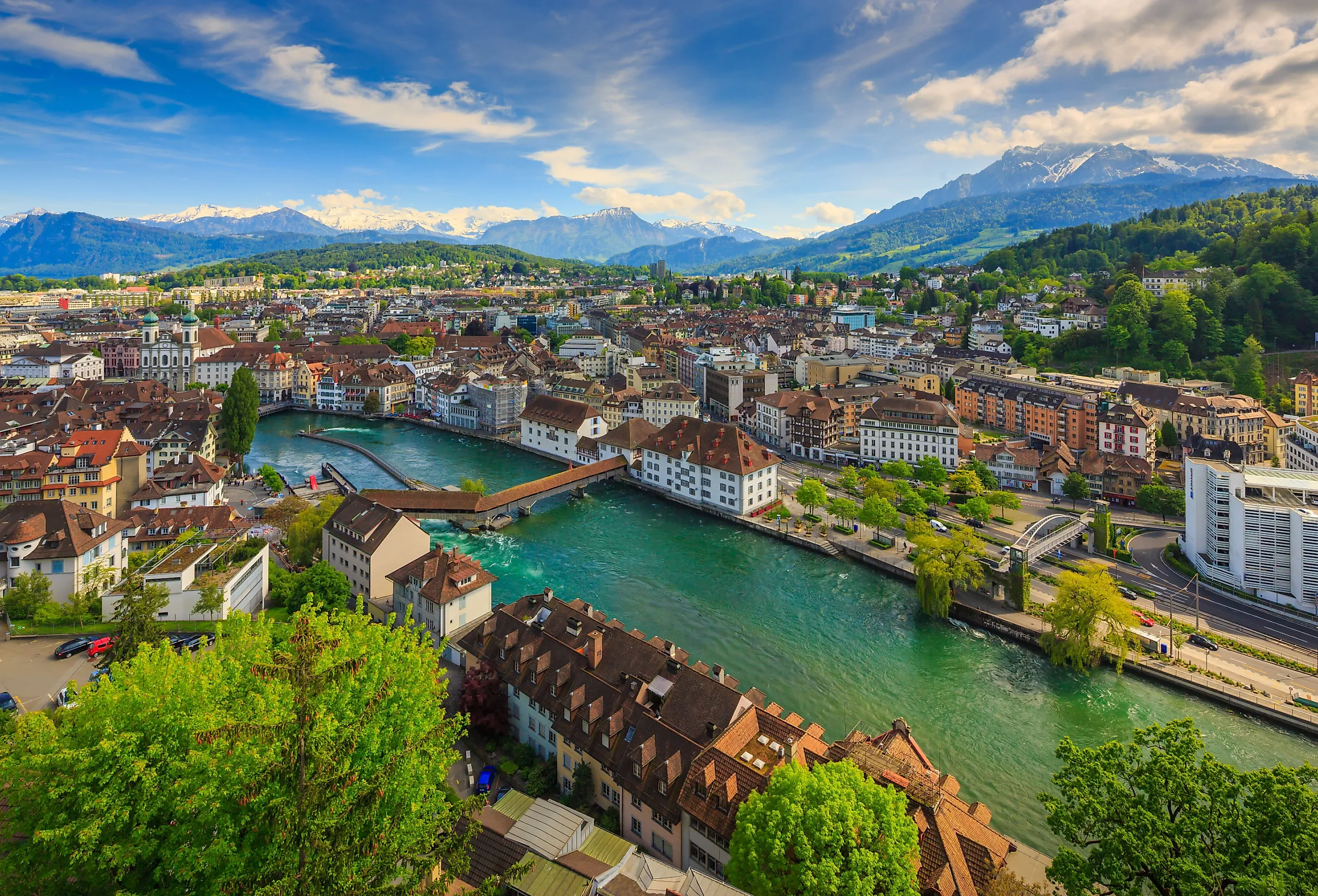
The Kapellbrücke, a covered wooden footbridge across the Reuss, is the image everyone knows, and the painted facades of the Weinmarkt square sit just behind it. On the waterfront, the glass-and-steel KKL concert hall hosts the Lucerne Festival, one of the most respected classical music events in Europe. The Swiss Museum of Transport, the most visited museum in the country, fills its halls with locomotives and aircraft. Behind the city, Mount Pilatus is reachable by cogwheel railway and cable car, which puts a real mountain within reach of an afternoon.
Zug

Low taxes built modern Zug. The canton's famously light tax rates pulled in finance and technology firms, and with them a wave of high earners, many of whom commute the short hop to Zurich while keeping a quieter address on the lake. The local economy is small but wealthy, which keeps housing tight and prices firm. Fast trains from the station make the daily trade between Zug calm and Zurich busy an easy one.
Life here gathers along the water. The Seepromenade is the place for an evening walk, and Landsgemeindeplatz, the main square, hosts the markets and seasonal fairs. Above town, a funicular climbs the Zugerberg in eight minutes to hiking trails and a long view over the lake. Once a year the Zuger SEEfest fills the shoreline with music and fireworks before the city settles back into its usual hush. Zug rewards people who want their money to go further and their evenings quiet.
St. Gallen

The University of St. Gallen sits on a hill above the city, and its business school carries a reputation that reaches well past the country's borders. Students and academics push demand up into the hillside neighborhoods, with Rotmonten closest to the campus and St. Georgen offering more room for families near green space. Work in the city centers on education, administration, and services rather than heavy industry, which gives it a white-collar, academic character.
The heart of St. Gallen is its abbey. The Abbey of St. Gall is a UNESCO World Heritage Site, and its Baroque library, lined with manuscripts more than a thousand years old, is one of the most important historic libraries in Europe. The pedestrian street of Multergasse runs through the old town with its cafes and the Textile Museum, a nod to the embroidery trade that once made the city rich. Above town, the Drei Weieren are three hillside ponds where residents swim through the summer, and the annual open-air festival brings major acts to the fields each year.
Winterthur
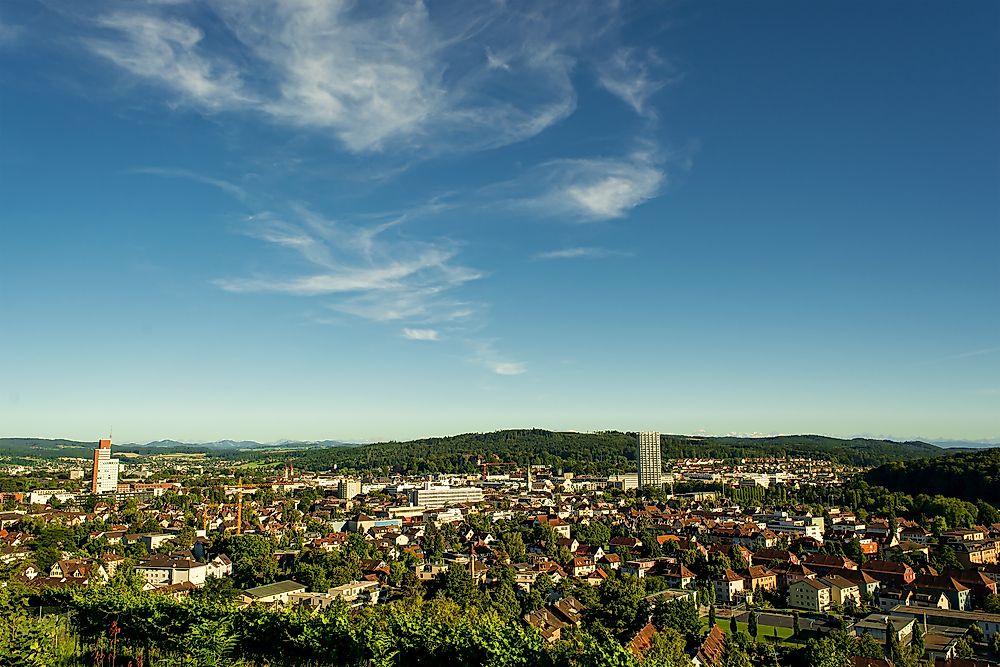
Winterthur offers the deal a lot of Zurich workers eventually take. It sits close enough for a quick train commute and prices a notch below the city, so most residents work elsewhere and come home to something more affordable. The old Sulzer industrial site at the center has been rebuilt into a mixed quarter of apartments, offices, and cultural space, which is where much of the new energy has gone.
For its size, the city carries serious art. The Kunst Museum and the Fotomuseum, one of the leading photography museums in the German-speaking world, both draw visitors who would not otherwise stop. Technorama, a hands-on science museum on the edge of town, pulls in families and school groups by the busload. Eulachpark and the wooded Eschenberg hill give residents quick green escapes, and venues like the Albani Music Club keep a modest live-music scene going in the redeveloped districts.
Lugano

Cross the Alps and the language changes to Italian, the palm trees appear, and you have reached Lugano. The economy here runs on finance, services, and trade with Italy just to the south. Buildable land is scarce around Lake Lugano, so homes stack up along the waterfront and climb the surrounding hillsides, and the result is a Swiss city with a distinctly Mediterranean temperament.
Piazza della Riforma, the broad arcaded square at the center, is where the city meets for a coffee and a passeggiata. Parco Ciani spreads along the lake for walking and lazing, and the LAC arts center handles the exhibitions, theater, and concerts. Two wooded peaks, Monte Brè and Monte San Salvatore, rise straight from the shore and reward the climb with a view over the whole basin. The Estival Jazz festival brings international names to the squares each summer, and the rest of the year the evenings drift between the lakeside bars and restaurants.
Choosing a Life, Not Just an Address
What separates these cities is not really scenery, because Switzerland has more of that than it knows what to do with. It is the shape of the working day. Zurich and Geneva trade on global finance and international institutions. Basel and Lausanne live off pharmaceuticals and the lab bench. Bern offers the steadiness of public service, and Lugano runs to a southern clock.
The smaller cities sell a different bargain. Lucerne, Zug, Winterthur, and St. Gallen each pair a real economy with a lake, a mountain, or a fast train back to somewhere bigger. The trick is matching the city to the life you actually want to lead, because in a country this well run, almost any of them will work.