6 Snake-Filled Waters In New Hampshire
New Hampshire surprises many visitors with its rich wetland tapestry, where lakes, rivers, marshes, and tidal creeks host an array of reptile life. Those who plan to paddle, fish, or hike along the state’s waterways will find practical notes about where snakes are often found in New Hampshire, and why those animals are an important part of local ecosystems. The northern water snake, the eastern ribbon snake, the common garter snake, the northern brown snake, the ring-necked snake, the smooth green snake, the eastern milk snake, and several other species use New Hampshire waters and adjacent shores for feeding and basking. Explore sheltered coves, marsh edges, and rocky points if an observer seeks a snake sighting. Those curious about natural history, local culture, and outdoor recreation, read on for a clear sense of place and a few practical tips for enjoying New Hampshire’s watery landscapes responsibly.
Pawtuckaway Lake

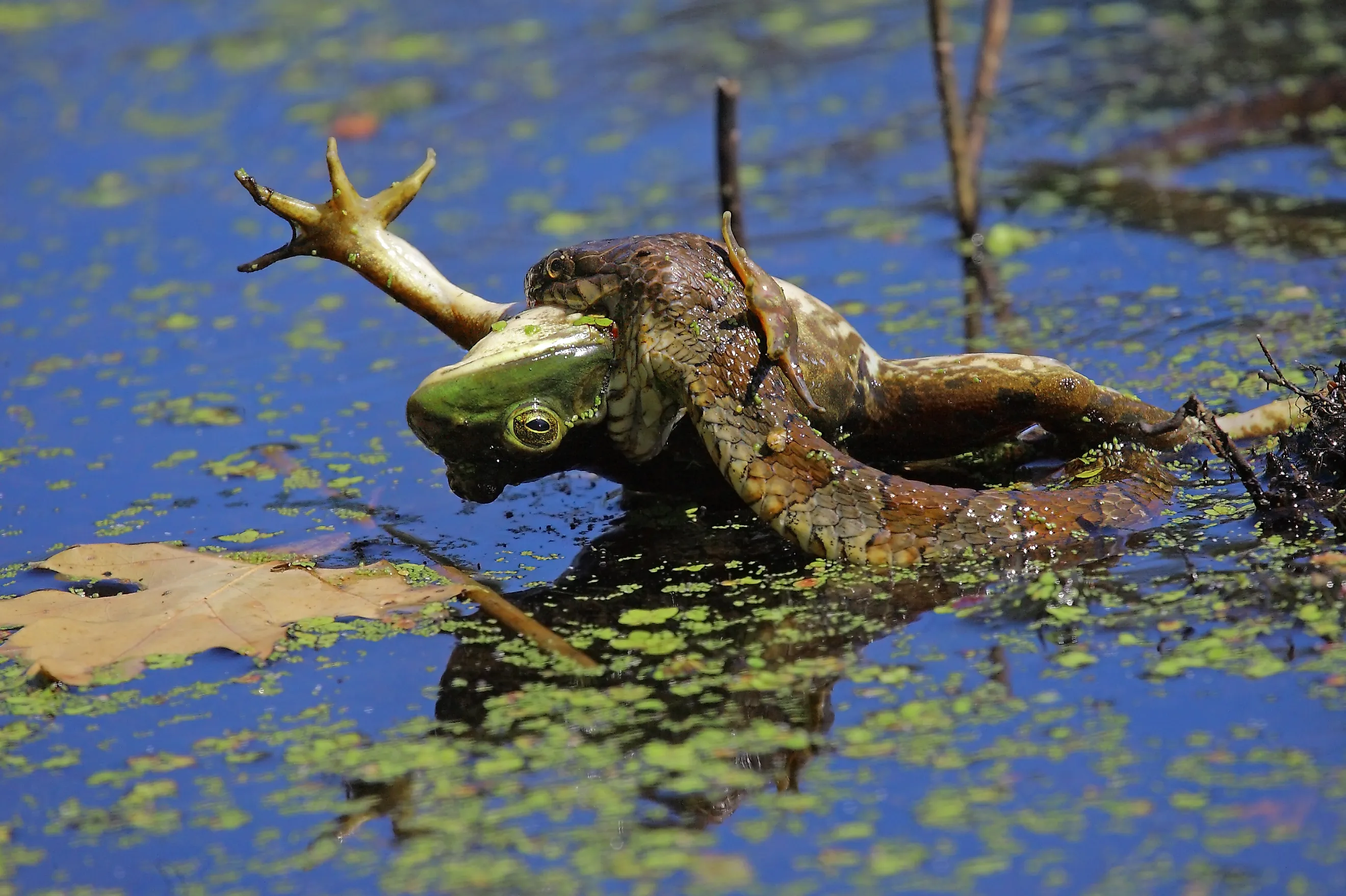
Pawtuckaway Lake and the wetlands around Pawtuckaway State Park support dense shoreline vegetation, shallow coves, and exposed rocks where snakes regularly hunt and sun themselves. Kayakers who skirt the marshy inlets often spot northern water snakes slipping through the reeds after frogs and small fish, and anglers may observe common garter snakes and ring-necked snakes on the shoreline chasing amphibians or searching for invertebrates. Fallen logs and boulders provide prime basking sites for smooth green snakes early in the season, and the islands and extensive littoral zone create abundant edge habitat that benefits both predator and prey.

Because shallow water warms earlier in the season, snakes are typically active along the shorelines before they become conspicuous in the open water, and visitors who move slowly and watch the margins tend to notice them first.
Lake Winnipesaukee

Lake Winnipesaukee, the state’s largest lake, contains hundreds of islands and miles of varied shoreline, including marshy bays, rock-strewn points, and sheltered coves that water snakes favor. The northern water snake ranges across much of the eastern United States and is found in larger lakes where shallow bays and abundant amphibian populations supply steady prey. On Winnipesaukee, ribbon snakes and common garter snakes move among emergent vegetation, and observers sometimes see northern brown snakes hunting along damp trail edges near launch sites. Snakes move between islands and near shorelines where anglers fish for bass and pickerel, and where loons, herons, and other waterbirds concentrate.

It is common for people to mistake a large, dark northern water snake for a venomous species, so learning simple field identification cues, such as head shape and behavior, is useful before a visit. Swimmers and boaters benefit from scanning launch areas and beaches for basking snakes before entering the water, and routine caution around rocks and submerged wood is sound practice.
Squam Lake

Squam Lake supports a mosaic of forested shoreline, wetland coves, and rocky ledges where northern water snakes, ribbon snakes, and ring-necked snakes forage and thermoregulate. The lake’s reputation as a wildlife-rich destination means naturalists and guided-boat tours frequently encounter reptiles along quiet bays and shallow beaches. Dense emergent vegetation provides both cover and feeding grounds for frog and fish populations that sustain water snakes, and fallen logs at the water’s edge are common basking platforms for smooth green snakes and juveniles of other species.

Because Squam’s islands and protected coves limit wave action, the littoral zones warm more quickly than open-water areas, creating early-season hotspots for reptile activity. For trip planning, consider that the best wildlife viewing often occurs at dawn and late afternoon, when snakes and other animals are most active along the shoreline.
Great Bay Estuary

Great Bay is New Hampshire’s largest estuarine system, where tidal marshes, mudflats, tidal creeks, and freshwater tributaries combine to produce complex habitat gradients. Although higher salinity zones are less hospitable to purely freshwater snakes, the reserve’s tidal creeks, freshwater inlets, and marsh edges host species such as northern water snakes, garter snakes, and other semi-aquatic reptiles. Snakes use sheltered creekbanks and riparian edges for feeding on amphibians and small fish, and ring-necked snakes often forage beneath boardwalks and debris in damp margins.

Kayakers and shore walkers exploring protected launches along the bay frequently report sightings in quiet side channels and salt-marsh fringes where fresh and brackish waters mix. Because tidal conditions influence where and when animals are visible, visitors should plan outings around tide charts and remain aware of sensitive marsh vegetation that supports foraging animals.
Merrimack River

The Merrimack River corridor threads through southern New Hampshire, and the river’s sandier banks and adjacent open fields provide habitat for snakes that prefer well-drained soils and river valleys. The eastern hognose snake occurs in parts of the Merrimack corridor south of Concord, where sandy or gravelly substrates and meadow-edge habitats support the amphibian and toad populations that hognose snakes favor. Northern black racers and eastern milk snakes appear in warmer, open stretches and field edges, while common garter snakes and northern brown snakes use the river margin for hunting.

Riverfront parks, gravel bars, and backwater channels offer basking and foraging opportunities for both water-associated species and more terrestrial snakes that hunt along the river margin. Anglers who wade near shallow, slow-flowing sections and families using riverside trails may encounter snakes sunning on exposed banks; the recommended response is to leave any animal undisturbed and to teach children basic respect for wildlife.
Lake Massabesic

Lake Massabesic sits near Manchester and functions as a drinking-water reservoir, as well as a place for quiet paddling and shoreline trails in adjacent conservation land. Because the lake contains varied littoral habitats—reeds, emergent vegetation, and rocky points—water snakes, ribbon snakes, and smooth green snakes can be found along the margins where amphibians and small fish are available. Observers in nearby neighborhoods and on lake trails have reported sightings near boat launches and protected coves, where snakes bask on floating logs or sunlit rocks.

Because parts of Massabesic are managed for water supply protection, access rules differ across the shore, so visitors should consult local regulations and plan wildlife viewing during permitted activities and in designated areas. When amateur naturalists and photographers see snakes on shorelines, mindful distancing helps avoid stress to both the animals and to other visitors who may be uneasy around reptiles.
Where Snakes Swim: Respectful Watching and Practical Tips
New Hampshire waters host a modest but ecologically important assembly of snake species, with the northern water snake among the most commonly encountered in lakes, rivers, and marsh edges. Reptiles are parts of functioning food webs; they control amphibian and small-fish populations, and they provide prey for raptors and larger mammals. For safe, low-impact encounters, follow a few simple rules: observe from a respectful distance, avoid handling wild snakes, teach children to look rather than to touch, and consult local signage and park rules before launching a boat or entering a protected shoreline. Visitors who learn a few identification cues are less likely to misidentify harmless species as dangerous ones, and knowing when snakes are most active—warmer months, mornings, and late afternoons—helps set realistic expectations for wildlife viewing. New Hampshire’s combination of lakes, rivers, tidal estuaries, and marshes supports reptile life in ways that make the state’s watery places ecologically interesting and worth careful, curious exploration.