5 Most Snake-Filled Bodies Of Water In Arizona
Arizona's reputation for snakes and other hardy desert-dwelling reptiles extends to its various waterways. In fact, some of the state's most important snake habitats are found along its reservoirs, rivers, and perennial streams where reliable water levels attract both these predators and their food sources.
From the more than 114 miles of shoreline at Lake Pleasant to the fish-rich waters of Theodore Roosevelt Lake and the roughly 190-mile course of the Verde River, many of these bodies of water host a remarkable variety of species. Species such as northern Mexican gartersnakes and narrow-headed gartersnakes, both federally threatened, depend on places where aquatic habitat remains available year-round in this otherwise arid corner of the United States. More common species, including black-necked gartersnakes, also make use of these wetland and shoreline habitats. With that, here are several Arizona waterways where snakes are commonly associated with riparian and shoreline habitat.
Lake Pleasant

Located just northwest of Phoenix, Lake Pleasant is among Arizona’s best-known destinations for boating and fishing. But its extensive shoreline and the surrounding Sonoran Desert also boast a notable diversity of snakes. If you're here for a quick escape from the city, you may encounter gopher snakes, coachwhips, and western diamondback rattlesnakes, mainly around the lake's craggy coves, washes, and brushy areas bordering the water.
The reservoir’s fluctuating water levels create a patchwork of habitats that similarly attract rodents, lizards, and birds, providing abundant prey. During warmer months, resident snakes are often most active during the cooler hours of the day, though some species shift toward evening activity as temperatures climb.
Because of its venomous bite, the western diamondback rattlesnake is especially important to look out for. Visually, it is a heavy-bodied species with a grayish-tan background color, dark diamond-shaped markings along its back, and, of course, a distinctive rattle at the end of its tail.
Theodore Roosevelt Lake

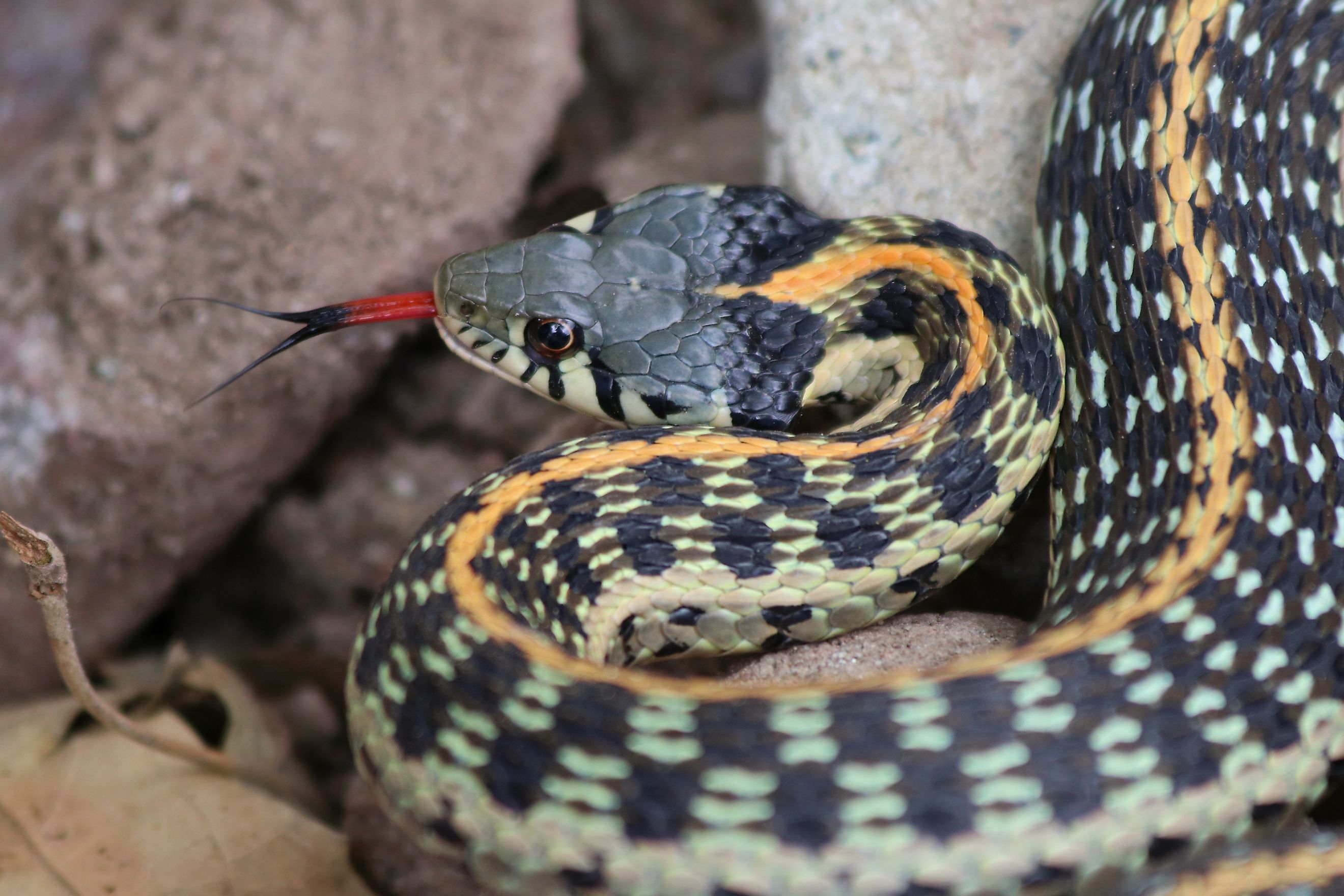
Theodore Roosevelt Lake, the largest lake entirely within Arizona, lies within the Tonto National Forest and offers extensive snake habitat along its numerous coves and desert hillsides. The lake is particularly well known among herpetologists for supporting northern Mexican gartersnakes, a slender species with three pale stripes running the length of its body against a darker background. Unlike many Arizona snakes, this species is strongly associated with water and often hunts fish, tadpoles, and amphibians.
The mix of aquatic and upland habitats allows both water-dependent and desert-adapted snakes and other reptiles to occupy the same general area. Other species found around the reservoir include gopher snakes, coachwhips, and western diamondback rattlesnakes.
Roosevelt Lake's importance for natural conservation is tied largely to its size and habitat diversity. At full pool, the reservoir stretches for more than 22 miles, creating a variety of spots where animals of all kinds can forage, bask, and seek shelter among rocks, vegetation, and driftwood, making it a great destination for wildlife photographers, too.
Patagonia Lake

Mere miles from the Mexican border, Patagonia Lake in far southern Arizona hosts a surprisingly diverse snake community thanks to its location within a remote and biologically rich part of the state. The reservoir and surrounding Sonoita Creek State Natural Area and Patagonia Lake State Park contain woodland, grassland, and desert scrub environments, creating favorable conditions for numerous reptile species.
Among the most notable is the black-necked gartersnake, a medium-sized snake recognized by the dark patch on the back of its neck and the bright yellow or orange markings that often run along its body. Patagonia Lake also offers space for coachwhips, gopher snakes, kingsnakes, and several rattlesnake species.
This area is especially productive because Sonoita Creek helps sustain moist habitat around Patagonia Lake, even in a region where permanent water is scarce. Those conditions also attract amphibians and small fish, which in turn support predatory, water-associated snakes.
Verde River

The Verde River is one of Arizona’s only major free-flowing rivers, winding through the central portion of the state and supporting a wide range of flora and fauna along its banks. For snakes, however, the river provides something uncommon in much of Arizona: quick-moving freshwater and dense riparian vegetation. It flows for roughly 190 miles before joining the Salt River, creating a long ribbon of reptile-friendly habitat through a landscape where, again, permanent waterways are relatively rare.
One notable species in parts of the upper Verde River watershed is the narrow-headed gartersnake, a slender, fish-eating snake with a long, narrow snout and a brown, tan, charcoal, or olive body marked by paired blotches that often fade toward the tail. It is uniquely and uncommonly adapted to life in and around moving water, where it feeds primarily on native fish.
The Verde River watershed also provides habitat for northern Mexican gartersnakes, black-necked gartersnakes, gopher snakes, and several rattlesnake species, though the federally threatened gartersnakes are uncommon and rarely seen. Stands of cottonwood, meandering backwaters, gravel bars, and undercut banks offer shelter and hunting grounds throughout the river system.
Cienega Creek

Located southeast of Tucson, Cienega Creek is one of the few perennial streams remaining in southern Arizona. Whereas many desert waterways run dry in the region for much of the year, portions of this creek maintain surface water year-round, supporting a rich riparian ecosystem that attracts a variety of snake species. Among them is the gopher snake, a species that typically displays a yellow or cream-colored body with brown spots. They can also grow up to 8 feet!
The creek’s dense stands of cottonwoods and willows, combined with marshy areas and shallow pools, provide ideal cover for snakes and their prey. Checkered gartersnakes, western diamondback rattlesnakes, black-necked gartersnakes, and northern Mexican gartersnakes can also be found in the surrounding grasslands and mesquite bosques.
Watch Out for Snakes in These Arizona Waterways
The above-mentioned lakes, rivers, and streams concentrate snake activity by combining Arizona's sparse water, prey availability, and protected desert habitats. Whether in Theodore Roosevelt Lake’s extensive shoreline, the fast-flowing Verde River, or remnant wetlands like Cienega Creek, each location supports distinct assemblages of gartersnakes, rattlesnakes, and other species. Above all, these waterways showcase how limited fresh water shapes where reptiles in the Southwest can persist, offering scenic landscapes along with their ecological importance.