11 Iconic Animals That Live Only In Indonesia
Indonesia is the largest archipelago in the world and is off the coast of mainland Southeast Asia. It comprises over 17,500 islands spread across the Indian and Pacific Oceans. Out of all its islands, over 7,000 of them are uninhabited. The largest and most populous islands of Indonesia are characterized by dense forests, volcanic mountains, coastal plains, alluvial swamps, and shallow seas with coral reefs. Within that tropical climate, present throughout the country, live some unique animals that are not found anywhere else in the world.
Sumatran Orangutan

The Sumatran Orangutan is restricted to the northern tip of the island of Sumatra. Within that region, they occupy habitats of lowland tropical mangrove, riparian, and swamp forests. While already in a limited range in the wild, Sumatran Orangutans are also facing habitat loss. Illegal logging is common in their native range, as well as the capture of young orangutans that are then distributed in the illegal pet trade.
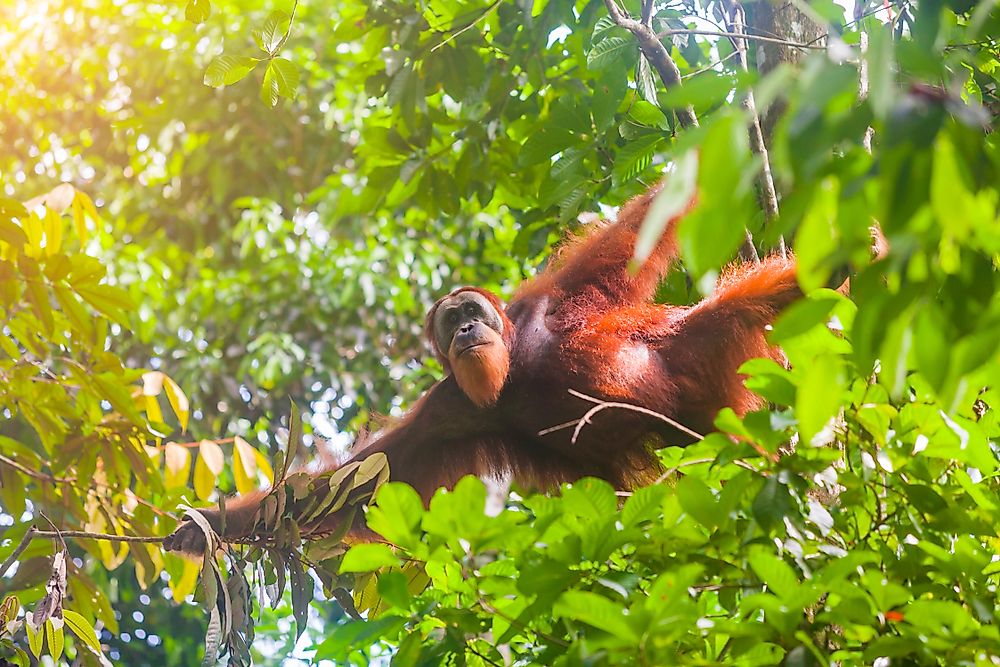
They are known for having high levels of intelligence, with some individuals learning how to use tools such as using sticks to prod termite mounds or extract seeds from fruit, then passing their learned information down to other generations of orangutans. In some instances, they have observed villagers cross bodies of water on boats, then, come down from the trees, unfastened the boat, and made their way across the water themselves.
Celebes Crested Macaques

Celebes Crested Macaques are native to Sulawesi, specifically in the northeast area of the island. There are a handful of populations that exist on the neighboring islands of Pulau Manadotua and Pulau Talise, as well as a population of around 100,000 that was introduced to the island of Pulau Bacan. These are social primates that often live in groups of between 50 and 97 individuals, mostly composed of females rather than males. Their name originates from hair on the crowns of their head that grows up and points backward.

They inhabit tropical lowland and upland rainforests that are between 700 and 1100 meters above sea level, which is likely due to the abundance of fruit like figs, which make up most of their diet. They have, however, been known to eat over 145 species of plants. When fruit is scarce, they will feed on insects, leaves, and flowering plants.
Komodo Dragon

The largest extant species of lizard in the world calls Indonesia home. The Komodo Dragon reaches lengths of 10 feet and can weigh as much as 300 pounds. They are primarily limited to Komodo Island National Park, with fewer than 3,500 individuals left in the wild. Young Komodo Dragons will eat animals as small as rats, whereas adults are capable of killing and eating adult buffalo. Their jaws are powerful, and they possess venom strong enough to kill a human.

They favor tropical forests but have been found across the Komodo Islands. Many factors threaten Komodo Dragons, such as habitat loss when people burn the Komodo Dragon’s land for other uses, illegal hunting by poachers targeting Komodo Dragons, climate change, such as rising sea levels, and tourists disrupting their mating behavior. However, females of the species have been known to reproduce without mating through a process called parthenogenesis.
Sumatran Tiger
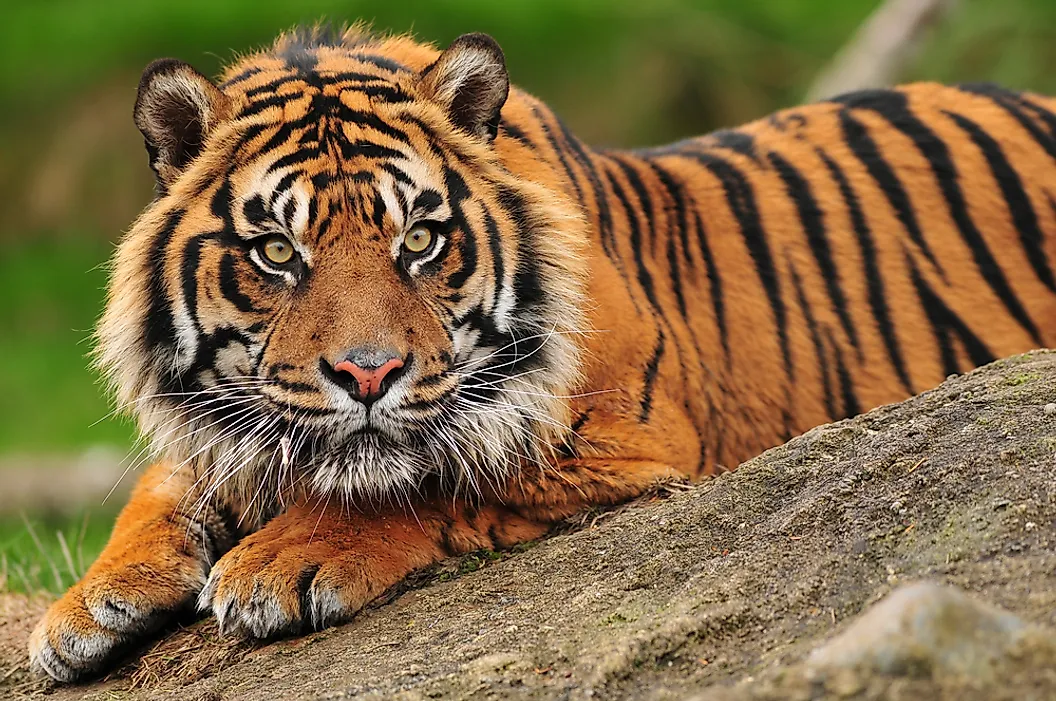
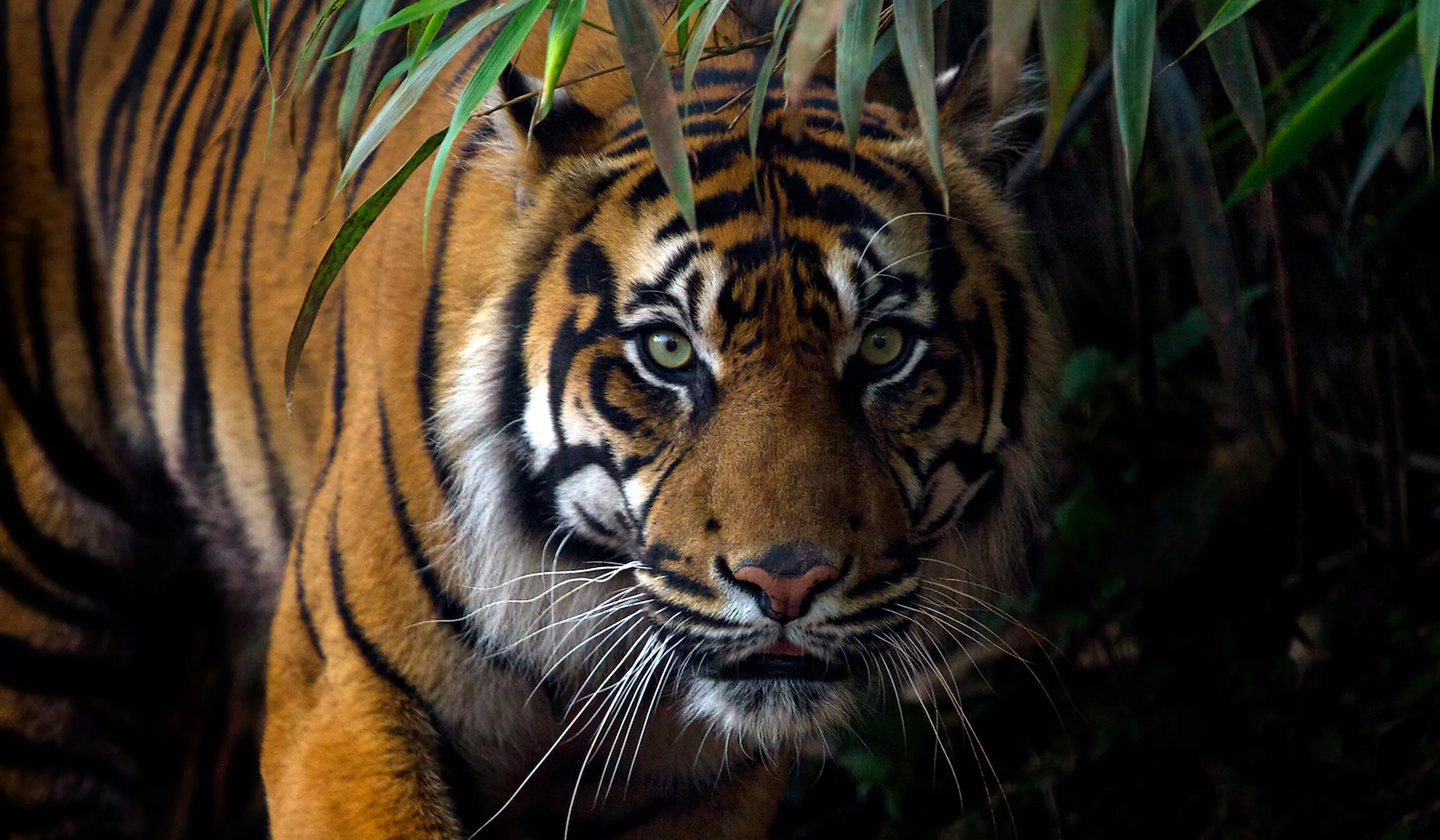
The smallest species of tiger in the world, the Sumatran Tiger, as its name would suggest, is limited to the island of Sumatra. It attains lengths of eight feet, weighing up to 260 pounds. There are thought to be only 400 individuals left in the wild, with 150 living in Gunung Leuser National Park. They inhabit lowland and mountainous forests throughout Sumatra, with many living in unprotected areas that are threatened by deforestation and agricultural conversion.
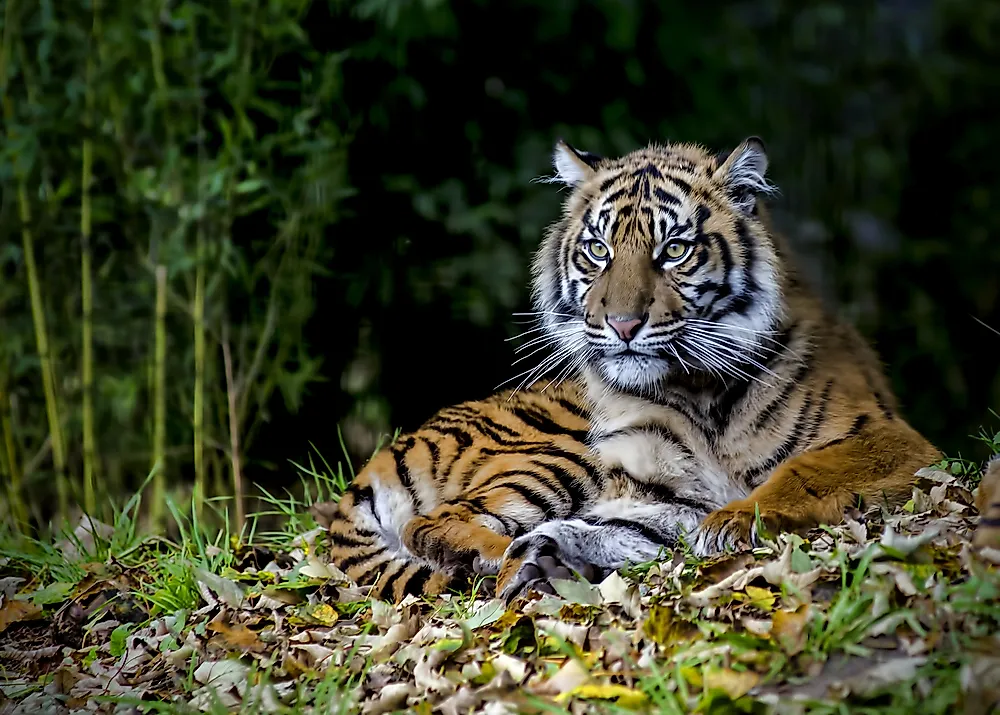
Sumatran Tigers hunt under the cover of darkness, potentially travelling up to 18 miles in search of Tapir, Wild Boar, and Deer. However, habitat loss affects the prey species of tigers just as much as it does tigers. In the last 22 years, deforestation has resulted in the loss of up to 30 million acres of Sumatran forests. Furthermore, illegal poaching poses a threat as they are harvested for their bones, genitalia, and fur.
Javan Rhino

There are only around 50 Javan Rhinos left in the wild, and they live in Ujung Kulon National Park on the island of Java. They weigh between 2,000 and 5,060 pounds, reaching heights of 5-5.5 feet, and lengths of 6-11 feet. Males possess a single horn that can be as much as 10 inches long, whereas females will have a much smaller, or no horn.

Little is known about them; however, biologists have concluded that they have a more varied diet than most species of rhino, with over 300 species of grass, plants, and vegetation that make up their diet. They are solitary by nature and rarely seen. They experience unique threats to their populations, such as uneven ratios between males and females of the species, the protected area they occupy is reaching its capacity for rhinos, and the area is also prone to natural disasters.
Sumatran Elephant

Sumatran Elephants are a unique and important species that contributes to the ecosystem by planting the seeds of the wide range of plants they eat. Their population in the wild is between 2,400 and 2,800. They reach lengths up to 20 feet, heights of 5-9 feet at the shoulder, and can weigh up to 5 tons. They inhabit broadleaf, moist, tropical forests, which have experienced severe habitat loss, changing the Sumatran Elephant’s status from endangered to critically endangered.

The population of Sumatran Elephants has declined by 80 percent within the last 25 years due to pulp and paper industries, and oil palm plantations. Consequently, this has confined small herds into small patches of forest where they are not expected to survive in the long term. Today, the Lampung province has only three herds left, out of which only two are believed to be biologically viable.
Mountain Anoa

The Mountain Anoa is the smallest species of wild cattle. They vary in color between dark brown and black, with males being darker than females. Between February and April, they will shed their hair and expose their head, neck, and limbs. Horns are present in both males and females, and are usually short and triangular at the tip.

Mountain Anoas are found on the island of Sulawesi and Buton, living in rainforests with little to no human activity, and favoring habitats that are rife with understory vegetation and close to water. They live solitary lives, mostly, sometimes living in pairs. They are most active in the morning, resting in the shade during the heat of midday, and sometimes bathing in water or mud to cool off.
North Sulawesi Babirusa

The North Sulawesi Babirusa is predominantly native to Sulawesi but also inhabits the islands of Lembeh, Buton, and Muna. It has two pairs of unique tusks made from enlarged canines, with the upper canines actually penetrating through the top of the Babirusa’s snout and stretched towards the forehead.

They typically live in the underbrush of tropical rainforests, near the shores of rivers and lakes. They are sociable animals that use different vocal sounds to communicate with each other. They live in groups divided into males and females, with each group establishing its own dominance and hierarchy. They are diurnal, foraging in the morning and late afternoon, choosing to rest in the heat of midday.
Pygmy Tarsier

The Pygmy Tarsier weighs less than two ounces and from head to tail is about four inches long. Their small size, paired with the Tarsier living in forests of an average elevation of 6,890 feet, resulted in them evading detection for 80 years, and the belief that they had gone extinct until they were rediscovered in May 2000.
The Pygmy Tarsier is found in central Sulawesi, living in forests situated on mountain slopes that gain moisture from clouds and fog. They often stay close to the lower canopy among the trunks of saplings. Their diet consists mostly of insects and arthropods, especially spiders, which they will hunt at night as they are primarily a nocturnal species, active before dawn or after dusk.
Javan Hawk Eagle

Javan Hawk Eagles are endemic to Java, as their name would suggest, but can also be found in Bali. Within these two islands, it is limited to disjunct patches of humid and tropical forest due to habitat loss. They normally occur at elevations ranging from 200 meters to 1,200 meters above sea level; however, individuals have been recorded as high as 3,000 meters in elevation. They hunt from perches, preying on mammals, reptiles, and other birds.

It is estimated that 300 to 1,200 individuals of this species remain in the wild. Deforestation has been the historical threat to this species; however, they are also victims of trappers and trade. Increased awareness of its conservation has resulted in a higher demand for individuals to be put on display. In recent years, it has been seen in zoos, bird markets, and rescue centers.
Sumba Hornbill

The Sumba Hornbill’s range spans throughout the Nusa Tenggara Islands, especially on Sumba Island, where it inhabits evergreen forests, monsoon forests, and forests along riparian areas. There, it will eat fruit from figs and other fruits, as the seeds of 16 different types of fruit have been found around their nests.

The Subma Hornbill is easily identified due to its red head and neck, blue throat, yellow beak, and solid black body and tail. Manupeu-Tanadaru National Park contains the largest population of Subma Hornbill and has preserved areas of lowland forest and large trees. This species is under threat from many factors, including dry seasons, wildfires, land conversion, poaching, and its demand as a pet.
Indonesia's Most Iconic
Indonesia is home to many different animal groups, including mammals, reptiles, birds, and much more. Many of these animals are iconic due to the titles they hold, such as the Komodo Dragon as the largest species of lizard in the world, the Sumatran Tiger as one of the smallest species of tiger in the world, or unique physical characteristics like the tusks on the North Sulawesi Babirusa. The animals on this list are the most unique and iconic animals that call Indonesia home.