11 Iconic Animals That Live Only In Ecuador
Ecuador is teeming with life. The country is home to four distinct climates, each of which feels like a different world. Between the Galápagos Islands, the Pacific Coast, the Andes Mountains, and the Amazon Rainforest, there are many habitats with prime conditions for a stunning array of wildlife. Some call the muddy rivers and damp earth on Ecuador’s forest floor home; others sunbathe on the country's rich lava rock, slither through dense vegetation, and soar above the skies of Ecuador’s cloud forests.
There are hundreds of iconic animal species that call Ecuador home, but many of those also live in other parts of South America. That is not the case for the animals you will see on this list. Ecuador is the only place on the planet where these animals exist in their natural habitat.
Galápagos Giant Tortoise

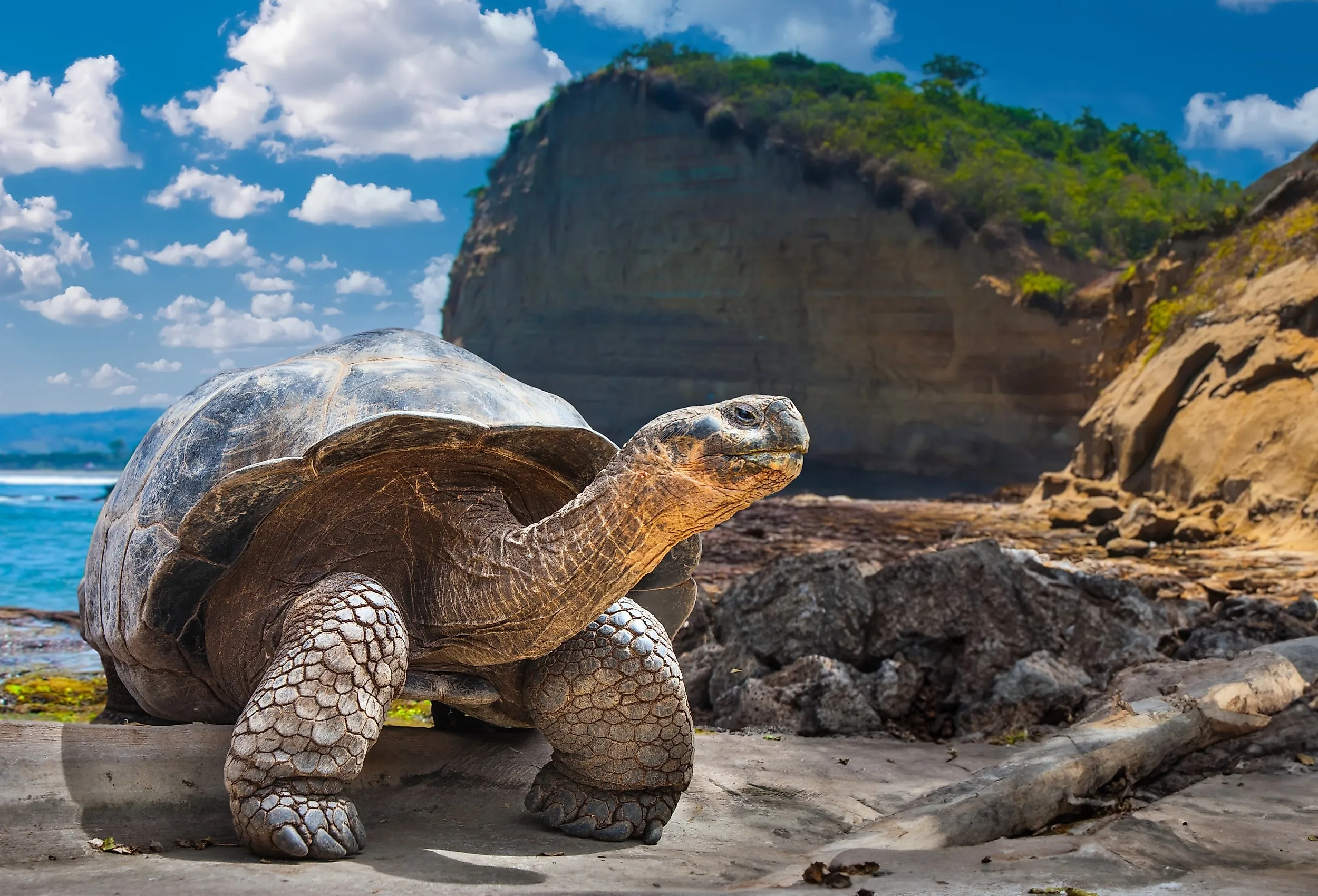
There is perhaps no Ecuadorian animal more famous than the Galápagos Giant Tortoise (Chelonoidis niger). Legend has it that when the Bishop of Panama first sighted the Galápagos Islands, he wrote back to the mainland and referred to the area as the “islands of the Tortoise,” saying he saw “such big tortoises that each could carry a man on top of himself.”

There are currently thirteen giant tortoise species living on several of the islands in the Galápagos. These turtles are enormous, both in terms of their big frames and their historical significance. The study of how these tortoise species differed across islands significantly influenced Charles Darwin’s theory of evolution. Unfortunately, explorers spent hundreds of years doing much more than just studying these turtles. The turtoises were reportedly so tasty that they rarely survived the trip from the Galápagos to Europe. After hundreds of years of overexploitation, the Galápagos giant tortoise has dwindled to just 10% of its historical population, but conservation efforts are underway to restore the species to greater numbers. One subspecies, the Fernandina giant tortoise, was thought to be extinct for over 100 years until 2019, when researchers found one female tortoise on Fernandina Island.
Phantasmal Poison Frog

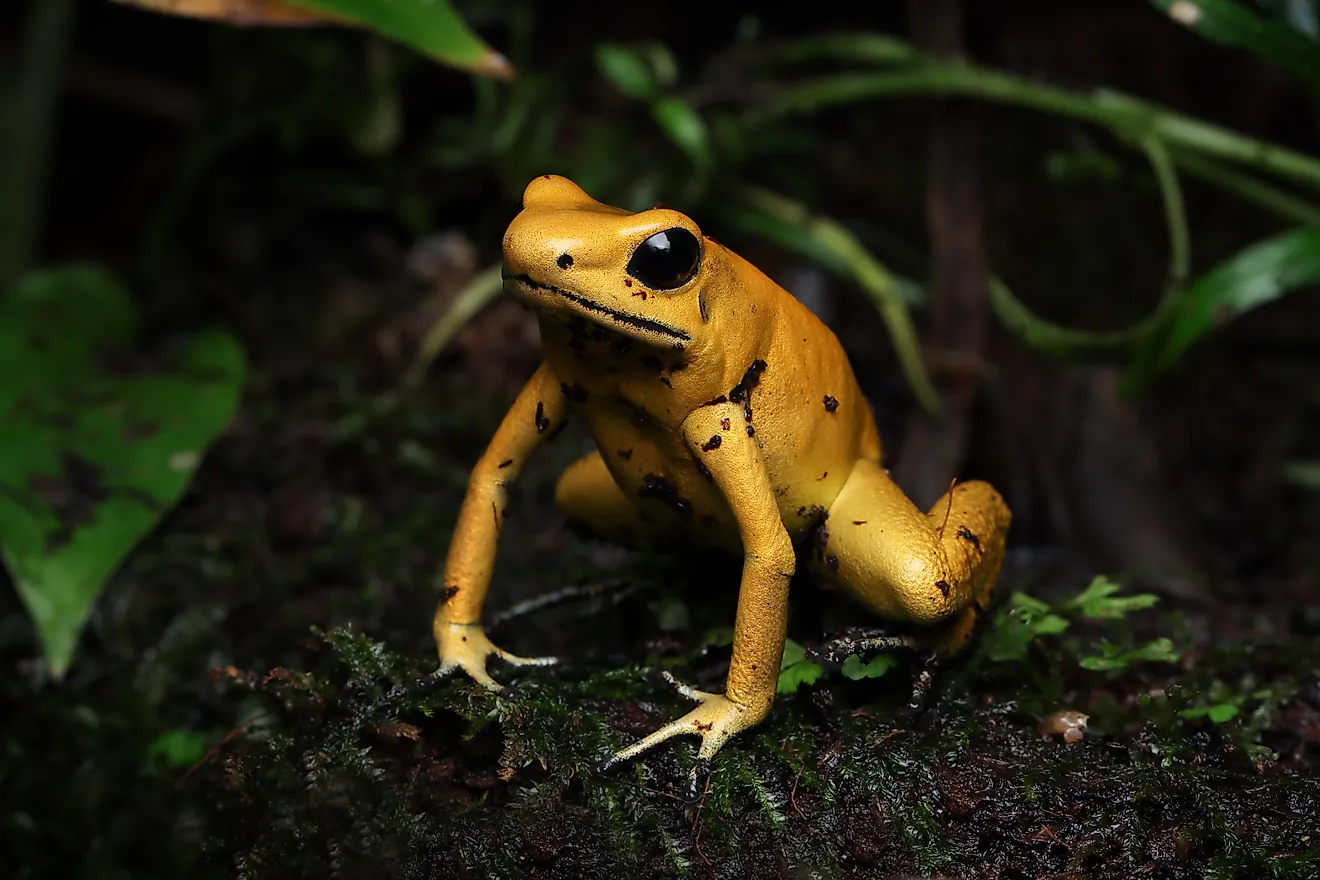
The Phantasmal Poison Frog (Epipedobates tricolor) is listed as a vulnerable species that exists solely within a 5,000-square-kilometer range, in the Bolívar province of Central Ecuador. This tiny creature lives in tropical and subtropical rainforests on the slopes of the Andes Mountains, hopping along the leaf litter on the rainforest floor. You can identify a Phantasmal frog by its reddish-brown body and yellow to green dorsolateral stripes, but you will have to look closely to spot one. The frogs measure only 22.6 mm from snout to vent, which makes them slightly smaller than the diameter of a US Quarter.
Marine Iguana

Found only in the Galápagos Islands, the Marine Iguana (Amblyrhynchus cristatus) is an interesting critter. Unlike many landlubbing iguanas, this animal has evolved to spend plenty of quality time in the water: it is the only modern lizard that forages at sea, diving gracefully into the Pacific Ocean and grazing marine algae that grows along the rocky coastline of the Galápagos. These iguanas are a big reason why scuba diving in the Galápagos is such an incredible activity. It is one of the only places on earth where you can swim with iguanas.

There are several subspecies of marine iguanas, each favoring different islands within the archipelago. All species of marine iguana generally feature dark bodies that soak up the warmth of the sun, salt glands that filter out seawater, and flattened tails that work like a rudder as the iguanas swim in the sea, the same way a snake slithers across land.
Black Breasted Puffleg

Sometimes dubbed the rarest hummingbird in Ecuador, catching sight of a black-breasted puffleg (Eriocnemis nigrivestis) is no easy feat. As of 2023, Rainforesttrust.org estimated that 150 (or fewer!) mature black-breasted pufflegs remain in the wild, mostly congregating around the Pichincha volcano.
Your best bet to spot one is to head to the Yanacocha Biological Reserve, a private slice of nature reserved for endangered hummingbirds. Pack plenty of patience and set up shop near a Palicourea huigrensis, a small tree with blue flowers that doubles as a black-breasted puffleg's favorite nectar source. Even once you make the arduous journey to the reserve, glimpses of this endangered hummingbird remain rare.
Galápagos Mockingbird
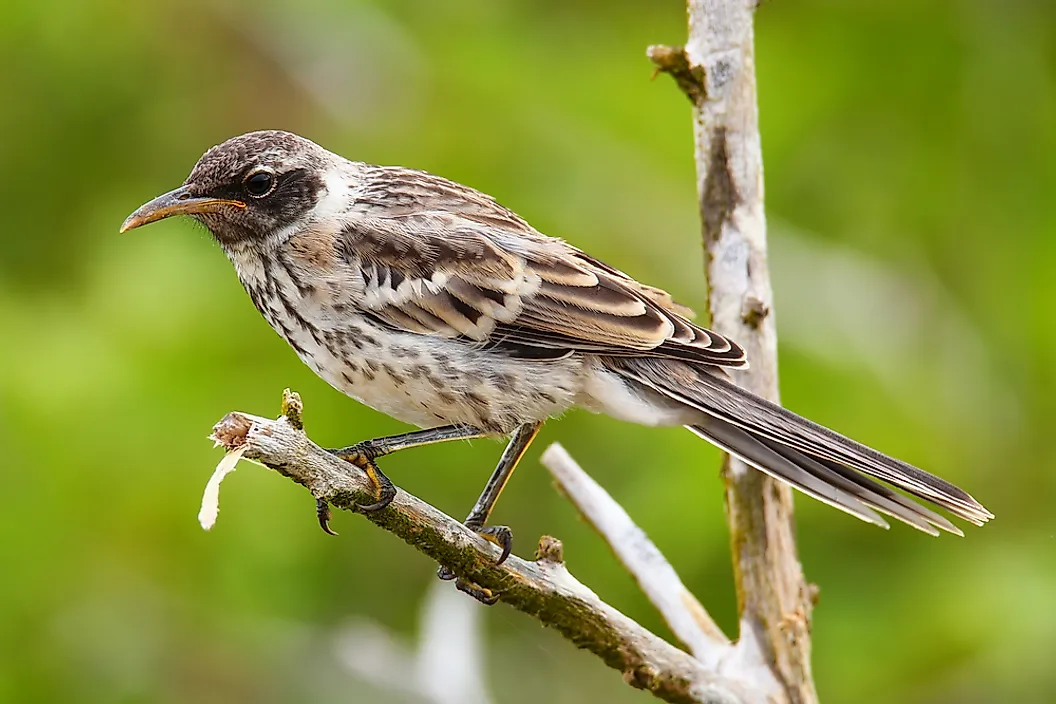
Four species of Mockingbirds call the Galápagos Islands, and nowhere else on Earth, their home. The most populous species is the Galápagos Mockingbird (Mimus parvulus), a small bird with long legs, a curved bill, and gray-brown plumage that makes it easy to spot as it bounces among lava rocks, shrubs, and prickly pear cactus pads.
Galápagos mockingbirds live in complex social groups and often raise young cooperatively, with nonbreeding birds helping defend nests, gather food, and feed chicks. Perhaps this communal living pattern has helped the mockingbird earn its iconic status amongst the endemic species of Ecuador. This bird is not shy around new people. Galápagos Mockingbirds will march right up to humans and have been spotted perching on camera equipment and bucket hats.
Lava Heron

The Lava Heron (Butorides sundevalli) lives only on the Galápagos Islands, picking, prodding, and thriving along the archipelago’s volcanic shoreline. Unlike some of the other icons in Ecuador, you won’t have much trouble spotting a Lava Heron. This bird is one of the most commonly seen in the Galápagos, hunting crabs and fish in shallow coastal waters. The bird has slate-gray to nearly black feathers that closely match the dark lava rock that makes up the Galápagos coast.
It is even easier to see these birds because their whereabouts are very predictable. Lava herons mark their territory and stick to it. They are known to defend the same stretches of shoreline or lagoon edges over time, but don’t worry, they typically don’t mind humans getting close. The best time to look for Lava Heron is during their breeding period from September to March. During mating season, male Lava Herons sharpen their looks and change the color of their legs from dull grey to bright orange.
Galápagos Penguin

There are parts of the Galápagos Islands on the north and south sides of the Equator. That is important because it means the Galápagos penguins (Spheniscus mendiculus) that live on the more northern islands in the archipelago are the only ones on Earth that live North of the Equator, even if it is just a few miles above the Earth's beltline. Perhaps, in part because they live so far North, these penguins are also among the smallest penguin species in the world, shedding their extra blubber and instead finding ways to stay cool.
You can spot these penguins panting on the shoreline or escaping into the cool waters of the Humboldt Current, a cool slipstream that runs through the waters surrounding the Galápagos all the way from Antarctica. Scientists believed this current carried the very first penguins to the Galápagos, where they have settled in and adapted with complementary traits to their unique ecosystem.
El Oro Parakeet

El Oro Parakeets (Pyrrhura orcesi) are social birds. You will likely spot a few birds perched together on a low branch in the Western slopes of the Ecuadorian Andes Mountains, where a large chunk of the El Oro Parakeet population crowds into a thin 100 by 10-kilometer strip of Ecuador's Buenaventura Reserve. The cloud forests that make up this nature preserve house more than 30 bird species endemic to Ecuador, none quite as flashy and colorful as the El Oro parakeet.
The birds get their name from the province many of them call home, El Oro. El Oro translates to “the gold" in Spanish, but don’t get it twisted, these parakeets are not at all golden. They are mainly a deep green color, with beautiful splashes of red and blue around the bird’s eyes, wings, and tail feathers. When on the prowl for a glimpse at the El Oro Parakeet, keep your ears open for chatter. Birds of a feather flock together, and El Oro Parakeets screech and yammer away in conversation while hopping from branch to branch.
Darwin’s Finches

Darwin’s Finches are so closely tied to the history of science that an entire Pulitzer Prize-winning book was written about them. These small birds helped change how people understand evolution, all because of one feature: their beaks. Each species is very similar in its shape and colors, but they all have distinct beaks.
Some sport a long pointed beak for scouring tight corners and snatching insects, and others have blunt bills best for cracking seeds and nuts. The birds have become the classic example of adaptive radiation. Each species has evolved differently based on which island of the Galápagos it lives on. Best of all, none of these 17 different species of Darwin’s Finch is even a finch. They all belong to the family of birds known as the Tanagers (Thraupidae).
Horned Anole

This tiny lizard has three different popular names. Its scientific name is Anolis proboscis, but it is sometimes called the Horned Anole, the Pinocchio anole, or the Ecuadorian horned anole. No matter what name you use, everyone who sees the Horned Anole says the same thing when they first lay eyes on one: “Whoa!”
There are many reasons why it is so exciting to spot a horned anole. For starters, the species was rumored to be extinct for almost 50 years. Six male specimens were recorded in the 1900s (the last one was charted in 1966), after which it disappeared from our sight for decades. No Anole had been spotted since the summer of love until explorers noticed an Anole in the cloud forests near Mindo, Ecuador, in 2005. The other main reason these creatures are iconic is their unique appendage, which is only seen on male members of this species. Sometimes called a horn or a proboscis, each male horned anole has a long, protruding appendage on its face that scientists believe is used for some form of sexual ritual. Male anoles are now famous for bending and flexing their horns in a captivating courtship display.
Galápagos Lava Lizards

Although a few species of lava lizards live elsewhere on Earth, the Galápagos lava lizards (Microlophus spp.) are endemic to the archipelago, and what a sight they are. These lizards blend in by sticking out with a wild array of splashy spots and color patterns. When still against a lava rock backdrop, they are practically indistinguishable, but when they decide to take the spotlight, they know how to strut. Lava lizards are known for their dramatic body language. Males often climb onto rocks to perform push-ups and bob their heads to assert their dominance.
These lizards are also a pivotal part of the Galápagos Islands’ contribution to science. They, similarly to Darwin’s Finches, have become a bellwether example of adaptive radiation. There are seven species of lava lizards across the archipelago, each with subtle differences based on the islands they inhabit.
See These Animals in Ecuador
Ecuador packs an incredible amount of biodiversity into a relatively small country. From the Galápagos Islands to the west to the Amazon Rainforest in the East, the Republic of Ecuador is home to numerous biodiversity hotspots. The next time you visit, allot extra time and pack binoculars. You will have several chances to spot animals that exist nowhere else on the planet. Some of these animals are constant sightings along Ecuador's coasts, mountains, and rainforests, but others are incredibly rare. If you blink, you might miss them.