The Most One-Sided Ancient Battles Ever Fought
The most one-sided battles of the ancient world share a strange twist. The army that got wiped out was usually the bigger one. Rome and Persia both marched in with overwhelming numbers and left the field destroyed. Their generals trusted mass to do the work of tactics. On the other side stood a commander who saw exactly where a huge army was weak. He broke it at that seam and turned retreat into slaughter. Size was the trap in every fight below.
Gaugamela, 331 BC

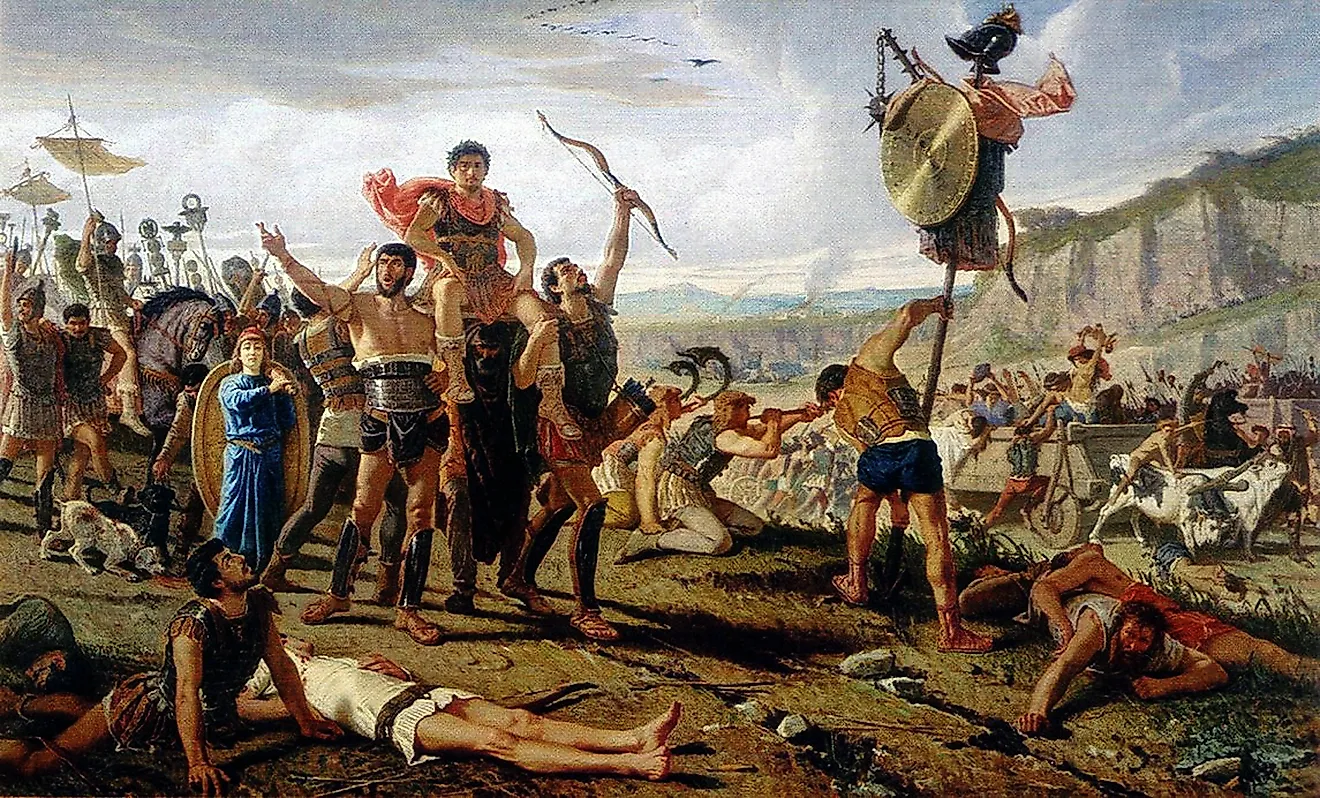
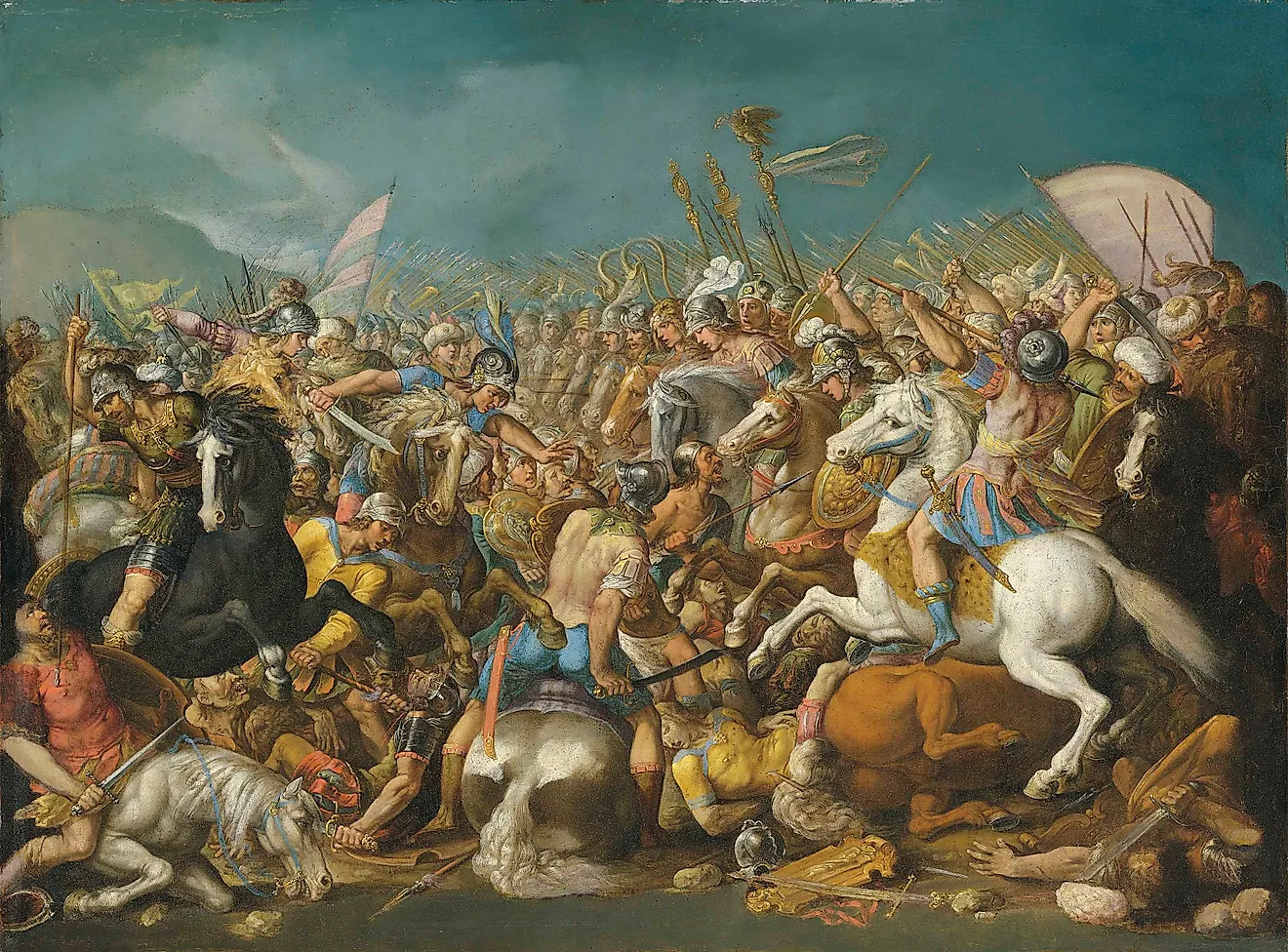
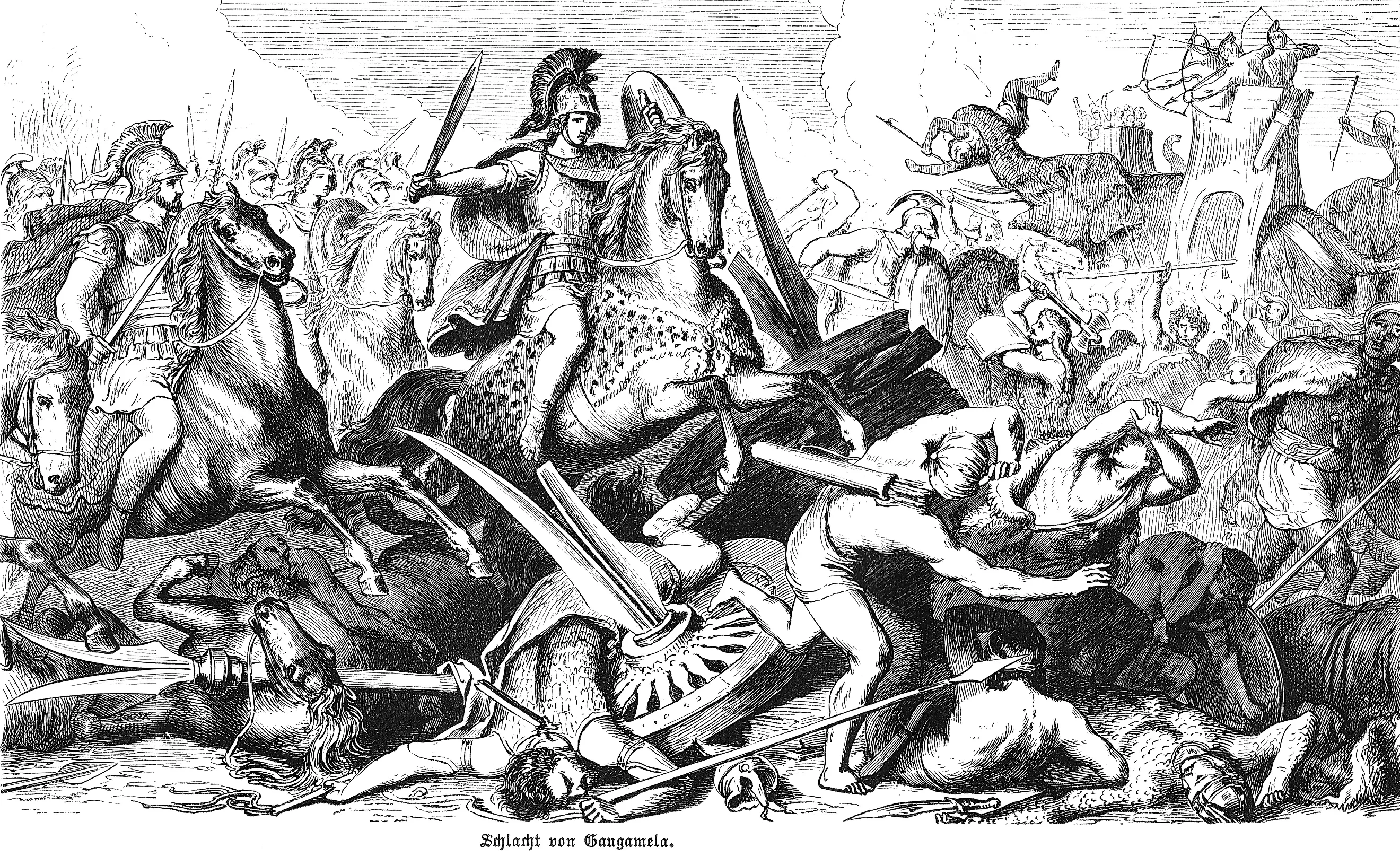
Darius III chose a wide plain in what is now northern Iraq and leveled it for his scythed chariots. He wanted room for the largest army he could raise, and modern estimates put it somewhere between 50,000 and 250,000 men. Alexander the Great arrived with roughly 47,000. Rather than match the Persian front, Alexander drew his line at an angle and baited the Persian cavalry into opening a gap. He drove a wedge of Companion cavalry straight toward Darius, who fled the field. The Persian center collapsed once its king had gone.
Arrian, writing centuries later, claimed 300,000 Persian dead against 100 Macedonians. Almost no historian believes that. The more sober ancient figure, from Curtius, is around 40,000 Persians killed, and Alexander's own reported losses run to a few hundred dead and several thousand wounded. Even the conservative version describes a rout. The defeat broke the Achaemenid Empire, and Darius was murdered by his own noble Bessus the following year.
Cannae, 216 BC

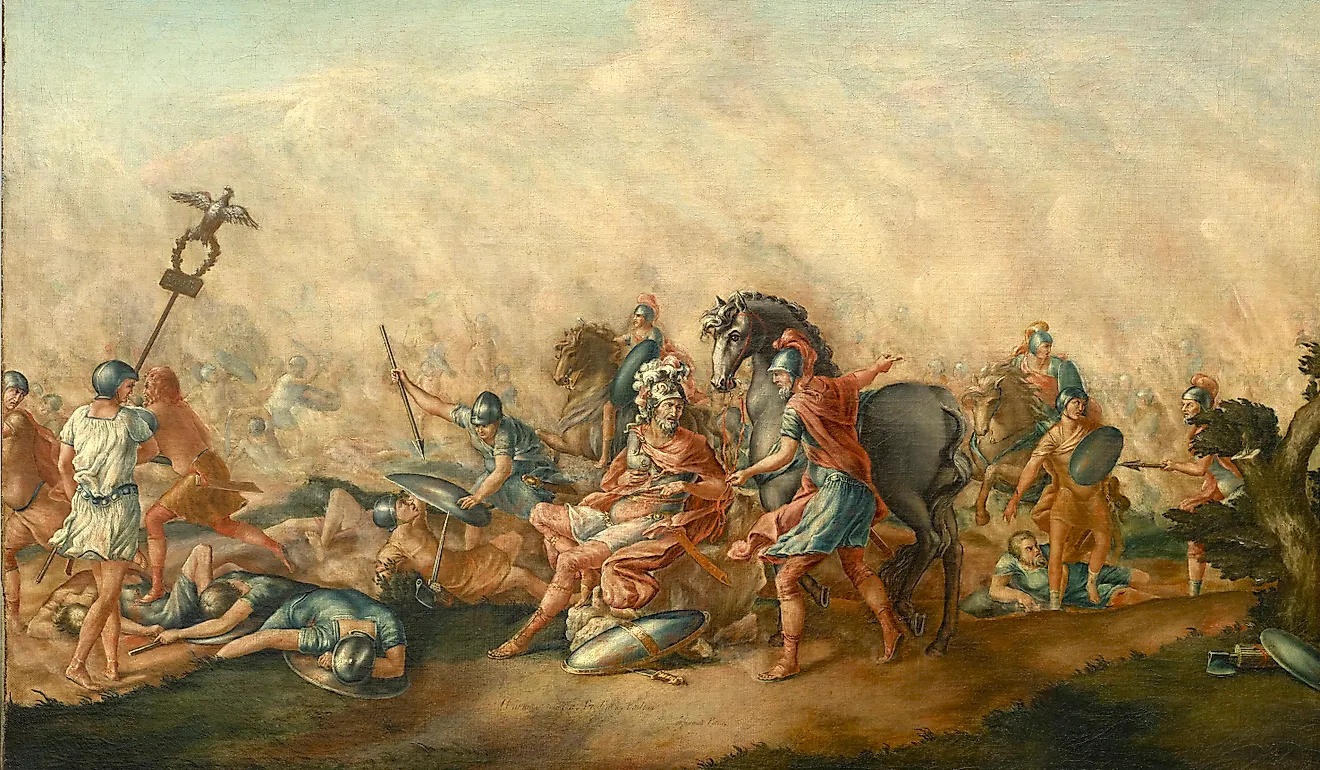
Rome wanted to end Hannibal in a single afternoon and raised about 80,000 men to do it. Hannibal had perhaps 50,000, many of them Gallic and Spanish infantry he was willing to spend. He bowed his center forward into a crescent, let the Romans press into it, then folded his veteran African infantry around both flanks. His cavalry scattered the Roman horse and sealed the rear. The largest army Rome had ever fielded was packed so tightly that the men in the middle could not raise their weapons.
Livy put the Roman dead at more than 48,000 with 20,000 captured, while Polybius reported around 70,000 killed. Modern historians tend toward roughly 30,000 dead, still a staggering share of the force. Carthaginian losses ran to about 6,000. One consul, Lucius Aemilius Paullus, died on the field alongside dozens of senators and military tribunes. Cannae remains the textbook example of double envelopment, studied at military academies to this day.
Zama, 202 BC

Fourteen years after Cannae, Rome handed Hannibal his own lesson. Scipio Africanus had survived Cannae as a young officer and spent the years since studying how Hannibal fought. When the two armies met in Tunisia, Hannibal opened with a charge of 80 war elephants. Scipio had drilled his men to open lanes in their ranks, and the animals thundered through harmlessly. Roman and Numidian cavalry under Masinissa then chased off the Carthaginian horse and returned to strike the infantry from behind.
Roman sources report about 20,000 Carthaginians killed and a similar number captured, against Roman losses of roughly 1,500. These figures come from the victors and carry the usual caution, but every account agrees the Carthaginian army was destroyed while Scipio's stayed largely intact. Hannibal escaped to Carthage and advised his government to accept Rome's terms. The Second Punic War was over, and Scipio earned the name Africanus.
Pharsalus, 48 BC

Julius Caesar was outnumbered and running short of supplies in central Greece. Pompey the Great held about 63,000 men to Caesar's 37,000 and a decisive edge in cavalry. Pompey planned to swing that cavalry around Caesar's right and roll up his line. Caesar guessed the plan and hid a fourth line of infantry behind his flank. When Pompey's horsemen charged, the concealed cohorts rose and drove their javelins upward at the riders' faces. The cavalry broke, and Caesar's veterans wheeled into Pompey's exposed infantry.
By one detailed reconstruction the fighting lasted under an hour. Pompey lost around 15,000 dead with some 24,000 surrendering, while Caesar reported only about 200 of his own men killed. Pompey rode from the field, sailed for Egypt, and was assassinated on arrival. The battle left Caesar the dominant figure in Rome and marked the effective end of the republic.
Watling Street, AD 60 or 61

Boudica, queen of the Iceni, had already burned three Roman towns and killed tens of thousands when the governor Gaius Suetonius Paulinus turned to face her. He had roughly 10,000 legionaries and auxiliaries. Her allied British force was far larger, though the Roman claim of 230,000 is not credible. Suetonius picked a narrow defile with woods at his back, which meant the Britons could only attack across a tight front. Roman javelins and a wedge advance turned the packed field into a killing ground, and the Britons' own wagons trapped them as they tried to flee.
Tacitus, the sole detailed source, reported about 80,000 Britons dead against roughly 400 Romans. Those numbers come entirely from the Roman side and are almost certainly inflated, a point every modern historian stresses. Even so, the rout was total. Boudica died soon after, by poison in one account, and organized resistance in southern Britain ended for good.
Fei River, AD 383

Fu Jian, ruler of the Former Qin, had conquered all of northern China and wanted the south as well. He marched against the Eastern Jin with an enormous conscript army drawn from many recently subdued peoples. The Jin general Xie Xuan led a much smaller force of disciplined Beifu troops. With the two armies facing each other across the Fei River, Xie Xuan asked the Qin to pull back slightly so the Jin could cross and settle the matter in open battle.
Fu Jian agreed, planning to strike the Jin mid-crossing. The step-back turned into panic. Rumors raced through the Qin ranks that the battle was already lost, and the huge, poorly unified army dissolved into a stampede before real fighting began. The Book of Jin records a Qin host of 870,000, a figure treated as literary rather than literal, but the collapse was real. Former Qin fragmented into civil war within a few years, and a divided China endured south of the Yangtze.
Reading the Numbers Behind the Slaughter
Every battle here shares a pattern the sources tend to obscure. The lopsided result was rarely about numbers, since the winning side was usually the smaller one. Terrain, discipline, and a commander who could read the enemy did the work, and the massacres came after a line broke and men were cut down in flight. The casualty figures that make these battles legendary were written by the winners and copied by admirers, so the specific totals deserve skepticism even where the outcome does not. What survives the scrutiny is the shape of each fight: a better-led force turning a rout into an annihilation.