8 Small Towns in North Dakota with the Best Downtowns
North Dakota’s small towns deliver some of the best downtowns in the Midwest, starting with Medora, which is home to cinematic Old West streets, along with its historic Chateau de Mores. Further north, Rugby stands out for its historic core and the iconic Niewoehner Bell Tower. Each of these downtowns has a unique personality, as evidenced by the beautiful Island Park and Pioneer Park in Mayville, and the Scenic Theatre in Lisbon. These downtowns are ideal for travelers who are hoping to pair walkable main streets with museums, scenic views, and local cafés.
Medora

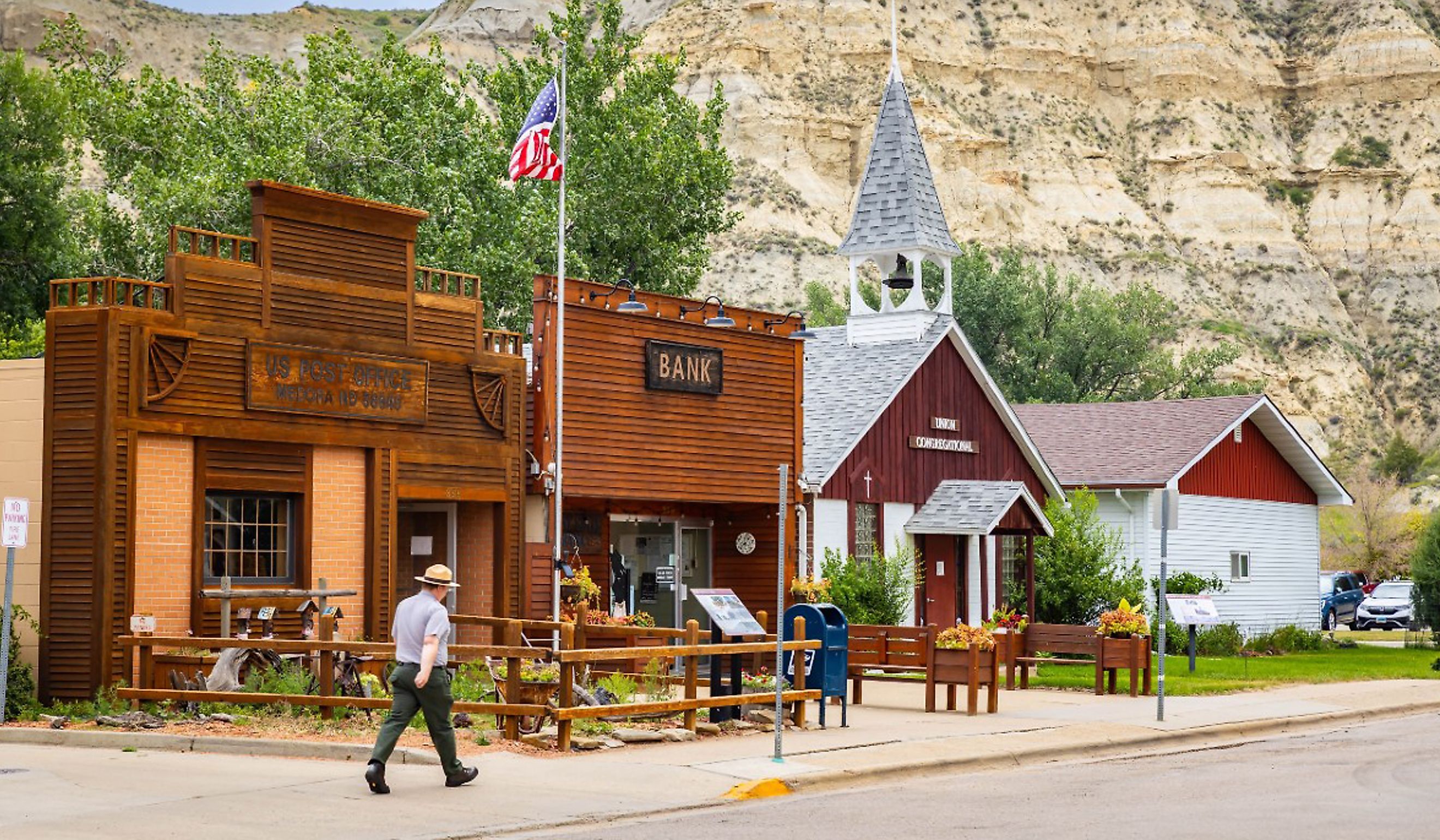
Medora may be tiny, but its downtown is one of the most visually dramatic in the state. Wooden boardwalks, frontier‑style storefronts, and the Badlands rising directly behind the main street give it a cinematic, Old West atmosphere that photographs beautifully. Visitors can browse Western shops, including The Buffalo Gap Gift Shop. History buffs can tour the historic Chateau de Mores, a 26‑room, French‑style hunting lodge built in 1883 by the Marquis de Morès. Visitors can tour the restored interior, learn about the Marquis and his entrepreneurial ambitions on the frontier, and enjoy sweeping views of Medora’s downtown and the surrounding buttes.
Music enthusiasts may attend the Medora Musical, a high‑energy, open‑air show staged in a stunning amphitheater carved directly into the Badlands. Blending live music, dancing, comedy, and frontier‑themed storytelling, the production celebrates the legacy of Theodore Roosevelt and the spirit of the American West. Conservationists may explore Theodore Roosevelt National Park, which offers scenic drives, overlooks, and hiking trails where visitors can spot bison, wild horses, prairie dogs, and sweeping Badlands vistas. The park’s layered rock formations and golden‑hour light make it one of the most photogenic natural areas in the region, just minutes from downtown.
Rugby

Rugby offers a compact, brick‑lined downtown anchored by the distinctive Niewoehner Bell Tower, a soaring, 30‑foot structure built from the bells of more than 10 former churches, giving it a sculptural, almost cathedral‑like presence on the edge of downtown. Travelers can visit the Prairie Village Museum, a heritage complex featuring 20 historic buildings arranged around a recreated village square, plus six exhibition halls containing thousands of pioneer artifacts. Stop at the Geographical Center of North America monument, a 1931 stone obelisk marking the center of North America by the U.S. Geological Survey.
Washburn

Washburn has a peaceful, vintage downtown shaped by its Missouri River valley setting, with classic storefronts and wide prairie light that make it especially photogenic. Tourists can tour the Lewis & Clark Interpretive Center, one of the state’s most polished, academically grounded heritage sites. Visitors encounter hundreds of period artifacts, rotating art, and history galleries. Explore Fort Mandan State Historic Site, built beginning on November 2, 1804. The fort consisted of two angled rows of huts. Each has four rooms, with lofts insulated with grass and clay, and additional storage rooms for provisions. Foodies can join the Taste of Washburn to sample the best that local vendors and downtown have to offer. Additionally, visit the Cabin Bar & Grill, a well‑loved bar and grill known for hearty American comfort food, generous portions, and a friendly small‑town atmosphere.
Mayville

Mayville stands out for its colorful, tree‑lined downtown, where murals, pocket parks, and tidy storefronts create a warm, walkable atmosphere. Travelers can wander through Island Park, at the heart of downtown. The community has 2.5‑mile walking and biking trails, along with major local events. For example, the annual Cruise to the Island car show, which draws more than 300 classic vehicles each September. Adjacent amenities, including Pioneer Park’s historic log cabin and a 9‑hole disc golf course, extend the park’s appeal, while the nearby Rainbow Garden & Sculpture Walk adds a burst of color just across the highway. Explore the Goose River footbridges, or visit local cafés and bakeries, including Paula's Cafe.
Bottineau

Bottineau feels unusually complete for a prairie town, anchored first by the Pride Dairy ice cream shop, where the scent of fresh waffle cones drifts onto Main Street and gives the whole district a warm, old‑fashioned pulse. A block away, the Dakota College at Bottineau’s historic campus edge adds an unexpected academic energy. Students moving between buildings, community events spilling into nearby cafés, and a sense that the town is always looking forward rather than back. That forward motion meets heritage at the Bottineau County Courthouse, a dignified stone landmark whose clock tower and landscaped grounds give downtown a visual center of gravity, the kind of civic architecture that makes a place feel rooted. Together, these three anchors, sweet, scholarly, and historic, create a downtown that feels both lived‑in and quietly special.
Lisbon

Downtown Lisbon, anchored by the Scenic Theatre, a century‑old movie house whose glowing marquee gives Main Street a touch of vintage glamour and a nightly sense of occasion. Just up the block, the Lisbon Opera House deepens that cultural thread. Its restored brick façade and intimate performance hall remind visitors that this prairie town has long valued the arts, not just agriculture. That heritage meets everyday life at the Bronc, where locals drift in for great cocktails and conversation, giving the downtown its warm, lived‑in rhythm and making it the natural social heart of the community. Tying it all together is the Ransom County Courthouse, a stately landmark whose landscaped grounds and classical architecture lend the district a sense of permanence, the kind of civic presence that makes the surrounding shops and cafés feel part of something enduring. Together, these places create a downtown that feels both grounded and quietly distinctive.
Wahpeton

Wahpeton carries an energy that feels bigger than its size, starting with the Wahpeton Wahpper, the giant catfish sculpture at the riverfront that acts as both a local icon and a playful gateway into town, drawing visitors toward Main Avenue. That sense of character deepens at the Red Door Art Gallery, where rotating exhibitions and community workshops infuse the district with creative life, giving the downtown a cultural backbone that surprises first‑timers. A short walk away, the Bois de Sioux Golf Course and Chahinkapa Park corridor bring greenery right up to the urban grid, so the downtown feels connected to open space. The Richland County Historical Museum gives downtown Wahpeton a sense of depth that you feel the moment you step inside. Its galleries of pioneer tools, railroad artifacts, and early‑settler photographs turn local history into something tactile, grounding the modern streetscape in the stories that built it.
Valley City

Valley City feels shaped by the river and the surrounding hills, but its character really comes into focus at the Rosebud Visitor Center. The restored 1881 Northern Pacific locomotive sits like a steel monument to the town’s railroad beginnings and sets a tone of heritage right at the edge of Main Street. That sense of history carries into the Barnes County Historical Society Museum, a surprisingly dynamic space where exhibits on pioneer life, local geology, and the iconic Hi‑Line bridges provide visitors to the downtown with a vibrant and cultural experience. Just a short walk away, the Valley City Eagles Club block adds everyday vibrancy. Locals gather for community events, weekend dances, and casual meals, giving the district a lived‑in warmth that softens its historic edges.
North Dakota’s small towns prove they have memorable, visually distinctive downtowns. From the Badlands‑backed boardwalks of Medora, the brick‑built heritage of Rugby, or the colorful small‑city charm of Mayville, each community offers its own blend of history, scenery, and local character. These downtowns invite slow exploration, coffee shops, museums, river overlooks, scenic trails, and friendly storefronts that reward travelers who take the time to wander. All eight destinations also photograph beautifully, making them ideal for travel storytelling, itineraries, and visual‑driven guides. Together, they showcase the quieter, more intimate side of North Dakota, one defined by authenticity, landscape, and the kind of small‑town charm that stays with you long after the trip ends.