11 Small Towns in The Northern United States with the Best Downtowns
The strongest downtowns are recognizable before anyone reads the town name. Galena has blocks of 19th-century brick storefronts below steep hills. Jim Thorpe's commercial district sits in a narrow valley crowded with Victorian architecture. In Lake Placid, Main Street runs beside Mirror Lake, and in Marquette the streets drop toward an enormous ore dock on Lake Superior. The 11 towns below earned a place for the appearance of their downtowns and for the museums, historic buildings, local businesses, and parks concentrated around their central streets.
Woodstock, Vermont

Woodstock does not depend on a dense wall of commercial buildings for its downtown identity. The village centers on The Green, with older homes, churches, inns, and businesses spread along Central and Elm streets. Mount Tom rises behind the village, and the Ottauquechee River runs nearby.
One business has been part of this streetscape since the 19th century. F.H. Gillingham & Sons has operated since 1886 and still sells Vermont maple products, cheddar, housewares, hardware, and other goods. Woodstock's tourism office continues to list it among the village's shops.
The Middle Covered Bridge crosses the river just off the central streets, a classic Vermont structure within walking distance rather than a drive into the countryside. Woodstock also has dozens of independent shops, including Farmhouse Pottery, where visitors can watch craftspeople work with clay at the company's flagship store.
For a higher perspective, trails run up Mount Tom behind the village. The view back toward the church steeples and buildings around The Green is why Woodstock's downtown photographs look so different from those of the other towns on this list.
Bar Harbor, Maine

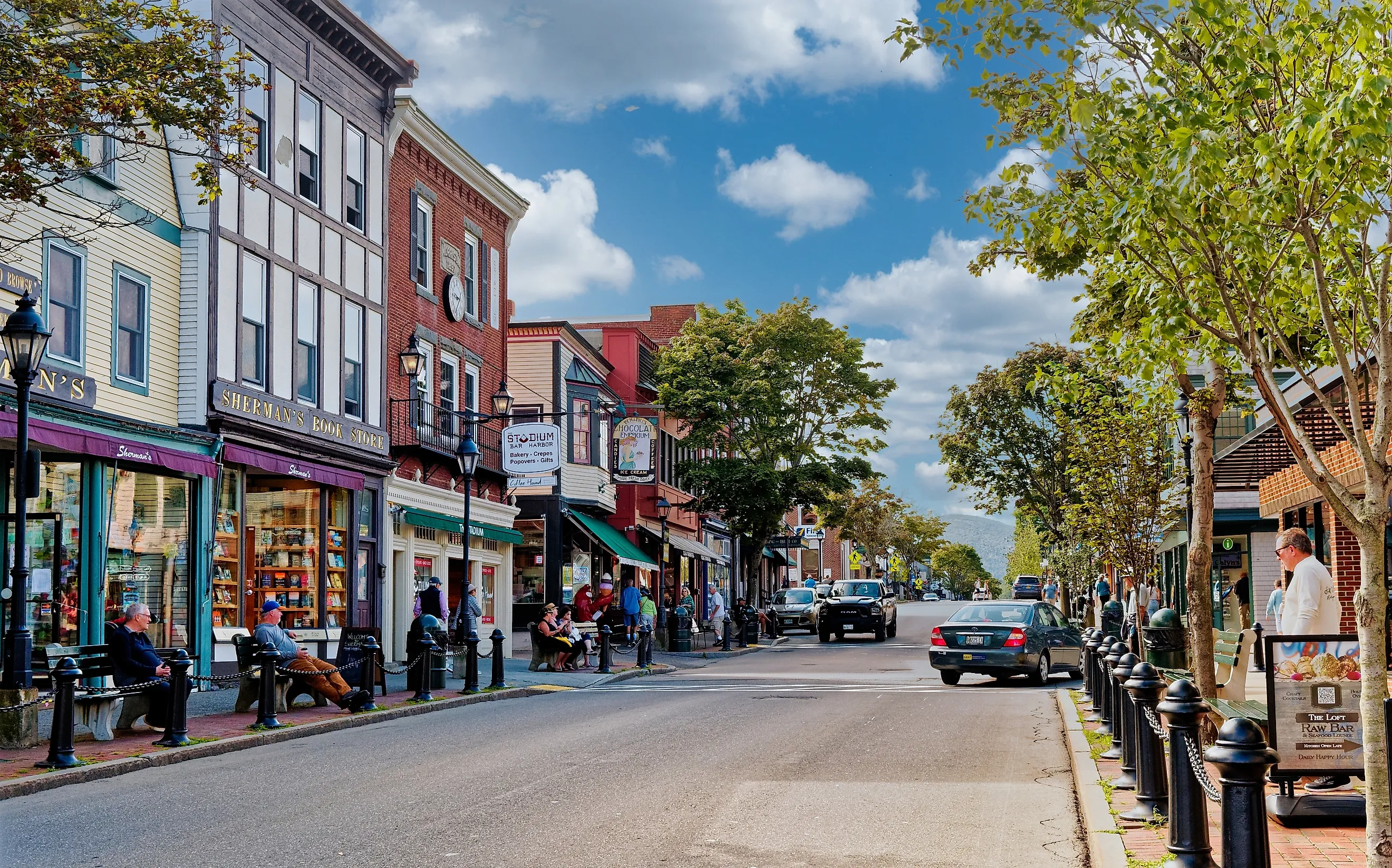
Main Street in Bar Harbor runs toward a working harbor filled with fishing boats, sightseeing vessels, and views across Frenchman Bay. The Village Green breaks up the commercial district near the center of town, and several streets descend toward the waterfront.
Agamont Park is one of the easiest places to see that relationship. Its lawn sits above the harbor, with the Porcupine Islands visible across the water. Nearby, the Shore Path follows the bay past waterfront properties and open sections of rocky coastline, giving visitors coastal views within walking distance of downtown.
Back on Main Street, the Abbe Museum focuses on the history and cultures of the Wabanaki Nations of Maine, a useful indoor stop when coastal weather turns wet or foggy.
Dinner can stay tied to the setting. Restaurants near Main Street and the harbor lean heavily on Maine seafood, and the waterfront is close enough for an evening walk afterward. Bar Harbor's best downtown views often come at the ends of its commercial streets, where the storefronts open onto Frenchman Bay.
Marquette, Michigan

A massive iron ore dock extending into Lake Superior identifies Marquette's Lower Harbor at a glance. The structure sits below downtown, where the streets drop toward the water through blocks of brick commercial and civic buildings.
From Lower Harbor Park, the scale of the ore dock is easier to take in. Freight infrastructure fills one side of the view, with downtown behind the shoreline. The park is also a good stopping point before the walk uphill to Washington Street.
The Marquette Regional History Center is where that industrial landscape gets its context, with collections on Indigenous history, mining, immigration, and the industries that grew up around Lake Superior. Architecture is equally prominent nearby, and the domed Marquette County Courthouse is one of the central district's most recognizable buildings.
Continue toward the harbor and the scenery changes again at the red Marquette Harbor Lighthouse. Marquette's downtown ties to Lake Superior at nearly every level, from the ore dock below it to the lighthouse over the water.
Petoskey, Michigan

Petoskey's streets slope down toward Little Traverse Bay, opening water views between buildings throughout the historic Gaslight District. Decorative lamps line the sidewalks, and commercial buildings surround Pennsylvania Park at the center of downtown.
Rather than following a rigid sightseeing route, spend some time around Lake and Mitchell streets. These blocks hold many of Petoskey's independent stores, galleries, and restaurants. Pennsylvania Park is the open center of the shopping district before the streets continue downhill toward Lake Michigan.
Bayfront Park sits below the business district beside Little Traverse Bay. Paved paths follow the shoreline, and the marina fills with boats during warmer months. The Little Traverse History Museum occupies a former railroad depot nearby, with exhibits on the history of Petoskey and the surrounding region.
Petoskey stones also turn up in downtown jewelry and gift stores. These fossilized corals are Michigan's state stone and can be found along parts of the Lake Michigan shoreline, a souvenir tied directly to the landscape at the bottom of the hill.
Stillwater, Minnesota

Stillwater's geography is easiest to read from its riverfront. The St. Croix River runs beside downtown, Main Street sits one block inland, and a steep bluff rises behind the commercial buildings. Public staircases connect the lower streets with the neighborhoods above them.
The Stillwater Lift Bridge, completed in 1931, now carries pedestrians and cyclists across the St. Croix. From the bridge, visitors get a broad view of downtown's brick buildings on the Minnesota side and the wooded Wisconsin shoreline across the river.
Back on shore, Lowell Park runs along the water near Main Street, a good place to watch river traffic before heading into the commercial district, where antique shops have long been part of Stillwater's downtown identity.
Those willing to tackle the stairs behind downtown get a very different photograph. From higher ground, Main Street appears compressed between the bluff and the river, with the Lift Bridge crossing the St. Croix below.
Lake Placid, New York

Lake Placid keeps some of its best scenery right on Main Street. Mirror Lake runs alongside the commercial corridor, with the Adirondack Mountains beyond the water. Storefronts occupy the opposite side of the road, and several public areas open onto views across the lake.
The town's Olympic history is just as visible. The Lake Placid Olympic Museum is devoted to the 1932 and 1980 Winter Olympic Games, with artifacts connected to the 1980 U.S. men's hockey team's victory over the Soviet Union. It is part of the Olympic Center complex on Main Street.
Anyone who has spent enough time indoors can follow the route around Mirror Lake. The loop passes homes, hotels, public spaces, and several mountain viewpoints before returning to the commercial district.
Even an ordinary shopping trip here comes with an unusual backdrop of dark wood storefronts, stonework, and mountain-town architecture along Main Street.
Cooperstown, New York

Baseball is unmistakable on Cooperstown's Main Street. Memorabilia fills shop windows, team logos hang outside stores, and the National Baseball Hall of Fame and Museum occupies one of the central blocks.
The museum can take several hours, particularly for visitors who stop to read the exhibits on players, ballparks, broadcasting, equipment, and baseball history. Doubleday Field, another piece of the town's connection to the sport, sits nearby.
Main Street eventually meets the southern end of Otsego Lake. Lakefront Park is an easy change of scenery after the museums and merchandise shops, with benches and open water in place of the dense commercial blocks.
Those spending a full day in Cooperstown can continue along the lake to the Fenimore Art Museum, known for American art and collections connected to Native American culture. Between the baseball-centered Main Street and Otsego Lake, Cooperstown's downtown is never defined by a single museum.
Lititz, Pennsylvania

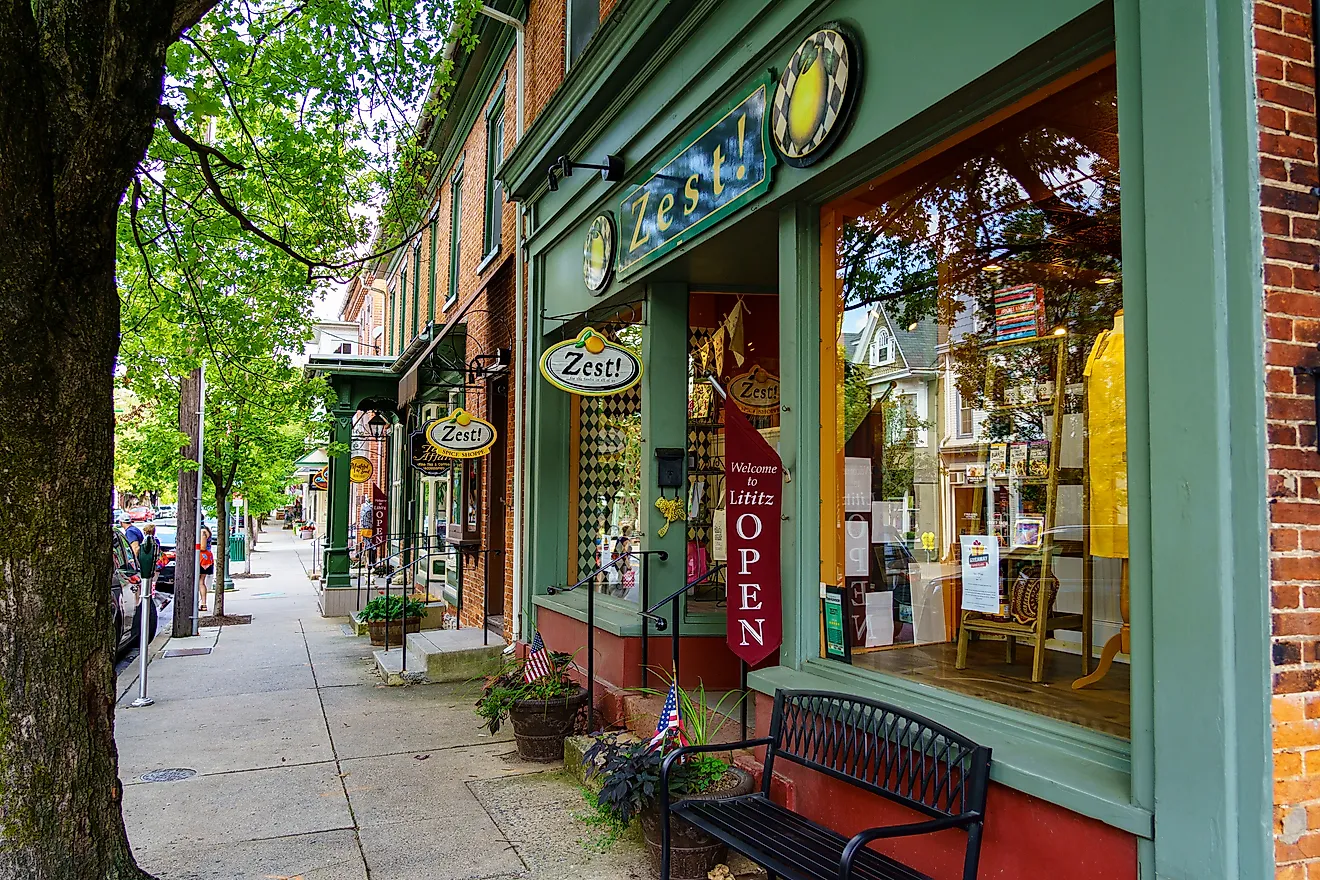
A stream runs through Lititz Springs Park only steps from the commercial blocks around Main and Broad streets. Mature trees, stone structures, footbridges, and lawns make the park part of the downtown streetscape rather than an attraction isolated on the edge of town.
Food history is another defining stop in Lititz. Julius Sturgis Pretzel Bakery, at 219 East Main Street, dates to 1861. Visitors can learn how pretzels were traditionally shaped inside the historic building, then continue along East Main Street rather than driving to the next attraction.
The Lititz Historical Foundation maintains the Johannes Mueller House, which dates to the 18th century and helps explain the community's Moravian origins. Its location keeps the history lesson connected to the streets visitors have already walked.
Lititz Springs Park is worth a return before leaving. The stream runs through the center of the grounds, and the park stays close enough to Main Street that downtown buildings are never far away.
Deadwood, South Dakota

Deadwood's Main Street occupies a narrow Black Hills gulch lined with brick buildings, saloons, hotels, casinos, and elaborate late 19th-century facades. Forested slopes rise immediately behind the commercial blocks. The setting is dramatically different from the lakeside and New England downtowns elsewhere on this list.
Spend some time looking at Main Street before disappearing inside its attractions. The narrow valley and preserved facades are the reason the Deadwood National Historic Landmark District runs well beyond a single historic building.
The Adams Museum is the place for the documented version of local history, with collections on mining, the Black Hills, Indigenous history, and Deadwood residents. The Historic Adams House, built in 1892, shows another side of the community through the preserved home of businessman W.E. Adams.
Then head uphill to Mount Moriah Cemetery, the burial place of Wild Bill Hickok and Calamity Jane. From that elevation, the view runs down toward the tightly packed downtown, and the reason Deadwood developed as it did becomes obvious: Main Street had to fit within the narrow space left between the Black Hills slopes.
Galena, Illinois

Red-brick buildings line Galena's curving Main Street, where more than 125 shops and restaurants fill a commercial district largely composed of 19th-century buildings. The surrounding hills add another layer to the view, with church towers and older homes visible above the rooftops.
There is enough on Main Street to spend an afternoon without treating shopping as filler between historic sites. Big Bill's Sandwich Shop & Coffee Bar, at 301 North Main Street, occupies the historic Logan House building and roasts coffee in-house. For something sweeter, the American Old Fashion Ice Cream Parlor is at 102 North Main Street. Galena's tourism office still lists both.
History runs through the surrounding blocks. The limestone Dowling House dates to 1826 and is among Galena's oldest surviving buildings. Across the Galena River, Grant Park looks back toward the downtown hills. The Ulysses S. Grant Home, presented to Grant by local residents after the Civil War, is another reason to venture beyond Main Street before returning for dinner.
Jim Thorpe, Pennsylvania

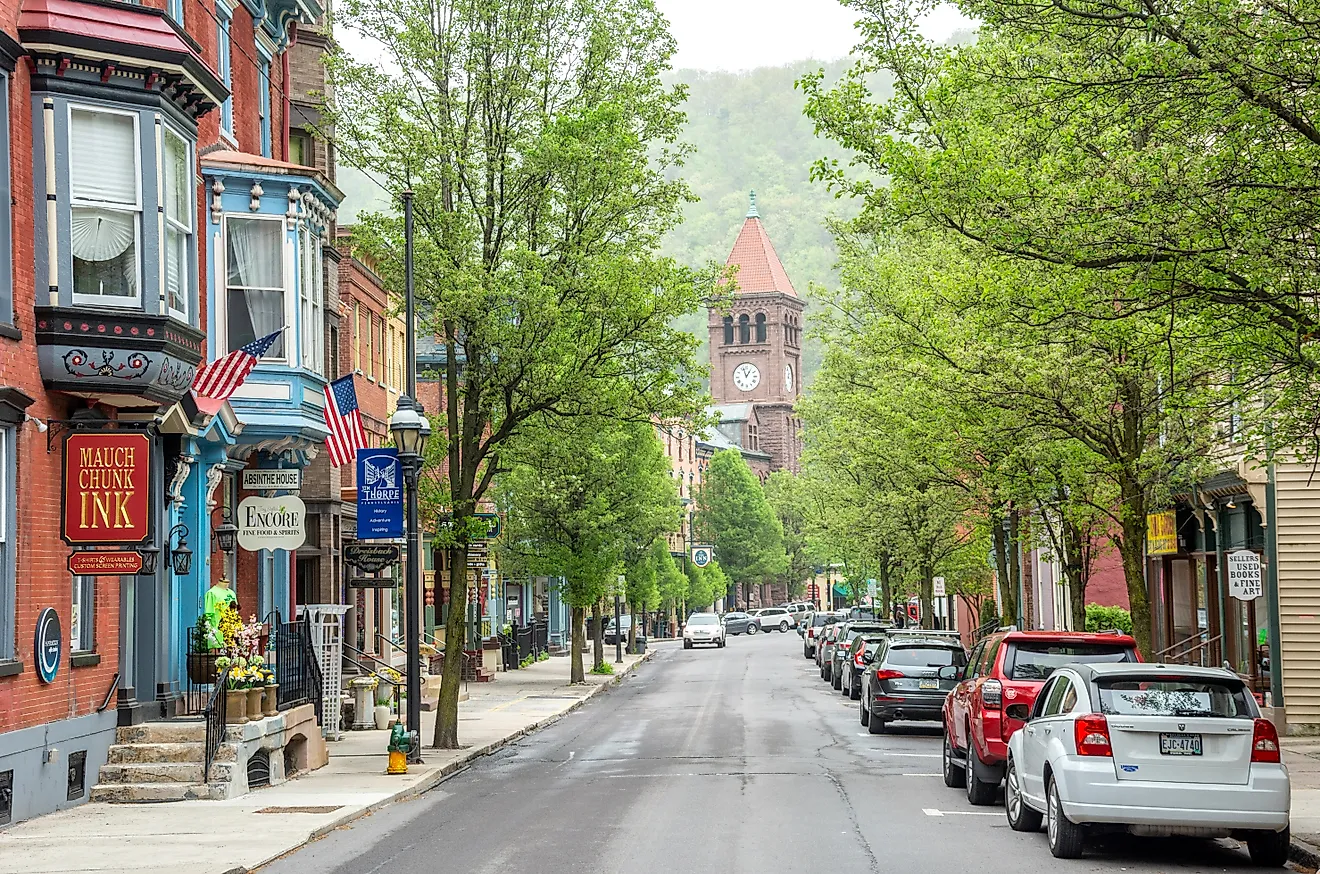
Broadway in Jim Thorpe climbs through a narrow Pocono Mountains valley, with little space between the commercial district, the wooded slopes, and the Lehigh River. Elaborate 19th-century facades line the street, remnants of the period when the community was known as Mauch Chunk and prospered through coal and rail transportation.
The Mauch Chunk Opera House has stood at 14 West Broadway since 1881 and still stages concerts and other performances. The Old Jail Museum and Mauch Chunk Museum sit farther along Broadway. Jim Thorpe Borough currently lists both among the community's attractions.
Race Street is worth the short detour from Broadway. Moya, at 24 Race Street, and Stone Row Eatery, at 47 Race Street, are two current dining choices listed by the borough. Visitors staying on Broadway can eat at the Broadway Grille & Pub inside the historic Inn at Jim Thorpe.
Above this compact street network stands the Asa Packer Mansion, completed in 1861 for railroad magnate Asa Packer. From its hilltop, visitors get another perspective on just how tightly Jim Thorpe's downtown fits into the valley.
Downtowns Worth Seeing Up Close
A good downtown can turn a quick stop into several hours on foot. These 11 towns make that easy, with restaurants, museums, local shops, historic buildings, and waterfront or mountain views close to their central streets. Each downtown also looks and feels connected to the place around it, and that connection is what travelers remember after they leave.