12 Cutest Small Towns In Illinois For 2026
These twelve Illinois towns make the case that small can be its own kind of cute. Galena's Ulysses S. Grant Home was presented to the general by townspeople in 1865 and still holds the original furnishings. Sycamore's Pumpkin Festival has been running every fall since 1962. Woodstock's downtown square shows up in the 1993 film Groundhog Day, complete with a sidewalk plaque that reads "Bill Murray Stepped Here." Pontiac counts three pedestrian swinging bridges, the oldest dating to 1898. Here are twelve cute small towns in Illinois worth pulling off the highway for.
Galena

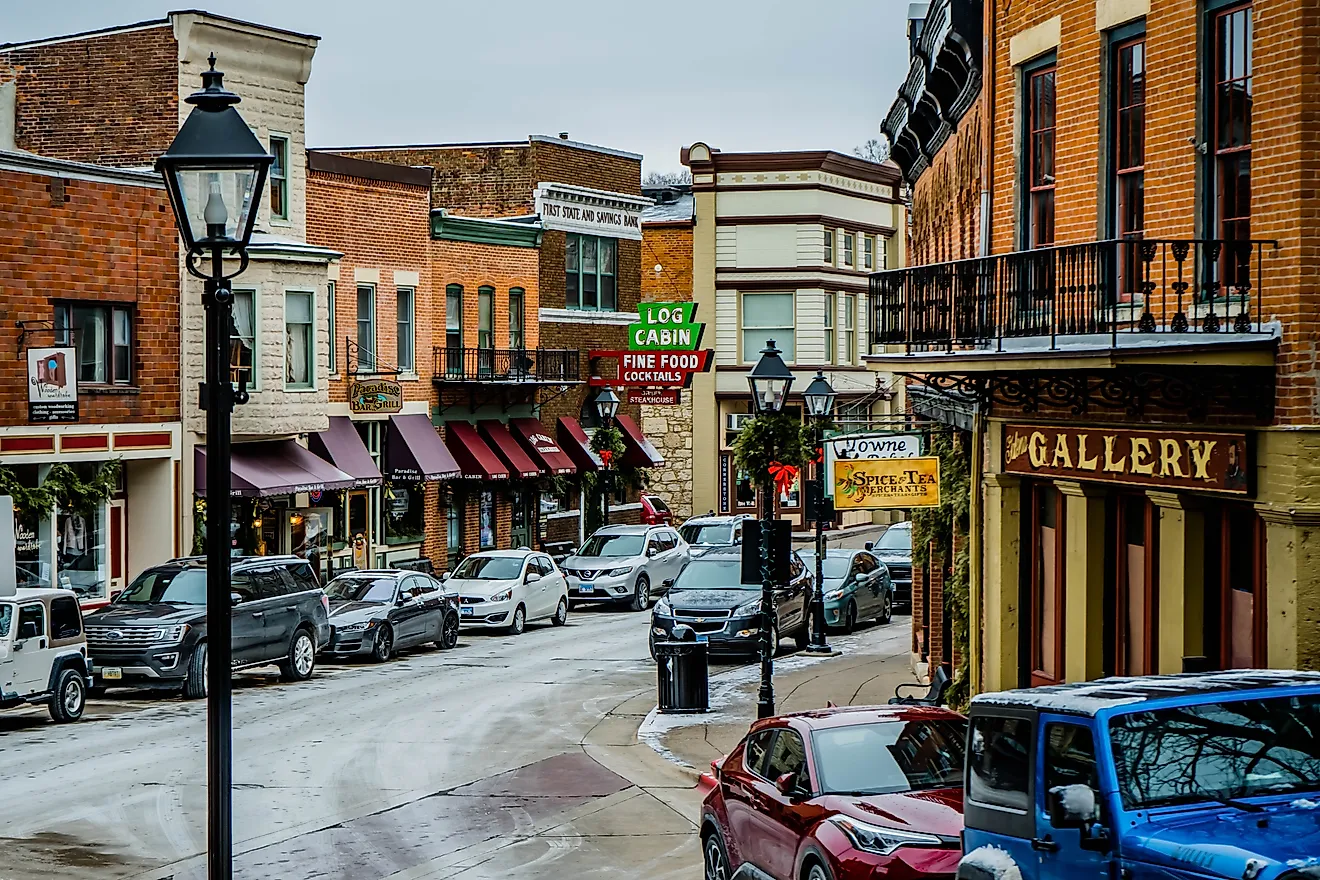
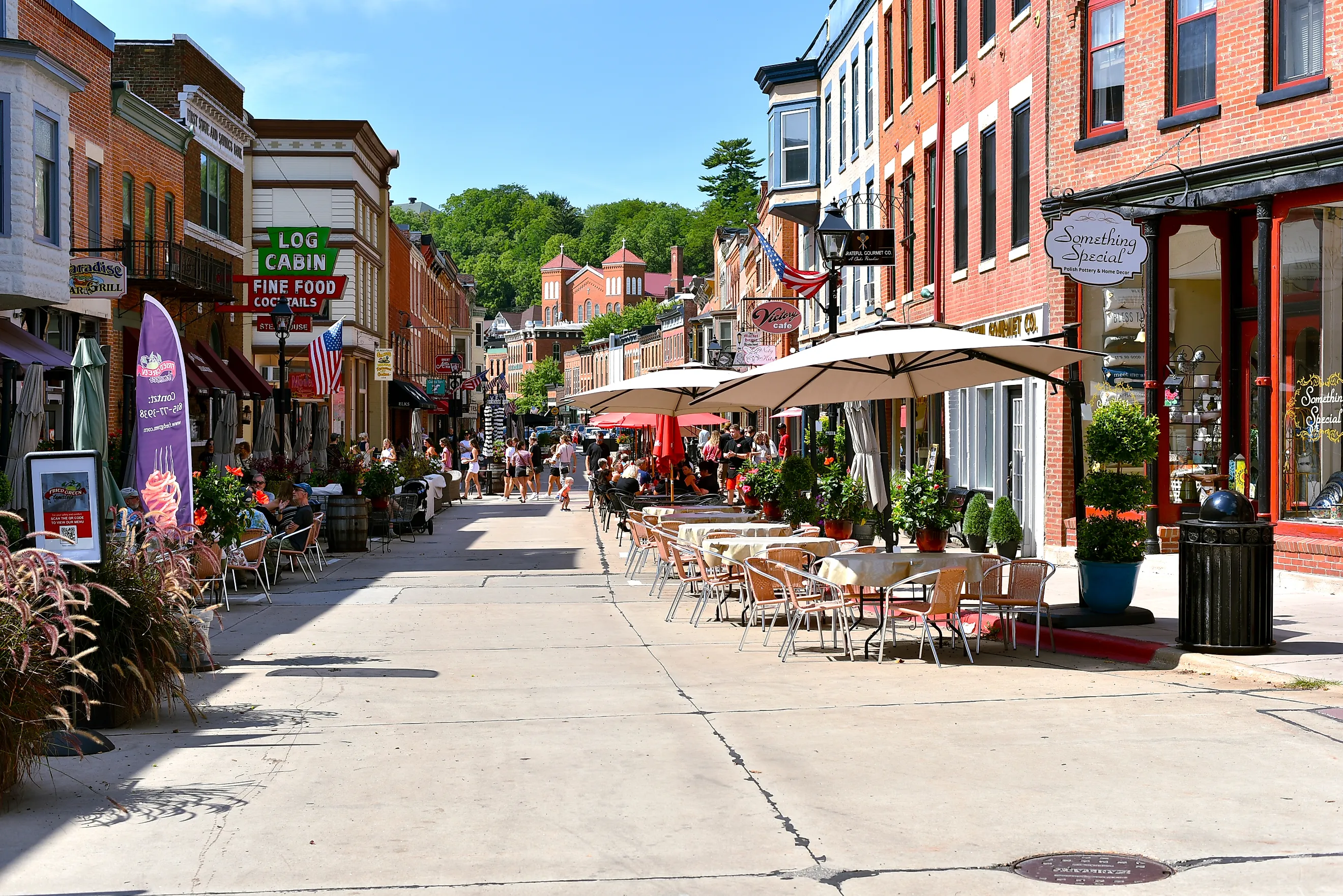
Galena holds about 85% of its 19th-century structures intact, one of the most preserved historic downtowns in Illinois. The Ulysses S. Grant Home State Historic Site, an Italianate brick house, was presented to Ulysses S. Grant by Galena citizens in 1865 upon his return from the Civil War, and it still holds nearly all of its original furnishings. Tours run Wednesday through Sunday and walk through the parlors and bedrooms as they looked during Grant's 1868 presidential campaign. The Belvedere Mansion, a 22-room Italianate built in 1857 for steamboat magnate J. Russell Jones, runs seasonal tours of an interior holding green velvet drapes from the set of Gone with the Wind and pieces from the estate of Liberace.
The DeSoto House Hotel has been operating since 1855, the oldest hotel still running in Illinois. Abraham Lincoln spoke from its second-floor balcony in 1856, and Grant ran his presidential campaign out of two of the building's rooms. The Galena River Trail picks up just south of downtown and follows a former Illinois Central right-of-way 8.8 miles on crushed limestone from Depot Park down to the Mississippi backwaters at Galena Junction.
Woodstock

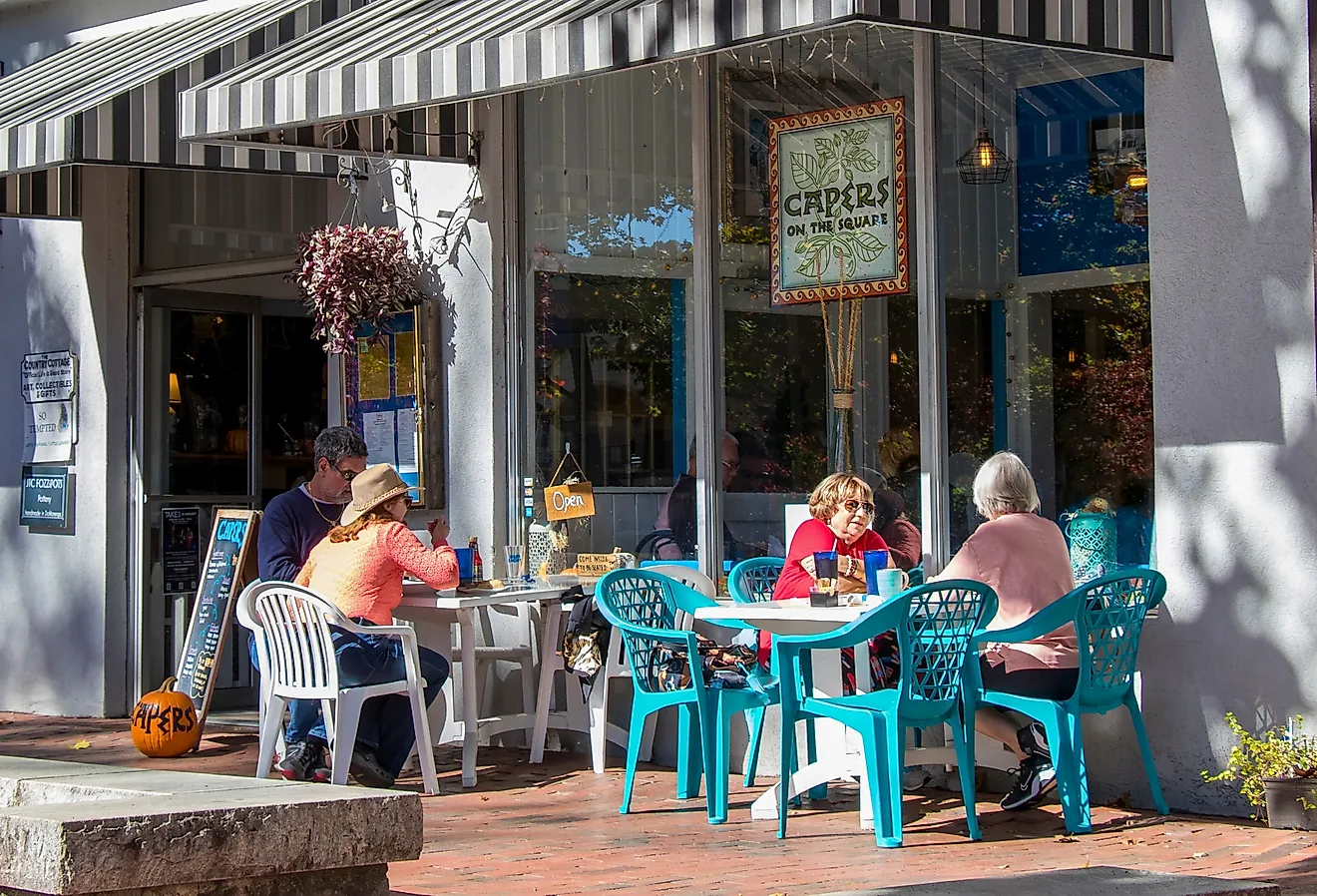
Woodstock served as the filming location for the 1993 Bill Murray film Groundhog Day, but the downtown square (added to the National Register of Historic Places in 1982) carries older history than the film. The 1889 Woodstock Opera House, built originally as the city hall, library, and fire department, is one of the oldest continuously operating theaters in the Midwest. Orson Welles made his American professional directorial debut on its stage in 1934 with the Todd Theatre Festival (Hamlet, Trilby, and Tsar Paul); the stage was formally dedicated to him in 2013. Paul Newman, Tom Bosley, and Geraldine Page all worked the same boards as members of the Woodstock Players in the late 1940s and early 1950s. The 1857 Old McHenry County Courthouse anchors the western side of the square, and the bronze plaque on the Cass Street sidewalk that reads "Bill Murray Stepped Here" marks the puddle-step scene from the film.
Saturday mornings from May through October bring the Woodstock Farmers' Market to the square, a producers-only operation: every item, from seasonal produce to farm meat, candy, and craft beer, comes directly from the grower or maker. A few blocks east, the Roscoe Woodstock Antique Mall covers 35,000 square feet across two levels with about 70 dealers, one of the larger antique destinations in northern Illinois.
Sycamore

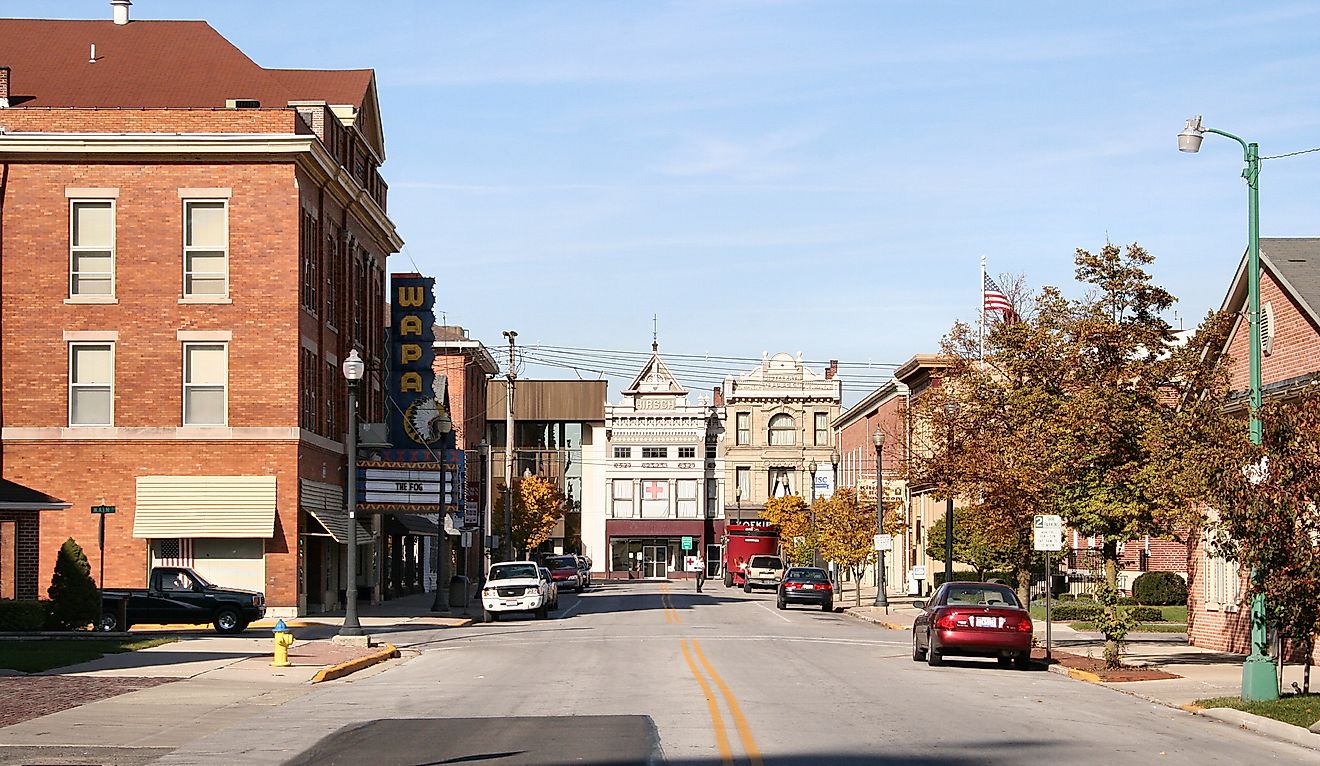
Sycamore centers on a courthouse square framed by Victorian storefronts and a 1905 Carnegie library, all in a downtown small enough to cross in a few minutes. The 1905 DeKalb County Courthouse, in Classical Revival style, fills its lawn each fall with the Sycamore Pumpkin Festival, running since 1962, where local kids submit thousands of decorated pumpkins around a parade and live vendors. The DeKalb County History Center holds research archives, rotating exhibits, and a 1923 Stutz fire truck on the grounds, with hosting credits including a Smithsonian traveling exhibition on rural America.
The Sycamore State Theater on State Street has run as a family-owned movie house since 1925, three screens of current releases on a tight community following. For dinner, Nats on Maple is the standing downtown pick, with house-style comfort food (meatloaf, jambalaya) drawing a mix of local and weekend traffic.
Geneva

Geneva sits on the Fox River on the western edge of the Chicago metro, with a downtown built on Swedish-immigrant trade and Fox River industry of the late 19th century. The Fabyan Villa Museum, on the southern edge of town in the Fabyan Forest Preserve, occupies a farmhouse that Frank Lloyd Wright redesigned in 1907 for industrialist George Fabyan; guided tours run Wednesday and weekends from May through September, and the adjoining Fabyan Japanese Garden runs the same season. The Geneva History Museum, facing the Kane County Courthouse, runs the permanent exhibit Geneva's Story (Fox River trade, Swedish immigration, the railroad's arrival) and offers walking, biking, and van tours covering everything from architecture to JFK's 1960 stop.
A footbridge from downtown reaches Island Park, a Fox River island with mature hardwoods, gardens, a treehouse playground with a zip line, the Fox River Bike Trail, and benches facing the water. The Historic Shopping District holds about 160 specialty shops and restaurants in restored Victorian storefronts, one of the more walkable commercial cores in the Chicago suburbs.
DeKalb

DeKalb's energy comes from Northern Illinois University, but its cultural anchors run older than the school. The Ellwood House Museum, a 33-room Victorian mansion built in 1879 for Isaac Ellwood (the business partner of barbed wire inventor Joseph Glidden), sits on 10 acres in the city center with seven historic structures, four gardens, and 6,000 square feet of exhibit galleries inside a converted carriage house. Downtown, the Egyptian Theatre is a 1929 Egyptian Revival theater on the National Register, themed around the Pharaoh Ramses II, with a 20-foot stained-glass scarab over the entrance and flanking pharaoh statues; the auditorium runs about 125 events a year across concerts, films, and live performance.
Whiskey Acres Distilling Co., a few miles south of town on family farmland, is one of a handful of certified farm-to-bottle distilleries in the country (the same family that grows the grain produces the whiskey from the same property), with tours through the full process from field to still. Hopkins Park, the DeKalb Park District's 32-acre central park, runs free summer concerts at the Dee Palmer Bandshell.
Oswego

Oswego runs a limestone-and-brick downtown with independent shops and direct Fox River access, half an hour from Naperville on the western edge of the Chicago metro. Hudson Crossing Park, on the river's edge, holds the Dix Bridge, two-plus miles of nature paths, and a play garden, with downtown a short walk away across the bridge. Fox Valley Winery, in the historic district, pours Illinois-grown grape and fruit wines (dry, semi-sweet, and seasonal) and runs as a participating stop on the Fox River Pour Tour, a self-guided wine trail through the river towns.
Keller's Farmstand, on the eastern edge of town, runs apple picking, a pumpkin patch, and a farm market through the fall, drawing families from across the Fox Valley. PrairieFest, the town's annual festival each June, fills downtown for several days with parades, music, and family activities.
St. Charles

Called the "Pride of the Fox," St. Charles is among the more walkable river towns in the state. Pottawatomie Park, on the eastern bank of the Fox River, runs 38.3 acres with a nine-hole golf course (since 1939), seasonal Fox River Queen riverboat cruises, an 18-hole miniature golf course, and a swimming pool with waterslides. The Arcada Theatre on Main Street, built in 1926, is a fully restored atmospheric venue with about 850 seats, a working pipe organ that rises through the stage floor, and an annual schedule of around 250 live music, comedy, and theater events.
The St. Charles History Museum on Main Street covers local history through rotating exhibits and an artifact collection that includes the town's claim as the historic Pickle Capital of the Midwest (the H.J. Heinz Company ran a major pickle plant in town for the first half of the 20th century). The Kane County Flea Market, held the first weekend of every month at the Kane County Fairgrounds, has run for nearly 60 years and is one of the larger outdoor markets in the Midwest.
Fulton

Fulton sits on the Mississippi River across from Clinton, Iowa, with an unusual identity for an Illinois river town: a working Dutch windmill on the flood-control dike at the western edge of downtown. De Immigrant, the windmill, stands close to 100 feet tall and was assembled in the Netherlands using traditional methods before being shipped to Fulton in pieces in 2000. Tours climb the narrow wooden stairs to watch the original millstones turn when the river wind cooperates. The Windmill Cultural Center across the street holds scale models of more than 20 windmills from ten European countries with interpretive material on each, and the gift shop sells the flour milled next door alongside Delft pottery and Dutch souvenirs.
Heritage Canyon, a few blocks from the windmill, is a 12-acre former limestone quarry converted into a recreation of an 1800s pioneer settlement, with hiking trails, period buildings, and re-enactors demonstrating pioneer crafts. Every May, downtown Fulton runs Dutch Days with traditional folk dancing, wooden-shoe racing, food vendors, and artisan demonstrations.
Princeton

Princeton holds an unusual feature for Illinois: a covered bridge. Captain Swift Covered Bridge, built in 2006 using 19th-century methods, is a 128-foot two-lane span across Big Bureau Creek with a burr arch design (the only two-lane covered bridge in Illinois). The creek bank below holds fishing access and walking paths. The Bureau County History Center occupies three historic structures near the courthouse square, including the Victorian-era Clark-Norris Home, with archives that include the H.W. Immke photography collection of more than 20,000 glass plate negatives, a serious genealogical resource.
The Owen Lovejoy Homestead, an 1838 house at the southern edge of town, was a documented station on the Underground Railroad, and tours walk through the preserved rooms and into the hidden space where freedom seekers were sheltered. Hornbaker Gardens, a nationally recognized retail garden and nursery a few miles southeast of town, runs seasonally on acres of perennial beds, ornamental trees, and specialty plants.
Lebanon

Lebanon's brick-paved downtown has been drawing travelers since the town's founding in 1814, anchored by McKendree University (founded 1828, the oldest continuously operating college in Illinois). The Mermaid House Inn, built in 1830 by a retired sea captain who claimed to have spotted mermaids at sea, is the town's most storied building; Charles Dickens stayed there in 1842 and wrote about Lebanon in American Notes. The inn is open by appointment and on special occasion days. Tiadaghton House, in a restored 1912 doctor's residence on St. Louis Street, is a regional art and craft gallery for about 85 area artists, with four resident-artist studio spaces upstairs.
The Hettenhausen Center for the Arts on the McKendree campus, a 479-seat auditorium that opened in 2006, hosts touring companies, jazz, classical music, and drama. Horner Park covers 58 acres on the southern edge of town with a five-acre fishing lake, tennis and pickleball courts, a short woodland trail, and old-growth oak shading the picnic areas.
Pontiac

Route 66 still runs through Pontiac, and the town has built its identity on it. The Illinois Route 66 Hall of Fame & Museum, in the old firehouse on Howard Street, holds thousands of pieces of Mother Road memorabilia. The big draws include Bob Waldmire's 1972 VW Microbus, the bus that inspired the Fillmore character in Pixar's Cars (Pixar originally wanted to name the character Waldmire, but the artist refused permission rather than see his name on McDonald's Happy Meal toys), the Bob Waldmire Road Yacht school bus, and a Life in the 1940s exhibit with four fully furnished rooms.
Beyond the museum, downtown is covered in 24 outdoor murals, 18 of which were painted in a single summer in 2009 by sign artists from around the world; red footprint markers on the sidewalk run a self-guided walking tour. Pontiac also runs three pedestrian swinging bridges over the Vermilion River, the oldest dating to 1898 and the newest (built in 1980) carrying an observation platform. Humiston Woods Nature Center, a 336-acre preserve a mile east of downtown, runs woodland paths, birding access, and picnic sites.
Urbana

Home to the University of Illinois Urbana-Champaign, Urbana runs more than its college-town energy. Market at the Square, running May through October at the corner of Illinois and Vine Streets, is one of the larger and more varied farmers' markets in the state, with produce, prepared food, handmade goods, and live music in one corner of the historic downtown. The Spurlock Museum on the U of I campus is free and worth the time, with a 50,000-object collection covering six continents and a million years of human history (Mesopotamian, Egyptian, East Asian, Oceanic, and American galleries plus rotating shows in the Campbell Gallery).
The Krannert Center for the Performing Arts, also on campus, runs five indoor stages with theater, dance, orchestra, and international touring company programming year-round; the acoustically tuned Foellinger Great Hall regularly hosts the U of I's Sinfonia da Camera and major touring orchestras. Meadowbrook Park in south Urbana covers 130 acres of restored native prairie with paved walking and biking paths.
Small Towns For A Cute Vacation In Illinois
The twelve towns above each carry a different anchor. A preserved 19th-century mining town. A square that doubled for Punxsutawney in 1992 and held a 19-year-old Welles in 1934. A courthouse pumpkin festival running since 1962. A Frank Lloyd Wright farmhouse redesign. A working Dutch windmill on a Mississippi flood-control dike. An 1838 Underground Railroad station. A Pixar-cited VW Microbus. A 130-acre prairie park inside a college town. Pick the one whose anchor matches the weekend, and the rest tends to follow.