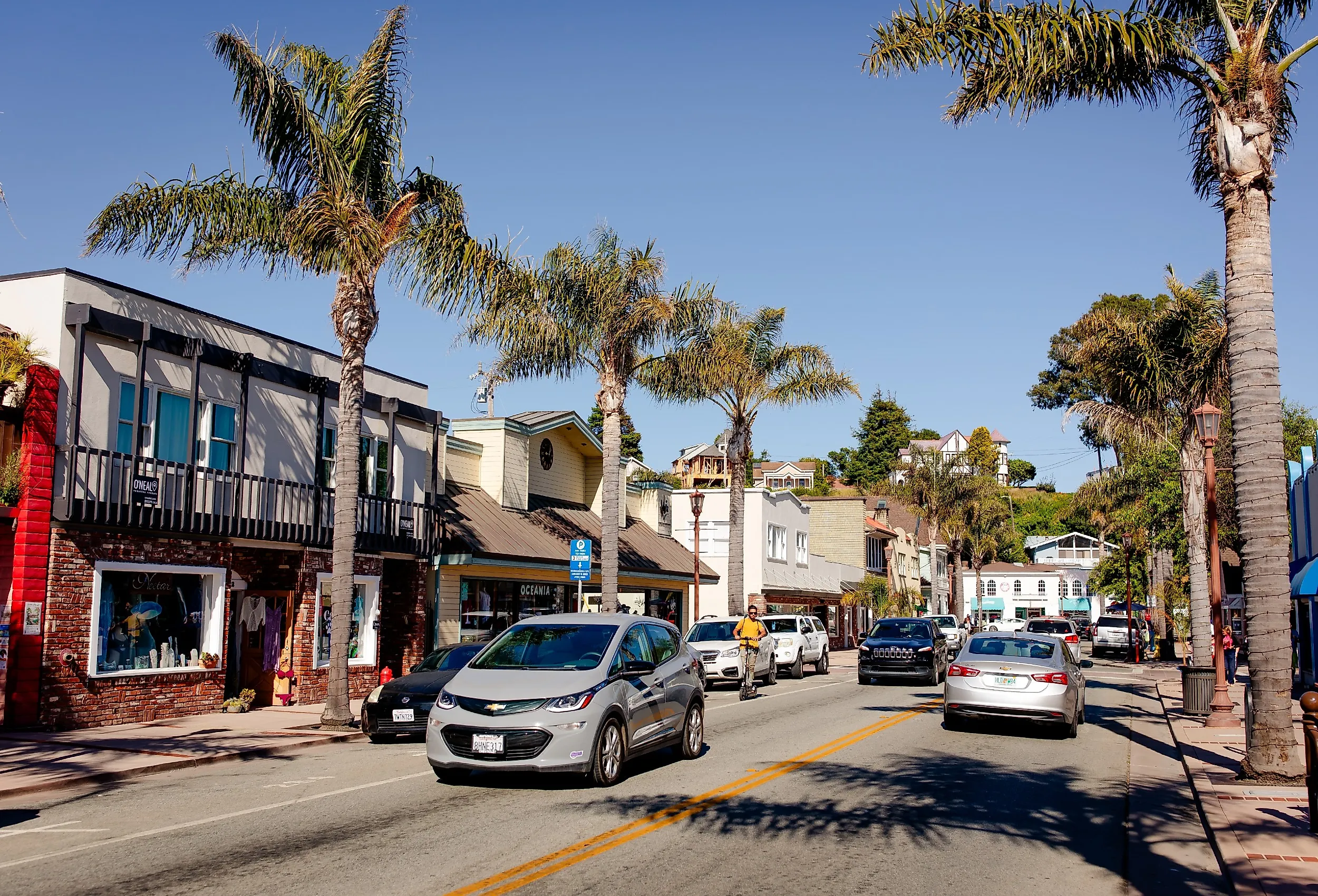
11 Small Towns in Northern California with the Best Downtowns
Northern California's small towns are thriving, and they owe much of their character and prosperity to the industries that built them. On the coast, some began as timber towns, while others inland were built for gold mining. Mendocino developed during the mid-19th-century redwood boom, and Jerome Ford's 1854 home is now the town's visitor center and museum. In Nevada City, the Miners Foundry Cultural Center grew out of a 19th-century machine shop and foundry that served mining operations. Truckee's downtown is shaped by its long association with the transcontinental railroad, and its railroad museum sits inside a former Southern Pacific caboose. These communities in Northern California have been home to the best downtowns for centuries and counting.
Capitola

The waterfront buildings in downtown Capitola are painted in bright shades, giving the town a distinctive coastal appearance. Venetian Court, whose development began in the 1920s, stands beside the shoreline with Spanish Colonial Revival and Mediterranean influences. Below it, Capitola Beach stretches along the mouth of Soquel Creek and draws visitors for swimming, sunbathing, and surfing.
For a wide-angle view of downtown, walk along the shoreline toward Capitola Wharf, which extends roughly 855 feet into Monterey Bay. The wharf suffered severe damage during storms in January 2023 and reopened in 2024 following reconstruction. Improvements include a wider deck, public viewing scopes, and interpretive displays. A short walk from the beach, the Capitola Historical Museum explores local history. Its grounds include a furnished 1907 beach cottage and an early 20th-century bathhouse.
Sausalito

Sausalito's downtown climbs the hills above San Francisco Bay. Near the ferry terminal, Viña del Mar Park features two large elephant statues and a fountain. The statues originated at San Francisco's 1915 Panama-Pacific International Exposition and were installed in Sausalito the following year. Nearby, the Sausalito Center for the Arts occupies a former Bank of America building and hosts rotating exhibitions, talks, musical performances, and other cultural events.
A short walk away, the Ice House Museum & Visitor Center introduces visitors to Sausalito's history. The late 19th-century structure was once used to store and distribute ice. Today, it contains local history exhibits and visitor information. Scoma's of Sausalito, on the other hand, occupies a late 19th-century Victorian building and serves seafood, including clam chowder and oysters.
Sonoma

Sonoma's adobe walls and tile roofs reflect the town's Mexican-era history. Sonoma Plaza covers eight acres and was laid out in 1835 under Mariano Vallejo. The historic square features lawns, a duck pond, a rose garden, and Sonoma City Hall, all surrounded by local shops and restaurants. On the northern edge, Mission San Francisco Solano preserves California's final Spanish mission and the only one established after Mexico gained independence from Spain. Visitors can explore the chapel, courtyard, and displays that include watercolors by Chris Jorgensen.
Also within Sonoma State Historic Park is the Sonoma Barracks. Built for Mexican troops associated with Vallejo, the two-story adobe building interprets Sonoma's military history and the events surrounding the 1846 Bear Flag Revolt. A few minutes away along First Street, Sebastiani Theatre adds a red neon marquee to the streetscape. The historic venue hosts films, concerts, and live stage productions.
Mendocino

Mendocino developed during California's mid-19th-century redwood boom. Jerome Ford helped establish the settlement after identifying the area's timber resources for San Francisco businessman Henry Meiggs, and the first sawmill followed soon afterward. The Ford House Visitor Center & Museum occupies Ford's 1854 home and documents the community's early history. Exhibits cover redwood logging, coastal schooner shipping, and historic Mendocino, including a detailed model of the village.
The Kelley House Museum provides another look at local history from a historic home overlooking Mendocino Bay. Its collections include material connected with the 1850 wreck of the Frolic and examples of Northern Pomo basketry. Nearby, Mendocino Headlands State Park surrounds the village on three sides, with trails leading across coastal bluffs that rise to roughly 70 feet in places. Along Little Lake Street, the Mendocino Art Center offers exhibitions and workshops in subjects such as ceramics, fibre arts, writing, and photography.
Ferndale

Downtown Ferndale is known for well-preserved Victorian-era architecture, including buildings with decorative woodwork and colorful facades. The Golden Gait Mercantile spans two floors, stocked with old-fashioned candy, toys, hats, kitchen goods, and gifts. A few doors away, The Blacksmith Shop displays a large collection of contemporary blacksmithing, sculpture, art glass, cutlery, and other handcrafted pieces.
Along Shaw Avenue, the Ferndale Museum explores the community's history through period rooms and exhibits on local industries, agriculture, and telecommunications. Visitors staying downtown can book a room at the Victorian Inn, where high ceilings and carved redwood details preserve elements of the historic interior. The property is also home to the Village Pub, which serves straightforward pub and bistro dishes with an emphasis on locally sourced ingredients.
Eureka

Nineteen miles north of Ferndale on Highway 101, Eureka combines Victorian architecture with galleries and cultural attractions. The Carson Mansion stands at 2nd and M Streets, with turrets, gables, and elaborate Queen Anne and Eastlake detailing. The building is now home to the private Ingomar Club, so its interior is not generally open to the public, but it's a sight to see from the street. A few blocks south, the Clarke Historical Museum occupies a former bank building completed in the early 20th century. Its collections include extensive Native American basketry and exhibits on Humboldt County history.
Eureka's arts scene continues in the former Carnegie library, which houses the Morris Graves Museum of Art. The museum contains seven galleries, a sculpture garden, and a collection of more than 1,000 works. Finish near the foot of C Street aboard the historic MV Madaket. Launched in 1910, the vessel formerly operated as a ferry and now offers sightseeing cruises on Humboldt Bay. Narrated trips cover the bay's working waterfront, history, and landmarks.
Weaverville

Historic downtown Weaverville preserves numerous Gold Rush-era buildings, along with distinctive exterior iron spiral staircases. Chinese immigrants left an especially important landmark at Weaverville Joss House State Historic Park. The Taoist temple is also known as the Temple of the Forest Beneath the Clouds. Guided tours introduce visitors to its carved altars, ceremonial objects, mining tools, and other artifacts, including weapons associated with the 1854 Tong War.
Along Main Street, the Jake Jackson Museum preserves artifacts connected with Trinity County's mining and pioneer history. The museum complex includes historic equipment, a working blacksmith shop, and other outdoor displays. Nearby, the Highland Art Center combines galleries, gardens, artist studios, an arts library, and event space. For dinner, The Nugget Restaurant is a longstanding family-run diner known for traditional American comfort food and old-fashioned milkshakes.
Dunsmuir

Squeezed into the Upper Sacramento River canyon, Dunsmuir developed around the railroad and retains buildings from its early 20th-century train-town era. Along Dunsmuir Avenue, the Siskiyou Arts Museum presents changing exhibitions by regional and visiting artists. The town's cultural offerings continue at the POPS Performing Arts and Cultural Center, whose name references Louis "Pops" Armstrong. The venue hosts visual, literary, and performing arts along with classes and community events. Wrap up the day at Dunsmuir Brewery Works. The brewpub produces small-batch handcrafted beer and highlights Dunsmuir's mountain water as part of its brewing identity. It also serves a menu of pub-style food.
Nevada City

The hilly streets of downtown Nevada City are lined with historic storefronts, wooden balconies, and traditional gas-style streetlamps. Broad Street leads to the Nevada Theatre, which opened in 1865 and is California's oldest still-operating theatre building. It closed in 1957 before reopening in 1968, so its history has not been continuous. Over the years, the venue has hosted notable figures, including Mark Twain. Today, its calendar includes films, plays, concerts, and other events.
Farther along Broad Street, the National Exchange Hotel offers overnight accommodations in a property whose history dates to 1856. Its restored interiors display a collection of more than 400 artworks. On Main Street, the Firehouse No. 1 Museum covers subjects including the Nisenan people, Chinese pioneers, and Victorian-era Nevada County. More Gold Rush history can be explored at the Miners Foundry Cultural Center, which grew out of a 19th-century machine shop and foundry that served mining operations. It now hosts concerts, plays, community gatherings, and other events.
Truckee

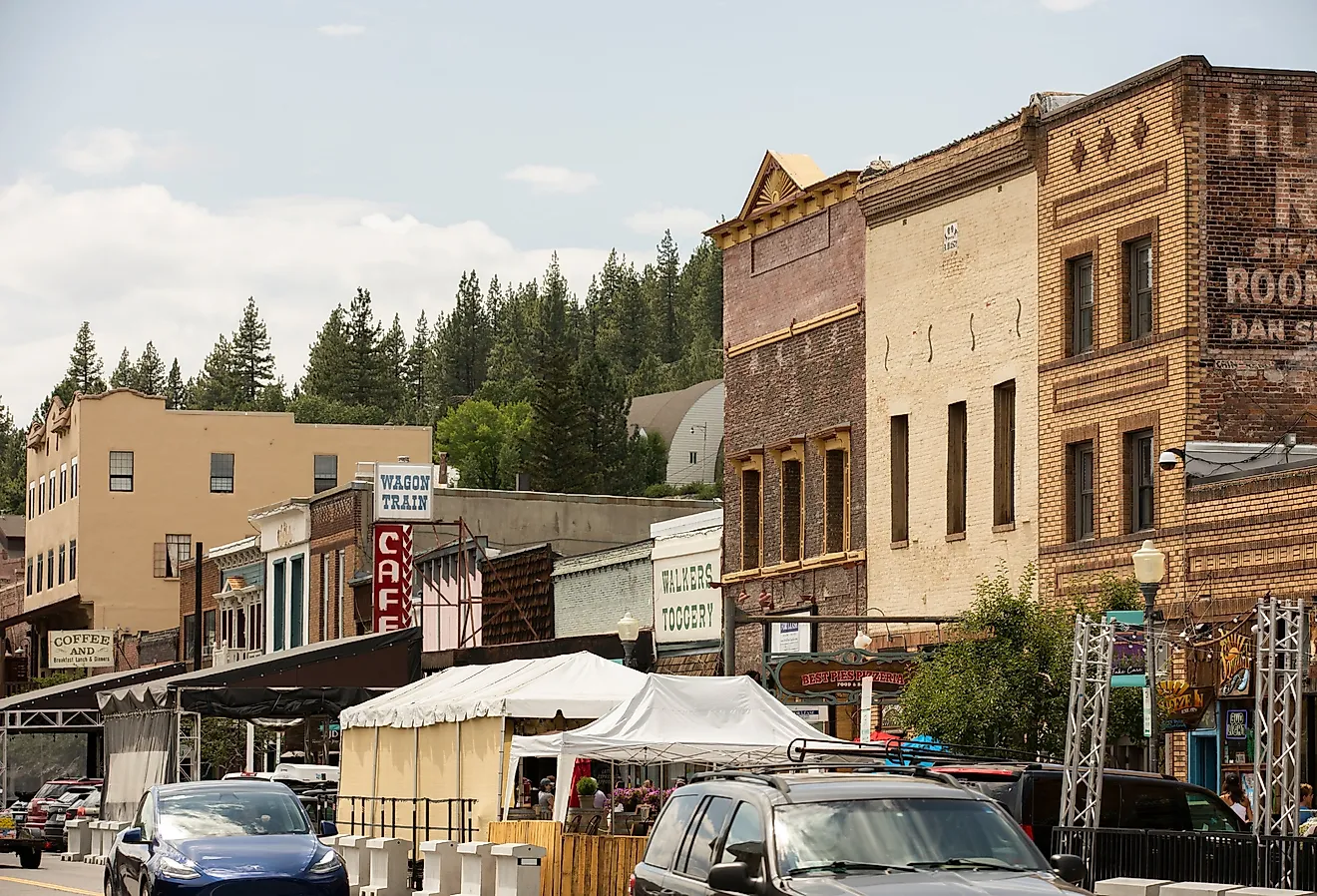
Forty-five miles east of Nevada City, Truckee has a downtown shaped by its long association with the transcontinental railroad. That history is explored at the Truckee Railroad Museum, set in a former Southern Pacific caboose dating to the 1950s. Exhibits cover subjects including railroad snow removal, regional lumber operations, and the role of rail travel in the Tahoe area. Along Jibboom Street, the Old Truckee Jail Museum occupies an 1875 jailhouse with original cells and exhibits on local industries, including ice harvesting and filmmaking. Downtown Truckee's creative side is on display at Riverside Studios, where local and regional artists sell handmade works. As evening arrives, Moody's Bistro, Bar & Beats operates inside the historic Truckee Hotel and regularly hosts live music, including jazz performances.
Sutter Creek

Historic wood, brick, and stone storefronts line downtown Sutter Creek, where the creek itself passes through the community. Miner's Bend Park tells part of the area's mining story through outdoor displays of historic machinery and equipment. Its centerpiece is an 1882 five-stamp mill built at nearby Knight Foundry.
A few blocks away, Knight Foundry preserves what is described as America's last intact water-powered foundry and machine shop. During public events, visitors may see historic equipment in operation along with blacksmithing and traditional sand-casting demonstrations. Local entertainment continues at the Sutter Creek Theatre on Main Street. The venue traces its origins to the silent-film era and today hosts concerts, theatrical performances, films, and other live events.
Northern California On Main
These California towns preserve downtowns shaped by very different chapters of the state's history. Mendocino and Eureka reflect the redwood era, while Weaverville and Nevada City retain reminders of the Gold Rush. Truckee developed around the railroad, and Sonoma preserves important sites from California's Mexican period. Together, their museums, historic buildings, galleries, theatres, and waterfront spaces give visitors plenty to explore on foot.