9 Offbeat Texas Hill Country Towns To Visit
South Central Texas's Hill Country is home to bustling cities like Austin and San Antonio, but also a number of smaller towns that have found unusual uses for their historic buildings, boast ambitious art projects, and sit in close proximity to many other peculiar attractions. Exploring these places means looking beyond the familiar wineries and scenic drives in this part of the state. A former feed mill houses interactive science exhibits in Johnson City, while Ingram displays a Stonehenge replica beside Easter Island heads. Elsewhere, historic jails welcome visitors, oversized cowboy boots become public art, and musicians keep old dance halls busy. Wherever you decide to go, a selection of museums, mom-and-pop shops, parks, and performance venues offer plenty of reasons to stop and spend time exploring each town's peculiarities.
Luckenbach

Luckenbach's town center was purchased in 1970 by a group that included humorist Hondo Crouch, who helped turn this former German farming settlement into a country music gathering place. Just southeast of Fredericksburg, its general store, bar, and dance hall still account for much of what curious visitors come to see.
Waylon Jennings made the name of the place famous with his 1977 hit, but the musical connection runs deeper. Furthermore, Jerry Jeff Walker recorded his album Viva Terlingua here in 1973. Today, you can still listen to acoustic picking sessions, browse the store's souvenirs, or attend a ticketed dance hall performance, and oak trees shade a number of outdoor gathering areas here, where the backdrop encourages lingering between sets.
Check the event calendar before choosing a date, since an informal afternoon of guitar music and a crowded evening concert could offer much different experiences of this small but influential Hill Country community. It all depends on the kind of time you want to have.
Wimberley

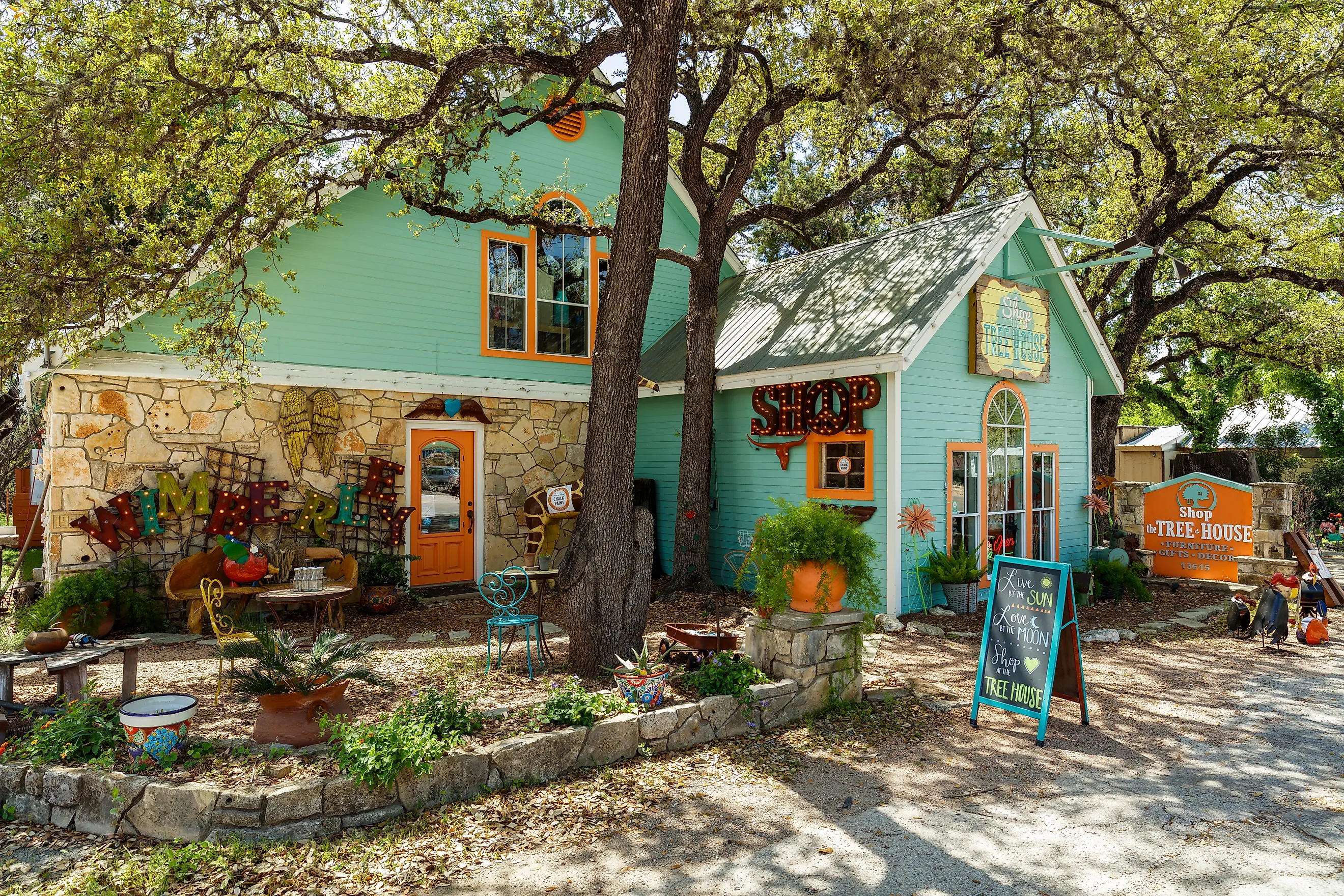
Oversized cowboy boots painted by artists give Wimberley a must-see public art trail, with designs scattered outside businesses and community buildings. Follow the Boot Trail map to find them, then browse actual vintage footwear and Western collectibles at Wild West Store along the way.
Around Wimberley Square, more cool galleries and shops further reflect the town's longstanding arts community, while nearby Cypress Creek Nature Trail & Preserve provides a shaded walk beside the water for any outdoor lovers out there. But for a broader view of the surrounding hills, climb the 218 steps at Old Baldy Park. This staircase is steep, but the summit rewards the effort with views across the Wimberley Valley.
Back near the center, Blue Hole Regional Park has more foot trails and picnic areas beneath stands of mature trees. Its swimming hole also occupies a highly scenic, cypress-lined stretch of aptly named Cypress Creek, making it a popular seasonal destination when water conditions allow swimming to proceed.
Comfort

Comfort's unique history includes German settlers who opposed the Confederacy, a legacy commemorated at the Treue der Union Monument. Dedicated in 1866, the limestone memorial offers a starting point for understanding a classic Hill Country community with strong freethinking traditions. You can then continue along High Street to browse various mom-and-pop antique shops and inspect the historic storefronts, then stop at MixHaus Gallery for contemporary artwork and rotating exhibitions.
Outside town, James Kiehl River Bend Park provides a place to get outdoors and explore the Guadalupe River's banks. If you're a keen wildlife enthusiast, you may want to save the evening for Old Tunnel State Park, though, where an abandoned railroad tunnel shelters up to 3 million Mexican free-tailed bats from May through October. Reserve a bat-viewing ticket in advance to watch their emergence from designated viewing areas. The park also has a short nature trail for visitors more interested in birds and exploring the railway route.
Bandera

Bandera pairs its title as the "cowboy capital of the world" with attractions that stray well beyond ranching history. At the Bandera Natural History and Art Museum, stroll among life-size dinosaur models, examine wildlife dioramas, and see colonial artwork from New Spain. Its International Hall adds another unexpected exhibit, too: a carved jade tiger weighing 2,000 pounds (907 kilograms).
For more learning fun, the Frontier Times Museum on 13th Street brings the focus back to the Lone Star State through displays of cowboy gear, Native American artifacts, and rodeo champions. Moreover, its Western art collection hangs against natural rock walls, making this gallery literally a part of the land.
Want to also grab a bite accompanied by some tunes? Head to Arkey Blue's Silver Dollar on Main Street, a honky-tonk housed in a building dating to 1921. This legendary venue has hosted Willie Nelson and Robert Earl Keen, and its calendar continues to include live bands and jam sessions with room for patrons to dance to traditional country music.
Llano

Rock stacking has become a competitive sport in Llano, where the Llano Earth Art Fest brings balancing contests, an array of "natural sculptures," and workshops to Grenwelge Park each spring. But outside of festival dates, the riverside park offers a place to explore exposed rock and photograph the Roy Inks Bridge.
The town's famous granite also appears in the walls of the Llano Red Top Jail, built in 1895 and used until 1982. Arrange a tour to see iron cells, former family living quarters, and graffiti left by prisoners. For a different collection of artifacts, visit the Llano County Historical Museum, which showcases Native American projectile points, antique phonographs, and saddles.
Art fans can also browse work by regional artists at the Llano Fine Arts Guild & Gallery or check its schedule for painting classes. And for a truly historic stay, book an overnight room at the Dabbs Hotel, a railroad hotel established in 1907.
Ingram

A replica of Stonehenge beside two Easter Island heads makes Ingram a surprisingly robust stop for more outdoor sculptures in the Texan Hill Country. "Stonehenge II" stands on the Hill Country Arts Foundation campus, where you can walk through the arrangement and photograph the monuments without an admission charge, great for travelers on a budget.
Al Shepperd and Doug Hill created the installation using steel, wire mesh, and plaster for most of its imitation stones, and the neighboring heads stand 13 feet (4 meters) tall, adding a second improbable landmark to the grounds.
Continue into the foundation's Duncan-McAshan Art Gallery for its ever-changing exhibitions, or register for an art workshop to spend time working with local instructors. Nearby, the Old Ingram Loop follows the town's original business district as well, where studios and craft shops occupy a variety of historic buildings. Browse paintings and handmade goods along the loop, then read the Old Ingram historical marker for more on this offbeat settlement's origins.
San Saba

San Saba's identity revolves around pecans, but a number of interesting roadside landmarks give reason to explore beyond the nut shops. For one, just outside of town, you'll probably want a photograph of the Wedding Oak, a sprawling tree connected to local marriage traditions. Farther into the countryside, Regency Bridge carries a wooden roadway over the Colorado River. Built in 1939, this suspension bridge connects San Saba and Mills counties and offers views along the river between its steel cables.
Back in town, Harry's Boots occupies five historic buildings filled with Western footwear, hats, and clothing, making browsing for cowboy garb quite the substantial activity rather than a quick souvenir purchase.
Hop over to Mill Pond Park after your hat is done being fitted, a spot that provides a nice network of walking paths, footbridges, and waterfalls for an afternoon outdoors. To see more of the river's lush environment here, follow the walkways at San Saba River Nature Park, where bird blinds and fishing stations give visitors places to watch wildlife or even cast a line.
Dripping Springs

Dripping Springs' music scene extends to nearby Mercer Dancehall in Driftwood, where you can dance to live bands on Saturday nights and Sunday afternoons. The venue moved from Mercer Street to Ranch Road 12 and includes a wraparound porch for breaks between sets. Cabins offer overnight stays close to the music.
The Pound House Farmstead and Museum offers a more personal account of the town's beginnings. Tour the 1854 home to see possessions belonging to the Pound family, then explore its gardens. The roses here have a specific attachment to that history, descending from cuttings Sarah Pound brought from Mississippi when she arrived in 1853.
This is a good destination for foodies too, and booking a guided tasting at Texas Hill Country Olive Co. on West Fitzhugh Road is a strong recommendation. Sessions in this very Mediterranean-like locale introduce extra virgin olive oils and balsamic vinegars, while the bistro serves meals featuring the company's signature products.
Johnson City

Johnson City's once-active feed mill now houses a fun science center, full of experiments that visitors can control, including a robotic hand standing 30 feet (9 meters) tall. At the so-called Science Mill, you're free to use a joystick to move its stainless steel fingers, then step inside a silo for the Light Loom, where a moving rope and colored LEDs demonstrate how light combines, among many other sights and sounds here.
Nearby, Lyndon Johnson's Boyhood Home preserves a different side of the town's history. Join a free, 30-minute program to learn about the president's childhood and see rooms furnished to reflect the 1920s era he grew up in. Continue to the Johnson Settlement, where a trail leads to his grandparents' log cabin and other ranch buildings. These sites belong to none other than the Lyndon B. Johnson National Historical Park, whose visitor center boasts even more exhibits and information for exploring both properties.
See Another Side of Hill Country at These Destinations
A visit to these welcoming central Texan towns can revolve around a museum tour, an afternoon beside the river, or an evening of live music. Keep in mind that historic tours, guided tastings, and performances often require more planning than a simple stroll past outdoor sculptures or through riverside parks. And with that, allow time for smaller stops between the better-known attractions, and definitely check schedules before setting out.