The State Parks With The Oldest Buildings Still Standing
When wandering Gunpowder Falls State Park, you'll find yourself standing inside a working gristmill that started grinding flour before the United States was born. That's the pattern running through every entry below: the building came first; the park came later. These parks often served to protect what someone else had already built. First up, we have a New Jersey farmhouse that had stood for three decades when Washington's boats scraped ashore on its riverbank.
Washington Crossing State Park, New Jersey

Washington Crossing State Park commemorates a single night. On December 25 and 26, 1776, the Continental Army crossed the Delaware River and came ashore at Johnson's Ferry, on ground the park now protects. The Johnson Ferry House was already there. New Jersey's park service dates the gambrel-roof farmhouse and tavern to about 1740 and credits it to Garret Johnson, who held a 490-acre tract along the river. James Slack was running the ferry by 1776. The agency records that Washington and his officers probably used the house on the night of the crossing.
The house worked as a tavern as well as a farmhouse. Its keeping room, parlor, and bedchambers carry period furnishings today, and the site also holds an 18th-century kitchen garden. The building has spent recent seasons under restoration. Whatever else the park interprets, and it interprets a great deal, the farmhouse was already standing on the night it commemorates.
Gunpowder Falls State Park, Maryland

Gunpowder Falls State Park keeps its headquarters inside a gristmill older than the country. In 1769, the millwright Isaiah Linton and the miller David Lee went into partnership to build one. Both men were Quakers from Bucks County, Pennsylvania. They chose a low seat on the Little Gunpowder Falls called Jerusalem. They finished Jerusalem Mill in August 1772, and Lee ground flour under the White Silk label. Much of it went by ship to the Caribbean.
The building runs five stories and measures 60 by 30 feet. White oak posts carry the ceilings, floors, and stairways, and two tiers of three dormers on each side of the roof light the upper levels.
A half-mile race once fed two pitch-back waterwheels, later swapped for horizontal turbines. Millstones 52 inches across did the grinding on the ground floor. When a flood broke the dam in 1940, the mill went over to electricity.
Retail is what kept it alive. The last miller, Jack Bridges, watched the grinding trade decline and added an early convenience store. Revenue from that sideline covered the shortfall until he died in 1961.
Mackinac Island State Park, Michigan

Fort Mackinac replaced a wooden post on the mainland. The British judged Fort Michilimackinac, on the Lower Peninsula shore, too vulnerable to American attack. In 1780, they moved the garrison to the limestone cliffs of Mackinac Island. Work on the Officers' Stone Quarters dates from the same year.
Fourteen historic structures survive at the post, and the agency that runs it calls this one the oldest public building in Michigan. Along with the stone ramparts and the south sally port, it belongs to the original fort. Every other building inside the walls came later, between the late 1790s and 1885. The structure served as officers' quarters throughout the fort's military life and often housed the commandant.
The park has an unusual pedigree of its own. Mackinac National Park dates to 1875, the second national park in the country. The federal government transferred it to Michigan in 1895, and the legislature set up a commission to run what became a state park. The building itself now holds a tea room and a hands-on gallery for children.
Fort Macon State Park, North Carolina

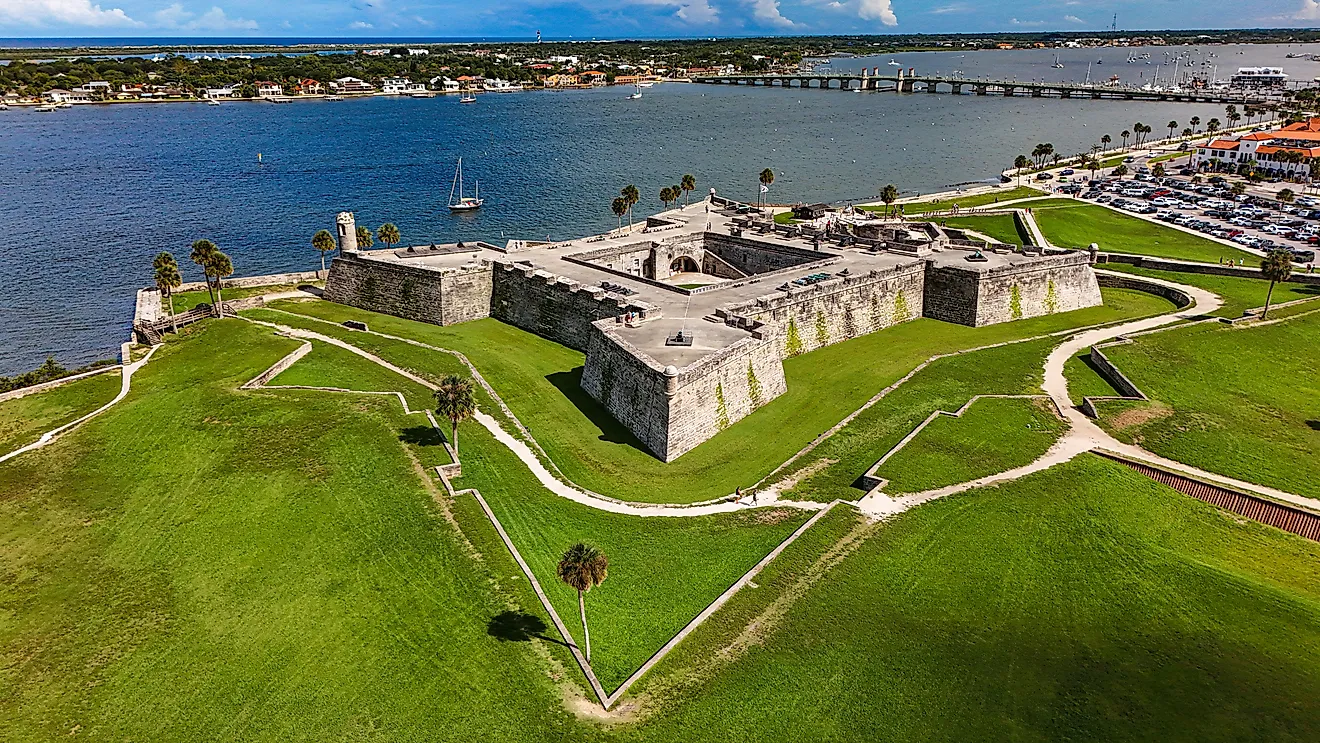
Fort Macon guarded Beaufort Inlet, and for most of its service life, almost nobody was in residence. The US Army Corps of Engineers raised the pentagonal brick fort between 1826 and 1834, to a design by Brigadier General Simon Bernard. Construction cost $463,790. The name honors the North Carolina statesman Nathaniel Macon. Active garrisons held the place only from 1834 to 1836, from 1842 to 1844, and from 1848 to 1849. The rest of the time, an ordnance sergeant acting as caretaker was often the only person stationed there.
The Army gave up on the fort in 1903, satisfied it would never be wanted again. It sat out the First World War. The reservation went onto the surplus list in 1923. A Congressional act of June 4, 1924, sold the fort and its land to North Carolina for $1, on condition that the state run a public park there. The gates opened to visitors in 1936. The fort's 26 vaulted casemates run through the ramparts. Coast Artillery troops moved back into them in December 1941, this time as tenants leasing the park from the state. They stayed until November 1944, and the Army gave up the lease in 1946.
Fort Ross State Historic Park, California

Fort Ross reads as a complete Russian settlement, and one building in it actually is. The Russian-American Company worked this stretch of the Sonoma County coast from 1812 to 1841, farming and trading furs to supply its Alaskan settlements. California State Parks describes the Rotchev House as an existing building renovated about 1836 for Alexander Rotchev, the last manager of the colony. By that account, nothing else on the site carries construction techniques from the Russian era.
Almost everything else inside the stockade went up later. The chapel, the Kuskov House, and the officials' barracks are reconstructions. So are the fur warehouse and both corner blockhouses, and the windmill is a replica raised in 2012. The distinction is worth carrying, because a visitor walking the compound is mostly walking through the 20th century.
Even the survivor has been repaired more than once, and its exterior was restored across a series of changes in the 20th century. What the agency points to is the fabric underneath. An inventory taken in December 1841, as the Russians were leaving, describes the commandant's new house as built of square beams, with six rooms and a vestibule.
Petaluma Adobe State Historic Park, California

Rancho Petaluma covered 66,000 acres, and part of the reason it existed was the Russians. Mexico sent Mariano Guadalupe Vallejo north in 1834 with three assignments, and one was to be near the Russian outpost on the coast. He chose a hilltop for the headquarters of the ranch.
The adobe served as the center of the working ranch from 1836 to 1846. The building was still unfinished when the Bear Flag Revolt ended Vallejo's hold on the place. Petaluma Adobe took shape as a two-story quadrangle around a courtyard, in adobe brick and redwood. The original thatched roof came off in the early 1840s, when George Yount was hired to split shingles and lay a wooden roof over it.
The rooms were working rooms. The quadrangle turned out to hide tallow and dried meat. It also produced blankets, carpets, and saddles. Indigenous laborers who lived on the ranch made the most of it. The east wing was only ever partially built, and the courtyard Vallejo laid out is still open on that side.
Bannack State Park, Montana

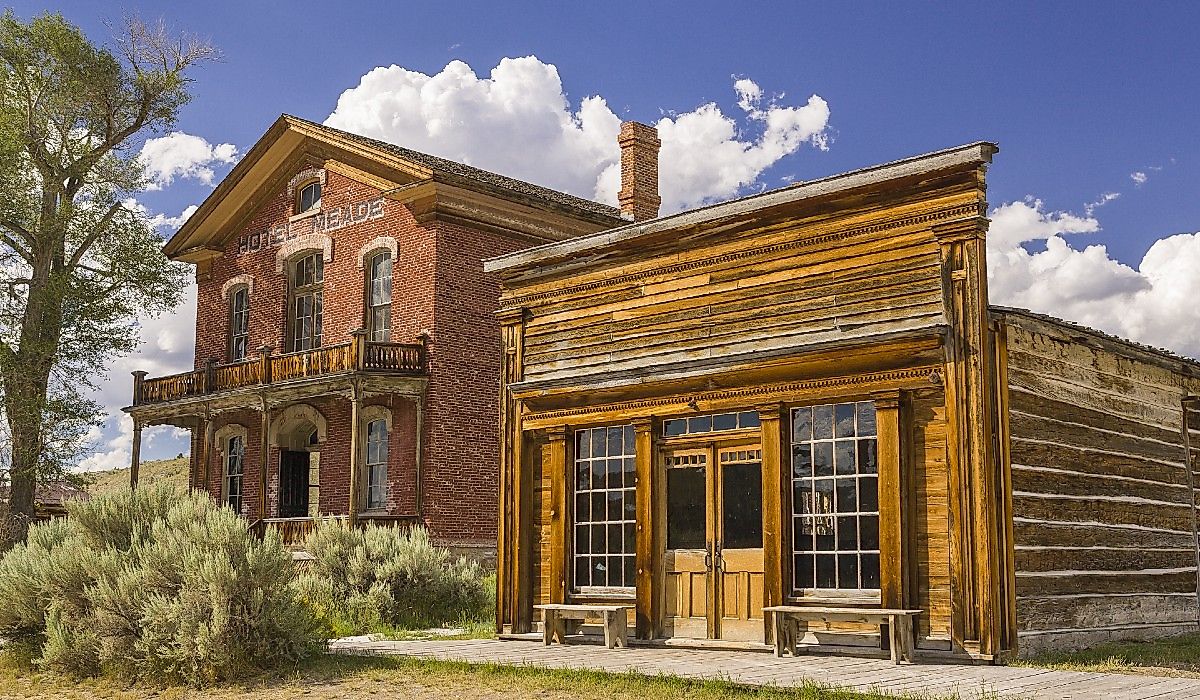
Bannack rewrote the rules on how to keep a ghost town upright. The state parks agency counts more than 50 buildings along Main Street. They are log and frame structures left from the rush that followed a gold strike on Grasshopper Creek on July 28, 1862. The camp held more than 3,000 people by 1863 and served as Montana's first territorial capital.
Bannack carries a long reputation for arrested decay, a practice of stabilizing buildings without ever repairing them. The park's own National Historic Landmark preservation plan takes a different line. It calls the older instruction, which asked staff to maintain a sense of abandonment, unclear from a preservation perspective. The plan records that the confusion had already produced gradual deterioration across many of the structures.
The Secretary of the Interior's standards now govern instead. Preservation comes first. Where an element can no longer be saved, it is replaced in kind. The replacement matches the original in material, design, and finish.
Where an alteration made between the 1950s and the 1990s changed a building's character, a failed element goes back to its 1862 to 1890 appearance. The plan bars invention outright, ruling out conjectural detail and any false sense of history.
What The States Did Not Build
None of the seven buildings above was built with a state park in mind. For example, a Quaker millwright built a gristmill for profit. A New Jersey ferryman kept a tavern for the river crossing trade. The park boundaries arrived only after each original use had already run its course. The Civilian Conservation Corps arrived later, adding the lodges and shelters most visitors now picture when they think of a state park. The oldest structure on the grounds is rarely the one a state chose to build. It's the one a state happened to inherit, and only later decided was worth keeping.