Where Young Families Are Putting Down Roots In Pennsylvania
More people leave Pennsylvania for other states than arrive from them. The Census Bureau's Vintage 2025 estimates put the state at a net domestic loss again in the year to July 2025, around 3,000 people, and 50,700 since 2020. Every bit of the state's growth last year came from international migration.
Which makes the inbound numbers more interesting, not less. About 38,400 people moved to Pennsylvania from New Jersey in the most recent state-to-state figures, the largest single corridor into the state, with another 29,300 from New York and 25,000 from Florida. A typical Pennsylvania home is valued at $254,500 against New Jersey's $454,400, a gap of almost exactly $200,000, and that gap is doing the work.
Those arrivals are not spreading evenly. They concentrate in a handful of cities: the Lehigh Valley takes families priced out of the New York metro, Hazleton has drawn Dominican and Latino households for two decades, Lancaster resettles refugees at a rate well above its size, and York sends more than 25,000 commuters into Maryland each day. These eight are where the movement actually shows up.
Allentown

Pennsylvania's third-largest city is the centre of the state's clearest in-migration story. Many Lehigh Valley newcomers are leaving the cramped, pricey New York City-area housing market, Zachary Jaindl of developer Jaindl Enterprises told Bisnow in August 2026, and the commute makes it possible: plenty of arrivals keep their New York-area jobs and drive or train in.

The PPL Center downtown anchors a revitalisation that has brought restaurants and a minor-league hockey crowd back to Hamilton Street. For families the draw is cheaper: Dorney Park and Wildwater Kingdom is in the city, the Bogert Covered Bridge crosses the Little Lehigh in a city park, and the Allentown Rose Gardens and Trexler Memorial Park are both free.
Air Products keeps its global headquarters on 50 acres just west of the city, built as the base for roughly 2,000 employees, and Interstate 78, US 22, and Route 100 all converge here. In the Breinigsville ZIP code on the city's western edge, the median sale price was about $452,000 in September 2026.
Bethlehem

Bethlehem is the Lehigh Valley's second pull, and it offers something Allentown does not: a historic district that still works as a downtown. Main Street runs a tight stretch of 18th and 19th-century buildings on a hill, with the Moravian settlement at the bottom of it. Moravian University, founded in 1742, is among the oldest colleges in the country.
The old Bethlehem Steel works south of the river is now SteelStacks, where the blast furnaces are floodlit and the site hosts Musikfest each August, one of the largest free music festivals in the country, drawing hundreds of thousands across ten days.
For families the practical pull is the schools and the position: Lehigh Valley International Airport is fifteen minutes away, New York is about ninety minutes, and Philadelphia a little over an hour. The city markets itself as Christmas City, and in December the Christkindlmarkt and the light displays bring the whole region in.
Easton

Easton sits where the Lehigh meets the Delaware, with New Jersey directly across the bridge, which makes it the first stop for anyone moving west out of the New York metro. A buyer can stand on Centre Square and be in New Jersey in two minutes.
The Crayola Experience occupies a building on that square and is the single most family-oriented attraction in the Lehigh Valley, built around the factory that has made Crayola crayons in Easton since 1976. The Easton Public Market a block away runs year-round with produce stalls and food vendors.
Hugh Moore Park preserves a working section of the Lehigh Canal, where a mule-drawn boat still runs in season and the National Canal Museum explains why the town existed in the first place. The Karl Stirner Arts Trail follows the Bushkill Creek through the middle of the city, and Lafayette College sits on the hill above.
Hazleton

Walk down Alter Street in Hazleton and you pass La Cueva, where the menu includes los tres golpes, a Dominican breakfast of mangú with eggs, cheese, and salami. Latino families, many of them Dominican, have been moving here for two decades for jobs and cheaper housing, and the city is now majority Hispanic.
Rossanna Gabriel, whose relatives live in New York and New Jersey, stayed mainly because the rent was cheaper and the homes were larger, WVIA reported in 2024, and because the place felt safe for her son. The median home in Hazleton sold for $224,893 in September 2026, roughly a quarter of the New York City median that month, and the city is about two and a half hours from New York by car.
Amazon, American Eagle, Cargill, and Hershey each employ more than 200 people in Greater Hazleton. The Hazleton One Community Center on East Fourth Street runs bilingual pre-K and youth sports for little or nothing, through a nonprofit founded by the former Cubs manager Joe Maddon, and more than 150 children signed up for its summer programmes on the first day. The school district's Newcomer Center is the first stop for children arriving with little English, and their parents can take weekly classes with free childcare.
Lancaster

Lancaster has been a resettlement city for decades, taking in refugees at a rate far above its size and absorbing families from Philadelphia and the New York metro at the same time. The result is a downtown of about 58,000 people that is considerably more mixed than the Amish-country branding suggests.

Central Market, trading on Penn Square since the 1730s, is the oldest continuously operating farmers market in the country and still the centre of the week here. Dutch Wonderland, 48 acres just east of the city, is built specifically for small children rather than teenagers, which is unusual among amusement parks.
Lancaster's Amtrak station puts Philadelphia within roughly an hour to an hour and twenty minutes on Keystone trains, which is why a family can sell in the suburbs there and still keep the job. The Lancaster Science Factory and the North Museum both run hands-on programmes, and Long's Park holds a free summer concert series.
Harrisburg

State government is a recession-resistant employer, and it is the reason the Harrisburg area keeps drawing families regardless of what the wider economy does. The Capitol complex, the hospital systems, and the warehousing along the interstates give the region a job base that does not swing much.

City Island sits in the middle of the Susquehanna, reached on foot from downtown, with a minor-league ballpark, a beach, a miniature railroad, and horse-drawn carriages. It is the most concentrated collection of cheap things to do with children anywhere in the state.
Harrisburg also sits at a genuine crossroads: Interstates 81 and 83 cross the Pennsylvania Turnpike here, Philadelphia is under two hours, Baltimore about ninety minutes, and Hershey twenty minutes east. The Whitaker Center downtown runs a science centre and theatre under one roof, and the Capitol itself offers free daily tours.
York

More than 25,000 York County residents work in Maryland, which is the whole economic logic of the place: Baltimore wages, Pennsylvania prices. The state line is twenty minutes south, and under Pennsylvania's reciprocal agreement a resident working across it pays income tax to Pennsylvania at a flat 3.07% rather than Maryland's 4.75% plus a county levy of 2.25% to 3.30%.
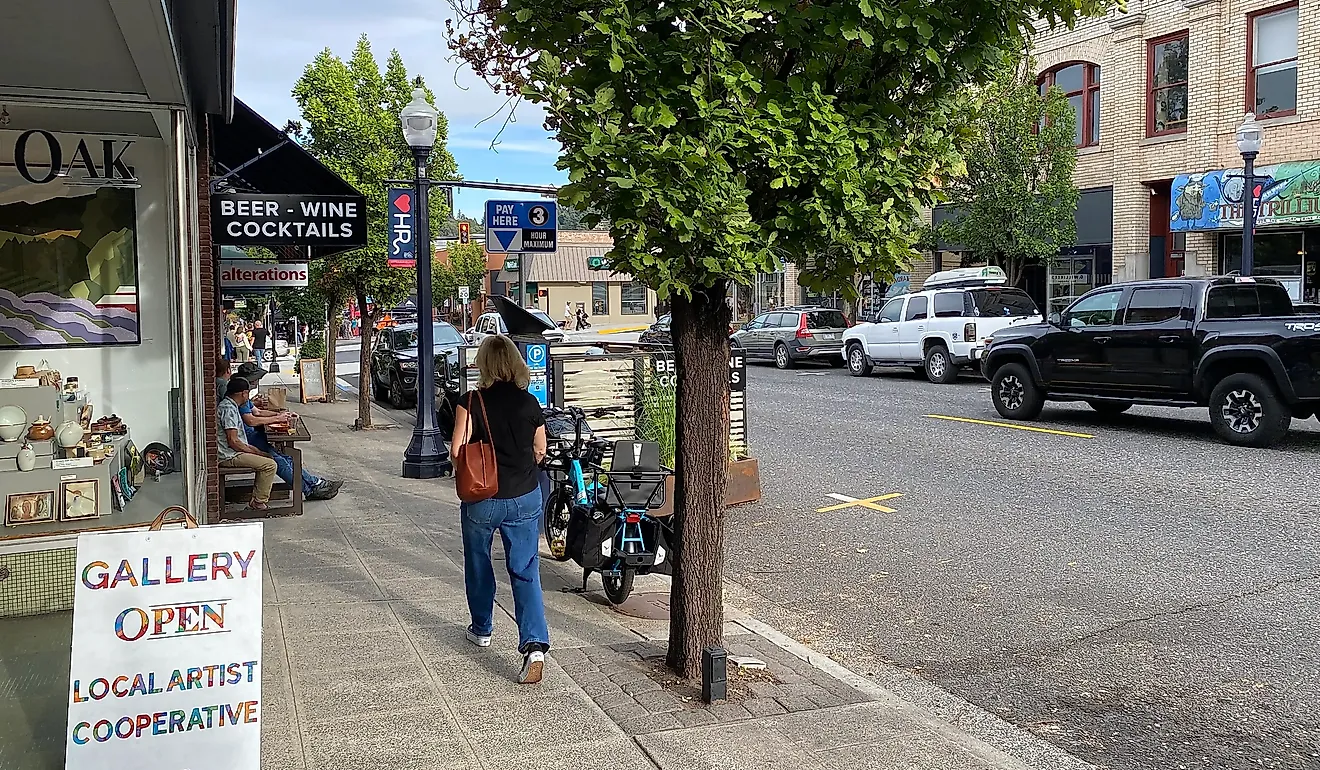
York itself is a working city of about 44,000 with a brick downtown, the oldest fair in America dating to 1765, and a First Friday art walk each month. The York County History Center, the Agricultural and Industrial Museum, and the Colonial Complex cover the period when the Continental Congress sat here and adopted the Articles of Confederation.
For families, Rocky Ridge County Park has eleven miles of trail and a winter light display, Springettsbury Park runs 51 acres with an amphitheatre, and the Heritage Rail Trail runs 27 miles from the city to the Maryland line, flat the whole way.
Pittsburgh

A typical home in the city of Pittsburgh was valued at $205,800 in the 2020-2024 Census estimates, which is the lowest figure for any major city in the northeast and roughly $40,000 below the Pennsylvania average. For a family moving from almost anywhere on the east coast, that is the headline.
What the money buys is a city with university and hospital employment that has held up through every downturn since the mills closed, led by UPMC and Carnegie Mellon. The health system is the largest private employer in the state.
The free attractions are unusually good. The Carnegie Science Center, the Children's Museum on the North Side, and the National Aviary are all paid, but Point State Park at the confluence of the three rivers, the 456-acre Frick Park, and the Duquesne Incline's view across the Monongahela cost little or nothing. Schenley Park alone covers 456 acres with trails and an ice rink, and the city's 24 public pools open in summer.
Working Across The State Line
A move into Pennsylvania can leave a parent's job exactly where it was, which is the quiet mechanism behind most of this. Some Lehigh Valley newcomers still commute to the New York area, and more than 25,000 York County residents work in Maryland. Under Pennsylvania's reciprocal agreements with Maryland and New Jersey, a resident who works across either line pays state income tax on those wages to Pennsylvania, at a flat 3.07%, with local earned income taxes averaging about 1%.
The comparison is what makes people move. In Maryland, a married couple's taxable income between $3,001 and $150,000 is taxed at 4.75%, and the counties add 2.25% to 3.30% on top. New Jersey's median home value runs about $200,000 above Pennsylvania's.
It is worth being clear about the scale, though. Pennsylvania as a whole is still losing residents to other states, and its population reached 13,059,432 in July 2025 on the back of international arrivals rather than domestic ones. Growth here is a local story rather than a statewide one, concentrated in these cities and the corridors feeding them, which is exactly why the list is eight places and not the whole map.