4 Copperhead Snake Hotspots In South Carolina
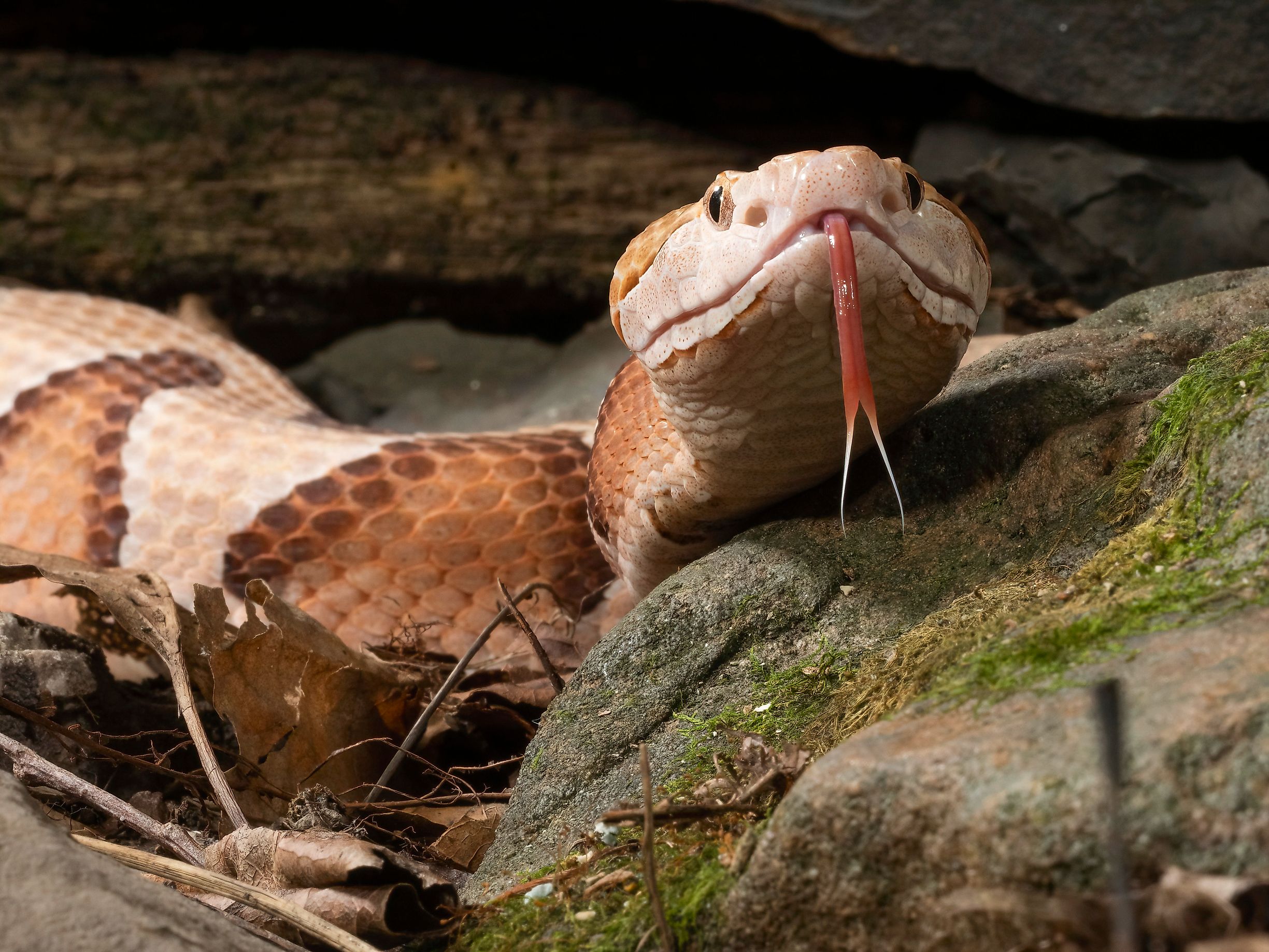
Copperheads (Agkistrodon contortrix) are South Carolina's most common venomous snake. Not only are they abundant, but they are among the more aggressive species of pit viper and account for the most snake bites per year across the state, so it is wise to know where they are likely to occur in order to keep everyone safe, snakes included.
South Carolina is a hospitable environment for copperheads, in large part due to its varied climate and topography. Their preferred habitats are deciduous and mixed forests, rocky leaf litter, and woodland edges, as well as near water sources such as streams, swamps, and marshes, where they tend to be well camouflaged and can easily prey on insects, amphibians, and lizards. In the following hotspots and throughout South Carolina, expect to share space with these incredible creatures, who have called the region home for millennia.
Congaree National Park

Given that Congaree National Park constitutes the largest intact expanse of old-growth bottomland hardwood forest remaining in the southeastern United States, it is no surprise that copperheads are commonly reported here. Spanning nearly 27,000 acres, the park is actually home to 21 species of snake, including the timber rattlesnake, the cottonmouth (also known as the water moccasin), and the copperhead. While cottonmouths prefer the swampy sections of the park, copperheads are most likely to be spotted and encountered off the trail in rocky crevices and dry underbrush. To play it safe, stick to the many boardwalks and well-trodden trails.
Poinsett State Park

Copperheads have also been observed in the mixed upland forest and creekside habitat of Poinsett State Park. The park boasts more than 25 miles of hiking trails across 1,000 acres of wilderness, much of which is prime real estate for snakes. One of Poinsett's defining features is actually its biodiversity, with landscapes that range from the foothills of the Blue Ridge Mountains to the Piedmont region of Upstate South Carolina, the Sandhills, and the Atlantic coastal plain. Here, cottonmouths have every opportunity to hunt for prey in the undergrowth and along the shorelines, bask on rocky outcrops, and hibernate during the cooler months. Encounters are always possible, including along the popular Palmetto Trail, which leads through the Manchester State Forest.
Hilton Head Island

The coastal forests and dunes of Hilton Head support copperheads near water and in the Lowcountry woodlands, and the region is also home to cottonmouths and eastern diamondback rattlesnakes. The entire island only covers about 69 square miles, with a growing population of both seasonal and permanent residents. While development and expanding infrastructure have had a negative impact on snake populations in recent years, protected areas like the Sea Pines Forest Preserve are still home to many copperheads. In general, they are crepuscular, meaning they’re most active during the twilight hours of dawn and dusk, so being particularly vigilant during these peak times is one way to avoid encounters in more populated areas.
Hunting Island State Park

South of Myrtle Beach, this popular barrier island destination attracts more than a million visitors a year. With 5,000 acres of lowcountry wilderness, which includes beach, marsh, and maritime forest, it is home to a wide range of plant and animal life, including, of course, snakes. While the eastern diamondback rattlesnake is more common here, copperhead encounters are possible, particularly in the forested sections of the park. Some other harmless species are sometimes taken for copperheads, such as rat snakes, corn snakes, and northern water snakes, so the best practice is simply to keep a safe distance and respect wildlife.
Playing It Safe With Snakes
From dense bottomland forests to coastal preserves, South Carolina offers ideal habitat for copperheads and many other snake species. Understanding where these snakes are most likely to be found helps reduce unnecessary encounters and promotes coexistence. By staying on designated trails, remaining alert during peak times like dawn and dusk, and respecting wildlife in general, visitors can safely enjoy the state’s remarkable natural spaces while allowing copperheads to continue playing their important role in South Carolina's vibrant ecosystem.