8 Snake Infested State Parks In Texas
Texas has a vast number of snakes, with some estimates putting as many as 105 species within the state's borders. Its environment suits snakes well, from its dry deserts to canyons to river valleys and rocky parks. Of these snakes, 14 are venomous, including multiple species of rattlesnakes, coral snakes, cottonmouths, and copperheads. Just about all of these snakes prefer to stay hidden from humans, but you are most likely to find them in their natural habitats in Texas' state parks.
Palo Duro Canyon State Park

Palo Duro Canyon State Park contains the second-largest canyon in the U.S. Nestled in the panhandle of Texas, it is 40 miles long with a depth of 800 feet. Traversing through the canyon will reveal the long geological history of Texas with its multi-colored canyon walls and mesas. Visitors can hike down through the more than 30 miles of trails in the canyon or stock up on supplies from the Trading Post at the bottom of the canyon.

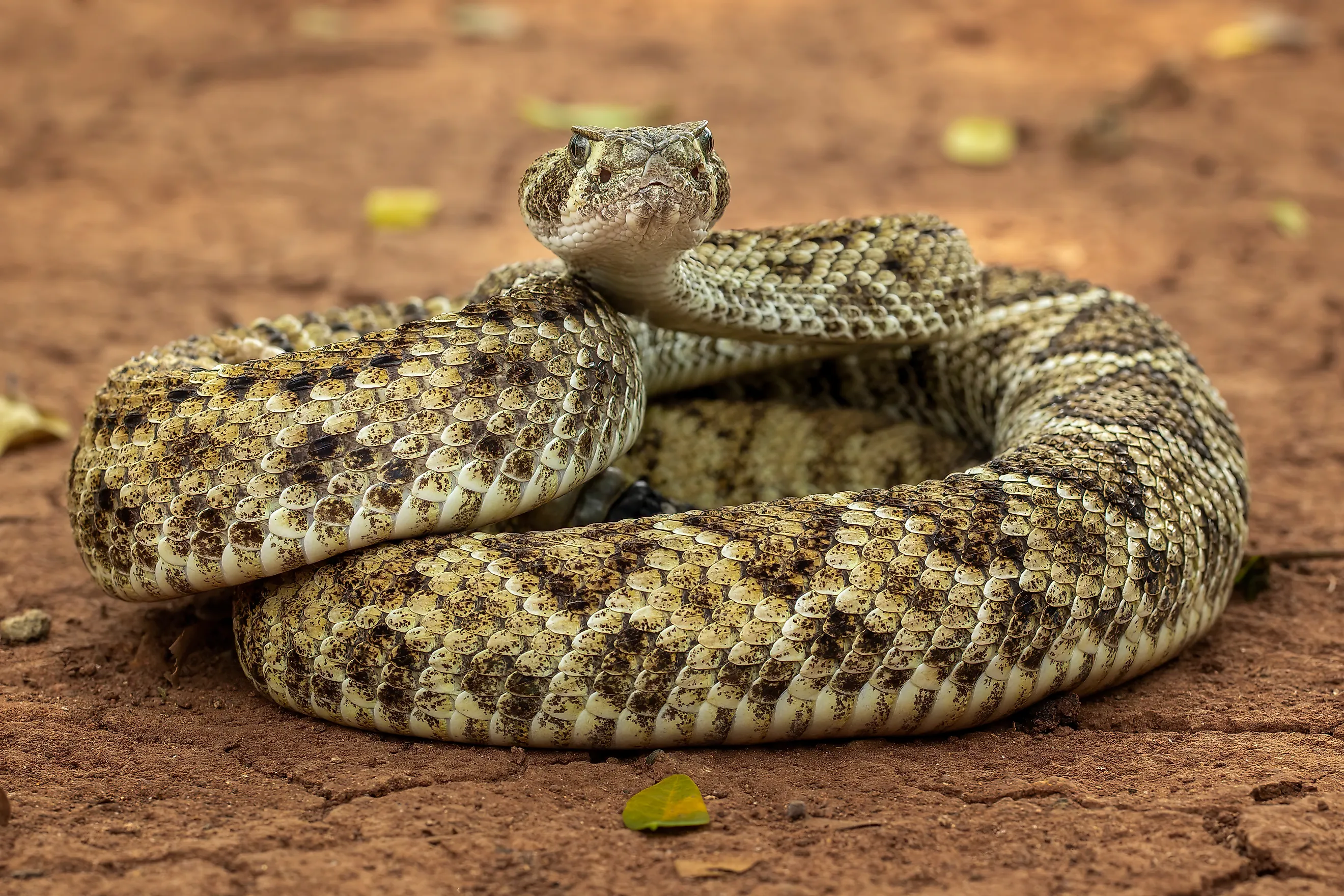
As you explore these ancient canyon floors, you just might run into a western diamondback rattlesnake or prairie rattlesnake hiding in the rock outcroppings or in underbrush. The prairie rattlesnake blends in well with the dusty environment with its light brown body. It tends to be just over 3 feet long, with heat-sensing pits on the sides of its head that it uses to detect prey. The western diamondback rattlesnake is larger, at around 4 to 5 feet long. It lives throughout the Southwestern U.S. and Northern Mexico. It has a very venomous bite, which can cause death if left untreated by medical professionals.
Enchanted Rock State Natural Area

Located near Fredericksburg, Texas, the Enchanted Rock State Natural Area stands out among all Texan state parks for its colorful dome. The pink granite dome is a 425-foot batholith in the center of the park, and is the primary feature that guests ascend. In addition, there are 11 miles of trails running around the hills and creeks of Fredericksburg, along with rock climbing opportunities.

The Enchanted Rock is home to many types of creatures, such as the Texas horned lizard or fairy shrimp, which live in vernal pools on the rock. The cliffs also hide many types of snakes, such as the western diamondback rattlesnake. These rattlesnakes are most active during the spring and late summer when males engage in mating combat to attract females. Unfortunately, some visitors to the park will harass these snakes by throwing rocks at them. This is a bad idea for two reasons. The first is that it is illegal to harm these creatures. The second is that antagonizing them makes it much more likely for them to become aggressive and bite you.
Lost Maples State Natural Area

The Lost Maples State Natural Area consists of several hills and canyons formed by the Sabinal River to the northwest of San Antonio. The park is named after its many maple trees, which usually do not grow in the hotter climates of Texas.
The rugged terrain here comes alive in the fall as the maple leaves change color, offering a brilliant display for hikers traversing the 10 miles of trails, including one that ascends up 2,200 feet. There are many good reasons to come here, whether that's searching for an endangered golden-cheeked warbler or fishing in the Sabinal River. If you get too lost in these maple trees, you might run into a snake, ranging from small garter snakes to western diamondback rattlesnakes, or the elusive coral snake.

This park is one of the few places in Texas where wildlife observers have seen coral snakes up close, as they rarely come out of their hiding places. Most experts recommend keeping 20 feet between you and a snake. They are unlikely to lash out at you, but giving them that amount of distance should ensure safety for you and the reptile.
Pedernales Falls State Park

Texas isn't a dry place by any means, as the Pedernales Falls State Park demonstrates with its waterfalls flowing over limestone cliffs. Located 40 miles west of Austin, it offers a swimming area at the Pedernales River for those willing to ascend a series of steep rock stairs. Much like other parks on this list, tubing on the river is a popular activity, along with bird watching, mountain biking, and hiking through the hill country. Hiking trails range in difficulty from a short Twin Falls Nature Trail to the 6-mile Wolf Mountain Trail.

It's not just humans who love to cool off in the waters here; snakes of many kinds also live here, such as the diamond-back watersnake (not to be confused with the rattlesnake). If you see a snake here, odds are it's nonvenomous. However, the Hill Country of Texas is the native territory of the western diamondback rattlesnake, eastern copperhead, and the cottonmouth.
The cottonmouth is a semiaquatic snake with strong venom that can destroy tissue. At times, this bite may cause a victim to lose a limb. Thankfully, there is good antivenom to treat a bite, as long as it is administered quickly enough.
South Llano River State Park

This state park was previously used as a ranch and pecan farm, and has since been converted into a multi-use wildlife refuge and recreational facility. It's especially crowded during the summer when folks bring a float or paddle to cool off in the river. The park rents out tubes for families to use on its two miles of riverfront, and you don't need a fishing license to cast a line here.
In addition to the riverfront, there are over 20 miles of trails atop ridges, through woodlands, and on the river. These trails cross over local ecosystems that are home to a large turkey roost, along with large populations of snakes. Rat snakes and diamond-backed water snakes are frequent sites here, along with the venomous western diamondback rattlesnake and coral snake.

Coral snakes are very shy creatures that tend to burrow into the ground or into leaf litter. They feed on smaller rodents, snakes, lizards, and frogs. Unlike other venomous snakes, their fangs are fixed in their mouths. The fangs are smaller, so these snakes will bite down and hold onto the prey so they can inject the full dose of neurotoxic venom.
Bentsen-Rio Grande Valley State Park

For wildlife watchers, the Bentsen-Rio Grande Valley State Park is a must-visit. Throughout the woodlands and brushlands of the park, birders can spot up to 360 species of birds. Other wildlife also call this park home, from bobcats to javelinas, which are more commonly referred to as skunk pigs for their skunk-like appearance.
The park is highly accessible with a 1.8 mile wheelchair friendly Rio Grande Trail and 3.5 miles of paved trails. The park store provides binocular rentals for anyone looking to get a closer look at the animals, without getting too close.

Unfortunately, many wildlife species have suffered as a result of human harassment, including snakes. Multiple snakes, such as the great plains rat snakes, have been found dead in the park due to humans attacking them. People commonly mistake nonvenomous snakes for a venomous snake that lives here: the western diamondback rattlesnake. Regardless of their motives, all snakes in state parks are protected by law. There is no reason to harm them, as long as you follow basic safety precautions such as wearing good footwear and not putting your hands into crevices or in leaf piles.
Inks Lake State Park

Inks Lake is a riverside lake by the Colorado River in Burnet, Texas, that was developed by the Civilian Conservation Corps into a full-fledged state park in the 1930s. Ever since then, it's drawn in a crowd that regularly fills up the park, as they eagerly take boats out onto the lake or the Devil's Waterhole extension. There are many colorful rock outcrops around the lake that date back to the pre-Cambrian times, more than 600 million years ago. There are small amounts of granite that show as veins through the gneiss rock that make up most of the landscape.
The lake is home to a wide variety of mammals, birds, reptiles, including snakes. Water snakes are the most commonly spotted snakes, such as the diamond-backed watersnake. This snake you're more likely to smell than see, as it will emit a foul odor to warn off humans who get too close.

As for venomous snakes, the state park sits in the range of the western cottonmouth, Texas coral snake, and western diamondback rattlesnake. The cottonmouth is the most likely to be seen swimming through the water, but it tends to be more active at night rather than during the day, when people will be swimming or fishing in these waters.
Guadalupe River State Park

The Guadalupe River State Park is a natural escape for city dwellers of San Antonio and Austin. It winds along four miles of the Guadalupe River for fishing, swimming, tubing, or canoeing. Surrounding the river are 13 miles of biking and hiking trails. Many of these trails are quite easy to reach, such as the 0.3-mile River Overlook Trail. The park is ideal for both day journeys and longer hikes through the prairie grasses of the hilly countryside.

The river itself is home to 15 species of snakes, most of which are nonvenomous, such as the eastern hognose snake, known for its pig-nose-shaped head, and several varieties of rat snakes and garter snakes. There are four species of venomous snakes that frequent the bluffs, trails, and creeks by the river. These include the broad-banded copperhead, which is responsible for the most venomous snake bites in the U.S. due to its tendency to freeze when approached, the four to five-foot-long western diamondback rattlesnake, the cottonmouth, and the Texas coral snake.
This last one is different from the rest as it has a rounded head, more common in nonvenomous snakes. It's identifiable by its black, yellow, and red bands. They typically like to hide under moist leaves or other debris, meaning you should be careful about where you put your hands when visiting the Guadalupe River State Park.
Watch where you step!
The best advice for dealing with any kind of snake is to watch where you step or put your hands. None of these snakes views humans as prey, but they do see them as potential threats or predators. That's why the various subspecies of rattlesnakes use their rattle to announce their presence. Other venomous snakes are not so loud as rattlesnakes, such as copperheads, which freeze in place, or the very venomous cottonmouth.
Venomous bites are rare in America, with only 7,000 to 8,000 reported annually, so some basic safety precautions can prevent these bites. In addition, make sure to show respect to these creatures as they live in these parks, and you are simply visiting.