Is It Legal To Collect Petrified Wood In The US?
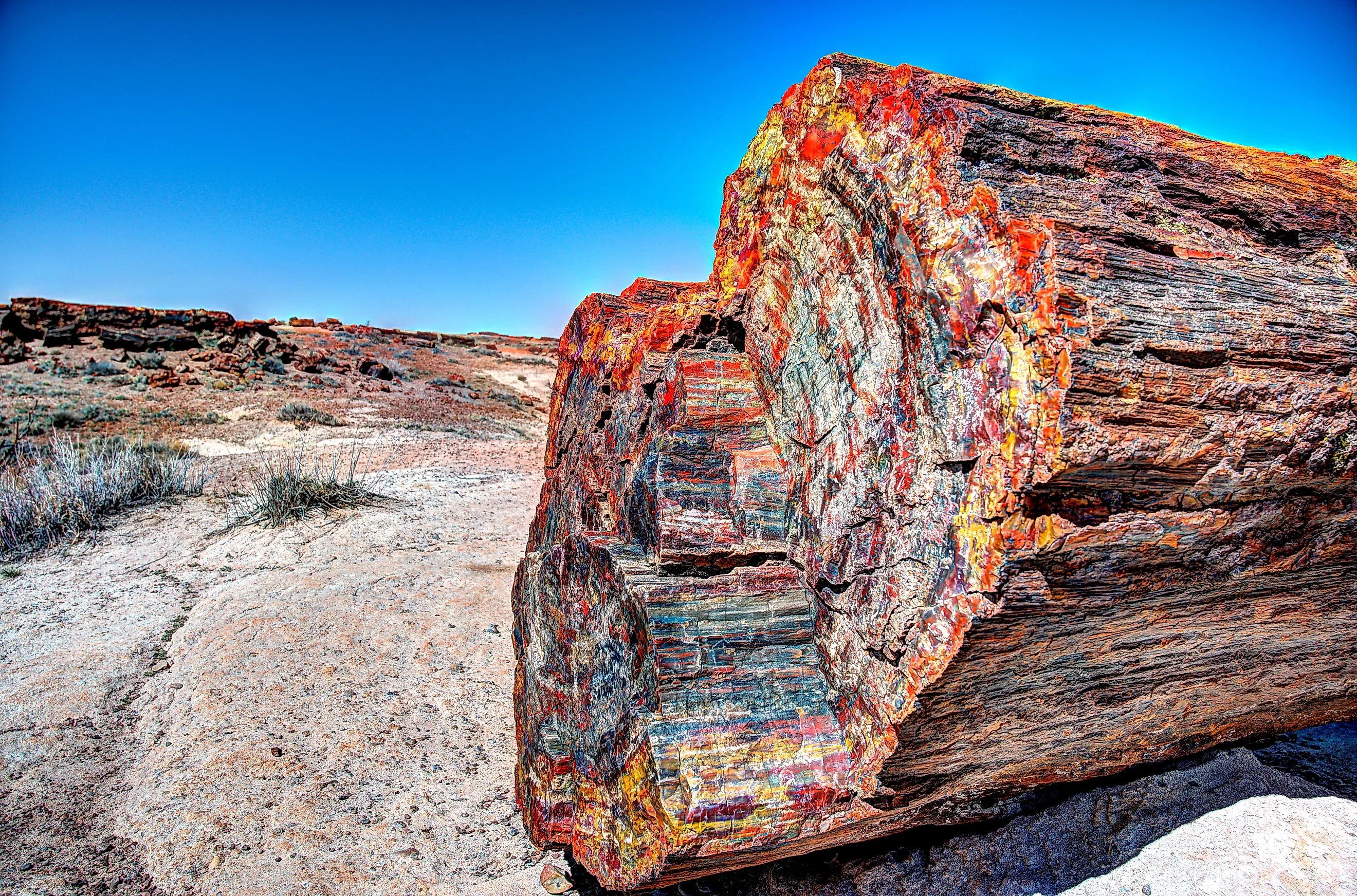
Petrified wood is a tree that turned to stone. When a log gets buried in sediment fast enough to lock out oxygen and rot, mineral-rich groundwater seeps through it for thousands of years, swapping the organic tissue molecule by molecule for silica, calcite, pyrite, or even opal. The wood itself is long gone, but its grain, rings, and bark can survive in perfect stony detail. Which raises the obvious question for anyone who spots a colorful chunk on a hike: can you legally take that piece of petrified wood home? The short answer is sometimes yes, sometimes absolutely not, and it comes down entirely to whose land you are standing on.
Is Petrified Wood Valuable?

Mostly, no, at least not in dollars. The vast majority of petrified wood is worth about as much as a common agate, which is to say not much. Its real value is scientific and historical, because a single log can record what a forest looked like tens of millions of years ago.
Now and then, though, a piece hits the jackpot. When wood is replaced by opal or bright agate with the grain still crisp, collectors will pay a few hundred dollars for a good specimen, and the best material gets cut into cabochons and jewelry. Near-perfect preservation, where the fossil still looks like raw timber until you feel its weight, is genuinely rare. The bark-and-grain pieces that look obviously stony are the common ones.
Is Petrified Wood A Protected Resource?

Here is where people get into trouble: there is no single national rule. Whether you can pocket a piece depends on the agency that manages the dirt under it.
In national parks and monuments, the answer is a flat no. Removing petrified wood, or any rock, fossil, or natural object, is prohibited across the entire National Park System under federal regulation, and rangers enforce it. Petrified Forest National Park in Arizona is the classic trap. Even small pieces are off-limits, penalties can include fines and possible jail time, and the park is famous for the apologetic "conscience letters" tourists mail back along with the wood they swiped, often blaming it for a streak of bad luck.
On public land managed by the Bureau of Land Management or the U.S. Forest Service, which together cover most of the open country in the West, the rules flip. Petrified wood counts as a common plant fossil, and federal law lets you collect it for personal use without a permit. State land is a coin flip, with some states allowing it and state parks almost always banning it, and private property is fair game only with the owner's permission or on land you own yourself.
How Do I Collect Petrified Wood Legally?

Say you have found a promising spot on BLM land. The federal rules are refreshingly specific: you may haul off up to 25 pounds plus one piece per day, capped at 250 pounds per person per calendar year, no permit required. The catches are simple. It has to be for personal use, you cannot sell or barter it without a separate BLM contract, and you cannot bring power tools or explosives, just your hands and a non-powered digging tool. Want a single piece heavier than 250 pounds? That one needs a permit.
National forests are looser in some ways and stricter in others. The Forest Service also allows personal, non-commercial collecting, but the BLM's tidy 25-and-250 formula does not apply there; each forest sets its own limits, so ask the local ranger district before you load the truck.
State rules are where the myths live. Florida, for instance, lets you keep plant fossils like petrified wood from eligible state land with no permit at all, since its special fossil permit covers only vertebrate bones. Utah is often described as handing out 250 pounds of petrified wood, but that figure is the federal BLM limit, not a state gift, and collecting on Utah's own state trust lands actually requires a paid rockhounding permit first. The takeaway: the managing agency, not the state line, writes the rules. When in doubt, call the office that runs the land before you dig.
Can I Visit Protected Fossil Wood Forests?
Absolutely, and you should. Several protected petrified forests are set aside as national monuments or scientific landmarks, and most of them welcome visitors. You can walk among the logs, photograph them, and run a hand along stone that was living wood a couple hundred million years ago. What you cannot do is break off a piece or slip one into a pocket.

Most of these parks run gift shops stocked with legally sourced specimens in every size, thumbnail chips, palm-sized rounds, and polished slabs, and the proceeds help pay for the rangers and trails. It is the honest way to bring a piece home, and you skip the federal charge that comes with pocketing one off the ground.
What Are Some Types Of Petrified Woods?

"Peanut wood" has nothing to do with peanuts. Its trademark white ovals, scattered across a near-black background, are fossilized boreholes. The wood began as driftwood bobbing in a Cretaceous sea off what is now Western Australia, where Teredo shipworms, a wood-boring clam, riddled it with tunnels. After the log sank and was buried, those tunnels filled with pale silica while the surrounding wood petrified dark, leaving the peanut-spotted contrast that collectors prize.
"Petrified palm wood" is a bit of a misnomer too, because palms are not truly woody. A palm trunk is a mass of fibrous tissue threaded with rod-like sclerenchyma strands, and when it fossilizes, those rods show up as spots, tapering streaks, or lines depending on the angle of the cut. Americans clearly have a soft spot for the stuff, since petrified palm wood is the state stone of Texas and the state fossil of Louisiana.
Why Are Silicified Woods Considered The Gemstones Of Fossil Wood?

The petrified wood that ends up in jewelry got there through silicification, and it comes in two flavors. In agatization, chalcedony replaces the tissue; in opalization, opal does, and the opal-filled pieces are the real showstoppers. Only a sliver of all fossil wood ever qualifies, because it needs bright color, a clearly preserved grain, and enough hardness to take a high polish. Material that clears the bar becomes cabochons and figurines, while lesser pieces get tumbled smooth or worked into home decor.
Once in a while, a fossil log hides a bonus. A hollow cavity inside the trunk can act as a crystal-lined pocket, with quartz or calcite, sometimes even amethyst or citrine, growing inside it. The result is essentially a geode hidden inside what used to be a tree, which is about as good as a rockhounding day gets.