The National Parks That Started Out As State Parks
Out of the 63 national parks in the United States and territories, two grew out of earlier state protection. Both were of high importance for land conservation in their respective states. One began with the 1864 Yosemite Grant, which set aside land for public use 8 years before Yellowstone became the first national park in 1872. The other served as the first state park of Florida. These lands became national parks due to a combination of factors, discussed in more detail below.
Everglades National Park

The Everglades National Park has a long and storied history that was driven by several actors. In 1900, conservationists raised concerns over draining impacting this environment of wetlands, forests, and habitats in southern Florida. One big concern was poaching, which led Florida to ban plume hunting. They hired Guy Bradley to serve as bird warden, who would regularly arrest poachers. Unfortunately, he was shot in 1905 by the father of a hunter.
In 1928, architect Ernest Coe began petitioning Congress to declare the Everglades as a national park, which gained Congressional approval in 1934. However, it would take another 13 years, until the park's dedication in 1947, before enough land had been assembled to formally establish it, and its boundaries continued to expand for decades afterward.

Meanwhile, other conservationists were doing work in the region, such as the Royal Palm State Park. This state park was established on November 23, 1916, through the efforts of May Mann Jennings, the wife of former governor William Jennings, and the Florida Federation of Women's Clubs, making it the first state park in Florida. The Federation had first proposed the park in 1905, and it managed the land the state set aside. The park itself is located in a hammock section of the Everglades, a term that refers to a large strand of trees located in the largely grassy landscape of the Everglades.
The club would maintain the park through the decades, raising funds through a lodge and restaurant, until 1947, when Royal Palm State Park became the nucleus of the new Everglades National Park. That same year, the Everglades National Park officially opened to the public.
Today the Everglades encompass 1.5 million acres, offering environments ranging from freshwater sloughs to cypress trees, mangroves, and coastal lowlands. Hikers often take easy hikes through the Pineland Trail across pine trees or a boardwalk trail through the Mahogany Hammock. One of the most unusual sites in the Everglades is the Z Tree, a dwarf cypress tree, which bends at an unusual angle, making it appear like the letter Z.
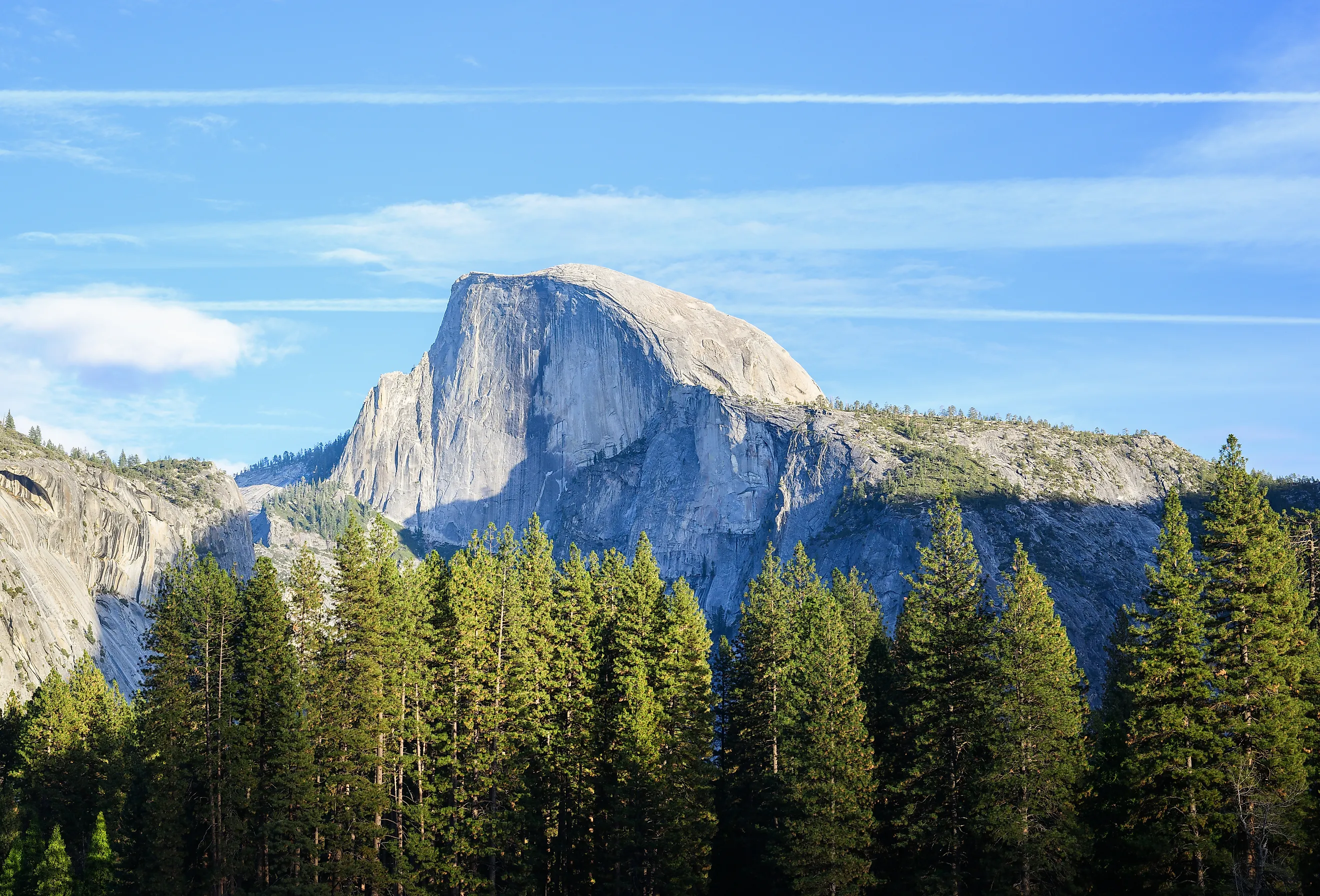
Yosemite National Park

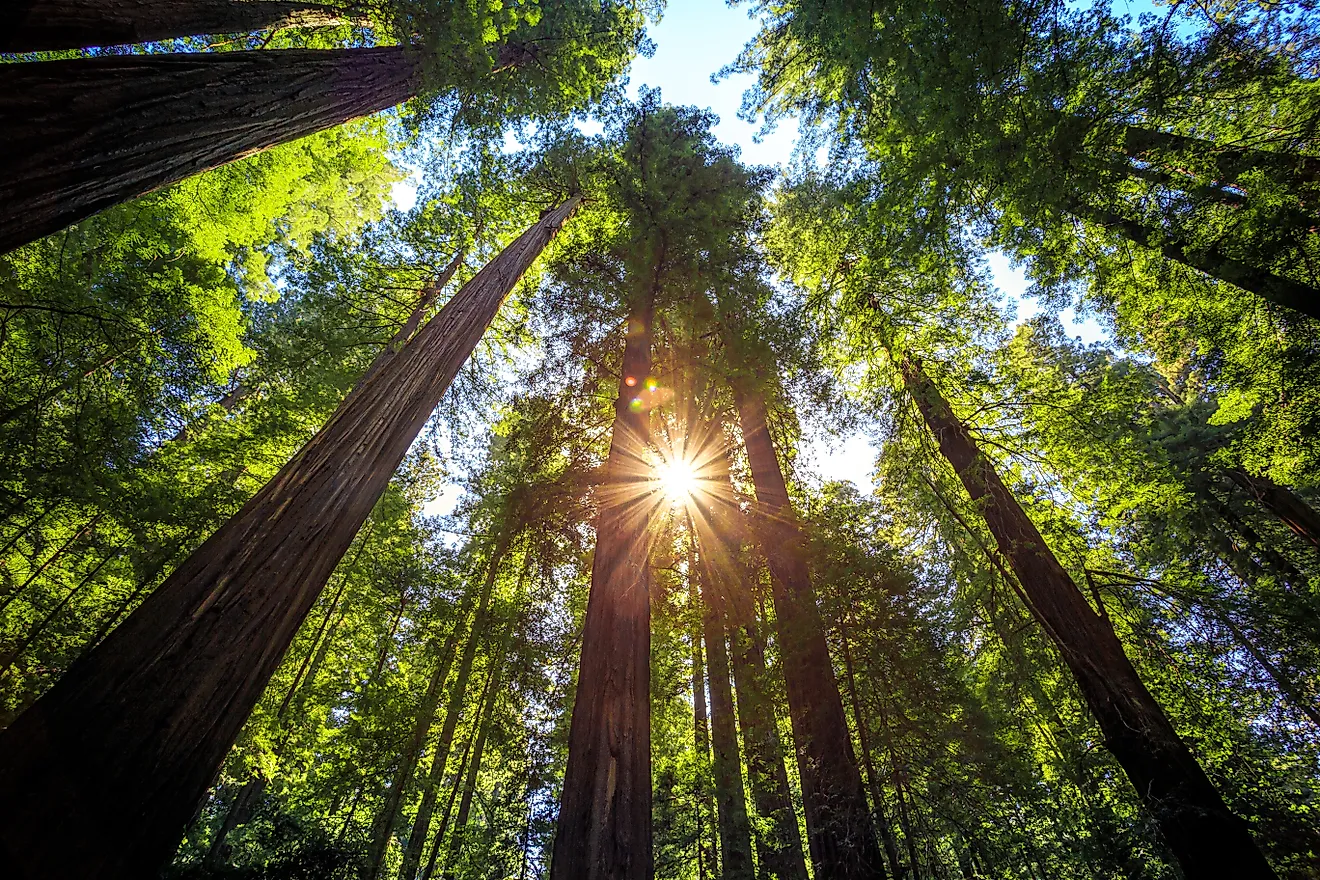
Yosemite National Park was first seen by Europeans in 1851, who were immediately struck by both the U-shape of the valley, along with the Giant Sequoia trees standing in the Mariposa Grove. These first explorers were part of the Mariposa Battalion in California, which aimed to chase away the Yosemite Indians.
Just four years after this incident, tourists began coming to Yosemite to see the valley and the trees, and Galen Clark established a hotel known as Clark's Station in 1856 to accommodate these visitors.
Painters and photographers began documenting the landscape of Yosemite and began a campaign to protect the land. Abraham Lincoln, in response, signed the Yosemite Grant of 1864, which gave a land grant for the "State of California of the Yosemite Valley," and for the land embracing the Mariposa Big Tree Grove.
The grant further added that this land should be for "public use, resort, and recreation." What makes this state park unique is that it was established by the federal government.
To accommodate visitors, local hotels sprang up over the following decades, along with early trails, such as Four Mile Trail, a toll trail built by John Conway which follows a granite wall. However, many conservationists were concerned about the lack of protection from overgrazing and logging, especially environmentalist John Muir and editor of Century Magazine Robert Underwood Johnson.

In 1890, Muir and Johnson convinced the Benjamin Harrison administration to establish Yosemite National Park. However, this did not rescind the original California State Grant of the Valley and Mariposa Grove. Instead, the park surrounded these two areas. Muir remained concerned that this state land was not adequately protected from loggers.
In 1903, Theodore Roosevelt made a visit to the Yosemite Valley under the guidance of John Muir. They spent several nights exploring Sentinel Dome, the Mariposa Grove, and the studio of landscape artist Thomas Hill. Roosevelt had made Muir promise not to discuss politics during this nature retreat, but Muir did later say that he "stuffed him pretty well regarding the timber thieves, and the destructive work of lumbermen and other spoilers of the forest."
Roosevelt himself agreed that having the land be maintained by the state and the federal government caused "triple troubles." Following this visit, California agreed to cede the land to the federal government under the 1905 Recession Legislation, ceding the Yosemite Valley and Mariposa Grove. This was further accepted by the Yosemite Recession Bill in Congress in June 1906.
Today, Yosemite National Park has 750 miles of trails, such as the Big Trees Loop Trail going to several giant sequoia trees, and Yosemite Falls Trail, leading up to this high waterfall, sitting 2,425 feet above the floor of the valley. During the spring and summer, Mirror Lake is a popular site to visit due to its crystal waters reflecting back the cliffs around it.
Conservation is a joint effort
The history of these national parks reveals that conservation is a joint effort. It takes both federal interest and state buy-in to successfully conserve and protect environments. As Yosemite reveals, it was a state-led effort in the first place to protect the landscape, followed by continual federal investment via the 1890 establishment of Yosemite National Park and the acquisition of the state grant land. The other element here is the people who worked diligently to protect and promote these lands in the first place, such as the naturalist John Muir and the women's club who worked together to keep the Everglades alive.