How Many State Parks Are There In The United States?
That question can be a bit complicated in getting a clear answer because of a few factors. Some areas designated as state parks might actually be a state forest or a protected state land. Depending on which source you use, there are anywhere between just under 2,500 and nearly 9,900 parks in the country. The gap comes down to how each group counts. According to America's State Parks website, there are 2,474 state parks in the US. The National Association of State Park Directors reports there are over 9,800 state parks. The number would be much closer to the lower figure if you only counted official state parks.
Depending on who runs the park site and the state agency in charge, the park must meet certain criteria to become an official state park. These parks are managed through their respective state governments. Some best known state parks are Anza-Borrego Desert State Park in California and Custer State Park in South Dakota. The largest state park in the contiguous US is located in northeast New York. The Adirondack Park is over 6.1 million acres, which covers roughly 20 percent of New York state.
How Is A State Park Designated?

For a park to be designated as a state park, two things must happen. First, the state government must determine an area that is to be set aside and protected as a state park. Then the state becomes the steward or caretaker of that area. It is responsible for the park, including its maintenance, safety, conservation, and improvement of any structures, plus access to the park. The state governing body typically has educational programs in place to promote awareness, conservation, safe use, and appreciation of the park.
The oldest state park in the US is Niagara Falls State Park. It was built in 1885 and encompasses over 400 acres. Prior to becoming a state park, the falls were controlled primarily by private interests. A landscape architect named Frederick Law Olmsted and James Gardner, a state surveyor, were the first two who paired together to protect this area between the US and Canada. They formed the Niagara Falls Association and lobbied New York governor Grover Cleveland to sign a bill to designate a park area.
How State Parks Operate
In order to safeguard and service land designated as a state park, governing agencies like the State Parks Division or Department of Natural Resources are responsible for the stewardship of the park. The managing agency will ensure that the parks are well maintained in order to conserve its resources, including rock and land formations and biodiversity of the plants and animals. They are also responsible for clearing the roads, trails, and parking areas. Park personnel will help maintain its wildlife and park habitat.
Education, interpretation, and appreciation of the park's history is incorporated into the stewardship of the park. State government is responsible for providing educational programs, including ranger-led presentations and visitor centers with interpretive exhibits. Community programs designed to support parks are held in or near the state park. These encourage appreciation, respect, and responsible park use. An additional benefit is that it brings the community together in a way that is different from national parks.
Benefits Of Visiting State Parks

For travelers who may have a difficult time navigating farther to a national park, state parks are often more accessible. They might be located closer to population centers and can be reached within a few hours or an easy day trip. State parks are a good representation of the beauty and nature specific to a state. They reflect that particular state's biodiversity and geological history. For example, beautiful Amicalola Falls State Park in northern Georgia reflects the state's native flora and fauna. The 829-acre park leads to Springer Mountain in Georgia, which is the southern end of the Appalachian Trail.
State parks often are tailored to the geography, community, and natural resources of each state. An example is the Jack London State Historic Park in California, which honors the life of the famed writer and adventurer, boasts more than 25 miles of trails and scenic views. In eastern Minnesota, Moose Lake State Park brings understanding of the lake and awareness to the geological composition and history of Minnesota. The Agate & Geological Center is open daily during the summer months to educate visitors on the park's rich history and natural resources.
Highlighting State Parks By Region

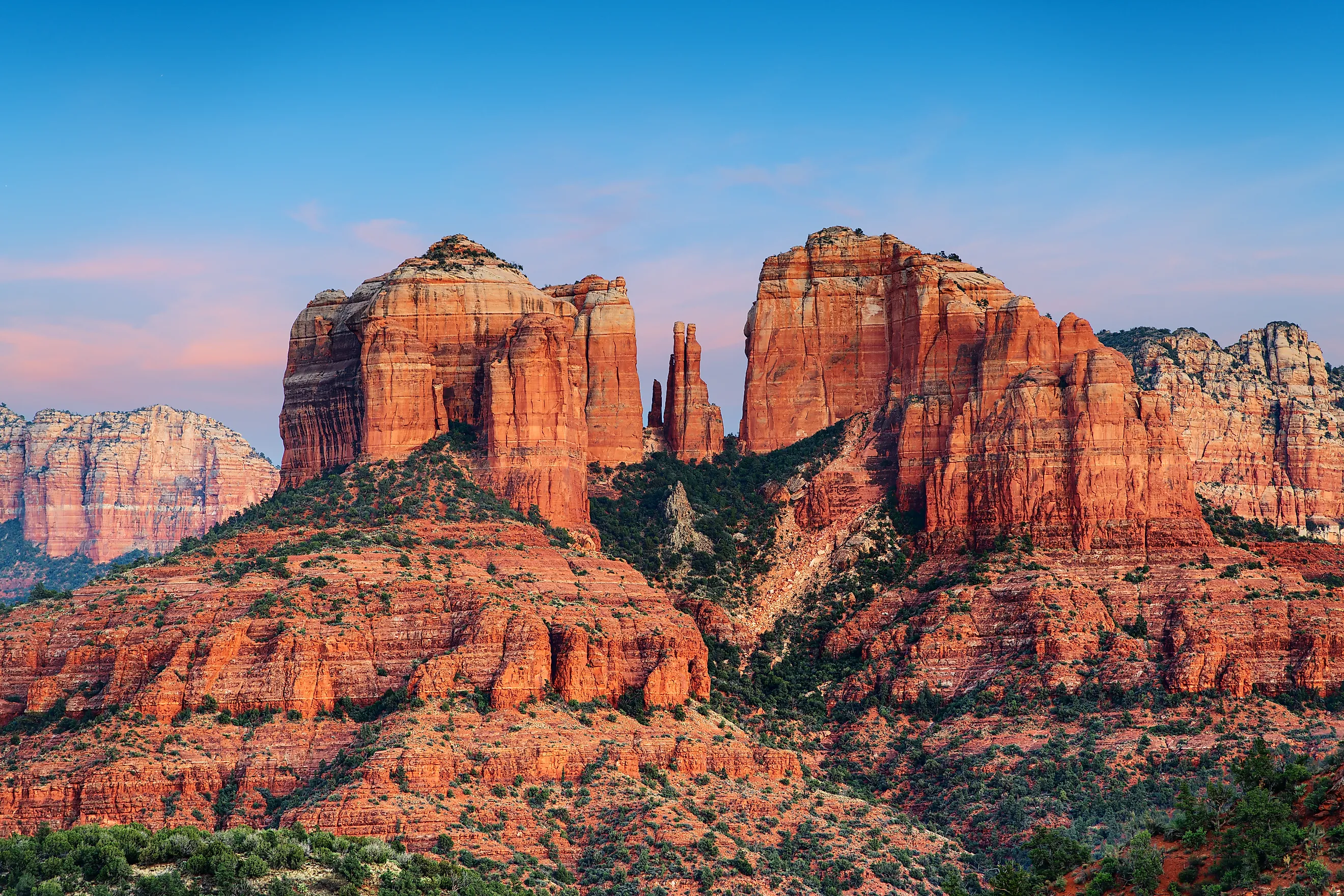
Regarding the climate and geography of the US, state parks not only represent the characteristics of that particular area, they have specific statewide animals and plants. Red Rock State Park in Arizona is known for goldfinches, while one can see woodpeckers, doves, and even an occasional owl at Elephant Butte Lake State Park in New Mexico. Another noteworthy park in the western region to visit is Bear Lake State Park in Utah. This park is known for its sandy lake beaches and vivid blue water. The blue hue is caused by calcium carbonate mineral deposits suspended in the lake.
In the Pacific Northwest, two noteworthy parks are Dash Point State Park and Saltwater State Park. While you are in Washington's gorgeous Puget Sound, see the colorful float homes on the marina. Along the Oregon coast, check out marine wildlife at Simpson Reef at Shore Acres State Park. If you travel farther east, the rustic Bannack State Park in Montana is well worth the trip. Park visitors will absolutely love the quaint building and ghost town. The movie 'A River Runs Through It' was filmed in Livingston, Montana.
Notable State Parks Along The East Coast Of The US

Some remarkable state parks are located along the Atlantic coast of the continental US. Characterized by its craggy beaches, Shackford Head State Park in Maine attracts both hikers and photographers. Meanwhile, a state park named Double Trouble in New Jersey is part of the Pine Barrens ecosystem. Cedar Creek in it once provided water for a sawmill and for cranberry production. The creek now provides perfect access for kayakers as well as canoeists. This is additionally a favorite spot for photographers.
The Mid-Atlantic region has multiple state parks that attract tourists year round. Assateague State Park sits on a barrier island off Maryland's Atlantic coast, bordered by the ocean on one side and Sinepuxent Bay on the other. It offers ocean beaches, camping, and boating amenities, and its wild horses are the main draw. The nearby Chincoteague herd in Virginia is famous for its annual pony swim across the channel. Farther inland, state parks around the Chesapeake Bay offer ample opportunities to understand the history and heritage of the region.
Visit State Parks To Appreciate Nature's Diversity In The US
Each state in the US has both national and state parks, and they are not the same. The 63 national parks in the US are maintained through the Department of the Interior by the National Park Service. Huge parks like Gettysburg National Military Park or Yellowstone National Park have their stories, but so do state parks. State parks impart the heritage and history of its state or region. They contain specific traits that are relevant to the state where it is located. Best yet, state parks give visitors unparalleled access to the state's beauty and natural resources.