10 Ways Schools Around The World Educate Their Kids Differently Than The US
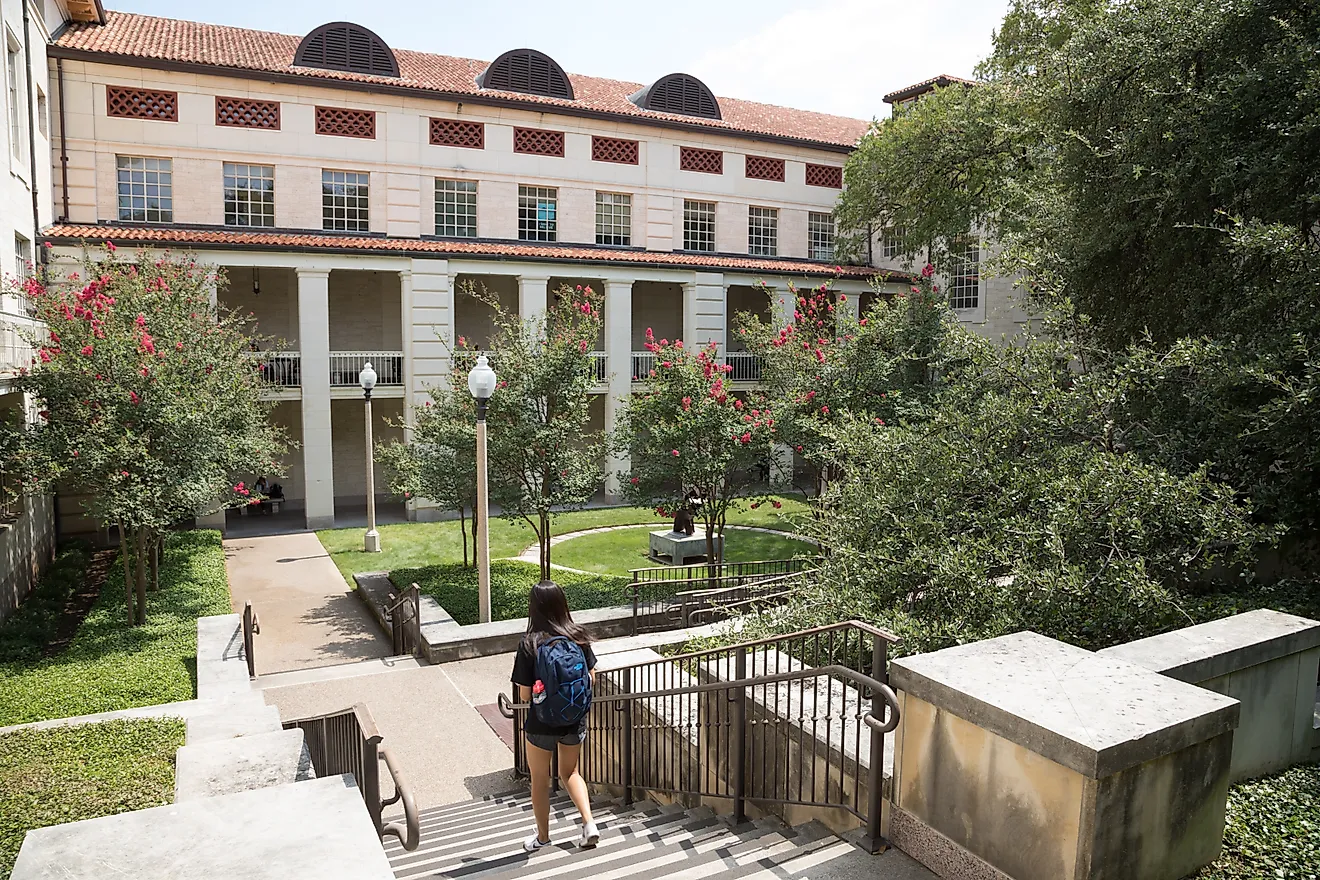
American education follows a pattern most people would recognize on sight: three levels (primary, secondary, and tertiary), students streamed into public or private elementary, middle, and high schools, and classrooms lined with desks, whiteboards, and student artwork. It feels like the default. But it is only one model among hundreds, and once you look past the US border, the assumptions behind that familiar classroom start to look like choices rather than rules.
The OECD measures and compares those choices every three years through PISA, the Programme for International Student Assessment, which tests fifteen-year-olds across roughly eighty education systems. The United States tends to land near the middle of the pack, scoring around or above the OECD average in reading and science while falling below it in mathematics. The countries that consistently outrank it, and many that do not, get there by teaching in ways that would look genuinely foreign in an American hallway. Here are ten of them.
Lessons in Two or Three Languages

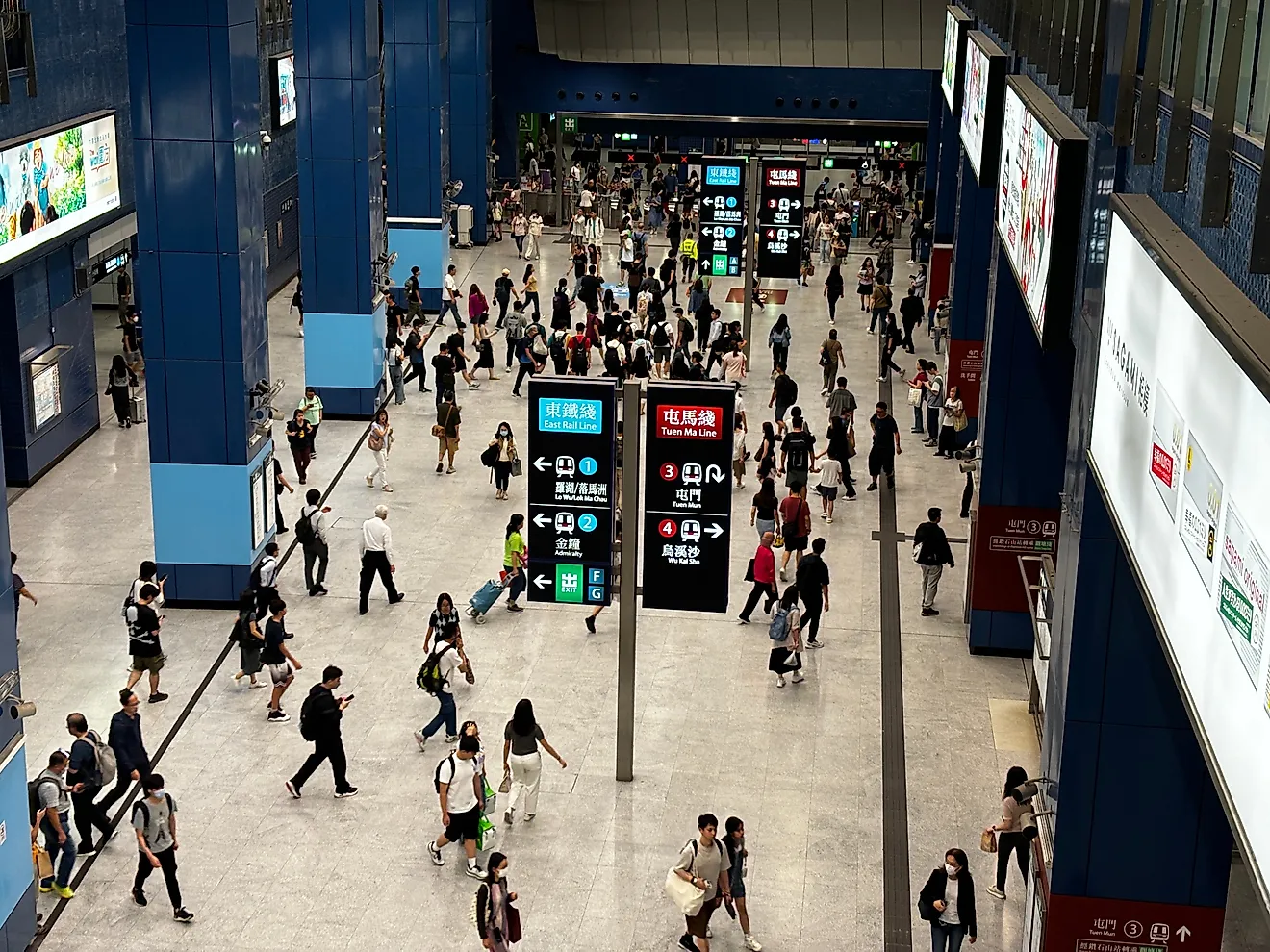
In much of the world, a child does not pick one language for school and stick with it. Whole subjects are taught in different tongues across the same day. The Philippines built this into national policy: under its long-standing bilingual education framework, mathematics and the sciences are taught in English while social studies and civics are taught in Filipino, and many early grades now begin in a child's mother tongue before transitioning. In Hong Kong, both Chinese and English are official languages and compulsory subjects, and many secondary schools deliver entire curricula in English. Lebanon goes a step further, with students commonly moving among Arabic, French, and English depending on the subject and the school. For most American students, who learn almost entirely in English and pick up a second language as a single elective, that daily code-switching is the sharpest contrast on this list.
Class Held Among the Trees

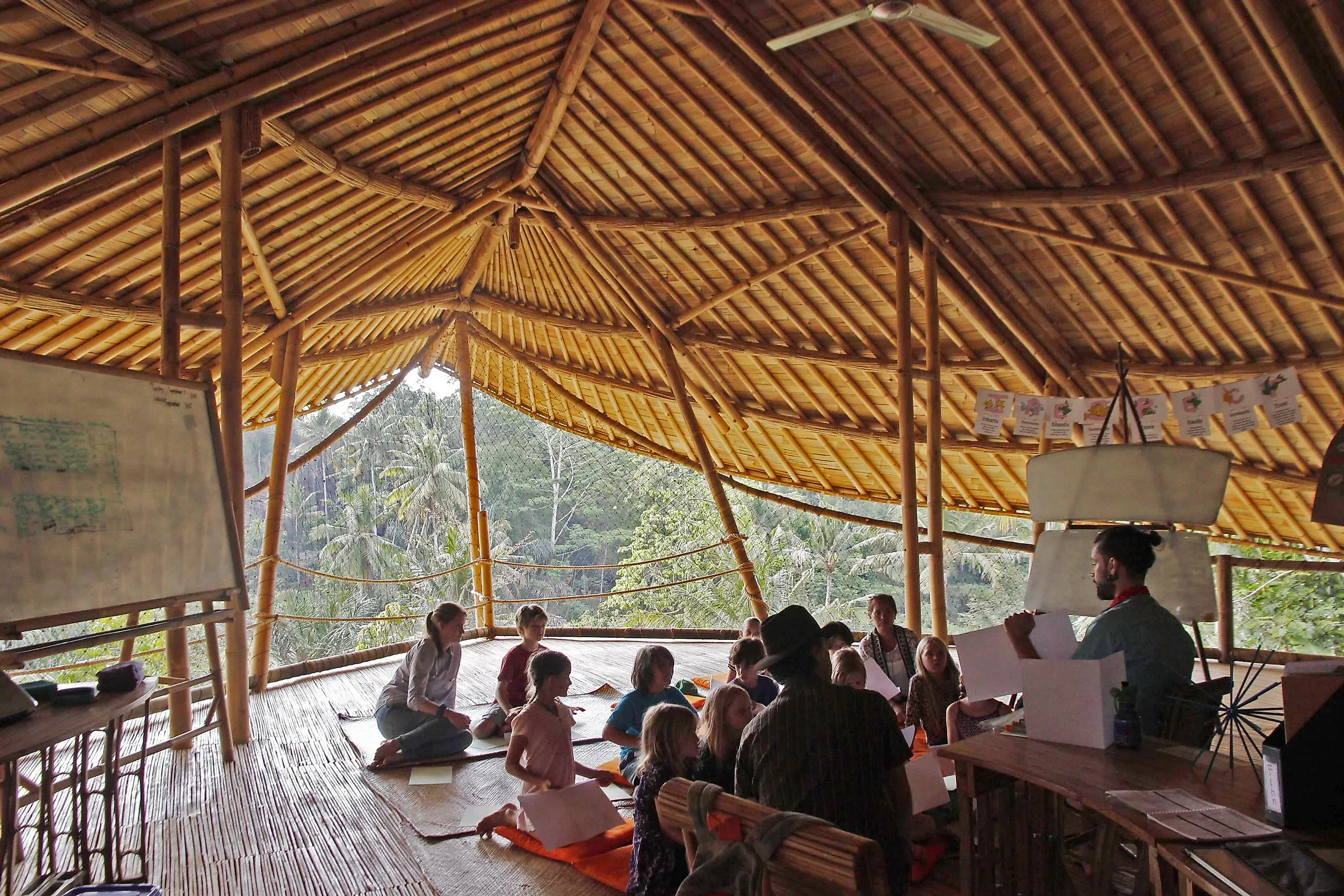
Some countries are convinced that the best classroom has no walls. The forest kindergarten, born in Scandinavia and Germany, sends children outdoors for much of the day in nearly any weather, trading worksheets for mud, tools, and unstructured risk. The model has spread across Switzerland, Denmark, Norway, and beyond, on the theory that young children learn resilience, motor skills, and focus through real physical play rather than early academics. At the older end, Bali's Green School, founded in 2008, runs an entire kindergarten-through-grade-twelve campus built from bamboo and powered largely off-grid, weaving sustainability, design, and entrepreneurship through a conventional academic core. Compared with the typical American classroom, where outdoor time means a fenced recess yard, these schools treat the natural world as the primary teaching tool rather than a break from teaching.
Schools That Float

Sometimes geography writes the lesson plan. In low-lying Bangladesh, where seasonal flooding can cut off entire river communities, the nonprofit Shidhulai Swanirvar Sangstha runs a fleet of solar-powered boats that serve as classrooms, libraries, and training centers, motoring between villages so that a flood season does not become a lost school year. The program has grown to dozens of vessels reaching tens of thousands of children and families. Nigeria produced the most famous single example, the Makoko Floating School on the Lagos Lagoon, a striking three-story bamboo-and-timber A-frame completed in 2013. It won international acclaim, including a Silver Lion at the 2016 Venice Architecture Biennale, but the prototype was decommissioned and collapsed in a storm that same year. It is best understood as an influential experiment that proved how hard such structures are to sustain, and it has since inspired sturdier follow-up designs.
No Lunchbox Required

The American lunch tray has nothing on the midday meal in much of the world, where lunch is treated as part of the curriculum rather than a pit stop. In France, snacks are discouraged and lunch is a sit-down, multi-course affair served in the cantine, often running from a starter through a main, cheese, and dessert under national nutrition rules. Italian children typically eat a primo of pasta or risotto followed by a meat or fish course with vegetables. In Japan, the kyushoku system has students themselves serve the food and clean up afterward, eating balanced meals of rice, soup, and a protein in their own classrooms as a daily lesson in responsibility and gratitude. Kenya's school feeding programs help keep children enrolled by guaranteeing a hot meal, often a maize-and-bean githeri. And Finland has provided free school lunches to every pupil since 1948, the first country in the world to do so.
Dressed for School

In the United States, uniforms are the exception, required by some private and charter schools but rare in public ones. Across much of the world, the reverse is true. Public-school uniforms are mandatory in the United Kingdom, Australia, Ghana, Burundi, Colombia, Malaysia, India, Japan, and dozens of other countries, where matching attire is framed as a way to blur income differences, build school identity, and cut down on daily distraction. It is a near-universal feature of the systems that top the PISA tables: students in China, Singapore, Macao, and Hong Kong all wear them. The American debate over whether uniforms help or stifle students is, in much of the world, simply not a debate at all.
School on the Train Platform

Some of the most inventive schooling happens where there is no school at all. In India, educator Inderjit Khurana noticed in the 1980s that railway platforms were full of children who would never make it into a classroom: runaways, child laborers, and kids from the surrounding slums who spent their days begging or hawking goods to passengers. Her conclusion was simple. If the children could not go to school, the school would come to them. Through the Ruchika Social Service Organisation she founded in Bhubaneswar, she began holding free lessons right on the platforms, working around train schedules and the rhythms of the children's days. Khurana died in 2010, but Ruchika has carried the model forward, and its platform and slum schools have reached tens of thousands of children who would otherwise have had no education at all.
A Pronoun for Everyone

Sweden has pushed gender equality further into the classroom than almost anywhere else, and its Education Act makes countering stereotypes an explicit goal. A number of Swedish preschools have leaned into this by using the gender-neutral pronoun "hen," a word coined to sit alongside "han" (he) and "hon" (she) and added to the official Swedish dictionary in 2015. At schools like Stockholm's Egalia, staff avoid steering children toward gendered toys, activities, or expectations, and pair that approach with a strong emphasis on emotional literacy and mental health. The aim is not to erase difference but to keep a four-year-old's options open. It is a deliberate, state-backed experiment with few parallels in American early education.
Keeping It Cool in the Far North

Both Canada and Norway govern territory well above the Arctic Circle, and schooling there looks nothing like a suburban campus. Beyond the conventional schools that operate north of the 60th parallel, students can join programs built around the environment they live in: expeditions aboard research vessels and icebreakers, fieldwork tracking polar bears or kayaking near beluga whales, and land-based learning rooted in the traditions of the Sami and Inuit peoples, including reindeer herding and Indigenous-language instruction. Rather than treating the Arctic as a hardship to overcome, these systems fold the landscape and its original cultures directly into the curriculum.
Lighter Homework, Heavier Homework

Finland built its global reputation by doing less. Children start formal school at age seven, days are short, homework is minimal, recess is frequent, and teachers are highly trained and trusted, yet Finnish students post some of the strongest results in Europe. That stands in sharp contrast to several East Asian systems, which reach the top of the rankings from the opposite direction. South Korea's formal homework loads are modest on paper, but the real workload comes after hours in private cram schools called hagwons, pushing total study time among the highest in the world. The OECD has found that students in China, followed by Russia and Singapore, spend the most hours on homework each week. Two philosophies, two routes to high scores, and a useful reminder that there is no single formula.
No School Sports Teams

Friday-night lights, varsity letters, and stadiums that seat more people than the school enrolls are deeply American. Across much of Europe and Asia, the school sports team barely exists. Physical education is a normal part of the daily timetable, and children learn a range of sports, but competitive teams are usually run by community clubs, city councils, or religious organizations rather than the schools themselves. The reasons are practical as much as philosophical: limited gym facilities, tight budgets, and a cultural decision to keep schools focused on academics while sport lives in a parallel club system. A teenager in Germany or Japan who wants to compete seriously joins a club, not the school squad.
What the Classroom Door Opens Onto
None of these models is automatically better than the American one, and most carry trade-offs that look very different up close than they do in a headline. But laid side by side, they make the same quiet point: nearly every feature of a school that feels permanent, from the language of instruction to the lunch tray to whether sport belongs in the building, is really a decision a society made and could make differently. The most useful thing a familiar classroom can do is remind a visitor that somewhere across the world, a child is learning the same lessons in a boat, on a train platform, or among the trees.