Why Cottonmouths Move Into Drainage Ditches In Winter
When most people picture a cottonmouth, they imagine it lurking deep in a remote swamp or a shadowy cypress slough, not sitting in the drainage ditch running alongside a county road. Yet come winter, those humble ditches become one of the snake's favorite cold-weather hideouts, which puts these venomous reptiles surprisingly close to homes, yards, and roadsides. And it is not random bad luck, either. A drainage ditch quietly checks almost every single box a cottonmouth is looking for once the temperature starts to drop, from water and cover to a frost-free place to wait out the cold. Here is exactly why these water-loving snakes gravitate toward ditches in winter, and what is worth keeping in mind if you happen to have one running past your property.
A Ditch Is a Man-Made Wetland

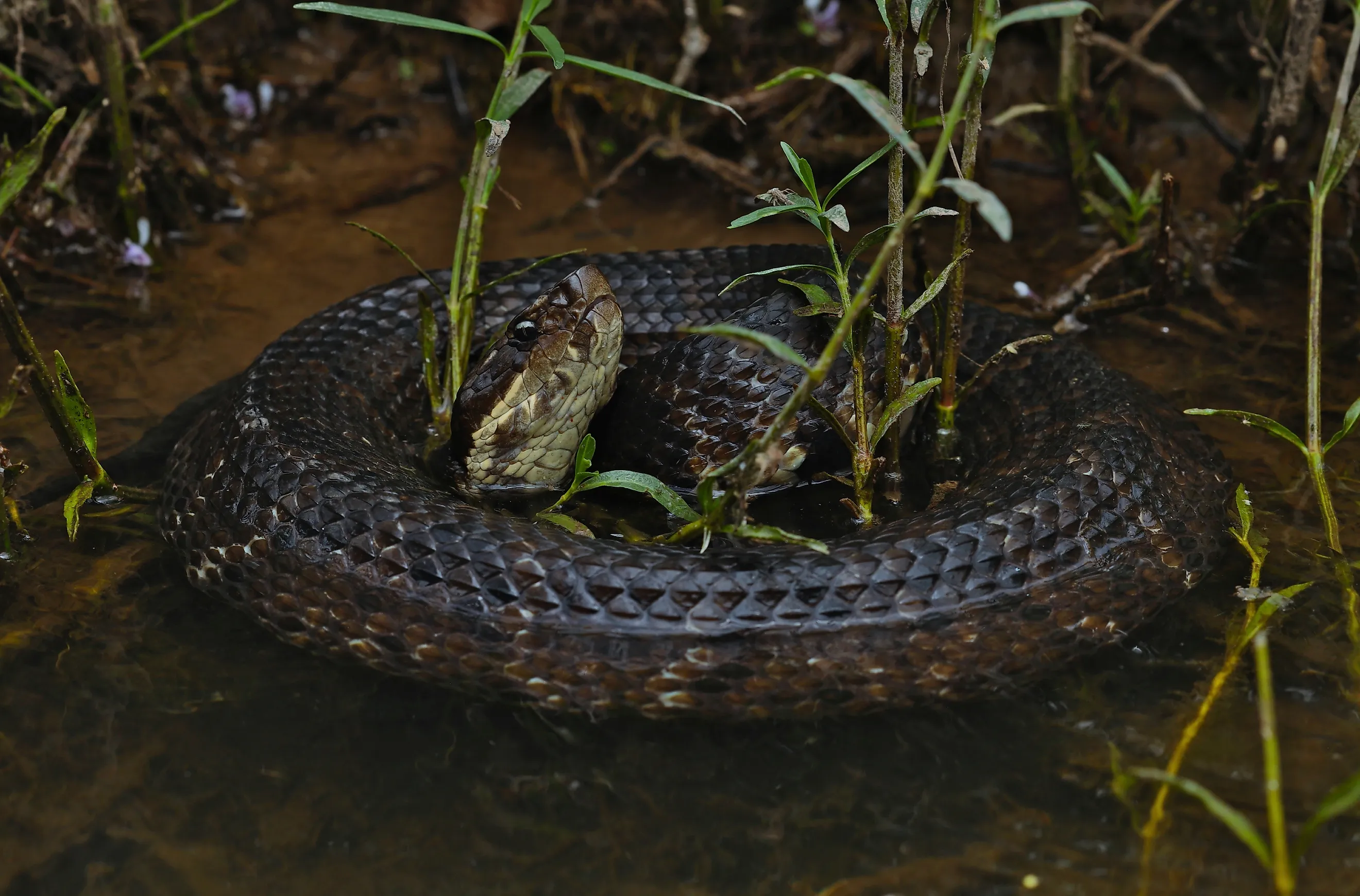
The cottonmouth, or water moccasin, is the most aquatic venomous snake in North America, and it rarely strays far from water. A drainage ditch hands it exactly what it wants: water or damp mud, thick weedy banks, plenty of debris to hide under, and a steady supply of frogs, fish, and crayfish to eat. In effect, a ditch is a man-made wetland. And as natural swamps and marshes are drained and paved over for roads and development, ditches, canals, and retention ponds increasingly serve as the snake's stand-in habitat, which is a big part of why cottonmouths turn up in them at all. Found across the Southeast from Virginia to Texas and up the Mississippi Valley, this heavy-bodied pit viper is right at home anywhere warm water sits still for long.
Frost-Free Shelter in the Banks

Here is the winter part. When the cold arrives, cottonmouths slip into brumation, a cold-blooded version of hibernation, and to survive it they need a sheltered spot that stays above freezing. A ditch bank is absolutely riddled with them: crayfish burrows, old root channels, rotting stumps, mammal burrows, and the dark spaces inside culverts all offer refuge below the frost line. In the flat lowlands where cottonmouths thrive, which often lack the rocky hillsides that snakes elsewhere use as dens, these ditch-bank burrows are prime winter real estate. Cottonmouths sometimes even share these winter dens with other snakes, including copperheads, rat snakes, and the occasional timber rattlesnake, all packed into the same frost-free hideaway.
Basking on Mild Days

Because cottonmouths live across the warm South, their winters are mild, and they do not fully shut down the way snakes in colder climates do. On sunny winter days, they will slide out of their burrows and stretch across the sun-warmed ditch bank to soak up some heat, then slip back into shelter when the chill returns at dusk. A ditch, conveniently, supplies both the den and the sun deck in one spot, so a cottonmouth can ride out the whole winter without ever going far.
Watch the Ditch in Winter

All of this puts cottonmouths right alongside roads, yards, and farm fields all through the winter, usually hidden out of sight down in the banks. So take real care when clearing ditches, culverts, and debris piles in the colder months, and never go reaching in with a bare hand. A cold cottonmouth may be slow and sluggish, but it is still fully venomous, and it will still defend itself if it feels cornered. Spot one and the rule is the same as ever: give it plenty of room and leave it be. Come spring, it will head back to open water on its own.