The Driest Forest In America
When you think of forests in the U.S., "dry" isn't always the first feature that comes to mind. That's understandable because most deciduous forests in the Northeast get 30 to 60 inches (750 to 1,500 mm) of rainfall per year. However, Kaibab National Forest in northern Arizona has been widely recognized as the driest national forest in the U.S. Read on to discover why this forest is so dry and how and when to see it for yourself.
Kaibab National Forest — America's driest forest

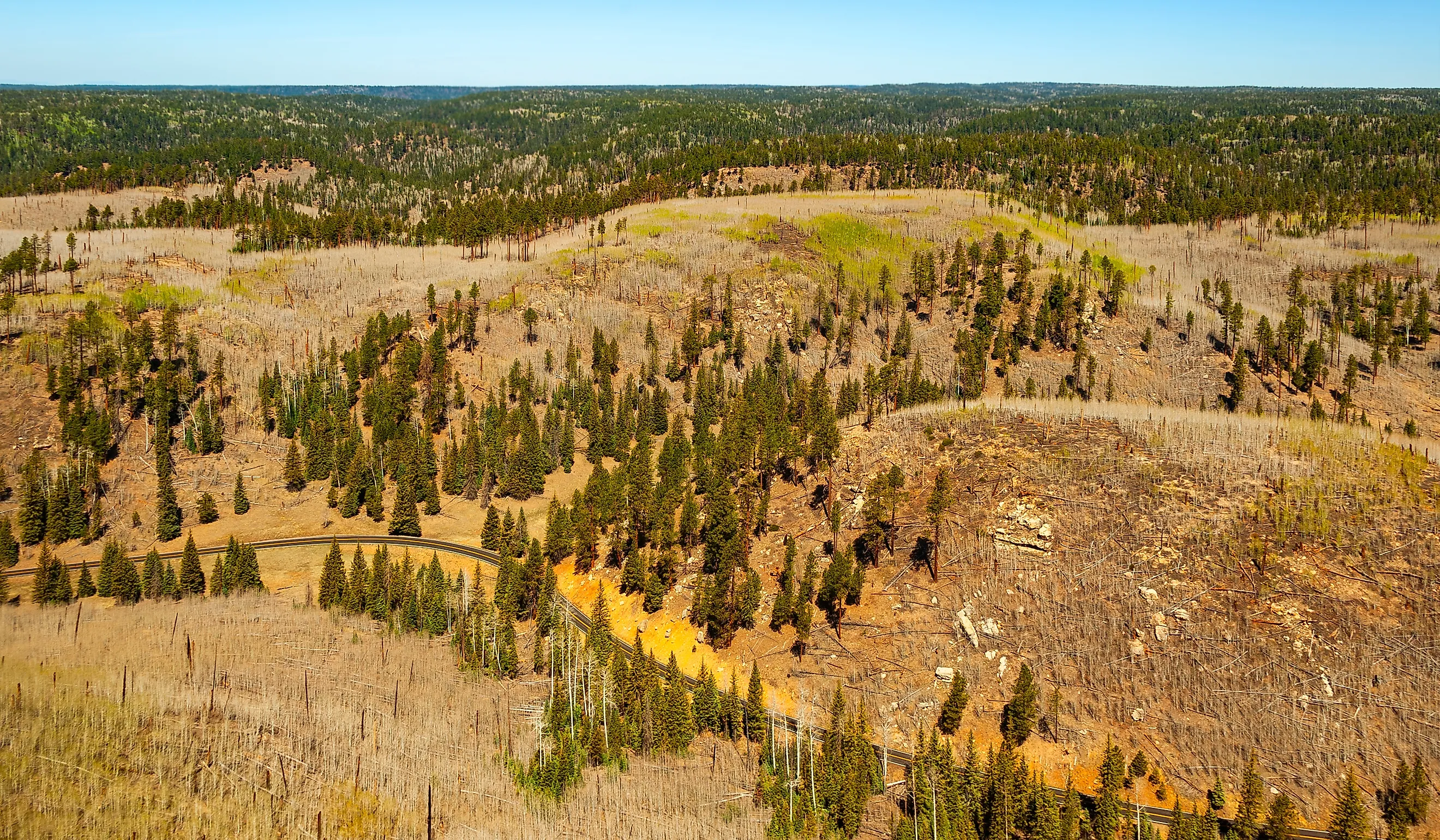
In the heart of northern Arizona is the home of Kaibab National Forest. This national forest spans 1.6 million acres (6,475 sq. km) and is just south of Grand Canyon National Park, about 100 miles (160 km) north of Sedona, Arizona. The vegetation says a lot about the climate. Kaibab is characterized by its wide array of dry canyon areas with a mix of semi-arid desert shrubs in the lowlands and aspen groves in the high plateaus. Primarily, shrubs can grow in the lowlands because it has virtually no perennial streams, and therefore finding frequent water sources is hard for the vegetation living below the plateaus. At the highest elevations of the forest, rain does make landfall but with very low annual rainfall levels. This national forest can expect roughly 12 to 15 inches (305-381 mm) of annual precipitation on the South Rim and up to 26 inches (660 mm) on the North Rim. When the rain does manage to fall, it quickly evaporates and drains through the highly porous Kaibab Limestone.
Exploring Kaibab Safely

Visiting the country's driest forest requires preparation and planning. There can be spontaneous weather shifts, extremely rugged terrain, encounters with wildlife like bears, wildfires, and floods. You can prepare yourself by visiting at the right time of year and knowing where the nearest rangers and safety nets are.
With dry national forests comes extreme weather. With an elevation of 5,500 ft (1,676 m) to 10,418 ft (3,175 km), weather can swing dramatically from extremely dry summer heat to freezing temperatures in the canyons. Naturally, wildfires are more common in dry national forests. In July 2025, the White Sage and Dragon Bravo fires tore through 205,500 acres of public lands. In case you find yourself in trouble, there are three ranger stations sprinkled throughout the forest. One in the North Kaibab district, another in Tusayan District, and one more in the Williams District. With that said, exploring this dry national forest requires good timing and preparation.
Best Time to Visit Kaibab National Forest

To avoid the smoldering heat, fire risk, and flooding, the best time to visit Kaibab National Forest is from early spring to late fall. The weather is the mildest, and the crowds are significantly smaller at this time of year. In late spring, the dry desert wildflowers become active, and you can see the rare Indian Paintbrush, the Sand Dune Wallflower, and Colorado's state flower: the Blue Columbine. In July through August, you receive a bit more moisture, making the national forests' greenery shine through without the torrential rain found in the winter months at the park. Late fall is also a good choice for seeing the changing colors of the aspen groves and the crisp air, blue skies, and very small crowds.
The Country's Driest Forest is Worth a Visit
Visiting a forest with only 12 to 15 inches (305-381 mm) of rain per year doesn't sound that wonderful for some people. Although this Kaibab National Forest receives less than half of the rainfall as other forests in the country, visiting in the more moderate seasons gifts you with a colorful array of wildflowers in the spring, lush green forests in the summer, and golden-red aspen grove views in the late fall. Avoiding winter and early spring is a must to dodge the risk of flash flooding and to increase your chances of having access to all of the forest's trails. As long as you are prepared to visit, you can find so many places to explore in this dry but wonderful national forest.