Why Copperheads Den In Stone Walls
New England holds an estimated 240,000 miles of abandoned farm walls, enough to circle the Earth ten times, with a combined volume greater than the Great Wall of China, Hadrian's Wall and the Egyptian pyramids put together. Nobody built them for wildlife. A geologist at the University of Connecticut describes them as dry, granular, linear, rocky elements in an otherwise moist landscape, which is a precise description of natural talus. Talus is exactly what a copperhead wants, and farmers accidentally laid about six linear miles of it per square mile of land. The walls are superb snake infrastructure, and as actual winter dens most of them fail.
A Wall Is Artificial Scree

The comparison to natural rock is not loose. It is the formal ecological description.
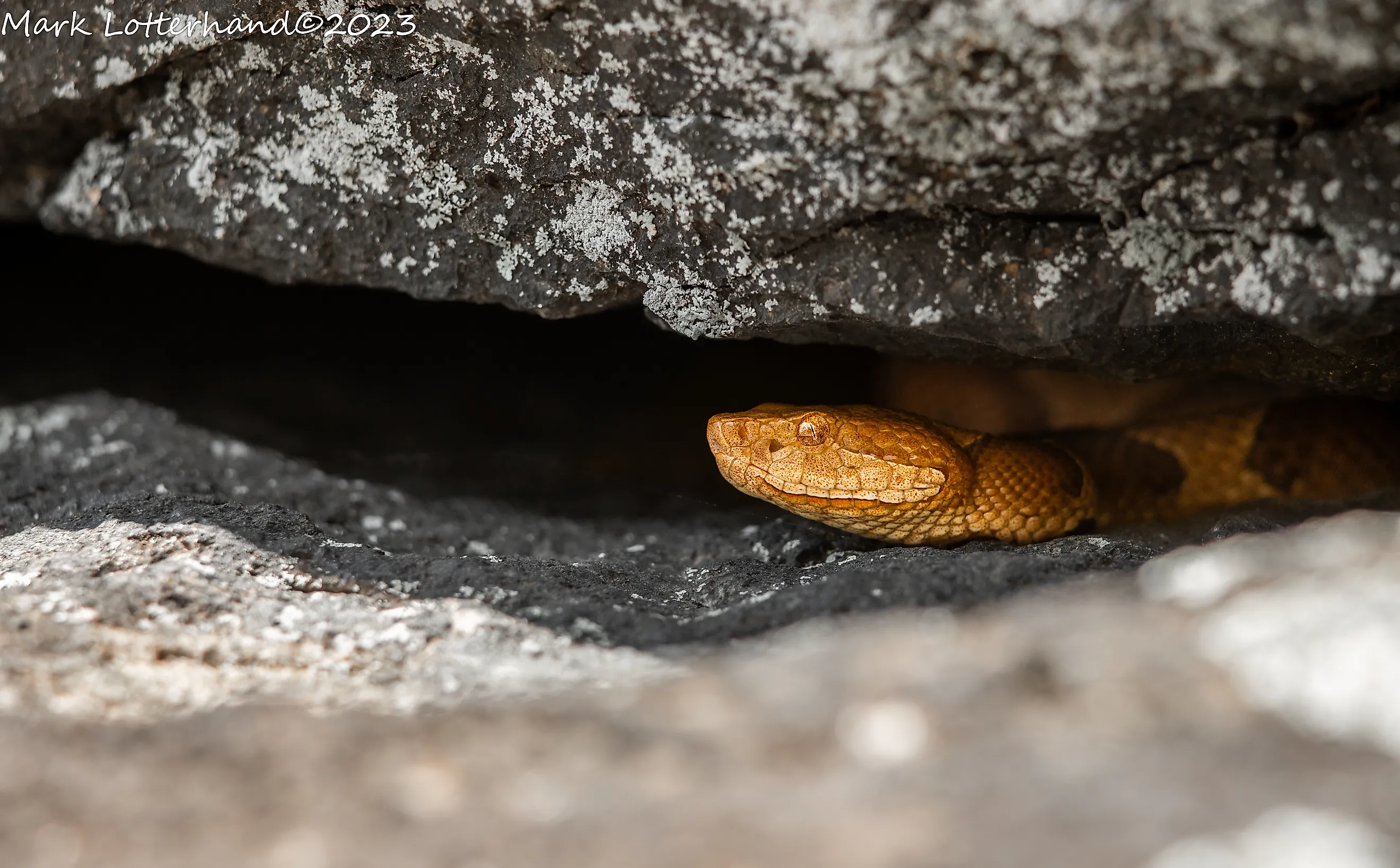
Stone walls are characterized as being like natural talus slopes or mountain scree, dry granular rocky lines sitting in a moister, soil-covered, vegetated landscape. Copperheads and timber rattlesnakes den in talus because it offers crevices, drainage and thermal mass.
Almost every wall was laid dry, without mortar, held together by gravity and the shape of the stones. That construction leaves voids running through the entire structure.
Stone Holds The Day Longer Than Soil
The thermal behavior of a wall is what separates it from the ground either side of it.
Stone has a higher heat capacity and conductivity than soil, so walls retain the warmth of the day and the cold of the night longer than the earth around them. South-facing walls absorb sun, shed snow faster and stay warmer than anything nearby.
For an animal that cannot generate its own heat, a structure that stores the afternoon and releases it into the evening is worth returning to.
It Is Also A Corridor

This is the property a rock pile does not have, and it is the one that matters most in autumn.
As Robert Thorson of the University of Connecticut puts it, it is a wall but it is also a corridor. Walls function as borders between adjacent habitats and as connections between distant ones, and prey animals scurry along beneath the edge where there is cover.
A copperhead moving from summer range to a winter den can follow a wall for a mile without crossing open ground. Nothing else in a cleared landscape offers that.
The Mice Are Already Inside

The food supply arrives with the structure rather than being a separate consideration.
Walls provide porous volumes for small mammals, and a single rock pile might hold a few chipmunks or white-footed mice. Chain that habitat together for miles and the rodent population scales with it.
Weasels and ermine are documented using walls as both dens and hunting grounds, preying on the small mammals within and along them. A copperhead is doing the same job with a different method.
But Walls Are Effectively Deserts

Here is the complication that stops a stone wall being a perfect den, and it is the same factor that makes crawl spaces so attractive.
Thorson is blunt about the moisture: look at a stone wall and you see no surface moisture and never will unless it is raining. They are very, very dry. Effectively deserts.
Snakes that choose a hibernaculum which is too dry risk dehydration, and prolonged exposure to dry conditions can kill them. A wall solves temperature and cover and creates a water problem.
Most Of Them Are Too Shallow

The second limitation is vertical, and it rules out a great many walls entirely.
The typical farmstead wall is thigh-high and similarly wide, built from a single tier of stacked two-handers. A hibernaculum needs to sit below the frost line, and a knee-high pile of stone sitting on the ground surface does not.
Which means the walls that genuinely serve as dens are the ones with depth. A wall built into a slope, one with deep footings, or one resting on existing bedrock fissures gives access to the stable ground underneath.
The Best Ones Sit On Something Else

In practice the wall is often the visible part of a den rather than the whole of it.
Walls built against outcrops, along rocky hillsides or over natural talus connect to crevice systems that do reach below the frost line. The wall provides the basking surface and the approach, and the geology underneath provides the overwintering space.
That is also why the same walls get used year after year. Site fidelity attaches to the crevice system, not to the stones on top of it.
Where This Matters Most

The overlap between wall country and copperhead country is not total, and knowing the gap is useful.
The densest stone wall landscape runs through Connecticut, Massachusetts, Rhode Island, southern New Hampshire and Vermont. Copperheads occur across southern New England, with Connecticut and Massachusetts holding small and heavily protected populations, while timber rattlesnakes are listed as endangered in most of the region.
So in much of New England a snake in a stone wall is a garter snake, a milk snake or a rat snake. The venomous ones are there and they are rare.
Removing A Wall Removes A Habitat

Stone walls are being dismantled and sold, and the ecological consequence is rarely part of the transaction.
Each wall pulled out is described as a loss of biodiversity, because each is a linear rock desert in an otherwise moist world, a boundary, a corridor and a home for animals that need hiding places. Of the original 240,000 miles, roughly 120,000 are estimated to remain.
For a species that returns to the same den for generations and reproduces every two or three years, the removal of a wall built into a hillside is not a tidy-up. It is an eviction with no alternative address.
The Short Version
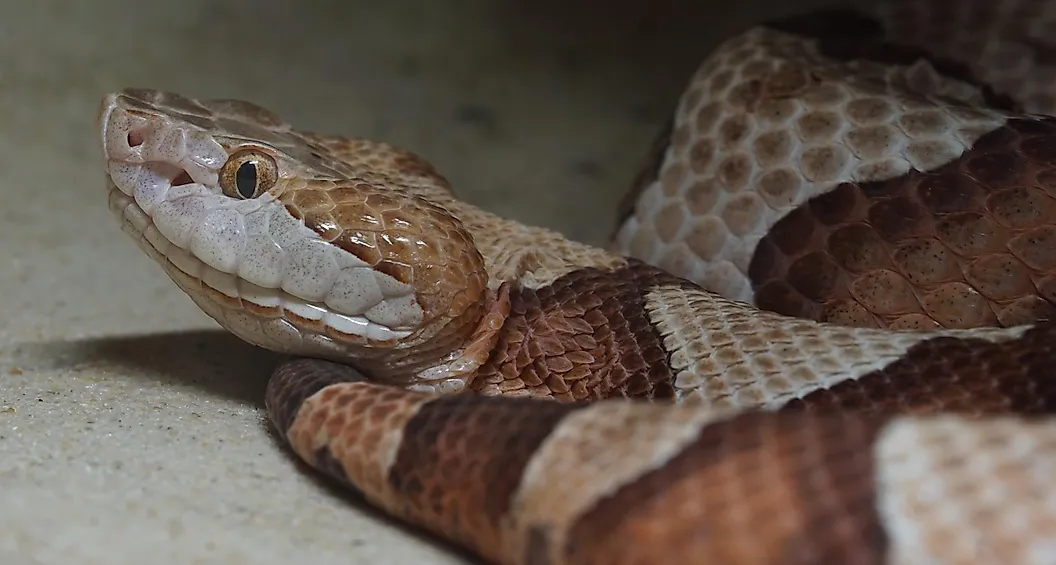
Copperheads use stone walls because dry-laid stone is artificial talus, with crevices for cover, thermal mass that holds the day's heat into the evening, a resident rodent population, and a continuous corridor to travel along without exposure.
What walls mostly cannot do is provide a true hibernaculum, because they are shallow and famously dry. The ones that work are built into slopes or over bedrock, where the stone above connects to crevices below the frost line, and those are the walls worth leaving exactly where they are.