Where Is The Oldest Lighthouse In America
The question has two valid answers, and the debate over them is more compelling than either answer alone. Boston Light was established on Little Brewster Island in 1716, making it the earliest lighthouse in what became the United States, and it remains active today. However, British troops destroyed the original tower in 1776, and the current structure was rebuilt in 1783. Consequently, the title of the oldest surviving lighthouse goes to a sandstone tower on a New Jersey sandspit, first lit in 1764, which has never been reconstructed. By the Revolution, twelve lighthouses existed in the American colonies, but this is the only one still standing.
Here is the winner, why it lasted when the others did not, and the famous names that lost the title on technicalities.
Sandy Hook Lighthouse, New Jersey

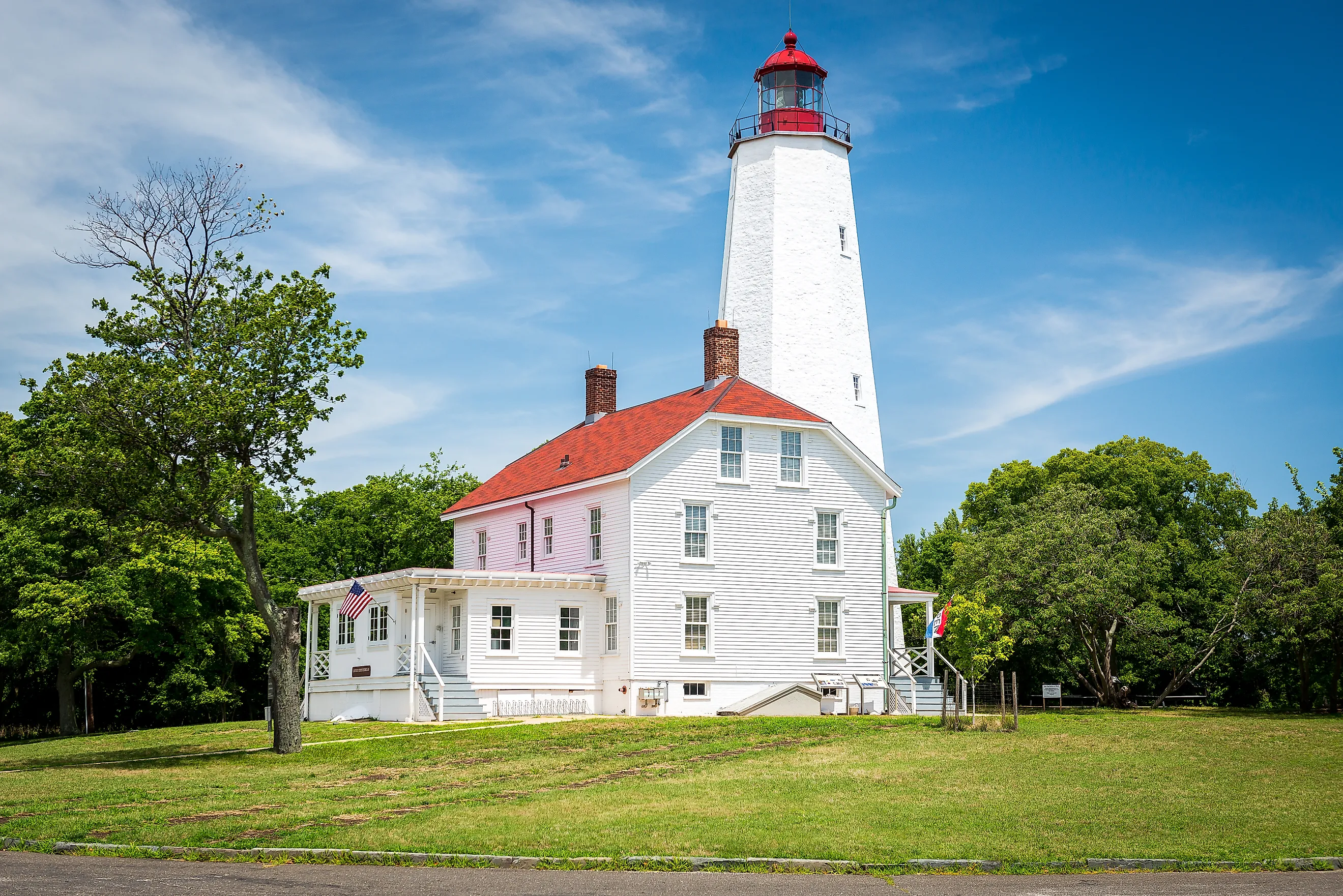
First lit on June 11, 1764, and still operational today, the lighthouse is recognized by the National Park Service as the oldest working lighthouse in the United States, a claim widely accepted by reputable sources. The tower measures 103 feet, constructed from local sandstone with a brick lining, and features an octagonal shape, painted white with a red lantern room. It was the fifth lighthouse built in the colonies and was initially named the New York Lighthouse, as it was requested by local merchants. Forty-three of them petitioned the Colonial Assembly following a series of shipwrecks in the early 1760s.
The way they funded it is a detail worth noting. The Assembly approved an act to raise up to three thousand pounds through a lottery, supplemented by a tonnage tax of three pence per ton on ships entering the harbor. In May 1762, four acres of what was described as barren sandy soil were purchased from Robert and Esek Hartshorne.
Today, the lighthouse remains lit, featuring an automated third-order Fresnel lens that emits a fixed white light visible for about 19 miles, maintained by the Coast Guard and operating around the clock. Ownership transferred to the Park Service in 1996, and it is now part of Gateway National Recreation Area, with an on-site museum. Notably, in 1889, it became the first lighthouse in the U.S. to be illuminated by incandescent lamps.
Why This One Survived

The other eleven colonial lighthouses were lost due to war, fire, storms, erosion, replacement, or simply collapsing. Sandy Hook remained intact, and lighthouse historian Jeremy D'Entremont credits much of that longevity to its builder. Isaac Conro, a mason from New York, used robust mortar. This might seem minor, but it stands out against the common practice at the time, where some early American lighthouse builders mixed seawater into their mortar. This creates a weak bond that deteriorates over decades. As D'Entremont has noted, many of these builders lacked actual lighthouse construction experience and were simply the lowest bidders.
Geography played an unintentional role in the lighthouse's fate. In 1764, the tower was positioned roughly 500 feet from Sandy Hook's tip. Over time, littoral drift has deposited so much sand that the lighthouse now lies about a mile and a half inland. While most historic American lighthouses struggled to keep pace with the ocean's encroachment, this one remained to witness the land gradually extending in front of it.
Boston Light, Massachusetts

First, and not the oldest, which is a difficult idea for Boston, Massachusetts, to accept. The station was established in 1716, making Little Brewster the oldest lighthouse site in North America. In 2026, it will celebrate 310 years of operation. The first keeper, George Worthylake, drowned in 1718 with his wife and daughter while returning from Boston.
In June 1776, the British destroyed the tower using timed explosives as they evacuated Boston. Massachusetts reconstructed it in 1783 at the original height of 75 feet, and it was elevated again in 1856, featuring a new lantern room and a second-order Fresnel lens. Its light can be seen up to approximately 27 nautical miles. A correction is needed here since the information about Boston Light is often inaccurate. It has long been described as the last officially staffed lighthouse in the US, maintained by Dr. Sally Snowman after automation in 1998. However, the Park Service now states that after Snowman's retirement in 2023, Boston Light is no longer staffed by a keeper. Many publications have not yet reflected this update.
Cape Henlopen, Delaware

This is one of the most striking near-misses. Constructed in 1767, it would be among the country's three oldest lighthouses today. However, the dunes below it eroded over time. Erosion undermined the tower throughout the early twentieth century, leading to its collapse into the sea in 1926. It is one of only two American lighthouses from the colonial era that no longer exist— the other being a 1721 beacon in New Orleans.
Brant Point, Nantucket, Massachusetts

The second lighthouse in America, established in 1746, holds a unique record. Brant Point has been reconstructed about ten times, more than any other lighthouse site in the US, due to frequent fire and storm damage. The current tower, built in 1901, makes it the oldest site with the newest structure, yet it doesn't claim the title of the oldest lighthouse overall.
Tybee Island, Georgia
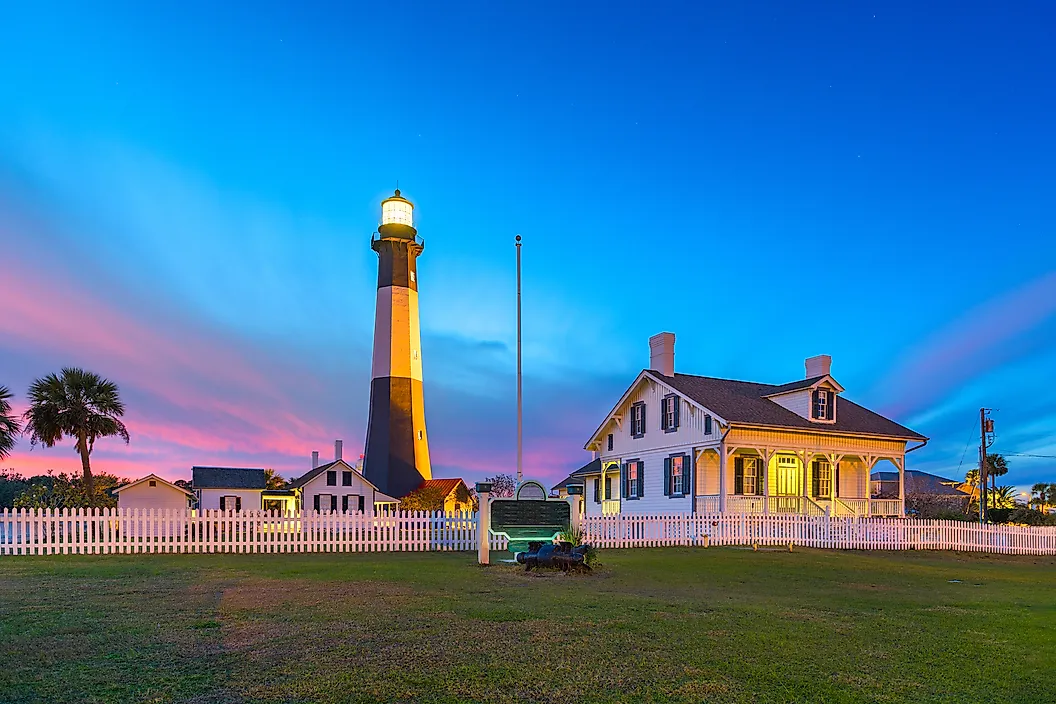
A light station has stood at the mouth of the Savannah River in Georgia since 1736, which predates Sandy Hook by 28 years, and Tybee is regularly described as one of America's oldest lighthouses on that basis.
The current tower tells a more complicated story. Repeated rebuilding means the bottom 60 feet dates to the eighteenth century while the upper portion is nineteenth-century work. It is a genuinely old lighthouse and it is not one continuous original structure, which is exactly the distinction that decides this whole question.
Old Cape Henry, Virginia

Finished in 1792 at Chesapeake Bay's entrance, Old Cape Henry holds a unique distinction. It was the first public works project initiated by the newly established federal government, authorized under one of Congress's earliest acts. Though it was too new to claim victory by age, the tower was retired in 1881 after developing cracks and was replaced by a newer one nearby. The original tower remains standing and is accessible for climbing.
Montauk Point, New York

Authorized by George Washington and finished in 1796, Montauk was the first lighthouse built solely by the federal government, not inherited from a colony. Located at Long Island's eastern tip in New York, it is the state's oldest lighthouse and remains operational. Erosion nearly threatened it, requiring decades of terracing and armoring to stabilize the bluff beneath.
Visiting Them

The two most important sites are both open, but they require very different levels of effort to visit. Sandy Hook is the easier option, located in Gateway National Recreation Area, accessible by car via the Garden State Parkway or by seasonal ferry from Manhattan. It features a keeper's quarters museum and offers free tower tours on a first-come, first-served basis, though parking fills up early in summer. Boston Light, on the other hand, is more challenging and rewarding. Little Brewster Island can only be reached by boat through Boston Harbor Islands National and State Park, with a limited seasonal schedule that varies each year, so advance booking is essential. Among other sites, Old Cape Henry and Montauk are both climbable, Tybee has an intact lighthouse with keeper's cottages, and Cape Henlopen only remains as a marker at Cape Henlopen State Park, where the tower once stood; the dune on which it sat no longer exists.