The Highest Railway In The World
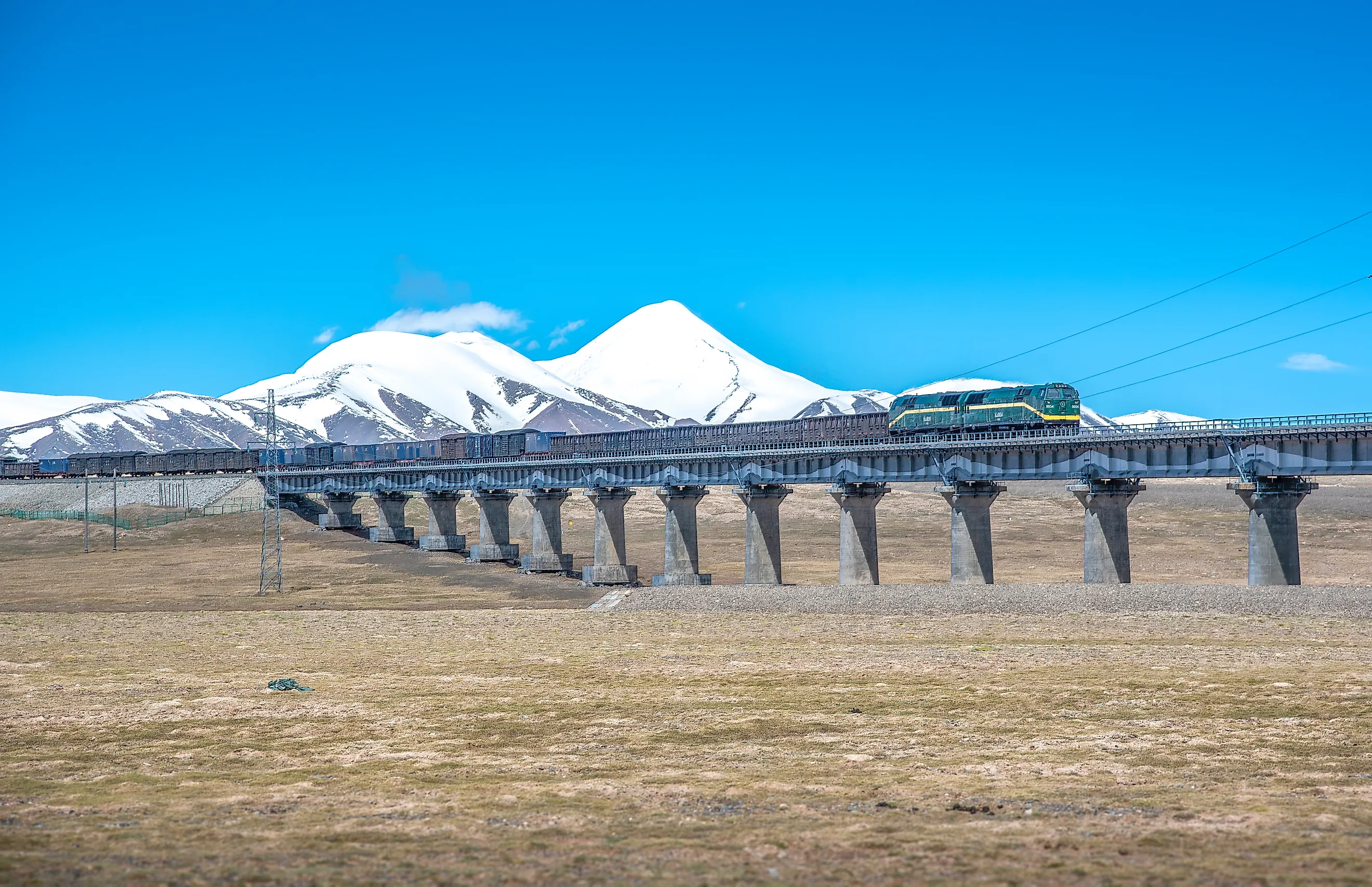
Most railways play it safe. They hug river valleys, sneak around mountains, and generally avoid anywhere a human might struggle to breathe. One railway ignores all of that. The Qinghai-Tibet Railway hauls ordinary passengers straight up onto the Tibetan Plateau to a dizzying 5,072 meters, or 16,640 feet, as it crosses the Tanggula Mountains, making it the highest railway on the planet by a country mile. To put that number in perspective, the track sits higher than the summit of Mont Blanc, the tallest mountain in the Alps, and higher than any peak in the Rocky Mountains or the Lower 48. People pay good money to climb to elevations this train simply rolls through. Here is how it claimed the crown, and what it takes to build and survive a railway on the roof of the world.
The Answer: The Qinghai-Tibet Railway
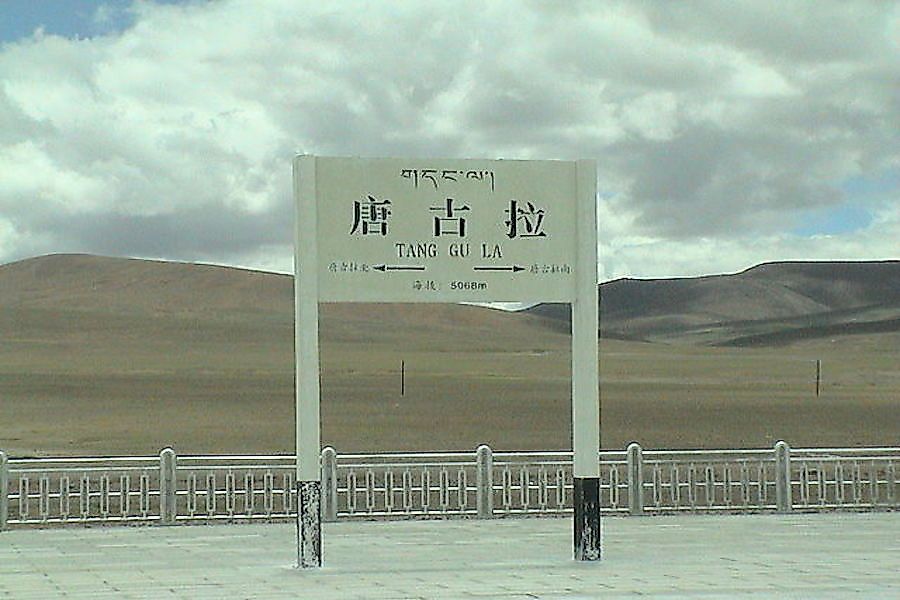
The Qinghai-Tibet Railway, also known as the Qingzang Railway, runs 1,956 kilometers from Xining, in China's Qinghai Province, southwest to Lhasa, the capital of the Tibet Autonomous Region. Its highest point is the Tanggula Pass at 5,072 meters, the loftiest piece of railway track anywhere on Earth. Just beside it sits Tanggula Station at 5,068 meters, officially the highest railway station in the world, an unstaffed stop so remote and oxygen-starved that trains barely bother to slow down. This is not a brief flirtation with altitude, either. Roughly 960 kilometers of the line, nearly half of it, sits above 4,000 meters. The brutal high-altitude stretch from Golmud to Lhasa was built between 2001 and 2006, and the full route opened for business in July 2006.
Building on the Roof of the World

Laying track up here meant solving problems that would make most engineers quietly resign. Around 550 kilometers of the route crosses permafrost, the longest such stretch of any railway on Earth, and thawing ground would warp the tracks into uselessness. So the builders got creative, raising much of the line onto elevated viaducts and installing ground-cooling pipes to keep the frozen earth frozen. They bored the Fenghuoshan Tunnel at 4,905 meters, the highest rail tunnel in the world, and threw up the Qingshui River Bridge, an 11.7-kilometer span across the empty Hoh Xil basin partly designed to let migrating Tibetan antelope pass safely underneath. Some 100,000 workers built the thing, breathing bottled oxygen at their camps, and in a genuinely staggering statistic, not a single one died of altitude sickness during construction.
Where the Air Runs Thin

Riding this railway is a lesson in just how little air there is up top. At these heights the atmosphere carries only about half the oxygen you would get at sea level, which is more than enough to leave an unprepared traveler dizzy, pounding with a headache, or worse. So the trains fight back. The carriages are sealed and pumped full of extra oxygen, with a personal oxygen outlet at every seat like on an airplane, and the windows wear special coatings to block the ferocious ultraviolet glare of high altitude. Doctors ride along in case anyone falters, and passengers are urged to acclimatize before boarding. The full haul from Xining to Lhasa takes about 21 hours, unspooling past turquoise lakes, glaciers, and herds of wild yak and antelope on a plateau that often looks utterly empty.
The Record It Broke

For most of railway history, the "highest" crown belonged to South America. Lines threading through the Andes of Peru and Bolivia held the top spots for decades, and they were no slouches. Then, in 2006, the Qinghai-Tibet Railway showed up and cleared them by roughly 250 meters, which in thin-air terms is a landslide. The gap between it and everyone else is now almost comical, as the table below makes clear.
| Railway high point | Location | Elevation |
|---|---|---|
| Tanggula Pass (highest track) | Qinghai-Tibet Railway, China | 5,072 m (16,640 ft) |
| Tanggula Station (highest station) | Qinghai-Tibet Railway, China | 5,068 m (16,627 ft) |
| Condor Station | Rio Mulatos-Potosi line, Bolivia | 4,786 m (15,702 ft) |
| Galera Station | Ferrocarril Central Andino, Peru | 4,781 m (15,686 ft) |
| Jungfraujoch (Europe's highest) | Jungfrau Railway, Switzerland | 3,454 m (11,332 ft) |
Notice how far Europe's proudest mountain railway, the Jungfrau line in the Swiss Alps, trails the field. It sits more than 1,600 meters below Tanggula, which is a taller gap than many entire mountains.
Why Build a Railway So High?

Why go to all this trouble and expense to run trains through the sky? In a word, connection. Before the railway, getting to Tibet overland from the rest of China was a grueling, days-long slog that left the region one of the most cut off on the continent. The line squeezed that journey down to under a day and wired Lhasa straight into China's enormous national rail network for the first time, unleashing a flood of freight, tourists, and far easier travel. It is rightly hailed as an engineering triumph, though it is worth noting that it also carries real political and cultural weight, binding a remote region more tightly to the nation. Opinions on that vary, but the raw achievement does not. A modern train now runs, smoothly and daily, across the highest and harshest plateau on Earth, and nothing else on any continent comes close.