The First Concrete Road In America
Inventions often come from noticing the needs of others. Whether that is struggling to function in the dark, slow roasting toast over a fire, or even driving on a muddy road.
George Bartholomew was one of those that noticed how hard it was to drive down Main Street, Ohio in 1891, thus leading to his use of concrete to create the roads we use today.
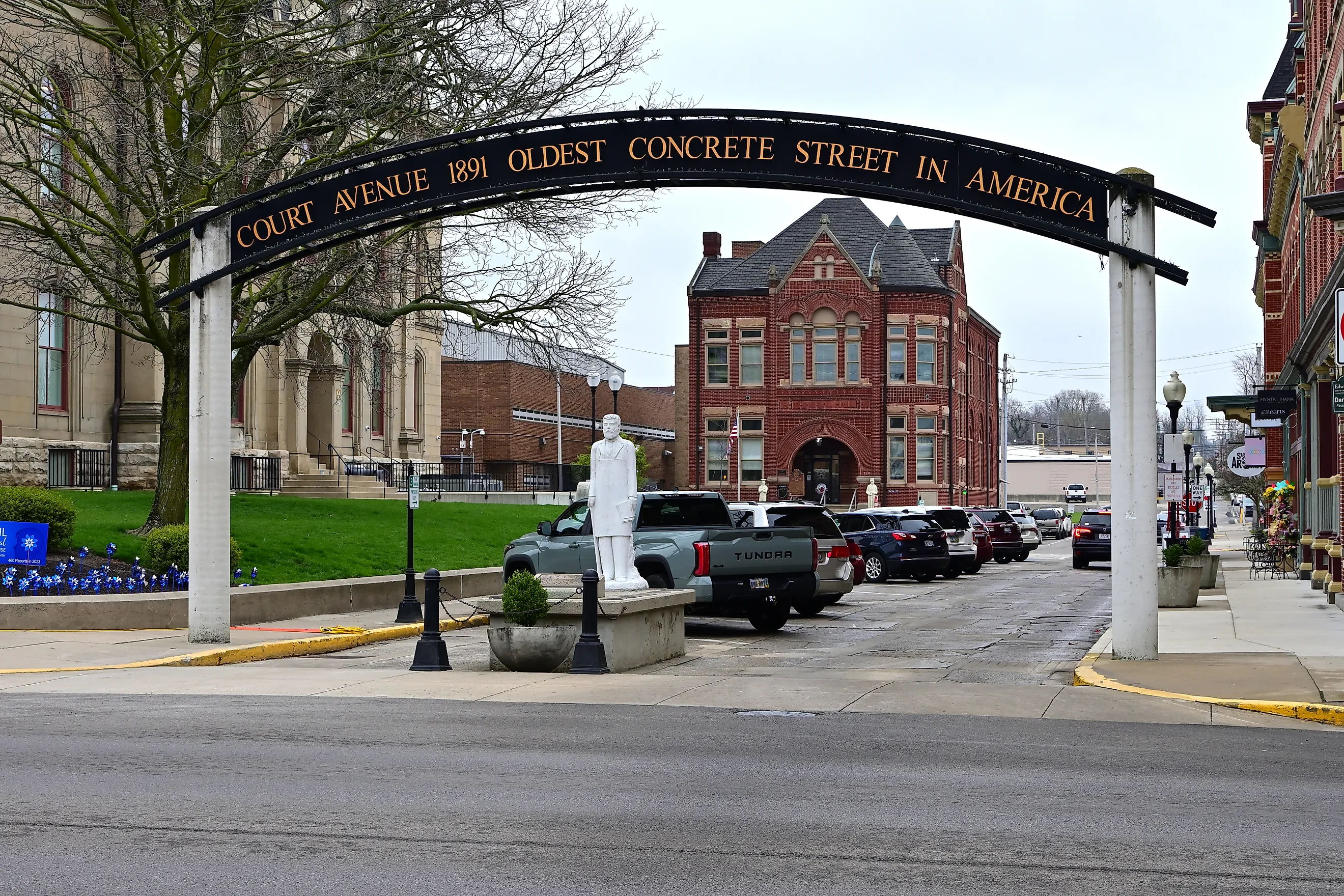
Bartholomew is still honored today with an arched sign at the entrance to Court Avenue in Bellefontaine, Ohio, announcing the oldest municipal concrete road in America, paved in 1893.
His method testing a new method of concrete paving using Portland cement. When city officials saw that the method was successful, they allowed him to pave Court Avenue two years later.
However, not everyone agrees that Court Avenue is America's first concrete road. But the debate should center around definition.
There is a clear difference between city streets and highways. When you define the criteria as the oldest municipal road, Court Avenue wins the title. If the definition changes to long-distance rural highway, the Dollarway Road, built in 1913, in Arkansas jumps to the top spot.
How Court Avenue Made History
Court Avenue, like all the other streets in Bellefontaine, was a dirt road before 1893. This caused problems for drivers and pedestrians because dust built up during the dry season, and when it rained, the road became muddy and difficult to navigate.
When George Bartholomew moved to Logan County in 1886, he already knew everything there was to know about concrete. He was also excited to learn that the area could produce high-quality concrete. Having such concrete to work with, Bartholomew came up with the idea to pave the muddy streets with it.

He put the wheels in motion by asking the town council if they would allow him to test the concept of concrete paving on a section of Main Street. When the test turned out to be a huge success, the council allowed him to pave all the streets surrounding the courthouse in 1893, starting with Court Avenue.
At the same time, the council was still not convinced that the concrete would hold. They demanded that Bartholomew provide the concrete free of charge and pay a $5,000 bond as a guarantee that the material would last at least five years.
Bartholomew took the risk and paved the four streets that surround the courthouse. The concrete was provided by the Buckeye Cement Company, and that same concrete won the top prize at Chicago's World Fair in 1893 for achievement in engineering technology.
Court Avenue is the only one left with the original concrete. Main, Opera, and Columbus Avenues were damaged by a broken water pipe and were repaved using asphalt.
The risk paid off when it came to Court Avenue, however. For the first five decades after it was paved, it cost a mere $1,400 to maintain, and it was only reconstructed in the 1960s. Today, Court Avenue has a spot on the National Register of Historic Places, and it was named a National Historic Civil Engineering Landmark.
Restoration And Rededication
Restoration on Court Avenue started in July 1962. The project included patching the joints that were deteriorating and replacing some of the concrete sections. This time, the materials were donated by local companies. The restoration was completed by August 1962, and at the end of that month, Bellefontaine held a rededication ceremony.
The event included the Miss Concrete Pavement pageant, with 19-year-old Sally Williams crowned the winner. The entertainment also included a baton corps contest and baton-twirling competition. A parade kicked off from the fairgrounds and lasted nearly two hours, with floats being cheered on by locals who had come out in their numbers.
Finally, chairman of the Street Committee and council member Robert J. Notestine and Sally Williams scattered sand and cement onto Court Avenue before pouring champagne over it.
Experiencing Court Avenue Today
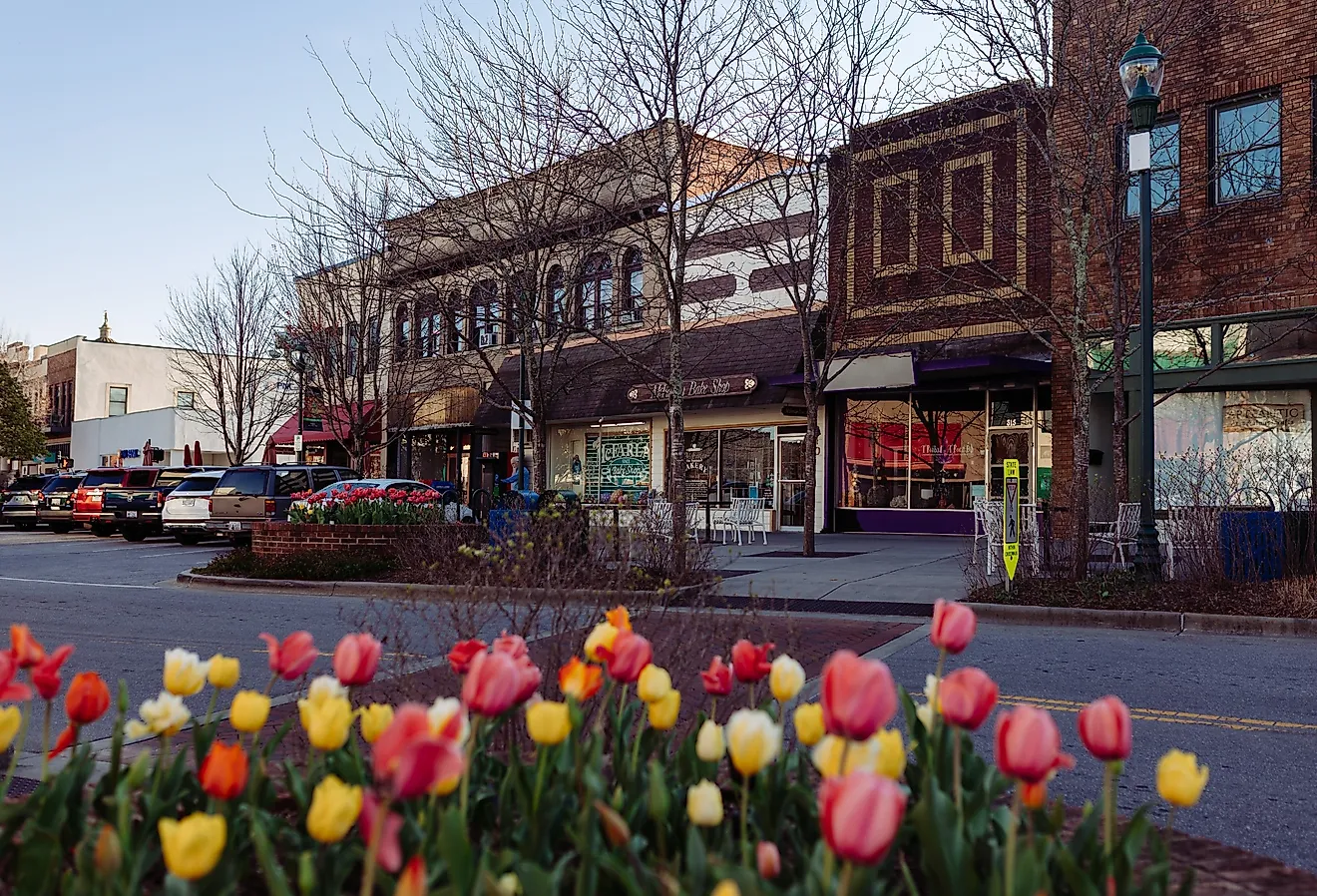
Court Avenue is one of the most walkable streets in Bellefontaine today, and particularly popular with seniors. The street's pavements are wide and level with plenty of benches along the way, and several shops to explore.
During the summer, there are street fairs, live music and craft markets to look forward to on Court Avenue and the surrounding streets. And the town goes all out with holiday parades over the festive season.
America's Other Concrete Roads

By now, it is clear that Court Avenue has earned its title of first concrete municipal road. But America boasts many other concrete roads with their own distinctions.
Concrete was a novelty in Europe well before America expressed interest in it. Concrete was famously used to build the barn of Horace Greeley, editor of the New York Tribune, in the 1850s.
Some municipalities used concrete to install sidewalks and alleyways throughout the 1880s. But there was no American city or town with a full public concrete street until Court Avenue was completed in 1893.

This inspired other states to follow suit, with Michigan paving the world's first continuous mile of concrete road along Woodward Avenue in Detroit in 1909. New York State laid rural concrete strips in 1910 to test how the cement would hold up under the freeze-thaw cycles on open roads.
As mentioned earlier, the Dollarway Road in Arkansas became the country's first long-distance rural concrete highway in 1913.
The Road Ahead Started In Bellefontaine
Court Avenue survived a century of wagons and heavy automobiles. It also paved the way for the concrete roads we see today. What started as a small paved section, and then four paved roads, grew into concrete interstates, runways, and bridges across America and it's all thanks to one person's vision for mudless streets.