America's 10 Most Beautiful Train Stations
Nobody takes the train to save time. You take it to watch the country slide past the window, and to stand for a few minutes inside buildings designed to make leaving somewhere feel like an event. Across the United States, a handful of terminals still pull that off, carrying a century of history in their domes, clocks, and marble. These ten have earned their place on the country's rail lines.
Grand Central Terminal, New York City

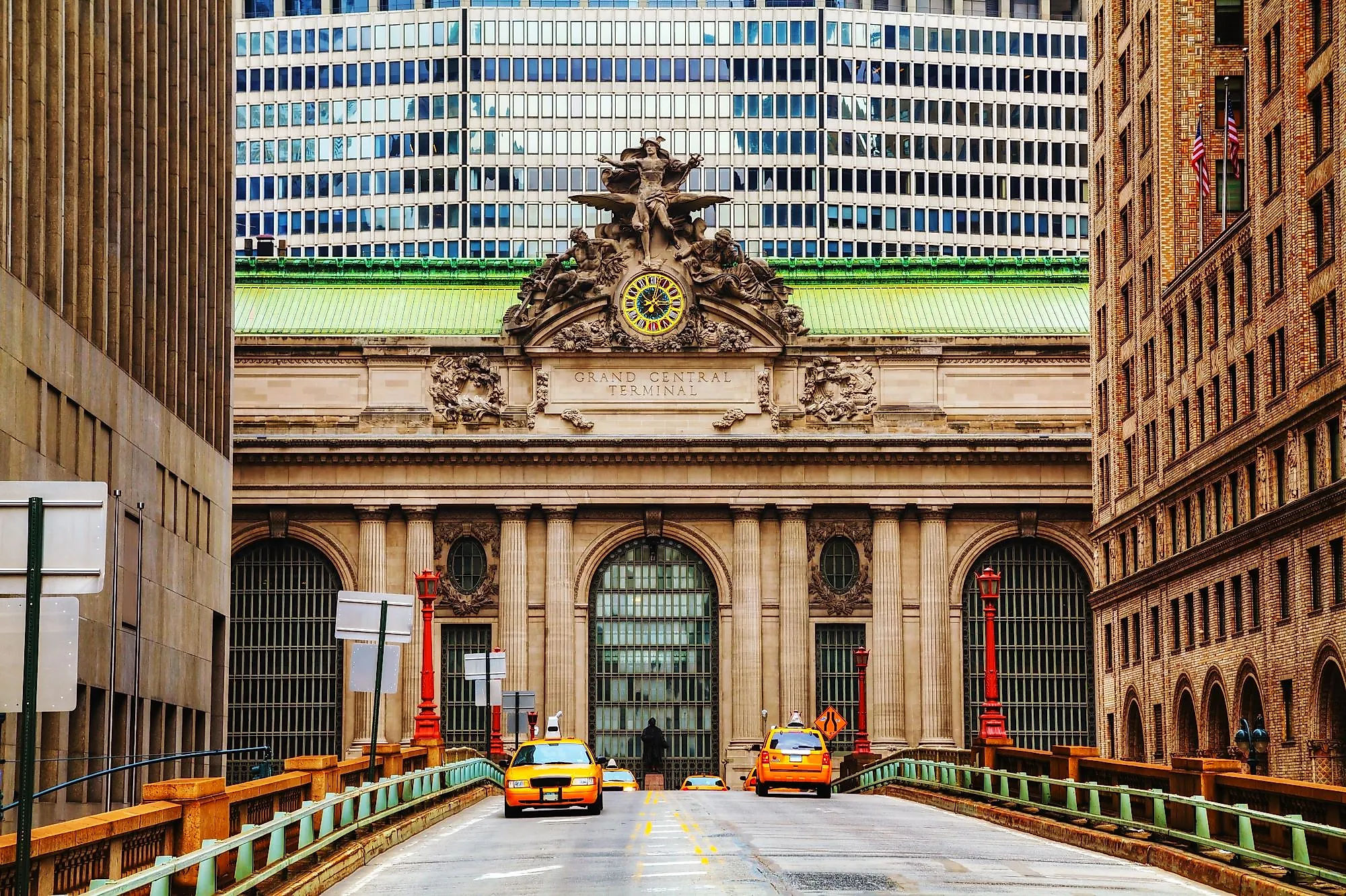
Start at the top. Grand Central Terminal is the station every other station is quietly trying to be. It opened in February 1913, a Beaux-Arts colossus by the firms Reed & Stem and Warren & Wetmore, and from day one it was never just a place to catch a train. Tip your head back in the main concourse: that vast green ceiling maps the zodiac in gold, and it is painted backwards. The constellations are reversed, and rather than fix the goof, the terminal kept it. Grand Central runs 44 platforms, more than any station on the planet, and the four-faced opal clock over the information booth has been the city's unofficial meeting spot for generations. Add the shops, the restaurants, and a constant drumbeat of events, and "train station" starts to feel like an understatement.
Barstow Harvey House, Barstow

Out in the Mojave Desert, where the mountains handle the scenery and the heat handles everything else, the Barstow Harvey House is worth breaking a trip for. The brick building dates to 1911, thrown up after a fire took the previous depot three years earlier, and it ran as a Harvey House - the chain of trackside hotels and restaurants that made eating on a Western rail line something other than a gamble. Today the old landmark, also called Casa del Desierto, packs four tenants under one roof: the Barstow Area Chamber of Commerce, the Western America Railroad Museum, the Route 66 Mother Road Museum, and a set of rentable ballrooms.
Union Station, Washington, D.C.

Plenty of cities have a Union Station. None of them have this one. Washington's mixed-use hall comes with the soaring arches and presidential swagger you would expect from the capital, but the better story is survival. Decades of wear, chronic underfunding, and a few rough turns from nature nearly finished it off. It clawed its way back, and today the National Historic Landmark runs three full levels of shopping and dining alongside the trains. Monuments, it turns out, can stage comebacks too.
Cincinnati Union Terminal, Cincinnati

The aquamarine fountain out front is just the warm-up. The Cincinnati Union Terminal in Ohio is an Art Deco knockout, finished in 1933 by the firm Fellheimer & Wagner, and its half-dome is the headline act: 180 feet wide, 106 feet tall, the largest in the Western Hemisphere when the doors opened. Step inside and the curve is lined with Winold Reiss mosaics blazing through the city's industrial history. Amtrak still stops here, but the building mostly works as the Cincinnati Museum Center now, with several museums, an OMNIMAX theater, and a history archive packed under that enormous arc.
San Juan Capistrano Depot, San Juan Capistrano

No grand dome here, and that is exactly the point. The San Juan Capistrano depot winds the whole genre back to 1894: a low brick station threaded with arches and topped by a 40-foot bell tower, white dome and cross included, tipping its hat to the famous mission down the road. Small, quiet, and unbothered, it sets you down squarely in another century.
Main Street Station, Richmond

You can spot Main Street Station doing 70 on I-95 - six stories of red roof rising over Richmond, Virginia - but that is cheating. Arrive by rail, the way the place intended when it opened in 1901. This Renaissance Revival landmark has outlasted floods, fires, and long stretches of neglect, earned National Historic Landmark status, and came back swinging with a full restoration in the early 2000s. Ride the clock tower up and try to picture the skyline it has watched rearrange itself over the past century and change.
Union Station, Kansas City

Kansas City's Union Station does grandeur the old-fashioned way. It went up in 1914, and the Beaux-Arts Great Hall still stops people cold with a 95-foot ceiling and chandeliers the size of small cars. The trains share the building now, though: Science City, a planetarium, a live-theater stage, and a movie house have all moved in. There is a grislier claim to fame, too - the 1933 "Kansas City Massacre," a gangland shootout that left bodies on the pavement right outside the doors. Plenty of reasons to come, and almost none of them require a ticket.
King Street Station, Seattle

Look up at King Street Station and you are looking at Venice. Its brick clock tower is a near-copy of the Campanile di San Marco, which is about the last thing you expect to find in Seattle. The station opened in 1906 to a design by architect Charles A. Reed, then lived the usual hard-luck century - boom, neglect, a brush with the wrecking ball - before a careful 2010s restoration brought it back. The payoff is the main hall, where an ornate white plaster ceiling and fluted Corinthian columns are on display again after decades hidden behind a dropped ceiling.
Santa Fe Depot, San Diego

The Santa Fe Depot looks like it wandered up the coast from an old mission. San Diego's Spanish Colonial Revival showpiece went up in 1915 to greet the crowds at the Panama-California Exposition, all white stucco and red tile, with twin tiled domes to match. It is another head-turner in California, and the regular farmers markets and cafes outside make a good last stop before you plunge into the border city.
30th Street Station, Philadelphia

Save the biggest for last. Philadelphia's 30th Street Station is a Neoclassical monster, finished in 1933 for the Pennsylvania Railroad, its porticoes hoisted on 71-foot Corinthian columns. The main concourse is built for sound: dress shoes cracking across marble, a thousand half-heard conversations, the crackle of the next departure overhead. Presiding over the whole room is the bronze "Angel of the Resurrection," lifting a fallen worker skyward - a memorial to the Pennsylvania Railroad employees killed in World War II. Stand still long enough and you might even catch the rarest sound in the building: someone turning the page of an actual newspaper.
Worth Missing A Train For
Cars and planes won the argument a long time ago. But the train still owns a corner of the American imagination, which is exactly why people keep pouring money and care into saving these multi-generational landmarks. They were built to make arriving somewhere feel like something, and the good ones still pull it off. So if one of these is close, go stand under the dome for a while. And if not? Maybe it is finally time to take the train.