5 Tick Infested Areas In Maryland
Maryland's marshes, farms, and forests all suit ticks just fine. Even the suburban greenbelts hold them. Blacklegged ticks are the most commonly reported in the state. Lone Star and American dog ticks also turn up across Maryland. Lyme disease remains the most-reported tick-borne illness here. The five areas ahead see the heaviest overlap between tick habitat and human recreation.
The bay at the center of the state
For more on the body of water that defines so much of Maryland's tick country, read about Chesapeake Bay.
Southern Maryland Forest Belt

The Southern Maryland Forest Belt covers Calvert, Charles, and St. Mary's Counties. St. Mary's River State Park is a popular hiking destination here, with wooded trails, swamps, and streams that suit white-tailed deer. Plenty of deer means plenty of host animals, which keeps tick populations fed. Plenty of brush means plenty of places for ticks to wait. Both conditions favor the Lone Star tick (Amblyomma americanum), an aggressive species recognizable by the single white "star" on its back. Lone Star ticks have spread across the East Coast with the deer population and now show up regularly in Southern Maryland's wooded and brushy areas in the warm months. Hikers pick them up in long grass, where ticks attach to shoes and pant legs and crawl onto skin from there. A bite can lead to ehrlichiosis, Heartland virus, tularemia, and alpha-gal syndrome, a red-meat allergy triggered by Lone Star bites.
Montgomery County Parks & Greenbelt Corridor

A few miles from the nation's capital, the Rock Creek and Seneca Creek region holds winding forested trails and campsites. The thick foliage and valley streams support a healthy mammal population and the ticks that ride along with them. Tick activity here continues into the autumn, when ticks shelter in leaf piles. Adult ticks will search for a host even in winter on any day temperatures rise above freezing.
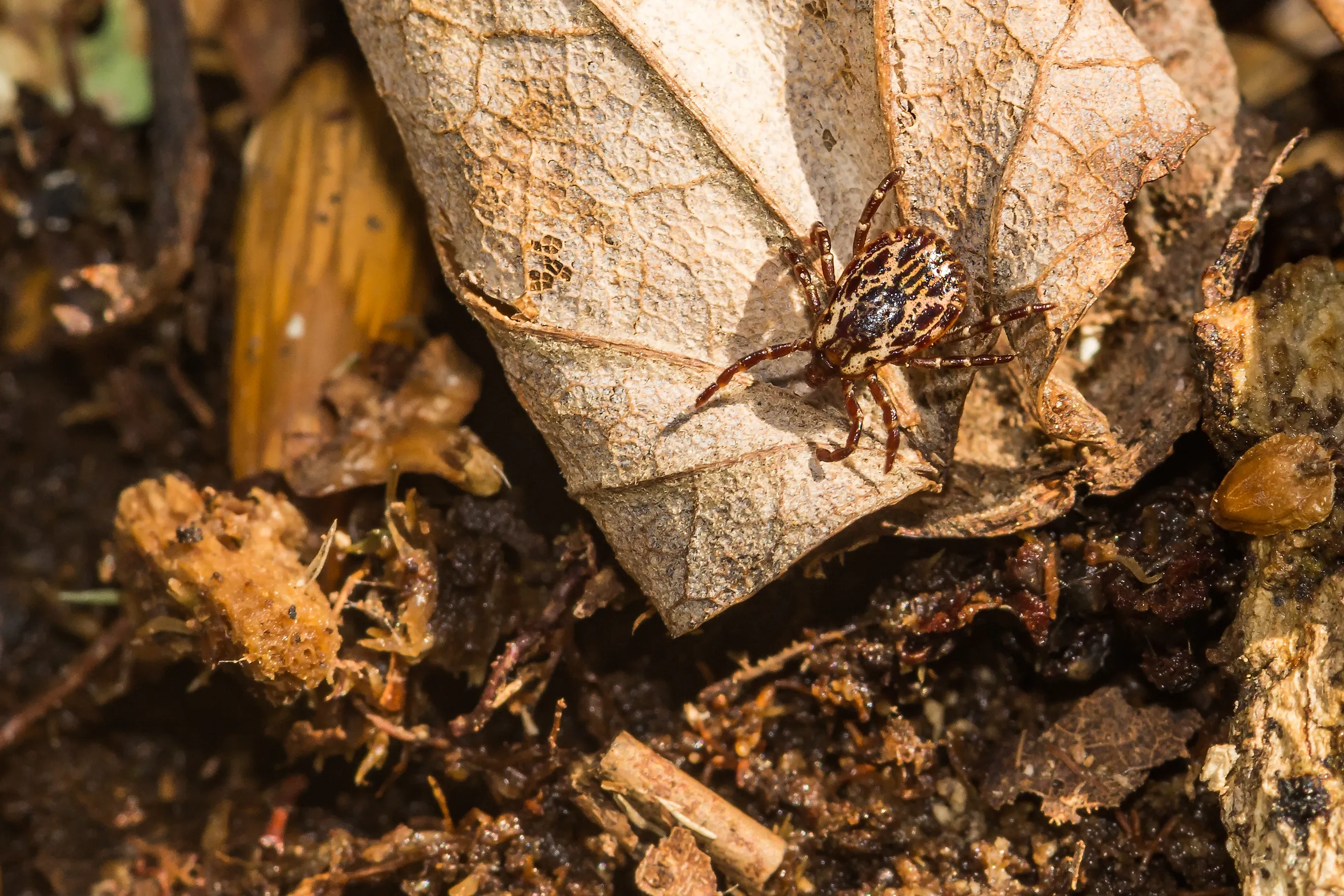
Blacklegged ticks (Ixodes scapularis) and Lone Star ticks both turn up most often in this corridor. As larvae, blacklegged ticks feed on white-footed mice and other small mammals, then move to deer in adulthood. The blacklegged tick is identifiable by its round, dark brown scutum. It is the primary carrier of Lyme disease and can also transmit anaplasmosis, babesiosis, and Powassan disease.
Eastern Shore Woodlands

The Eastern Shore Land Conservancy holds over 67,000 acres of preserved farms and forests. Chesapeake Bay, the largest estuary in the country, winds through the same landscape. Tuckahoe State Park sits within these woodlands and pulls in hikers and hunters for long weekends. The waterways and the vegetation keep tick populations comfortable. Blacklegged, Lone Star, and American dog ticks (Dermacentor variabilis) all show up here.
Some ticks favor forested terrain, but the American dog tick prefers areas with little tree cover. Often found feeding on dogs, these ticks ride into homes on pets. Hikers in the region pick them up walking through trails and brushing against grass and brush. Dog ticks can transmit tularemia and Rocky Mountain spotted fever, which can be deadly without treatment.
Chesapeake & Blackwater Marsh Region

The Blackwater National Wildlife Refuge is known for its rich tidal marsh and pinewood forests. Originally established as a refuge for migratory birds, the park also holds a large white-tailed deer population. The dense deer numbers plus the humidity from the marshland keep ticks fed and hydrated.
The marshes are an asset to ticks, which cannot drink water and have to absorb moisture directly from the air to survive. The consistently moist air and damp soil around Blackwater's marshes create the conditions Lone Star, American dog, and blacklegged ticks need. These three species can spread anaplasmosis, babesiosis, human ehrlichiosis, and Lyme disease.
Gunpowder Falls Watershed

Gunpowder Falls State Park covers waterfalls, rugged forests, and wetlands. The same features that draw more than a million visitors each year build an ideal home for ticks. Hikers cross tick habitat all along the park's trail network, which runs more than 120 miles of hiking, biking, and equestrian routes. Both blacklegged and Lone Star ticks favor the thick forested areas, with Lone Stars clustering in animal resting spots: thick brush, grassy valleys, and underbrush. Bites here can spread Powassan virus, ehrlichiosis, and other infections, with symptoms that can include fever and rashes. Powassan virus is rare and has no known treatment, and cases are on the rise.
Where to settle in Maryland
For a wider look at Maryland's most livable small towns away from the tick density, see our list of the best Maryland towns to retire comfortably.
Staying Tick-Aware Across Maryland's Seasons
Outdoor recreation and tick activity in Maryland both climb in the warmer months, which makes it useful to know the signs of tick-transmitted disease. Some ticks stay active through autumn and winter on any day temperatures rise above freezing. Whatever time of year you spend in forests, marshes, parks, or brushy trails, stay aware of the habitats where ticks tend to cluster and learn the early signs of possible infection.