5 Tick Infested Areas In Delaware
Delaware is a state stitched together with tidal marshes, river bottomlands, and mixed hardwood forests where mild winters rarely get cold enough to slow tick activity for more than a few weeks at a time. Ticks turn up in forests, meadows, and wetlands from the piedmont slopes of northern New Castle County to the bald cypress swamps of Sussex. Delaware is now home to at least 15 established tick species, but the blacklegged tick (Ixodes scapularis) and the lone star tick (Amblyomma americanum) do most of the biting.
Lyme disease is by far the most common tick-borne disease in Delaware. Around 349 cases of Lyme disease, a bacterial illness spread by blacklegged ticks, were reported statewide in 2023. This rate of infection was more than high enough to make the state of Delaware a high-incidence Lyme disease jurisdiction per CDC guidelines.
Alpha-gal syndrome, a red meat allergy triggered by lone star tick bites, has logged over 200 cases since Delaware started tracking it as a reportable condition in 2024. Add in ehrlichiosis, anaplasmosis, babesiosis, and spotted fever rickettsiosis, and it's clear that the risk runs in several directions at once, depending on which patch of woods, marsh, or meadow you're moving through.
Trap Pond State Park

The standing water, dense swamp vegetation, and surrounding upland forest at Trap Pond State Park in Sussex County create prime habitat for tick species that favor wetland edges. Near Laurel in the southwestern corner of the state, this park contains one of the largest surviving freshwater wetlands in Delaware, a roughly 2,000-acre stand of bald cypress that marks one of the northernmost natural occurrences of the species in North America.
The Delaware Department of Natural Resources and Environmental Control (DNREC) identifies the Gulf Coast tick (Amblyomma maculatum) as a species that prefers meadow and wetland habitats, making the park's landscape well suited to this species. Spotted fever rickettsiosis, a disease tied to Gulf Coast ticks, was recorded five times in Sussex County in 2023, versus once in New Castle and not at all in Kent.
Redden State Forest

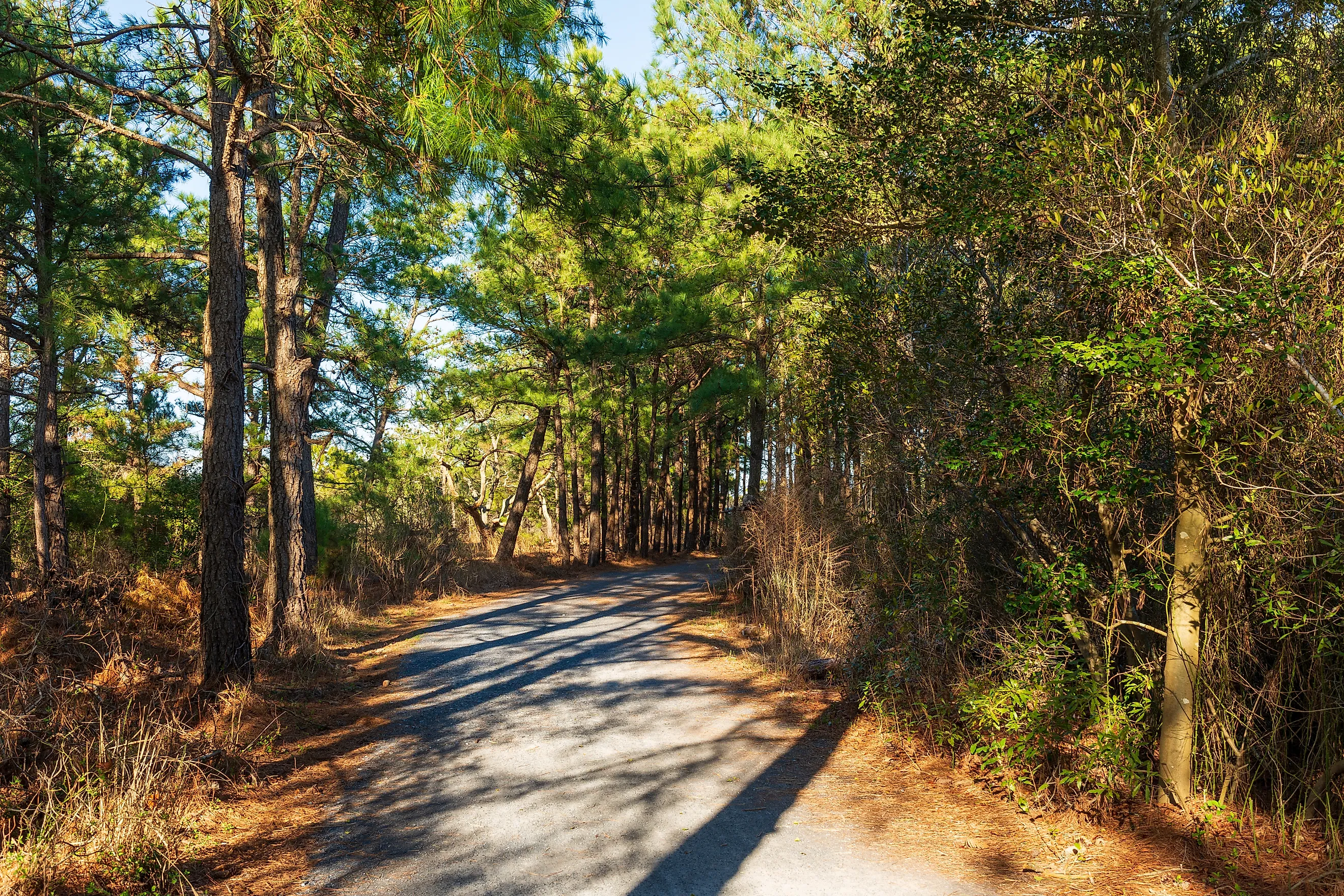
Redden State Forest, within the Atlantic Coastal Plains region, is serious deer country. The large white-tailed deer population means there's a steady host supply for ticks. This state forest features large timbered tracts that the state manages partly for deer hunting. It is Delaware's largest contiguous forest at around 14,000 acres of loblolly pine and mixed hardwood, laced with 44 miles of trails across 18 separate tracts.
White-tailed deer are the preferred host of adult lone star ticks, Delaware's most abundant tick species. It comes as no surprise that Sussex County, where Redden State forest is located, is home to Delaware's highest lone star tick population. These ticks turn up heavily in spring and summer across nearly every habitat type the forest offers. The species spreads more cases of Ehrlichiosis in Sussex County than anywhere else in the state. The disease was reported 13 times in Sussex County in 2023, versus only two in New Castle and four in Kent Counties respectively.
Cape Henlopen State Park

Cape Henlopen State Park's coastal habitats support suitable conditions for a variety of ticks. The park, at the mouth of the Delaware Bay near Lewes, mixes dune grassland, maritime forest, and open meadow within a single 5,000-acre boundary.
DNREC state tick biologist Dr. Ashley Kennedy has even conducted her field research along the park's Gordons Pond Trail of Cape Henlopen State Park. By dragging cloth flags through edge habitats where hikers are most likely to pick up ticks, reachers can study the insect furthur without direct contact. Assisted by environmental scientist Jacob Walls, Dr. Kennedy drags a white denim flag every 10 meters to safely collect, count, and isolate the ticks in vials. This ongoing research has become increasingly vital as Delaware’s overall tick population surges, driven by a combination of rapid land-use development that creates ideal edge habitats where clearings and forests meet, along with mild winters that fail to naturally keep the population in check.
Lone star ticks are commonly found in Sussex county, and can be found in all habitats within the park. As of 2023, 98 percent of Delware's tick population is made up of lone star ticks, an explosion that did not exist 10 years prior, according to Dr. Kennedy. Gulf Coast ticks, a less common species statewide that can spread spotted fever rickettsiosis, prefer the meadow and wetland habitats along the park's coast.
White Clay Creek State Park

Blacklegged ticks, those responsible for spreading Lyme disease, favor the shaded, wooded edge, host-abundant habitat that defines White Clay Creek State Park. This New Castle County park, straddling Newark and the Pennsylvania line, sits in the only part of Delaware that isn't flat coastal plain. It's Appalachian Piedmont country, and it consists largely of steep, forested slopes running down to creek beds. The park hosts an impressively sized deer population, so much so that the park encourages hunters to harvest as many female deer as possible. Park trail planning documents that many of the park's 37+ miles of paths originally started out as deer trails. This abundance of hosts contributes to the high level of tick activity across the property.
New Castle County carried the heaviest Lyme disease burden of Delaware's three counties in 2023, accounting for 213 of Delaware's 349 reported cases. This was more cases than Kent and Sussex counties combined. In addition to Lyme disease, a DNREC field biologist surveying a wooded patch of New Castle County made a disease discovery that Delaware had never confirmed before. They found a tick that was carrying Powassan virus, a rare but potentially fatal pathogen with no antibiotic treatment.
Blackbird State Forest

Blacklegged ticks, the species responsible for Lyme disease, anaplasmosis, and babesiosis, are common throughout the oak, yellow-poplar, maple, and hickory leaves of Blackbird State Forest. The forest encompasses about 6,000 acres that sit within the Blackbird-Millington corridor straddling the New Castle and Kent County line north of Smyrna. This is one of the largest forests of its kind, and is also where the lone star tick's range is pushing north into New Castle after historically being concentrated further south, making human encounters more and more likely.
The Asian longhorned tick, an invasive species first confirmed in northern New Castle County in 2019, has become increasingly established in Delaware. While there are yet to be any confirmed disease transmissions from these ticks in the US, the Delaware Division of Public Health warns residents to stay vigilant, noting that bites from this species have caused serious illnesses in other countries. The state forest provides the ideal habitat for this species.
Staying Safe Outside
Delaware's tick season doesn't really close, though most bites are recorded in the summer months around May. According to DNREC, Delaware residents should dress in light-colored clothing, tuck pants into socks, and use an EPA-registered repellent with at least 20 percent DEET or picaridin before heading outside.
You should do a full-body check afterwards, making sure to pay close attention to the hairline, armpits, and behind the knees, to find and remove ticks before they have time to transmit any diseases. Delaware residents can also file a free Tick Interaction Report on DNREC's tick reporting page. DNREC's tick program uses those reports to track species distribution across the state.