4 Rattlesnake Hotspots In Michigan
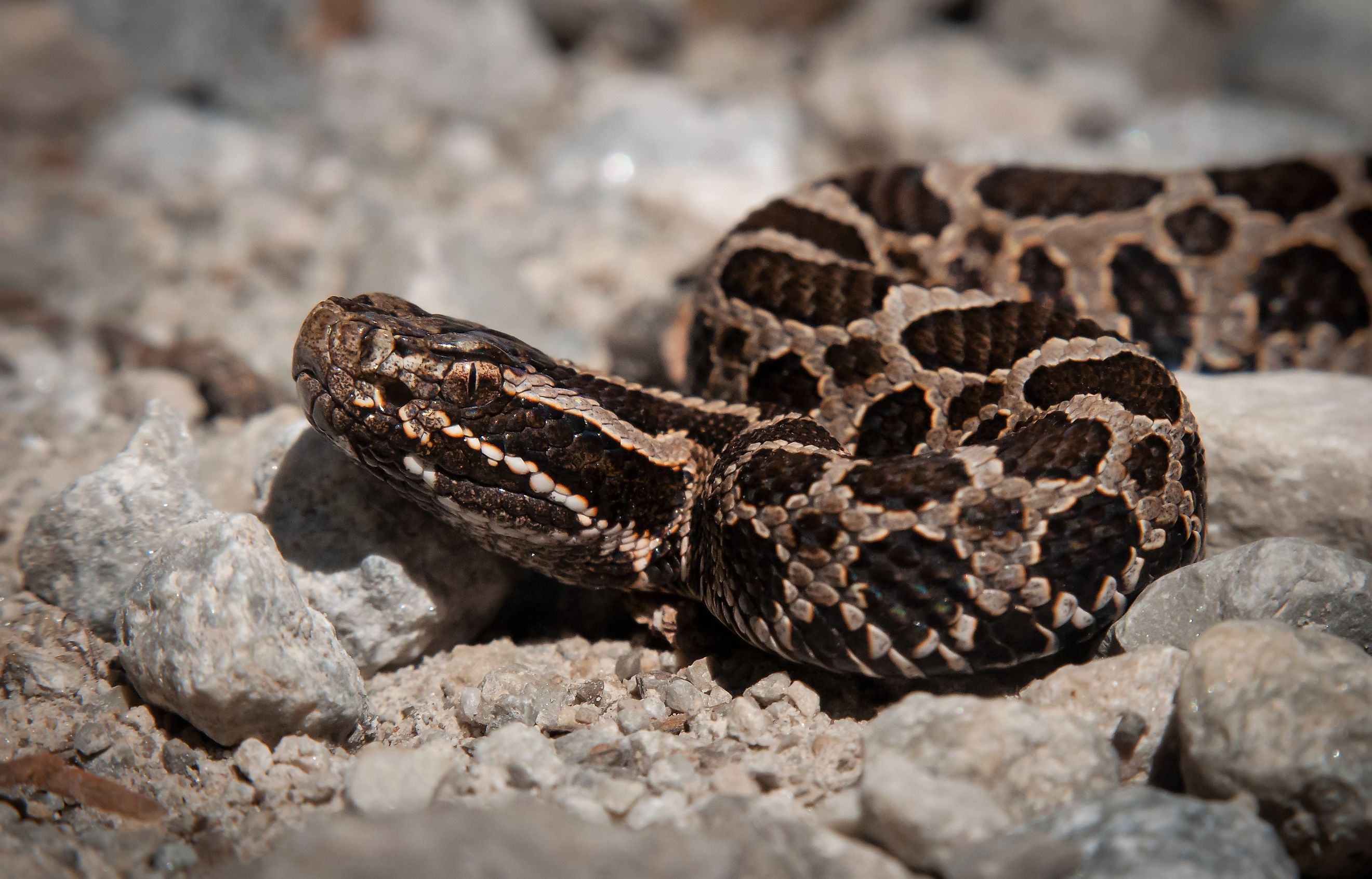
Only one venomous snake lives in Michigan, and most residents will never lay eyes on it. The eastern massasauga rattlesnake keeps to wetlands across the Lower Peninsula. Its name comes from a Chippewa word meaning "great river mouth." Biologists have mapped its sightings into three loose clusters of counties. Two of those clusters sit down south, and the third lies up in the northern forests. Each place below keeps the wet ground and open sun this shy rattlesnake still depends on.
These four spots are not chosen for scenery. They are the places where field crews and hikers keep running into the same gray, thick-bodied snake with the buzzing tail. Learn where it lives, and you learn how it survives here at all.
Pinckney Recreation Area

Glaciers built Pinckney. The retreating ice left behind a terminal moraine of rolling hills and a chain of small lakes northwest of Ann Arbor. That mix of high dry ground and low wet pockets is exactly what a massasauga works through in a season. The snake winters in the soggy low spots and climbs to the sunny ridges to warm up and hunt.

The park straddles the Livingston and Washtenaw county line, right inside the southeast sighting cluster that biologists watch most closely. Its 11,000 acres draw thousands of hikers, mountain bikers, and anglers every year. Almost none of them ever spot the snake.
The reason is camouflage and nerve. A massasauga would rather freeze under a clump of grass than bolt. Its gray body and dark saddle blotches vanish against leaf litter, so a hiker usually walks right past one without a clue. The safe move is simple. Stay on the trail and watch your feet in tall grass.
Waterloo State Recreation Area

Waterloo picks up right where Pinckney ends. The two parks connect along the 36-mile Waterloo-Pinckney Trail, and together they form one long stretch of protected habitat across Jackson and Washtenaw counties. Waterloo is the largest state park in the Lower Peninsula, so the snake has room here that it has lost across most of its range.

The key feature here is the prairie fen. These rare wetlands stay wet all year from groundwater seeping up through the soil, and they hold the open sunlit sedges a massasauga needs. State biologists have run repeated surveys for the snake at the North Fork Mill Creek fen inside the park. Rangers even lead education programs about it at the Gerald E. Eddy Discovery Center.
A massasauga hunts by ambush, not by chasing. It coils near a vole runway and waits. Two heat-sensing pits between its eyes and nostrils read the warmth of a mouse in the dark, so it can strike accurately even in thick cover. Meadow voles, deer mice, and shrews make up most of what it eats.
Huron-Manistee National Forests

Head north and the picture changes. The Huron-Manistee National Forests spread nearly a million acres across the northern Lower Peninsula, and this is where the third sighting cluster sits. The snake trades southern prairie fens for lowland conifer swamps and the sunny clearings beside them.
Here the massasauga spends its time in cedar swamps and cool wet lowlands, then slides out to forest openings and old utility corridors to bask. Field crews find it far more thinly spread than down south. The forests are so large that a camper can pitch a tent here for years and never cross paths with one.

Its northern diet leans on the small mammals of the forest floor, mostly deer mice and red-backed voles. When a wet meadow lies close by, it will also take a frog or a salamander. The same heat-sensing pits are just as useful under a dark canopy as in a southern fen.
Allegan State Game Area

The Kalamazoo River runs through the north end of Allegan, and its floodplain shapes the ground across this whole 50,000-acre preserve. Wet meadows, oak savanna, and sandy old fields sit side by side across the ground. That patchwork of damp and dry, shaded and open, is why one of the densest massasauga populations in the Lower Peninsula lives here.

This is the heart of the southwest cluster, where Allegan, Barry, and Kalamazoo counties log confirmed sightings year after year. Snakes turn up most along the edges of wet meadows and on the raised ground near the river, where mice are thick and warm basking spots are easy to reach. The active season runs from April into October.
Late summer brings the next generation. Female massasaugas give birth to live young, not eggs, usually a brood of around a dozen. Each newborn arrives with a single button on its tail and grows a new rattle segment with every shed.
A Snake Worth Protecting
The same thread ties all four places together. A massasauga needs wet ground for winter, dry sunny ground for summer, and no one draining the wetland in between. Wherever that combination survives in Michigan, the snake has a chance, and where it has been drained or paved, the snake is gone.
That loss is why the eastern massasauga is now federally threatened, and why Michigan matters so much. More populations of this rattlesnake survive in Michigan than anywhere else in its range. Conservation crews here restore fens, reconnect broken habitat, and try to talk people out of killing a snake on sight.
Give it that room and the massasauga earns its keep. It thins out the voles and mice that would otherwise overrun a field, and it feeds the hawks and herons that hunt it in turn. Watch your step in the wet grass, leave it be, and Michigan's one venomous snake will most likely leave you be right back.