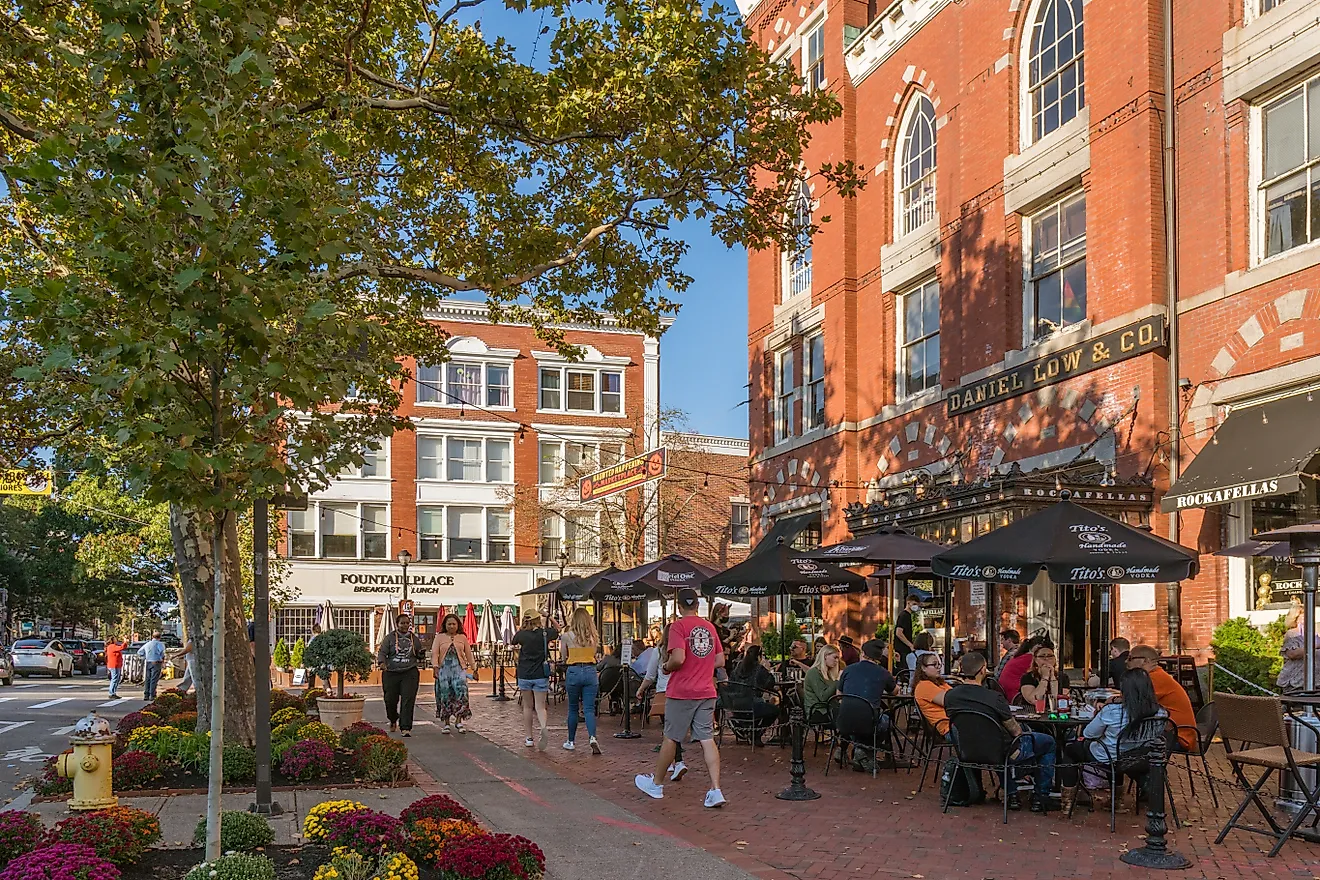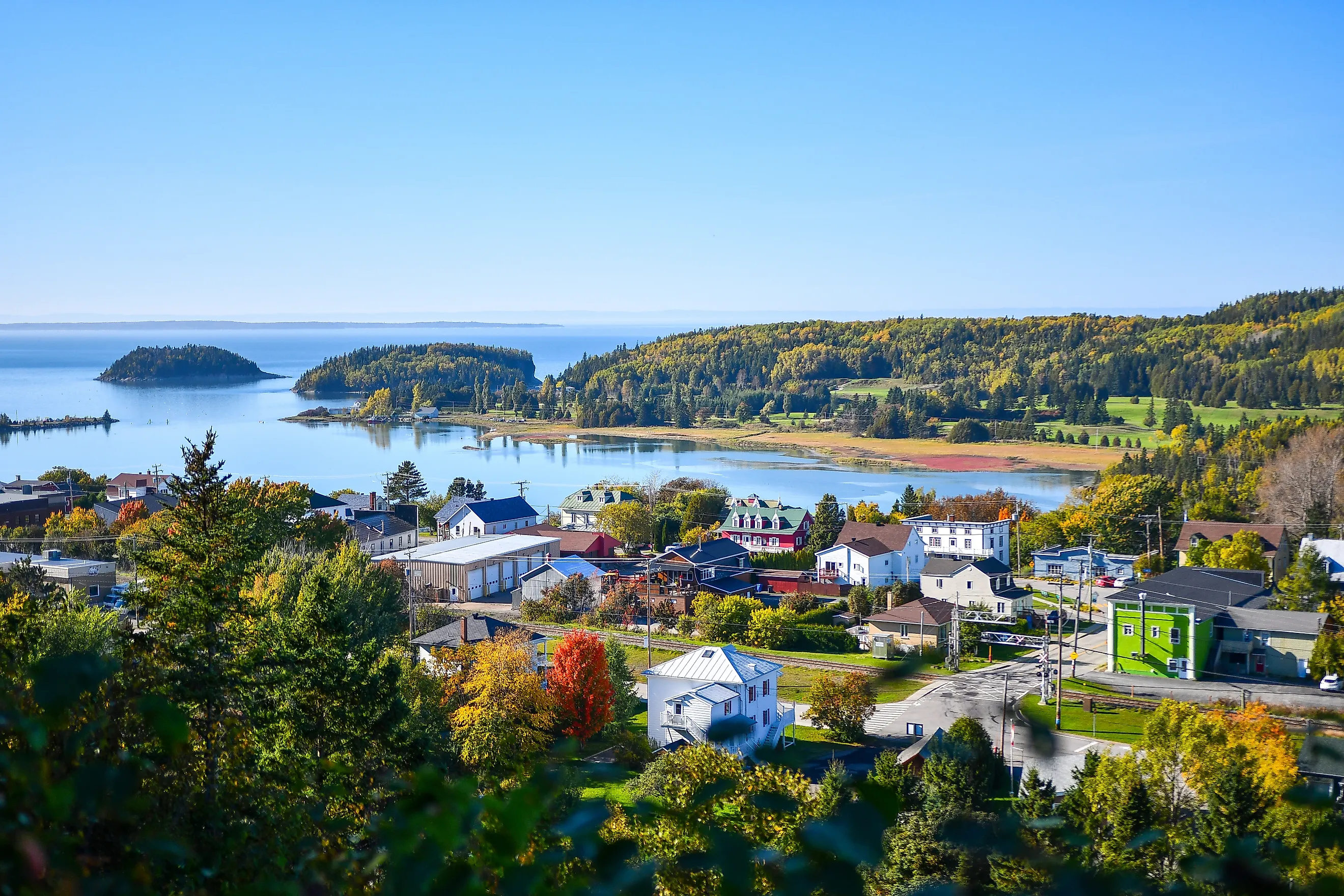
11 Best Places To Retire In Quebec
Quebec offers retirees a combination of affordable housing, strong healthcare access in most regions, and small communities scattered along the St. Lawrence River, in the Laurentians, the Eastern Townships, and along the Saguenay Fjord. Many of the towns on this list run housing prices well below those in Montreal or Quebec City, and provincial healthcare access remains solid even outside the bigger urban centres. The Eastern Townships hold lakeside retirement communities like Magog and North Hatley. The Laurentians and the Charlevoix region anchor the alpine and ski-town options. The eleven towns below cover the practical spread of Quebec's retirement options.
Saint-Donat-de-Montcalm

Saint-Donat-de-Montcalm sits 135 kilometres (84 miles) northwest of Montreal in the Laurentian Mountains, a town of about 4,000 people bracketed by two substantial lakes (Lake Archambault and Ouareau Lake) and bordering Parc national du Mont-Tremblant. The four-season outdoor calendar is the town's main retirement draw: hundreds of kilometres of snowmobile trails, two downhill ski areas (Ski La Reserve and Ski Garceau), an extensive cross-country trail network, and warm-weather hiking on Montagne Noire, with paddleboarding and kayaking on both lakes. House prices typically run at or below the provincial average, often under CA$400,000, though waterfront properties command considerably more.
Rue Principale is the main commercial street, with inns and bistros (Le 376 is a local fixture) and L'Hotel-Spa Le Suisse for spa visits. The town hosts Festival Plein Air St-Donat every February and the free outdoor summer-long series Un été tout en culture from July through September. Medical care is provided locally by the CLSC de Saint-Donat (primary care, emergency, and laboratory services).
Sutton

Sutton sits in Quebec's Eastern Townships in the Brome-Missisquoi wine region, ringed by vineyards, orchards, and the forested foothills of the Sutton Mountains. Mont Sutton runs as the town's ski hill in winter and as a mountain-biking and hiking network in the warm months. Local healthcare is handled by a community clinic with full hospital services about twenty minutes away in Cowansville. Housing prices remain moderate by provincial standards, particularly for retirees coming from Montreal.
The town hosts the Sutton Jazz Festival in summer and the Festival des Couleurs in autumn. Local life centres on the main-street cafés, the weekly farmers' market, and outdoor recreation in the surrounding hills. Microbrasserie Auberge Sutton Brouërie is the long-running local craft brewer-restaurant.
Sainte-Rose-du-Nord

Sainte-Rose-du-Nord on the south shore of the Saguenay Fjord carries the nickname "Pearl of the Fjord" for its setting against the steep walls of the inlet. The village is small (population about 400) and quiet, which suits retirees looking for that scale of community. A local clinic handles primary care, with full hospital services about an hour away in Saguenay city. Housing prices run well below the provincial average and are among the most affordable in the broader retirement-town list.
Daily life is heavily outdoor: kayaking on the Saguenay, hiking the fjord rim, snowshoeing in winter, and fjord cruises in summer. Auberge La Fjordelaise overlooks the inlet and serves as the village's main dining option.
North Hatley

North Hatley sits on the northern tip of Lake Massawippi in the Eastern Townships, a lakeside village historically settled by wealthy Americans in the late 19th century and built around their summer estates. The architectural legacy persists in the heritage homes around the lake and the pedestrian-scaled village core. Local healthcare runs through community clinics, with full hospital services in Sherbrooke about thirty minutes away.
Waterfront properties command premium prices, though the surrounding township homes remain priced competitively against Montreal and Quebec City. Retirees orient daily life around lake activities, walking trails, the village's small galleries and shops (Fet'Art is a long-running fixture), and seasonal events including the North Hatley Canada Day festivities. Pilsen Restaurant et Pub is the long-standing village dining institution, with a deck overlooking the lake.
Rimouski

Rimouski is the largest town on this list, a city of about 50,000 on the south shore of the St. Lawrence Estuary about 300 kilometres downstream of Quebec City. The Centre hospitalier régional de Rimouski is a full regional hospital with specialist services, which makes Rimouski the strongest healthcare option among Quebec's smaller retirement-friendly cities. Housing prices run noticeably below Quebec's major metropolitan markets, which lets retirees afford waterfront or near-waterfront homes at moderate prices.
The city's maritime heritage is on display at the Pointe-au-Père Maritime Historic Site, where the Empress of Ireland Museum sits at the location of Canada's worst-ever peacetime shipwreck (the May 1914 Empress of Ireland sinking, which killed 1,012 people, the second-deadliest peacetime maritime disaster after the Titanic). Parc national du Bic, fifteen minutes west of town, offers extensive coastal hiking. The Festi Jazz International de Rimouski runs every late summer, and Chez Saint-Pierre handles upscale regional dining built around Bas-Saint-Laurent seafood.
Wakefield

Wakefield sits in the Gatineau Hills about thirty minutes north of Ottawa-Gatineau, alongside the Gatineau River. The village runs an unusually active arts community for its size (around 2,000 people), with year-round galleries, music venues, craft markets, and the annual Wakefield Writers Fête every October. Wakefield Memorial Hospital handles emergency and community healthcare, with full specialist services available in Gatineau and Ottawa fifteen to thirty minutes south.
Housing prices have risen recently as Ottawa-area buyers have moved north, though the broader Gatineau Hills market remains below major-metro averages. The pedestrian-walkable village core, the Gatineau River paddling, the Gatineau Park trails, and the heritage covered bridge across the river anchor the local routine. The Village House is the long-running flagship restaurant; the Wakefield Mill Hotel & Spa runs as the larger destination spa property.
Mont-Saint-Hilaire

Mont-Saint-Hilaire sits less than an hour east of Montreal at the foot of its namesake mountain, one of the Monteregian Hills. The Gault Nature Reserve, run by McGill University, protects the eastern half of the mountain as a UNESCO biosphere reserve and runs an annual biodiversity festival every October. The town combines heritage residential neighbourhoods with relatively easy commuter access to Montreal via the Mont-Saint-Hilaire commuter rail line.
Healthcare runs through local clinics and Montérégie regional hospitals. Housing prices typically come in below Montreal Island averages, particularly for detached homes and condominiums favoured by retirees. Outdoor activity centres on hiking, birdwatching, and cycling routes through the Richelieu River valley. La Table des Jardiniers handles upscale local dining; the town's commuter rail link to Montreal makes occasional city trips simple.
Sainte-Anne-de-Bellevue

Sainte-Anne-de-Bellevue sits at the western tip of the island of Montreal, at the confluence of the Saint-Lawrence and Ottawa Rivers. The historic Rue Sainte-Anne and a scenic boardwalk along Lake Saint-Louis define the town's pedestrian-scaled core. Ste. Anne's Hospital, formerly the federal veterans' hospital, specialises in long-term and geriatric care, which gives the town an unusually strong eldercare option for its size.
Property values vary widely, but condominiums and smaller homes are typically priced competitively against central Montreal neighbourhoods. Annual events include the Garlic Festival in August and a winter carnival in February. Nearby Morgan Arboretum and the Ecomuseum Zoo handle the warm-weather outdoor circuit. Restaurant l'Anse aux Oies is the local upscale-dining fixture, with views across Lake Saint-Louis.
Magog

Magog sits on the northern shore of Lake Memphremagog in the Eastern Townships, the largest town in the immediate region and the main service centre for the lake. Magog Hospital is a regional facility with established geriatric services. Lakeside properties command premium prices, particularly along the Memphremagog waterfront, but condominiums and homes in the surrounding township are reasonably priced against larger Quebec metros.
Year-round activity is the town's main draw: boating, paddling, and cycling along the lake in summer; cross-country and downhill skiing at Mont-Orford in winter. Magog hosts the Festivités Memphrémagog and a series of arts and music festivals through summer and autumn. The pedestrian downtown carries boutiques, galleries, and cafés around the lakefront. Fondissimo runs as the lakefront fondue-and-tasting fixture.
Baie-Saint-Paul

Baie-Saint-Paul sits where the Gouffre River meets the St. Lawrence in the Charlevoix region, ringed by mountains and the river estuary. The town is regionally known for its arts scene: it produced the artistic talent that became Cirque du Soleil (founded by Baie-Saint-Paul natives in 1984), and its galleries and studios are central to Charlevoix's cultural identity. The Baie-Saint-Paul Hospital is a full-service facility with emergency, surgical, outpatient, and short-term geriatric units.
Housing prices vary, but homes away from the tourism-heavy centre remain more affordable than Quebec City or Montreal equivalents. Le Massif de Charlevoix, twenty minutes west, runs as one of eastern Canada's most striking ski hills, with the highest vertical drop east of the Rockies. Le Festif! de Baie-Saint-Paul runs every July as the major summer arts festival. Mouton Noir handles the regional cuisine and locally sourced ingredients.
Saint-Sauveur

Saint-Sauveur sits in the Laurentians about an hour north of Montreal and runs as one of the most established ski-resort towns in eastern Canada. Mont Saint-Sauveur and the surrounding hills carry one of Quebec's largest illuminated night-skiing operations. Mont-Tremblant, about an hour north, handles the higher-vertical option. Healthcare runs through nearby Laurentian regional clinics and hospitals.
Housing prices are moderate against Montreal averages, especially for condominiums and smaller residences favoured by retirees. The pedestrian village core carries boutiques, spas, and cafés that remain active year-round. The Festival des Arts de Saint-Sauveur runs every summer with internationally recognised dance programming. Gibby's runs as the long-running upscale steakhouse fixture.
The Pattern Across Quebec
The eleven towns above cluster into four practical retirement settings. The lakeside Eastern Townships (Magog, North Hatley, Sutton) carry the longest tradition of retirement migration in the province, with mature healthcare and arts infrastructure. The Laurentian ski-belt towns (Saint-Sauveur, Saint-Donat-de-Montcalm) trade off short summers for an active four-season calendar within an hour of Montreal. The St. Lawrence corridor towns (Rimouski, Baie-Saint-Paul, Mont-Saint-Hilaire) anchor on the river itself, with the strongest regional-hospital access for retirees who prioritise specialist medical care. And the outliers (Sainte-Rose-du-Nord on the Saguenay Fjord, Sainte-Anne-de-Bellevue at Montreal's western edge, Wakefield in the Gatineau Hills) round out the regional spread. Across all four groupings, the common thread is the same: Quebec's smaller communities run housing costs well below Canada's bigger-city markets while keeping provincial healthcare and a usable downtown within reach.