7 Strange Discoveries About the Amazon River You Never Knew
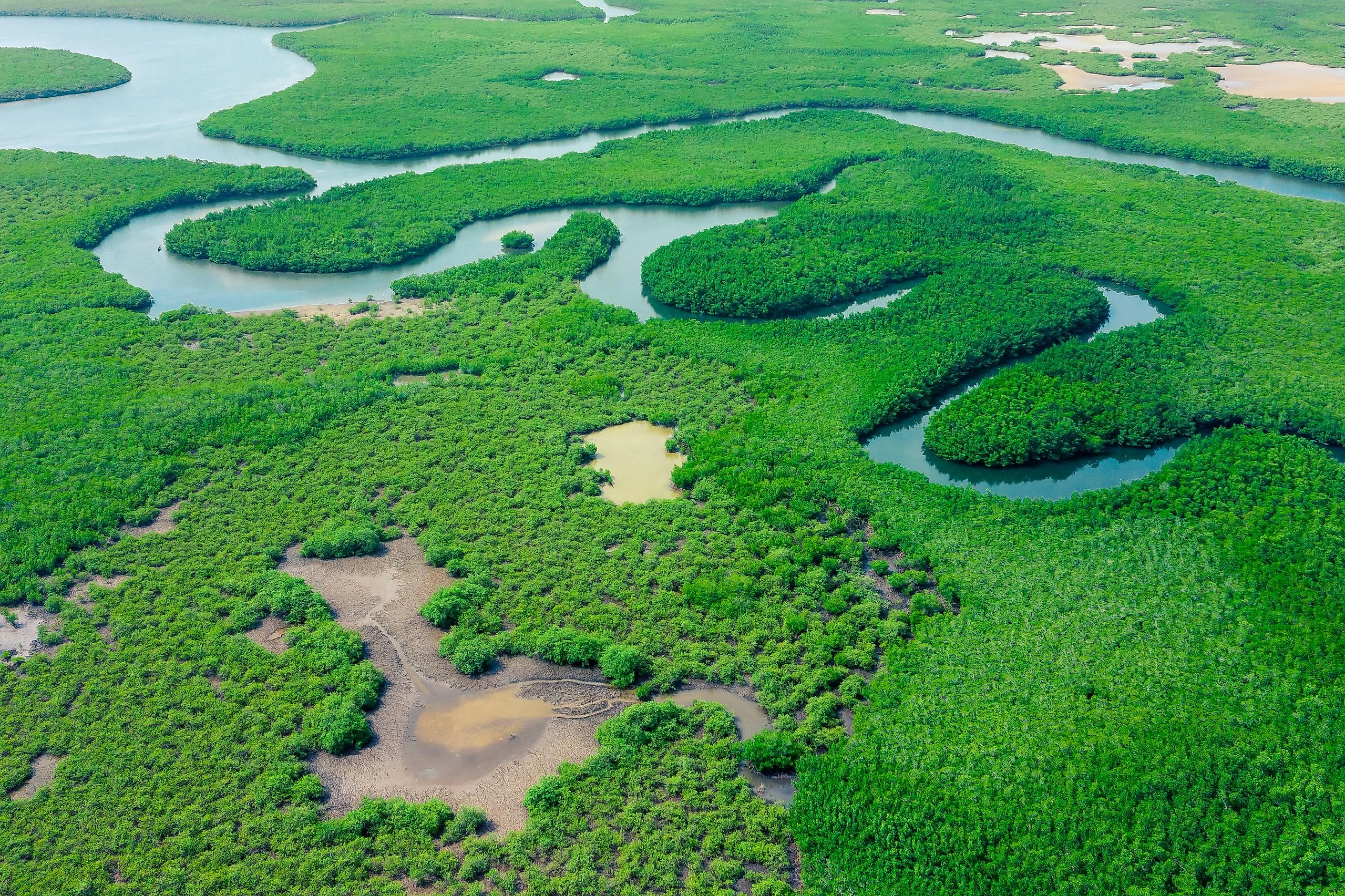
The world’s second-longest river has a certain mystique. Its scale is somewhat responsible for that. Cutting through a sizeable chunk of South America, it is almost too big to wrap your head around. But it is also the spirit of the place that gives it its distinct character.
Before its name referred to an online shopping emporium, the Amazon was synonymous in the public eye with dense, uncharted forest and muddy waters teeming with piranhas, the sort of mysterious place you entered at your peril. Although science has revealed many of its secrets, it is still hiding countless more.
It is impossible to know how much might still be lurking beneath the surface, but that is not for lack of trying. Here are seven of the most unexpected Amazon River discoveries scientists have made.
Massive Hidden Coral Reef Thriving Where the Muddy River Meets the Sea

You would not expect it to be possible to hide a coral reef larger than the U.S. state of Delaware, but the Amazon has produced such a surprise. In 2014, a massive coral reef system matching that description was found at the mouth of the Amazon River. It is highly unusual for a coral reef to thrive underneath the Amazon River plume. Most light-dependent coral reefs require clear waters to grow.
The Amazon Reef differs from most known carbonate reef systems, likely hosts an array of species unknown to science, and is important for scientists who study how reefs respond to suboptimal conditions. As environmental conditions worsen in many regions where coral reefs typically thrive, this system may offer insight into how reefs adapt to environmental stress.
Proof the Amazon Once Flowed Backwards Across an Entire Continent

Rivers tend to run downhill. This is fairly basic. Gravity pulls water downward. But South America’s topography has not always been what it is today, and because of this, the Amazon, which flows from west to east, actually reversed course about 10 million years ago.
The Andes Mountains are responsible for that shift. The mountainous spine of South America’s west coast started to rise about 65 million years ago, and after roughly tens of millions of years of mountain-building, it became high enough to force the Amazon River, which until then had flowed westward from higher ground in the Amazon Basin to the east, to change course. It is accurate to say that the Amazon River once flowed in the opposite direction.
Among Its Latest-Discovered Residents Are Amphibious Mice

The Amazon River is home to a wide range of unusual species, several of which are referenced later in this article. One lesser-known example is a species of mouse that can swim. While this may sound surprising, in the Amazon River, one newly discovered species of aquatic mouse is a documented reality.
The Daptomys was found in 2022 when researchers collaborated with the indigenous people of the Alto Mayo region in the heart of the Peruvian Amazon, where river systems and seasonal flooding shape much of the local wildlife, to discover no less than 27 new species. It is a swimming mouse belonging to a rare group of semi-aquatic rodents, a classification that is uncommon among mammals.
An Underground River Following the Path of the Amazon
Beneath parts of the Amazon Basin, researchers have inferred a deep, slow regional groundwater flow system from geothermal well data. It’s sometimes nicknamed the “Hamza River,” but it behaves more like an aquifer flow through porous rock than a river channel, and its exact pathway relative to the surface of the Amazon is not directly mapped.
The Hamza River is over twice the width of the Amazon and far slower-moving. It also went undetected for eons before unusual geothermal data prompted scientists to take a closer look at soundings from inactive oil wells, eventually revealing a massive subsurface body of water.
A New Species is Discovered Every Other Day

It is no surprise that the Amazon River and the wider basin it sustains are teeming with life, but it can be astonishing to realize just how much there is. According to the World Wildlife Fund, a new species is discovered in the Amazon Basin every other day. That amounts to well over 150 new species each year on average. Though human encroachment is a constant threat to the biodiversity of this region, there remains an enormous wealth of species yet to be identified, underscoring the importance of understanding and protecting the ecosystem.
A Hundred or More Uncontacted Cultures Residing along the Amazon River
Like most of the world’s great rivers, the Amazon has given rise to societies, though not in the same form that rivers like the Nile or the Yangtze did in the ancient world. Instead, the Amazon River Basin is home to some of the highest numbers of uncontacted, or isolated, indigenous peoples in the world.
These groups refuse contact with the outside world and live in the Amazon Basin without external intervention. Though they are distributed across several countries through which the Amazon River flows, their diverse and isolated ways of life are widely threatened by the same pressures, including building projects, the expansion of agriculture, and extractive industries such as logging and mining.
A Bizarre Blob-Headed Fish Unknown to Science

Remember those swimming mice from earlier? They are not the only unusual Amazon River dwellers the Alto Mayo expedition turned up. A distinctive species of catfish also emerged, and although it was a familiar sight to the local people who helped to catch it, science had never documented anything like it before.
Part of the armored catfish family, the new species was discovered in 2022 and puzzled scientists. The large, blob-like protrusion on its head serves no obvious purpose, and scientists had not previously documented it. As of yet, no one knows what it is for. It is one of the many species of the Amazon River and its tributaries that have surprised researchers as they continue to study this ecosystem, which is teeming with life.
Why the Amazon Still Defies Full Understanding
By its very nature, the Amazon River is difficult to study. It is massive in scope, meanders through some of the densest and most isolated rainforests on the planet, and remains in constant flux as human intervention threatens and alters ecosystems in the region. These factors mean it continues to hold surprises and resist complete understanding. This is one of the reasons protecting the Amazon River and its banks is so important. When it is damaged, the full extent of what has been lost is often impossible to measure.